
In today’s global food trade landscape, a single question haunts importers and consumers alike: where does our food really come from? For Chinese food exports entering international markets, this question has evolved from casual curiosity into a critical requirement. Food traceability—the ability to track a product’s journey from its origin through every step of the supply chain to the final consumer—has become the cornerstone of trust in global trade relationships.
The numbers tell a compelling story. China imported 188 billion euros worth of agricultural and agri-food products in 2024, making it one of the world’s most strategic food markets. Yet this massive opportunity comes with unprecedented scrutiny. International buyers, regulatory bodies, and end consumers demand verifiable proof that products meet safety standards, quality benchmarks, and ethical sourcing requirements. Without robust traceability systems, exporters face immediate disadvantages: delayed customs clearance, rejected shipments, and most critically, lost trust that takes years to rebuild.
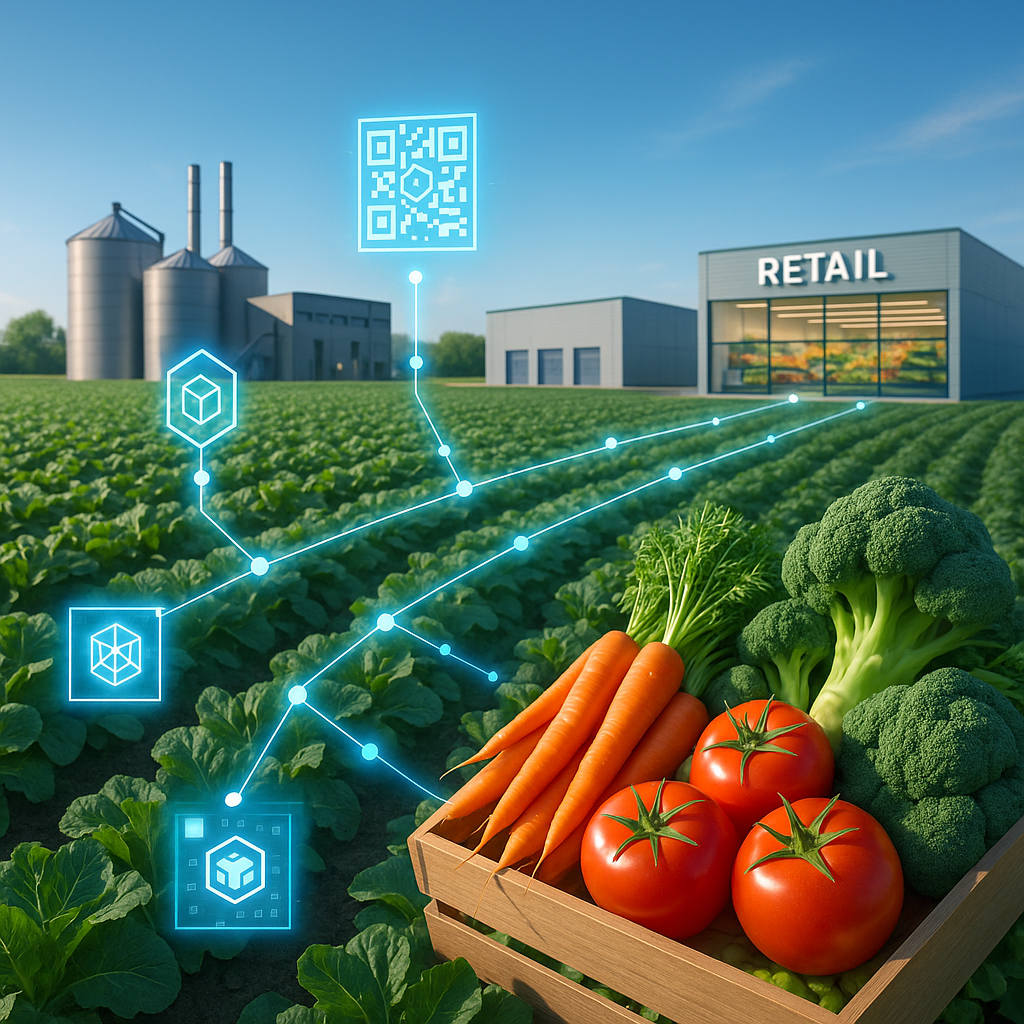
Food traceability transforms this challenge into competitive advantage. When implemented effectively, these systems create a transparent digital thread connecting farms, processing facilities, warehouses, and retail shelves. Importers can verify a product’s complete history with a simple scan, confirming everything from origin authenticity to temperature-controlled transport conditions. This transparency doesn’t just satisfy regulatory compliance—it builds the confidence that international partnerships require to flourish.
The Technology Foundation: Standards and Innovation Driving Transparency
Building effective food traceability systems requires more than good intentions. The foundation rests on internationally recognized standards that create a common language across borders and supply chains. The GS1 Global Traceability Standard has emerged as the universal framework, enabling seamless information exchange regardless of where products originate or their final destination. This standard establishes protocols for identifying, capturing, and sharing critical data points throughout the food journey.
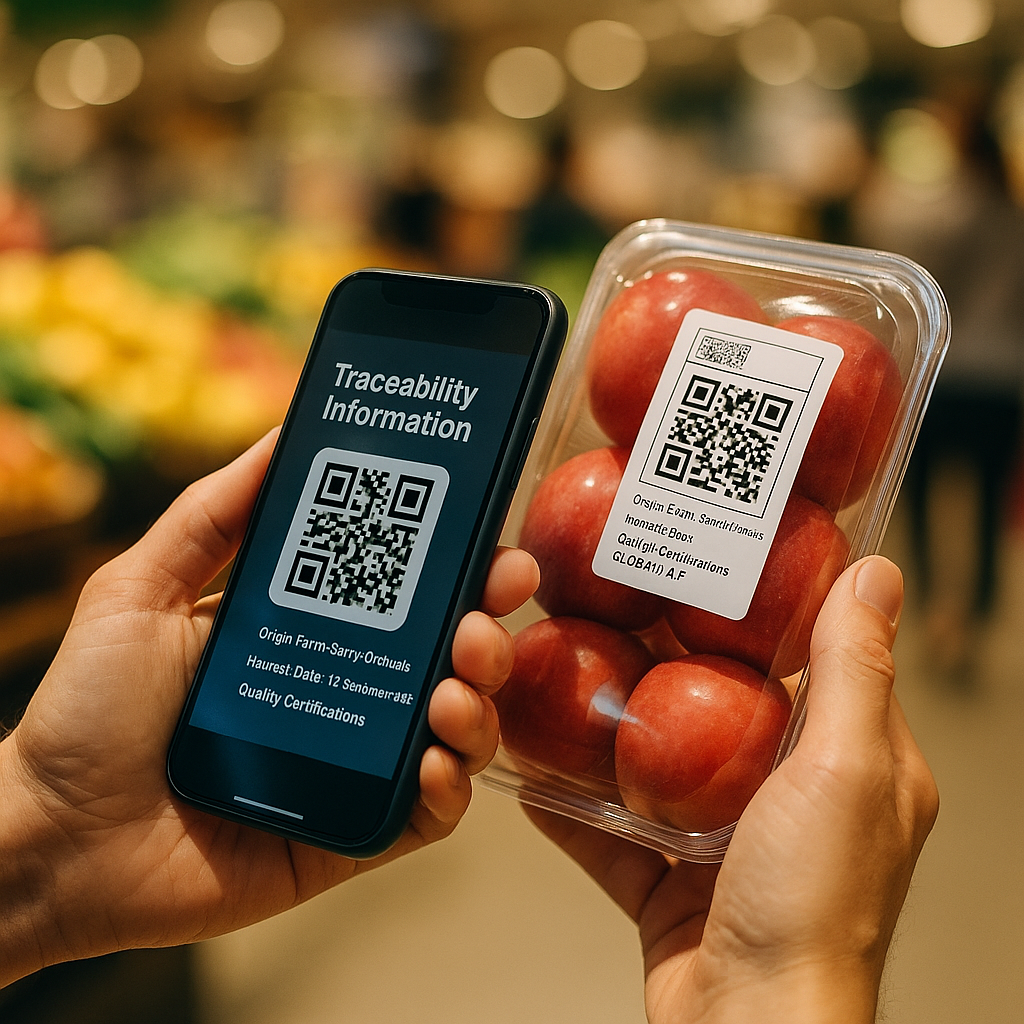
Consider how this works in practice. In a recent pilot program, Thai durian exported to China utilized GS1-powered QR codes on each fruit. These codes contained standardized information—origin farm details, harvest dates, quality certifications, and transport conditions. Chinese customs officials, importers, and eventually consumers could access this verified information instantly, creating unprecedented visibility across international borders.
Technology has transformed what’s possible in traceability. Blockchain technology provides immutable records that cannot be altered retroactively, creating trustworthy audit trails for every transaction and transfer. When Walmart implemented blockchain to track pork through China’s supply chain—from farms through warehouses to retail outlets—the system dramatically improved product accountability. Each stakeholder could verify authenticity and handling conditions without relying on paper documentation or manual record-keeping.
Internet of Things (IoT) sensors take traceability beyond static documentation into real-time monitoring. Temperature sensors embedded in refrigerated containers continuously record cold-chain conditions, automatically flagging deviations that could compromise product quality. These sensors capture data that blockchain systems permanently record, creating comprehensive digital twins of physical products moving through supply chains.
Cloud platforms integrate these technologies into unified systems accessible to authorized stakeholders worldwide. Supply chain partners in different countries can access the same verified information simultaneously, eliminating communication delays and information gaps that previously caused disputes and compliance failures. The convergence of blockchain, IoT, and cloud infrastructure creates traceability systems that are comprehensive, real-time, and trustworthy.
Navigating China’s Regulatory Landscape: Compliance and Challenges
China’s regulatory framework for food imports has evolved rapidly, reflecting growing consumer awareness and government commitment to food safety. The regulatory environment presents both challenges and opportunities for exporters who understand its requirements. China’s Food Safety Law established collaborative mechanisms between domestic safety standards and export traceability requirements, creating a unified system where exported food must demonstrate the same rigorous tracking as products sold domestically.
The compliance requirements are substantial and specific. Food producers and operators must establish comprehensive food safety traceability systems that record detailed information including incoming inspections, production processes, and pre-delivery verifications. These records must be maintained, accessible for inspection, and capable of tracking products both forward through distribution channels and backward to original sources.
Labeling standards have tightened significantly, making compliance and traceability non-negotiable. Products entering China must meet stringent requirements for ingredient disclosure, additive documentation, and quality certification. All imported food must align with China’s food safety laws and national standards, meaning exporters cannot simply ship products designed for other markets—they need China-specific compliance strategies.
The General Administration of Customs (GAC) has implemented new regulations setting specific rules for registration, traceability, and compliance verification. GAC No. 219 established requirements for overseas food enterprises to ensure smooth customs clearance, including mandatory preservation of cold-chain logs, veterinary certifications, and batch traceability documentation. These requirements enable rapid inspection and, critically, faster identification and removal of potentially contaminated products when safety concerns arise.
Regional pilot programs demonstrate successful implementation pathways. Zhejiang Province has pioneered comprehensive traceability systems that integrate local producers with international export requirements. These programs showcase how proper system design enables compliance without creating insurmountable barriers. The key lies in understanding that Chinese regulations aren’t obstacles but frameworks for building credible supply chains.
Challenges remain, particularly around establishing complete databases and harmonizing technological systems across diverse suppliers. Many exporters struggle with inadequate understanding of regulatory specifics or lag in implementing necessary tracking technologies. However, these challenges are surmountable for companies committed to systematic compliance approaches.
Implementing Effective Traceability: Practical Steps for Success
Creating robust traceability systems requires methodical planning and phased implementation. The journey begins with comprehensive supply chain mapping—documenting every stakeholder, process, and transfer point from original producers to end customers. This mapping exercise often reveals gaps in existing documentation and highlights potential vulnerability points where product integrity could be compromised.
Developing functional and non-functional requirements comes next. Functional requirements define what the system must accomplish: recording specific data points, enabling rapid query capabilities, and generating compliance documentation. Non-functional requirements address system performance: reliability, scalability, user accessibility, and integration with existing business systems. In fruit supply chains, for example, requirements include tracking harvest times, storage temperatures, transport conditions, and quality inspections at each transfer point.
Technology selection should align with both current needs and future scalability. Starting with pilot programs involving key suppliers minimizes risk while demonstrating value. These pilots test system capabilities with real products and actual supply chain conditions before full-scale rollout. Successful pilots build internal buy-in by demonstrating tangible benefits: faster problem resolution, reduced waste from recalls, and enhanced customer confidence.
Training represents a critical but often underestimated requirement. Every supply chain participant needs understanding of their role in maintaining traceability integrity. Farmers must accurately record harvest data. Processors need protocols for batch tracking. Logistics providers require procedures for condition monitoring and documentation. Without comprehensive training, even sophisticated technical systems fail because human operators don’t utilize them correctly.
Integration with existing business systems ensures traceability doesn’t become an isolated compliance exercise but rather enhances operational efficiency. When traceability data feeds into inventory management, quality control, and customer relationship systems, it creates value beyond regulatory compliance. Companies discover opportunities to optimize sourcing, improve forecasting, and differentiate products based on verified quality attributes.
The benefits extend far beyond checking regulatory boxes. Enhanced recall efficiency transforms potential crises into manageable incidents. When contamination concerns arise, traceability systems enable precise identification of affected batches within hours rather than weeks. This surgical precision minimizes product waste, limits customer impact, and preserves brand reputation.
Risk management capabilities improve dramatically. Real-time visibility into supply chain conditions enables proactive intervention before problems escalate. If cold-chain temperatures deviate during transport, alerts trigger immediate corrective action rather than discovering spoiled product upon delivery. This shift from reactive to preventive management reduces losses and strengthens reliability.
Consumer trust—the ultimate objective—grows naturally from demonstrated transparency. International buyers increasingly recognize that suppliers with robust traceability systems represent lower-risk partnerships. These suppliers demonstrate professionalism, quality commitment, and preparedness for the scrutiny that global markets demand.
The Future of Food Traceability: Emerging Trends and Opportunities
Looking ahead, food traceability systems will continue evolving in sophistication and scope. The blockchain and IoT integration in agriculture and food supply chain management is projected to grow from $0.6 billion in 2025 to $12.1 billion by 2035, reflecting a compound annual growth rate of 36%. This explosive growth signals industry recognition that traceability represents competitive advantage, not merely compliance cost.
Artificial intelligence and machine learning will enhance predictive capabilities. Rather than simply recording what happened, advanced systems will forecast potential problems based on pattern recognition across vast datasets. These systems might predict supply disruptions, identify quality trends before they become problems, or optimize routing based on historical performance data.
Consumer-facing applications will proliferate, bringing traceability transparency directly to end users. Scanning product codes will reveal detailed origin stories, producer profiles, and sustainability metrics. This direct consumer connection creates market differentiation opportunities for exporters who can authentically demonstrate quality and ethical practices.
Regulatory frameworks will continue tightening globally, but they’ll also become more harmonized. International standards development recognizes that fragmented requirements create unnecessary complexity. Future systems will emphasize interoperability—enabling traceability data captured in China to flow seamlessly into regulatory frameworks across Europe, North America, and emerging markets.
For Chinese food exporters, these trends create unprecedented opportunities to establish leadership in global markets. Companies that invest in comprehensive traceability systems today position themselves as preferred partners for quality-conscious international buyers. This alignment between technological capability and market demand enables sustained competitive advantage.
At Jade Premium, we understand that effective traceability systems extend beyond technology implementation—they represent commitment to the cultural heritage and authentic quality that Chinese cuisine embodies. Our comprehensive supply chain solutions integrate traditional food production expertise with modern tracking capabilities, ensuring products maintain integrity from origin through international delivery.
We recognize that each product carries stories—of farming traditions passed through generations, regional specialties with unique preparation methods, and innovative producers elevating quality standards. Traceability systems should preserve and communicate these stories while providing the verification that international partners require. When importers choose products facilitated through our networks, they access not just compliant documentation but deep understanding of the cultural significance and production excellence behind each offering.
Building trust in international food trade requires more than data points and digital records. It demands genuine commitment to quality, respect for food traditions, and professional management of complex supply chains. As traceability systems continue evolving, they’ll increasingly reflect what we’ve always known: authentic quality combined with transparent operations creates partnerships that benefit everyone—from farmers and producers to importers and consumers worldwide.
The journey from farm to fork grows shorter not in distance but in visibility. Every stakeholder can now see, verify, and trust the path that brings exceptional Chinese food products to global tables. This transparency doesn’t just satisfy regulations—it honors the dedication of producers, respects the expectations of consumers, and builds the foundation for lasting international partnerships in an increasingly connected world.