
In the competitive landscape of international food trade, smart buyers know that success isn’t just about finding quality products—it’s about securing them at prices that make business sense. For importers, retail chains, and foodservice operators working with frozen Asian foods, volume pricing represents more than just a discount strategy. It’s a fundamental approach that can slash procurement costs by up to 30% while maintaining the premium quality standards that customers expect.
At Jade Premium, we’ve witnessed firsthand how strategic volume purchasing transforms businesses. Our philosophy centers on connecting authentic Chinese cuisine with global markets through intelligent supply chain solutions. Volume pricing isn’t simply about buying more—it’s about understanding the intricate dance between supplier relationships, logistics optimization, and market timing that creates sustainable competitive advantages.
Why Volume Pricing Matters for International Food Buyers
The frozen Asian food sector operates on margins that demand precision. International food importers face unique pressures: fluctuating currency rates, complex compliance requirements, and the constant need to balance inventory costs against product availability. Volume pricing addresses these challenges head-on by creating predictable cost structures that improve financial planning.
For retail chain buyers, the math is straightforward. When you purchase frozen spring rolls, dumplings, or dim sum in bulk quantities—think 12 tons rather than 12 cases—your per-unit costs drop dramatically. A recent analysis of wholesale frozen Asian food transactions showed that buyers moving from small-batch orders to volume contracts reduced their base costs by 25-30%. This isn’t just about the discount itself. Reduced per-unit costs translate directly to improved profit margins, whether you’re pricing for retail shelves or restaurant menus.
Food service operators benefit even more directly. Restaurants and catering companies operating on notoriously thin margins find that volume pricing creates breathing room in their budgets. When a hotel chain commits to quarterly bulk orders of frozen Asian appetizers, they’re not just securing lower prices—they’re stabilizing their supply chain, reducing the frequency of orders, and minimizing the administrative overhead that comes with constant reordering.
The cash flow advantages deserve special attention. According to strategic pricing research, volume-based approaches create predictable financial structures that strengthen business planning. Volume purchasing typically involves upfront commitments, but the trade-off creates predictable expenses that simplify financial forecasting. Instead of dealing with price fluctuations month after month, volume buyers lock in rates for extended periods. This stability becomes invaluable when planning seasonal menus, negotiating with your own customers, or managing tight operational budgets.
Strategic Pricing Models That Work
Understanding volume pricing structures requires looking beyond simple percentage discounts. The most effective suppliers employ tiered pricing models that reward commitment while maintaining flexibility. At Jade Premium, we’ve developed pricing frameworks that reflect both market realities and genuine partnership principles.
Uniform discount structures offer the simplest approach. A buyer commits to a minimum volume—say, 10 tons per quarter—and receives a flat discount across all products in that category. This works particularly well for foodservice operators with consistent needs. A hotel chain serving Asian breakfast options might commit to regular frozen bun and dumpling orders, securing a 15% discount that applies uniformly across their purchase portfolio.
Tiered pricing models provide more sophisticated optimization opportunities. These structures typically feature three to four levels. A basic tier might start at 5 tons per order with a 10% discount. The standard tier at 10 tons offers 18% off. Premium buyers committing to 20+ tons access the top tier with discounts reaching 25-30%. This approach encourages buyers to consolidate orders and plan more strategically, while suppliers benefit from predictable production scheduling.
The real intelligence comes in understanding how these tiers interact with product categories. High-demand frozen Asian staples like spring rolls, pot stickers, and steamed buns often carry different tier thresholds than specialty items. Smart buyers mix their orders strategically, hitting volume thresholds by combining fast-moving staples with higher-margin specialty products.
Sourcing Strategies That Secure Competitive Base Prices
Volume pricing effectiveness starts long before you negotiate discounts—it begins with sourcing strategy. Direct-from-Asia suppliers offer the foundation for genuine cost advantages, but navigating this landscape requires expertise and established relationships.
Jade Premium’s extensive network across major Chinese cities—from Guangzhou’s food production hub to Shanghai’s export infrastructure—provides insights that transform pricing negotiations. Understanding proper certification requirements ensures your suppliers meet international standards from the start. We’ve learned that the most competitive base prices come from suppliers who understand international quality standards while maintaining authentic production methods. A frozen dumpling producer in Shenzhen might quote attractive prices, but if their facility lacks proper HACCP certification or temperature control documentation, the “savings” evaporate in compliance costs and potential product losses.
Strong supplier relationships create pricing advantages that extend beyond simple volume discounts. When you work consistently with qualified producers, they prioritize your orders during peak seasons, offer flexible payment terms, and often provide early access to new product innovations. We’ve seen long-term partnerships yield benefits equivalent to an additional 5-8% in cost savings through preferential scheduling and reduced minimum order requirements.
Quality control integration into sourcing strategy prevents the false economy of choosing suppliers purely on price. Every batch of frozen Asian food should meet strict temperature maintenance standards throughout production and storage, as outlined in FDA import requirements. Breaks in the cold chain—even brief ones—compromise product integrity and shelf life. Suppliers who maintain temperatures consistently at -18°C (0°F) or below might charge slightly more upfront, but they eliminate the costly problem of product degradation and customer complaints.
Product Selection and Category Management
Volume pricing strategies succeed or fail based on product selection. The frozen Asian food category encompasses everything from simple frozen vegetables to complex multi-component meals. Understanding which items drive the best volume economics requires both market knowledge and operational insight.
High-demand staples form the foundation of effective volume purchasing. Frozen spring rolls, various dumpling types, steamed buns, and Asian appetizer assortments consistently move through retail and foodservice channels. These products benefit most from volume pricing because suppliers can plan production runs efficiently, and buyers can commit to regular replenishment without excessive inventory risk.
A practical example illustrates this dynamic: A retail chain carrying frozen Asian foods might commit to a quarterly order of 8 tons combining pot stickers (40%), spring rolls (30%), steamed buns (20%), and specialty items (10%). This mix hits volume pricing thresholds while balancing fast-moving items against higher-margin specialty products. The result? Overall costs drop by 22% compared to weekly small-batch ordering.
Shelf life management becomes critical when dealing with volume orders. Most premium frozen Asian foods maintain quality for 12-18 months at proper storage temperatures, but effective rotation systems prevent waste. First-in-first-out (FIFO) inventory practices, clearly marked production dates, and strategic order timing ensure products reach customers well within their optimal quality window. Volume buyers who master rotation practices report waste rates below 2%, compared to industry averages of 5-7% for smaller, less systematic operations.
Product variety within volume orders requires careful planning. While it’s tempting to fill containers with single SKUs to maximize discounts, smart buyers maintain variety that matches actual demand patterns. Our comprehensive guide to Chinese frozen food categories helps importers select the optimal product mix. A foodservice distributor might order 12 tons quarterly but spread that across 15-20 different frozen Asian products, each ordered in quantities that align with downstream customer needs. This approach captures volume pricing benefits while avoiding the trap of dead inventory.
Operational Readiness for Volume Orders
Securing volume pricing means nothing if you can’t handle the operational demands. Cold chain capabilities, storage capacity, and logistics coordination determine whether volume purchasing creates value or chaos.
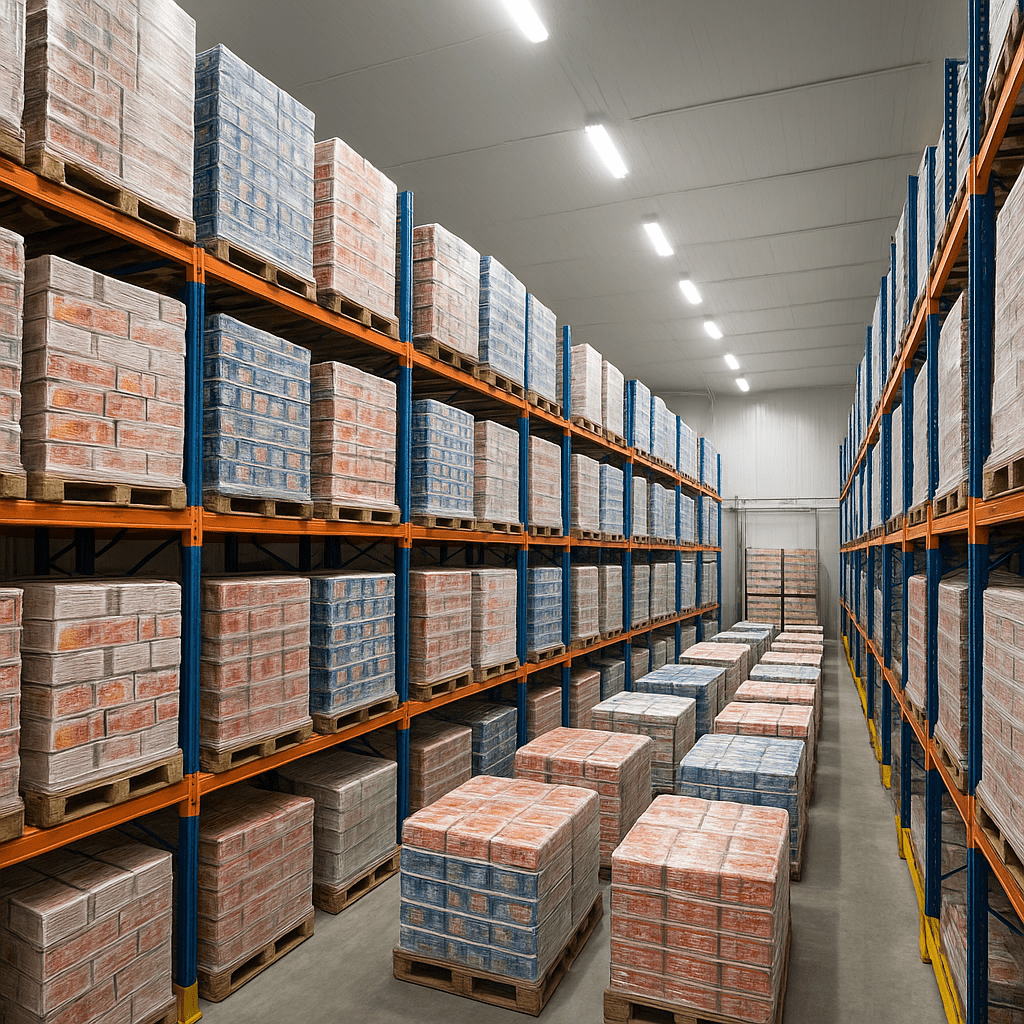
Cold chain infrastructure forms the foundation. Receiving 10-20 tons of frozen products requires adequate freezer space maintained at consistent temperatures. Many successful volume buyers work with third-party cold storage facilities that offer flexible capacity. These partnerships allow you to scale storage needs seasonally without massive capital investments in your own freezer infrastructure. A mid-sized foodservice distributor might maintain 50 cubic meters of owned freezer space for regular inventory while contracting an additional 100 cubic meters of cold storage capacity for volume purchases.
Packaging optimization reduces both storage footprint and handling costs. Master cases designed for efficient palletization maximize freezer space utilization. When products arrive in standardized carton dimensions that stack efficiently, you can store more product in less space while simplifying inventory management. We’ve seen buyers improve storage efficiency by 15-20% simply by working with suppliers on packaging standards.
Logistics strategies tailored to volume orders create significant cost advantages beyond the initial discount. Full container loads (FCL) reduce per-unit freight costs dramatically compared to less-than-container-load (LCL) shipments. A 20-foot refrigerated container holds approximately 10-12 tons of frozen product—perfectly aligned with common volume pricing thresholds. Buyers who coordinate orders to fill containers completely can reduce freight costs by 30-40% compared to partial shipments.
Distribution planning determines how effectively you convert volume purchases into actual sales. Leading Asian food distribution networks leverage technology and logistics expertise to optimize this critical function. Smart buyers segment their inventory based on movement velocity. Fast-moving items stay in readily accessible primary storage, while slower-moving products occupy deeper, less accessible storage areas. This seems simple, but it dramatically affects order fulfillment efficiency and labor costs.
Building Your Volume Pricing Framework
Implementing volume pricing requires a systematic framework that balances aggressive cost reduction with operational reality. Here’s how successful buyers structure their approach:
Start by establishing your base costs through competitive supplier analysis. Request detailed quotations from 3-5 qualified suppliers for your target product categories. These quotes should include not just unit prices but also minimum order quantities, payment terms, and delivery timeframes. Understanding the market baseline helps you recognize genuinely competitive offers and negotiate effectively.
Define your margin requirements before committing to volume purchases. A retail chain needs to account for storage costs, shrinkage, distribution expenses, and desired profit margins. A useful rule: your landed cost (product cost plus freight, storage, and handling) should represent no more than 60-65% of your selling price for profitable operations. Volume discounts that bring you below this threshold create real business value.
Establish clear discount tiers that align with your operational capacity and market demand. A practical framework might look like this:
- Entry Tier: 5-8 tons per order, 12% discount
- Standard Tier: 8-15 tons per order, 18% discount
- Premium Tier: 15-25 tons per order, 25% discount
- Strategic Partnership: 25+ tons per order, 28-30% discount plus additional benefits
These tiers should reflect genuine economies of scale for your supplier while creating clear incentive structures for your purchasing decisions.
Integrate seasonal adjustments into your pricing framework. Asian food demand fluctuates significantly around major holidays and seasonal eating patterns. Chinese New Year drives massive demand for traditional frozen dim sum and appetizers. Smart buyers increase volume commitments during these peak periods to secure supply while negotiating additional seasonal discounts that reflect suppliers’ desire to maximize production during high-demand windows.
Risk mitigation strategies protect against the downside of volume commitments. Build flexibility into contracts through clause options that allow order adjustments based on specific triggers—currency fluctuations beyond certain thresholds, unexpected regulatory changes, or documented quality issues. The most effective volume pricing relationships feature partnership thinking where both parties share risk and reward.
Making Volume Pricing Work: Practical Tips for Success
For readers looking to implement these strategies immediately, here are actionable insights tailored to different buyer types:
For International Food Importers: Start by consolidating your supplier base. Learn how to identify reliable Chinese food suppliers who can support your volume purchasing strategy. Working with fewer, higher-quality suppliers creates the volume concentration needed to negotiate meaningful discounts. One importer we work with reduced their frozen Asian food supplier count from 12 to 4, immediately qualifying for premium tier pricing that saved 24% annually.
For Retail Chain Buyers: Coordinate purchasing across multiple locations to aggregate volume. Even if individual stores can’t hit volume thresholds, chain-wide commitments unlock significant savings. Use centralized distribution to break down volume orders into store-appropriate quantities while capturing wholesale pricing benefits.
For Food Service Operators: Join or form buying groups with other operators in your region. A consortium of five mid-sized restaurants can collectively achieve volume thresholds that individual operators never reach. This collaborative approach has helped foodservice buyers access discounts previously reserved for major chains.
Remember that volume pricing success requires viewing suppliers as partners rather than adversaries. The most sustainable cost advantages come from relationships built on mutual benefit, quality commitment, and long-term thinking. At Jade Premium, we’ve built our business on this philosophy—bringing authentic Chinese cuisine to global tables through supply chain solutions that benefit everyone in the value chain.
When you’re ready to explore customized volume pricing strategies for your frozen Asian food procurement, start with clear analysis of your actual demand patterns, honest assessment of your operational capabilities, and openness to building supplier partnerships that go beyond transactional price negotiations. The 30% cost reduction potential isn’t just marketing talk—it’s what happens when volume pricing strategy, operational excellence, and genuine partnership principles align.