
The global appetite for authentic Chinese cuisine has never been stronger. Walk through any major supermarket in London, New York, or Sydney, and you’ll find freezer aisles filled with Chinese dumplings, baozi, and ready-to-heat stir-fry dishes. This isn’t just a trend—it’s a fundamental shift in how international consumers access Chinese food. Behind these convenient meals lies a complex web of requirements, certifications, and standards that Chinese exporters must navigate to meet international buyers’ expectations.
Chinese prepared meals represent one of the fastest-growing segments in the global food trade. These products range from frozen dumplings and spring rolls to complete ready-to-eat hotpot meals and sophisticated dim sum platters. What makes them particularly appealing to international buyers is their ability to deliver authentic Chinese flavors with minimal preparation—often requiring nothing more than heating in a microwave or steamer. Yet for all their market potential, success in exporting these products hinges on understanding exactly what international buyers scrutinize before signing purchase orders.
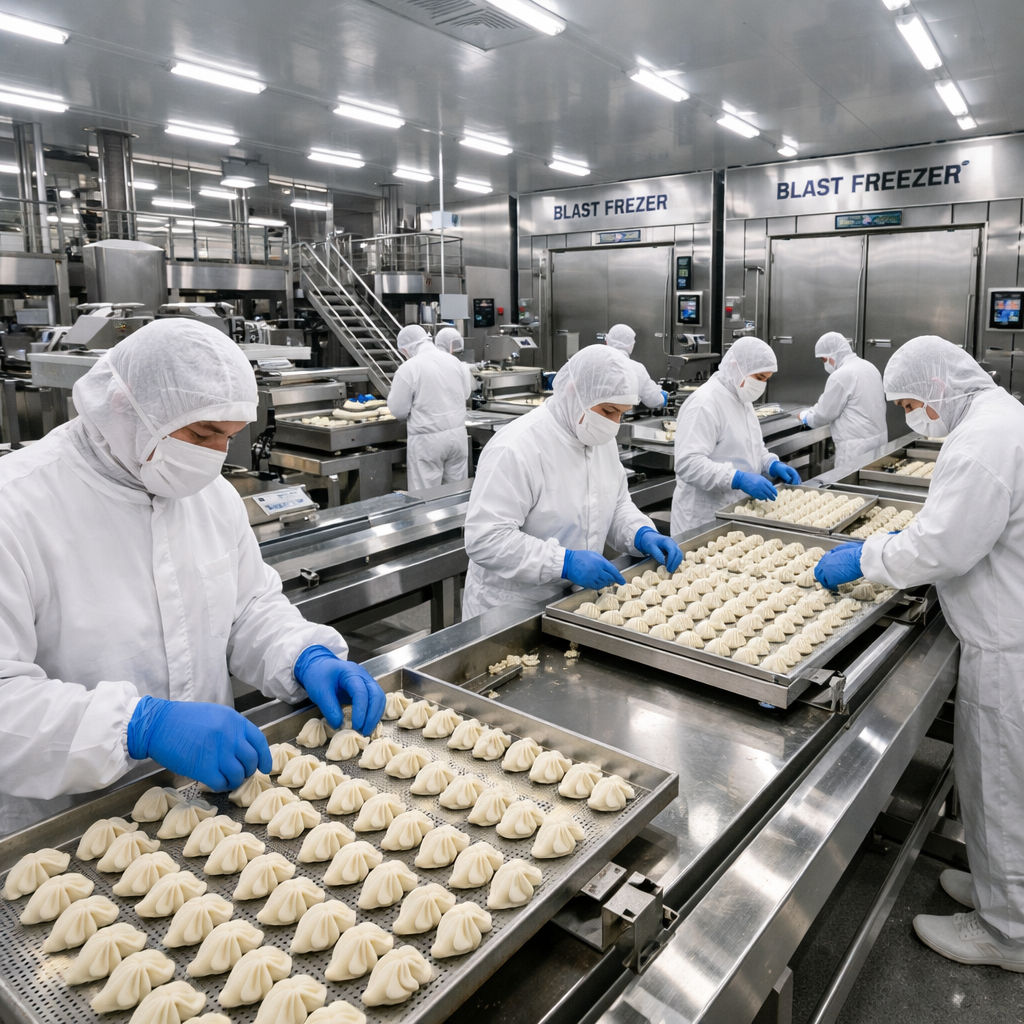
For international buyers evaluating Chinese prepared meal suppliers, the decision goes far beyond taste testing samples. They’re looking for partners who understand that a dumpling isn’t just food—it’s a promise of safety, consistency, and regulatory compliance that must hold true across thousands of miles and multiple border crossings.
The Non-Negotiables: Food Safety Systems and Certifications
When international buyers assess potential Chinese prepared meal suppliers, food safety management systems sit at the absolute top of their checklist. This isn’t about paperwork for paperwork’s sake—it’s about risk management in a global supply chain where a single contamination incident can destroy brands and trigger massive recalls.
HACCP (Hazard Analysis and Critical Control Points) certification has become the baseline expectation. This systematic approach to identifying and controlling food safety hazards isn’t optional in most markets; it’s the price of entry. For those unfamiliar with HACCP certification requirements, understanding the seven core principles is essential. International buyers want to see that Chinese exporters have mapped every critical control point in their production process—from receiving raw ingredients to blast freezing the final product. A Shanghai food processing plant that recently achieved ISO 22000 certification discovered that implementing HACCP principles fundamentally transformed their operations, creating documented evidence trails that international buyers could verify and trust.
ISO 22000 certification takes this foundation further by integrating food safety management into overall business systems. This international standard harmonizes various food safety requirements into a single framework, making it particularly valuable for Chinese exporters targeting multiple markets. When a buyer from Germany and another from the United States can both recognize and trust the same certification, it reduces the friction and duplication in the export process.
Beyond these core certifications, international buyers increasingly expect compliance with their specific national regulations. For Chinese exporters, this means understanding that GACC (General Administration of Customs China) registration isn’t just a domestic formality—it’s a quality assurance signal that resonates internationally. Products must carry bilingual labels in Simplified Chinese and pass GACC inspections, demonstrating that exporters have already cleared significant regulatory hurdles before goods even leave China.
The documentation requirements extend beyond certifications to include comprehensive traceability systems. International buyers need to know that if a problem emerges with a batch of dumplings sold in California, the exporter can trace those products back through every step of production to identify the source—much like the comprehensive recall management systems required for cross-border food trade within hours, not days. This recall readiness isn’t theoretical—it’s a practical requirement that separates professional exporters from those who aren’t prepared for international trade’s demands.
Regional Variations: One Product, Multiple Market Requirements
The complexity of exporting Chinese prepared meals multiplies when you consider that requirements vary significantly across different international markets. What satisfies buyers in Singapore might not meet standards in Sweden, and Chinese exporters must navigate these variations without compromising efficiency.
For the United States market, FDA registration and compliance with FSMA (Food Safety Modernization Act) requirements create additional layers of scrutiny. American buyers typically require suppliers to demonstrate not just that products are safe, but that preventive controls are embedded throughout the production process. The USDA’s HACCP validation guidelines provide detailed standards for this systematic approach. The emphasis is on preventing contamination rather than simply detecting it—a subtle but crucial distinction that affects everything from facility design to employee training protocols.
European Union buyers operate under a different regulatory framework, with stringent requirements around food additives, labeling, and traceability that often exceed American standards. EU regulations on food contact materials, for instance, can affect packaging choices for Chinese prepared meals in ways that might surprise exporters unfamiliar with these requirements. A Chinese supplier might use packaging materials perfectly acceptable in Asian markets, only to discover they don’t meet EU migration testing requirements for substances that could transfer from packaging to food.
ASEAN markets present their own unique considerations. While some requirements align closely with international standards, others reflect regional preferences and halal certification needs that are essential for markets like Malaysia and Indonesia. The rapid growth of Southeast Asian middle classes has created enormous demand for convenient, quality meal solutions, but Chinese exporters must understand that “Asian market” isn’t monolithic—each country within ASEAN has specific import requirements and cultural preferences.
These regional variations create operational implications that go beyond simply checking different boxes on compliance forms. Our experience with authentic Chinese ingredient sourcing shows that the most successful exporters build flexible systems capable of meeting multiple standards simultaneously. Rather than maintaining separate production lines for different markets, they design their food safety management systems to meet the highest common standards, then document compliance in ways that satisfy different regional requirements.
This approach requires investment in robust quality management infrastructure, but it pays dividends in operational efficiency and market access. A facility designed to meet EU standards will generally exceed requirements for most other markets, giving exporters flexibility in responding to buyer opportunities wherever they emerge globally.
Beyond Compliance: Building Cold-Chain Integrity
While certifications and regulatory compliance form the foundation of international trade in Chinese prepared meals, operational excellence in cold-chain management often determines whether buyers place repeat orders or look elsewhere.
Cold-chain integrity—maintaining proper temperature control from production through delivery—represents one of the biggest practical challenges in exporting frozen and chilled Chinese prepared meals. International buyers understand that even properly certified products can become unsafe if temperature control lapses during transport. This is why sophisticated buyers don’t just verify production certifications; they also audit logistics capabilities and cold-chain protocols.
The China frozen food market, projected to surge from USD 32.20 billion in 2024 to USD 71.97 billion by 2033, reflects growing domestic cold-chain infrastructure that also supports export capabilities. However, international buyers need assurance that this infrastructure extends beyond Chinese borders. Understanding cold chain logistics as a temperature-controlled network spanning manufacturing through final delivery helps buyers evaluate supplier capabilities. They want to see documented temperature monitoring throughout the supply chain, with IoT sensors and data logging that provide continuous visibility into product conditions during ocean freight, customs clearance, and last-mile delivery.
Chinese exporters who invest in cold-chain excellence create competitive advantages that extend beyond merely preventing product spoilage. They demonstrate operational sophistication that builds buyer confidence for expanding product ranges and order volumes. When a buyer sees that an exporter maintains cold-chain integrity reliably, they become more willing to trial new products or commit to larger volumes—the frozen dumplings that arrive in perfect condition create trust that encourages buyers to explore more complex products like ready-to-eat hotpot meals.
This operational excellence also provides crucial protection against the financial risks of international trade. A container of Chinese prepared meals represents significant investment—in ingredients, production, packaging, shipping, and tariffs. If temperature control failures render that container unsaleable upon arrival, the financial loss can be devastating. Insurance might cover direct costs, but the damage to buyer relationships and market reputation is harder to quantify and impossible to insure against.
Risk Management: Anticipating Challenges Before They Emerge
International buyers evaluating Chinese prepared meal suppliers increasingly think like risk managers, not just purchasers. They’re asking: What could go wrong, and how is this supplier prepared to handle it?
Regulatory changes represent one of the most significant ongoing risks in international food trade. China’s recent tightening of organic product certification rules, for instance, significantly raised requirements across certification, inspections, and traceability—part of broader Chinese food export trends toward enhanced quality standards. While these changes strengthen the credibility of Chinese organic products internationally, they also require exporters to adapt quickly. Buyers favor suppliers who monitor regulatory developments proactively and adjust their systems before compliance deadlines, rather than scrambling to meet requirements at the last moment.
Traceability systems that seemed adequate yesterday may not meet tomorrow’s requirements. The European Union’s ongoing discussions about digital product passports for food items signal where international standards are heading—toward more transparency and more granular tracking of ingredients and processing steps. Chinese exporters who build robust traceability systems now position themselves to adapt more easily as international requirements evolve.
Product recall preparedness is another dimension of risk management that sophisticated buyers evaluate carefully. They want to know: If we discover a quality issue with products already in our warehouse, how quickly can you identify which other batches might be affected? Do you have the systems to coordinate recalls across multiple markets simultaneously? Have you established financial reserves to manage recall costs without jeopardizing your business continuity?
These aren’t theoretical concerns. The food industry sees regular recalls, and buyers know that their supplier’s ability to manage a recall professionally can mean the difference between a contained incident and a catastrophic brand crisis. Chinese exporters who have documented recall procedures, conduct regular recall simulations, and maintain clear communication protocols demonstrate the kind of professional risk management that makes buyers comfortable placing substantial orders.
Another emerging risk factor involves sustainability and environmental compliance. While not yet universal requirements, increasingly buyers from European and North American markets want to understand the environmental footprint of the Chinese prepared meals they purchase. Questions about energy sources used in production, water management, and packaging sustainability are becoming standard parts of buyer due diligence. Chinese exporters who can speak credibly about their sustainability practices—backed by data and certifications—differentiate themselves in competitive bidding situations.
Practical Takeaways: What This Means for International Buyers
For international buyers sourcing Chinese prepared meals, the message is clear: successful partnerships require looking beyond product samples to evaluate the complete operational and compliance infrastructure supporting those products.
Start with certification readiness as your baseline filter. Suppliers should have current HACCP certification and ideally ISO 22000 certification. These aren’t just badges to display on websites—they’re indicators of systematic approaches to food safety that protect your business. Request copies of certifications and verify their validity through issuing bodies. Be wary of suppliers who can’t readily provide this documentation or whose certifications are expired or near expiration.
Demand comprehensive export documentation that demonstrates market-specific compliance knowledge. The best Chinese exporters don’t just produce good food—they understand the regulatory requirements of your target market and can proactively provide documentation that facilitates smooth customs clearance. Our guide on managing lead times in food imports explains how documentation efficiency impacts overall supply chain performance. If you’re sourcing for the US market, suppliers should understand FDA requirements. For EU markets, they should be familiar with EU food law and labeling requirements. This knowledge prevents costly delays and rejected shipments.
Evaluate cold-chain capabilities as rigorously as you assess production facilities. Ask detailed questions about temperature monitoring systems, backup power supplies, refrigeration equipment maintenance schedules, and logistics partnerships. Request data from previous shipments showing temperature logs throughout the supply chain. Suppliers who can’t provide this level of transparency about cold-chain management may pose unacceptable risks for frozen and chilled products.
Beyond compliance checkboxes, look for suppliers who demonstrate true partnership orientation. The Chinese prepared meals market’s rapid growth means you have options—choose suppliers who invest in understanding your market, who proactively communicate about potential issues, and who show flexibility in addressing your specific requirements. The lowest price rarely represents the best value when you factor in the risks of quality failures, delayed shipments, or compliance problems.
This is where working with experienced trade facilitators like Jade Premium creates substantial value. Our deep understanding of both Chinese production capabilities and international market requirements allows us to bridge the knowledge gaps that often create friction in direct buyer-supplier relationships. We don’t just connect buyers with certified suppliers—we verify that those certifications translate into operational excellence and help both parties navigate the cultural and regulatory complexities that emerge in international food trade.
The Chinese prepared meals sector represents tremendous opportunity for international buyers seeking to meet consumer demand for authentic, convenient Chinese cuisine. The market’s explosive growth, improving quality standards, and expanding certification infrastructure create favorable conditions for international sourcing. However, success requires moving beyond simple procurement thinking to strategic partnership development with suppliers who meet rigorous food safety, regulatory compliance, and operational excellence standards.
As China’s prepared meals market continues maturing and export infrastructure becomes more sophisticated, the gap between leading exporters and the rest of the field will likely widen. International buyers who establish relationships now with the most capable Chinese suppliers position themselves to benefit from this market’s growth trajectory while managing the risks inherent in global food supply chains. The key is knowing what to look for—and having the expertise to verify that suppliers deliver not just today, but consistently over time as your partnership grows and evolves.