
- The Foundation: HACCP and Traceability Systems
- Certification Schemes: Entry Signals for Premium Markets
- Navigating China-Specific Export Requirements
- Practical Buyer Guidance: Evaluating Chinese Seafood Suppliers
- Certification Distinctions: A Buyer's Perspective
- Conclusion: Quality as Foundation, Not Feature
When international buyers source seafood from China, they’re navigating one of the world’s most complex and dynamic food export landscapes. China is the globe’s largest seafood producer and exporter, supplying everything from farm-raised shrimp to wild-caught fish to global markets. Yet behind this massive industry lies a question that keeps procurement managers awake at night: How can you distinguish truly premium Chinese seafood from ordinary products?
The answer lies in understanding the hidden standards—the regulatory frameworks, quality systems, and certifications that separate exceptional suppliers from the rest. China’s seafood export sector operates under a comprehensive regulatory framework that governs everything from farm operations to processing facilities to export documentation. At the national level, GB (Guobiao) standards establish baseline requirements for food safety and quality. The General Administration of Customs of China (GACC) oversees export procedures, facility registrations, and inspection and quarantine functions, ensuring that seafood exports comply with both Chinese regulations and importing country requirements before products leave Chinese shores.
These regulatory bodies work together to create a multi-layered approval system. Before a Chinese seafood facility can export products internationally, it must undergo rigorous registration processes, facility inspections, and ongoing monitoring. For international buyers, this means that understanding Chinese seafood export quality starts with recognizing that legitimate exporters have already cleared significant regulatory hurdles. However, these baseline requirements represent just the starting point—premium products go much further.

The Foundation: HACCP and Traceability Systems
At the heart of premium chinese seafood export quality lies the HACCP (Hazard Analysis and Critical Control Point) system. China requires all seafood processing facilities exporting internationally to implement HACCP protocols, ensuring that products are monitored at critical points throughout the supply chain. This preventive approach identifies potential hazards—biological, chemical, or physical—before they become food safety problems.
HACCP operates on seven core principles: conducting hazard analysis, identifying critical control points, establishing critical limits, implementing monitoring procedures, establishing corrective actions, verification procedures, and maintaining comprehensive documentation. When properly implemented, HACCP transforms seafood processing from reactive quality checking to proactive risk management.
Consider a Chinese shrimp processing facility exporting to international markets. Under HACCP, the facility identifies critical control points from receiving raw shrimp through final packaging. Temperature monitoring during storage, metal detection during processing, and pathogen testing before shipment all become documented checkpoints. If any parameter falls outside established limits, predetermined corrective actions immediately kick in, and comprehensive records capture every step.
But HACCP alone isn’t enough for premium status. Traceability systems complement HACCP by creating a documented chain from farm to final product. Premium Chinese seafood suppliers maintain detailed records showing exactly where each batch originated, how it was processed, and where it went. This traceability serves two essential purposes: it enables rapid, targeted recalls if problems arise, and it provides transparency that builds buyer confidence.
Recall readiness represents another critical component. The best Chinese seafood exporters don’t just maintain traceability records—they regularly test their recall systems, ensuring they can identify and retrieve specific product batches within hours, not days. This capability matters tremendously when dealing with perishable seafood products crossing international borders.
Certification Schemes: Entry Signals for Premium Markets
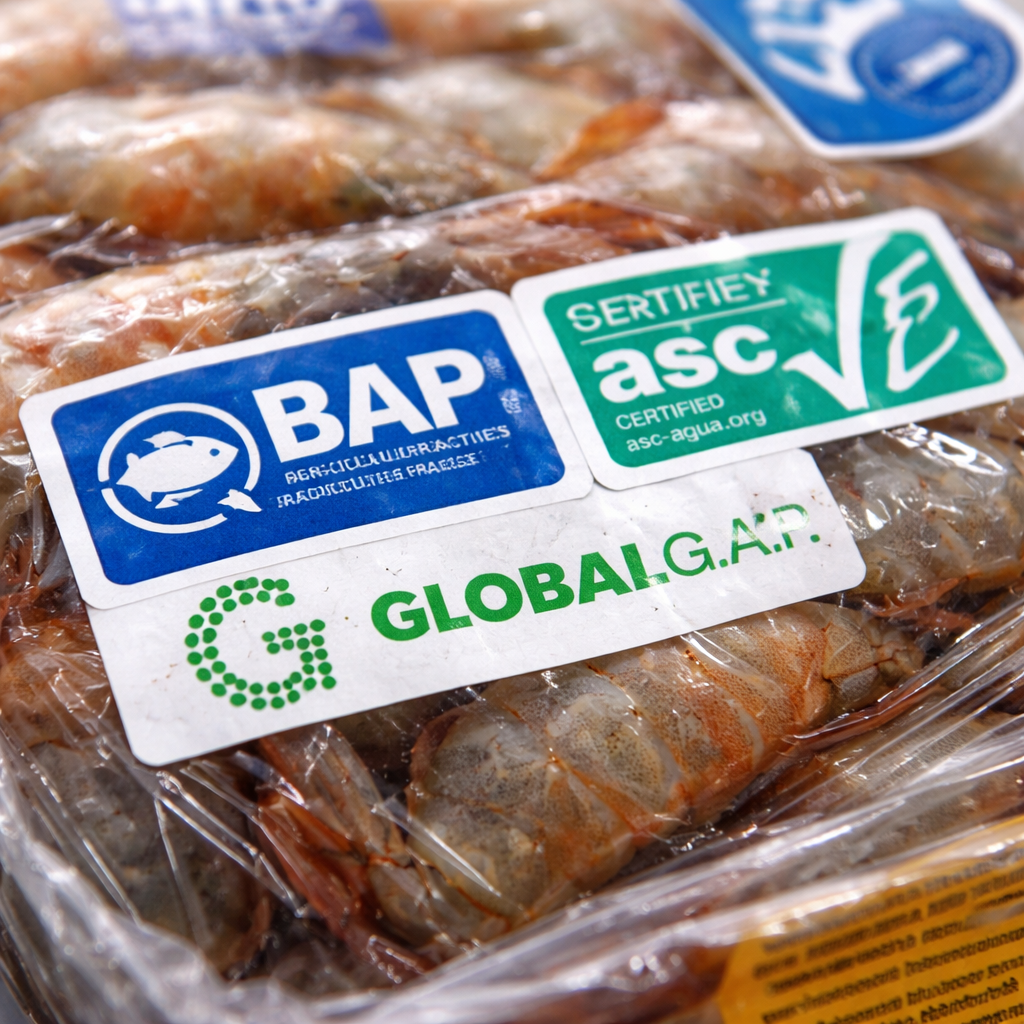
While HACCP and traceability form the operational foundation, third-party certifications serve as internationally recognized signals that separate premium Chinese seafood from standard products. Three certification schemes dominate global seafood markets: Best Aquaculture Practices (BAP), Aquaculture Stewardship Council (ASC), and GlobalGAP.
BAP certification, developed by the Global Aquaculture Alliance, takes a comprehensive four-star approach covering hatcheries, farms, processing plants, and feed mills. BAP-certified Chinese seafood facilities meet strict standards for environmental responsibility, social accountability, food safety, and animal welfare. The certification requires continuous improvement, with regular audits ensuring ongoing compliance. For shrimp, tilapia, and other farmed species from China, BAP certification signals that the entire production chain meets international best practices.
ASC certification focuses specifically on environmental sustainability and social responsibility in aquaculture. Established by the World Wildlife Fund and the Dutch Sustainable Trade Initiative, ASC standards are species-specific, recognizing that salmon farming differs fundamentally from shrimp production. ASC-certified Chinese aquaculture operations demonstrate responsible environmental stewardship—minimizing habitat destruction, controlling disease without excessive antibiotic use, and maintaining water quality. They also meet labor standards protecting worker rights and community relations.
GlobalGAP (Good Agricultural Practices) certification originated in European retail sectors and emphasizes on-farm food safety and sustainability. GlobalGAP-certified Chinese aquaculture facilities implement integrated pest management, maintain strict hygiene protocols, and document every input from feed to pharmaceuticals. The certification’s focus on farm-level practices makes it particularly valuable for buyers concerned about production origins rather than just processing standards.
Each certification scheme serves as a market entry signal. Major European retailers frequently require GlobalGAP certification from suppliers. North American buyers often prefer BAP’s comprehensive supply chain approach. Increasingly, chinese seafood export quality depends on holding multiple certifications, demonstrating commitment across different dimensions of responsibility and safety.
Navigating China-Specific Export Requirements
Understanding premium chinese seafood export quality requires recognizing China-specific compliance pathways. Beyond international certifications, Chinese seafood exporters must navigate domestic regulatory requirements that international buyers should verify.
First, facility registration with GACC represents a fundamental requirement. Every seafood processing facility exporting from China must complete GACC registration, undergoing facility inspections and demonstrating compliance with Chinese export standards. International buyers should verify that their Chinese suppliers hold current GACC registration—this isn’t optional paperwork but a legal prerequisite for export.
Second, export health certificates accompany every legitimate seafood shipment leaving China. These certificates, issued by authorized Chinese inspection bodies, attest that products meet both Chinese export standards and importing country requirements. The certificates document product details, processing methods, inspection results, and compliance with specific importing country regulations. Premium Chinese suppliers maintain meticulous certificate management systems, ensuring documentation accuracy and availability.
Third, third-party audit reports provide independent verification of facility conditions and systems. While Chinese regulatory inspections establish baseline compliance, premium exporters voluntarily undergo additional third-party audits from internationally recognized certification bodies. These audit reports, often required by international buyers, provide detailed facility assessments covering hygiene, processing controls, laboratory capabilities, and management systems.
Consider the documentation trail for a container of frozen Chinese tilapia destined for the United States. The exporter must provide: GACC facility registration evidence, export health certificates, HACCP plans and records, processing logs, traceability documentation, product testing results, and relevant third-party certification documents. This comprehensive documentation package differentiates premium suppliers who view compliance as fundamental to their business model from those treating it as bureaucratic burden.
At Jade Premium, our deep understanding of both Chinese regulatory systems and international market requirements allows us to guide buyers through these complexities. We verify supplier certifications, review documentation comprehensiveness, and ensure that Chinese seafood exports meet not just minimum standards but the elevated benchmarks that define premium products. Our extensive local network across major Chinese cities enables us to conduct on-site supplier assessments, verifying that documentation reflects actual facility conditions and operational practices.
Practical Buyer Guidance: Evaluating Chinese Seafood Suppliers
For international buyers, evaluating potential Chinese seafood suppliers requires systematic verification beyond marketing claims. Premium suppliers welcome scrutiny because their investments in quality systems, certifications, and compliance represent competitive advantages they’re proud to demonstrate.
Start with certification verification. Request copies of actual certificates rather than relying on website claims. Verify certificate validity by checking directly with certification bodies—most maintain online databases of certified facilities. Verify certificate validity by checking directly with certification bodies—most maintain online databases of certified facilities. Examine certificate scope carefully; a facility might hold BAP certification for shrimp but not tilapia, or GlobalGAP certification for farming but not processing.
Next, verify facility registration with Chinese authorities. Request the supplier’s GACC registration number and confirm its current status. This simple step eliminates non-compliant suppliers who shouldn’t be exporting at all. Chinese regulatory websites allow registration verification, though navigating them often requires Chinese language capabilities—another way experienced trade facilitators add value.
Demand comprehensive traceability data as part of supplier evaluation. Request sample documentation showing how the supplier traces products from origin through processing to shipment. Premium suppliers provide this information readily, often showcasing sophisticated tracking systems. Suppliers hesitant to share traceability documentation raise immediate red flags.
Independent product testing provides additional verification. Rather than relying solely on supplier-provided test results, consider engaging independent laboratories to test sample products for contaminants, residues, and quality parameters. Premium Chinese seafood consistently passes such testing because quality is built into their systems, not achieved through selective sampling.
Visit facilities when practical. Virtual tours have value, but nothing replaces physically observing operations. During facility visits, assess hygiene conditions, equipment maintenance, employee training, and whether documented procedures match actual practices. Premium Chinese seafood facilities operate transparently because they have nothing to hide and everything to showcase.
Request customer references and speak with existing buyers. Premium Chinese suppliers maintain long-term relationships with reputable international customers who can speak to product consistency, documentation reliability, and problem resolution. Suppliers lacking such references or reluctant to provide them warrant skepticism.
Certification Distinctions: A Buyer’s Perspective
From a procurement standpoint, understanding what different certifications signal helps match supplier capabilities with buyer priorities. BAP certification indicates comprehensive supply chain management, making it valuable when buyers need assurance covering everything from feed mills to final processing. The four-star BAP system allows buyers to understand exactly which supply chain stages hold certification.
ASC certification signals strong environmental and social commitments, appealing to buyers with sustainability mandates or retail customers demanding responsibly sourced seafood. ASC’s species-specific standards ensure that certification requirements genuinely reflect the environmental challenges of each aquaculture type rather than applying generic criteria.
GlobalGAP certification emphasizes on-farm practices and food safety from production origins, valuable for buyers particularly concerned about aquaculture conditions, feed inputs, and farming practices. GlobalGAP’s European origins make it especially relevant for suppliers targeting EU markets.
These certification distinctions align with Jade Premium’s philosophy of connecting authentic Chinese products with global markets through transparency and quality. We help international buyers understand not just what certifications exist but what they mean for specific sourcing needs. A buyer prioritizing environmental sustainability might emphasize ASC certification, while one focused on comprehensive supply chain integrity might favor BAP. Our role includes translating certifications from compliance checkboxes into meaningful indicators of supplier capabilities.
The best Chinese seafood suppliers increasingly hold multiple certifications, recognizing that different markets value different standards. A premium shrimp exporter might maintain BAP certification for North American customers, ASC certification for European sustainability-focused buyers, and GlobalGAP for major retail chains. This multi-certification approach reflects genuine quality commitment rather than merely meeting minimum market entry requirements.
Conclusion: Quality as Foundation, Not Feature
Premium chinese seafood export quality ultimately rests on a simple truth: quality cannot be inspected into products—it must be built into systems, culture, and operations. The certifications, documentation, and regulatory compliance discussed throughout this article represent visible manifestations of deeper commitments to food safety, environmental responsibility, and operational excellence.
For international buyers, understanding these hidden standards transforms seafood sourcing from uncertain gambles into informed decisions. Verifiable certifications, facility registration verification, comprehensive traceability, and independent testing together create a framework for identifying Chinese suppliers who treat quality as their foundation rather than a marketing feature.
At Jade Premium, we bridge Chinese food production excellence with global market demands by understanding both worlds deeply. Our commitment to natural, premium, and healthy products drives us to partner only with Chinese seafood suppliers who share our quality philosophy. We verify certifications, assess facilities, review documentation, and maintain ongoing supplier relationships that ensure consistency over time.
The cultural significance of Chinese seafood traditions—from freshwater aquaculture techniques refined over millennia to modern processing innovations—deserves recognition in international markets. Premium Chinese seafood represents not just a commodity but a culinary heritage meeting international standards through commitment to food safety, sustainability, and quality. By understanding the hidden standards separating premium products from the rest, international buyers gain access to exceptional seafood while supporting responsible Chinese producers.
The global seafood market increasingly rewards suppliers who invest in quality systems, embrace transparency, and meet rigorous standards. Chinese seafood exporters leading this transformation demonstrate that China’s role in global seafood trade extends beyond volume to encompass quality, responsibility, and innovation. For buyers willing to look beyond surface impressions and understand the standards that truly matter, premium Chinese seafood offers exceptional value backed by robust quality assurance.