
When you’re sourcing food products from China for international markets, one misstep in compliance can derail your entire business. A mislabeled allergen. A missing certificate. And a supplier who claimed organic certification but couldn’t prove it. These aren’t just paperwork problems— they’re costly mistakes that can trigger product recalls, legal battles, and irreparable damage to your brand reputation.
The stakes are particularly high when you’re dealing with authentic Chinese food products destined for Western markets. You’re navigating two different regulatory worlds, bridging cultural gaps in documentation practices, and managing suppliers who may be unfamiliar with international standards. This is where a comprehensive supplier compliance checklist becomes your first line of defense.
At Jade Premium, we’ve spent years helping international buyers source premium Chinese food products while maintaining rigorous compliance standards. We’ve seen firsthand how a systematic approach to supplier verification protects import businesses from the kinds of mistakes that keep food importers awake at night. The principles embedded in frameworks like Whole Foods’ supplier compliance checklist aren’t just best practices. They’re essential safeguards that separate successful international food trade from regulatory nightmares.
Understanding the Essential Elements of Supplier Compliance
A robust supplier compliance program goes far beyond checking boxes on a form. It’s about building a systematic approach that protects your business at every stage of the supply chain. Let’s break down the critical components that should anchor your compliance strategy.
Food Safety Readiness: Your Non-Negotiable Foundation
Food safety isn’t where you cut corners. When you’re importing Chinese dim sum, hotpot ingredients, or ready-to-eat meals to Western markets, you need absolute confidence that every product meets international food safety standards. This means verifying that your Chinese suppliers have proper HACCP plans in place, documented sanitation procedures, and active pest control programs.
Here’s what many importers miss: Chinese food manufacturers may have excellent safety practices but document them differently than Western auditors expect. Your compliance checklist must bridge this gap. When we work with buyers at Jade Premium, we verify that suppliers can demonstrate their safety protocols in formats that satisfy FDA, CFIA, or EU requirements—not just Chinese domestic standards.

Documentation: The Paper Trail That Protects You
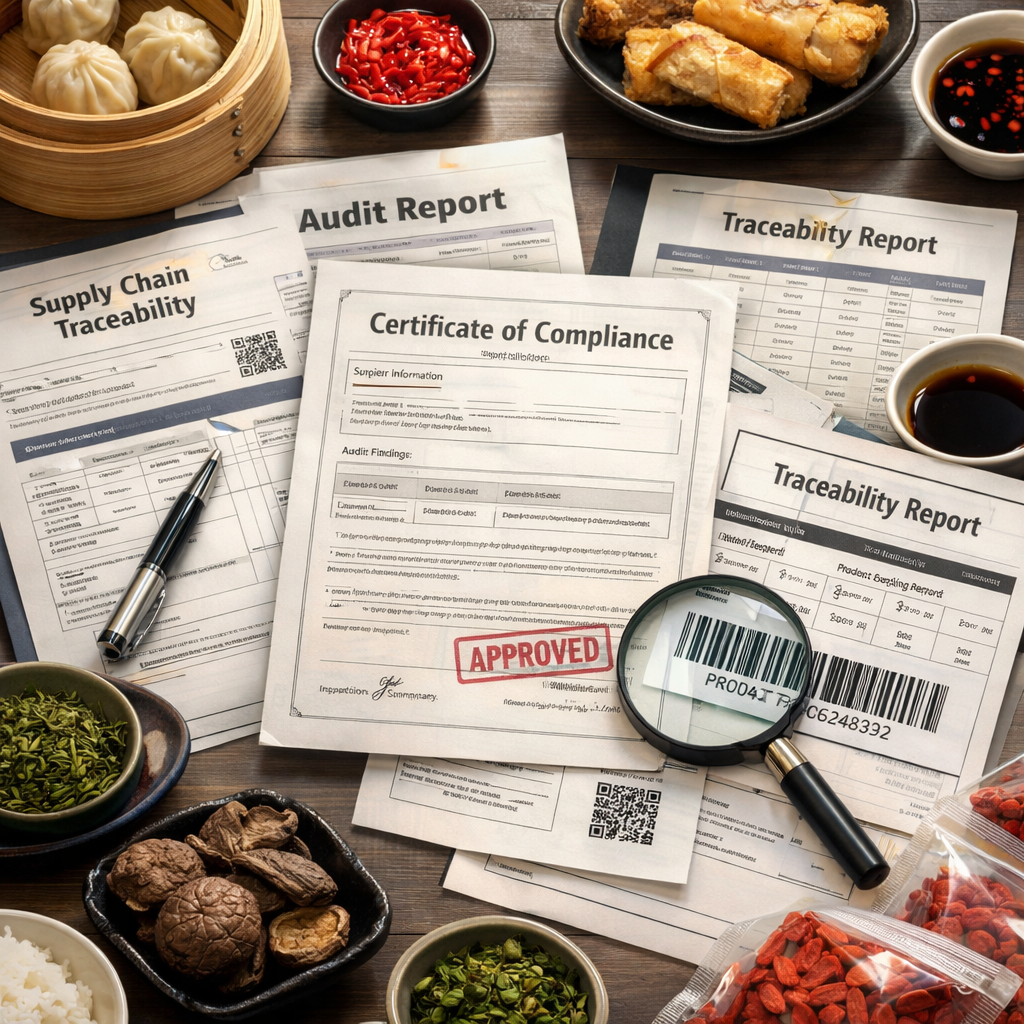
In international food trade, if it’s not documented, it didn’t happen. Your compliance checklist must demand comprehensive documentation from Chinese suppliers: Certificates of Analysis, allergen statements, ingredient declarations, and third-party audit reports.
But here’s the reality check: Many Chinese suppliers aren’t accustomed to the documentation standards expected in Western markets. They may have excellent products and processes but struggle with English-language documentation or don’t understand why buyers need certain certificates. This creates a dangerous gap where quality products fail to meet import requirements simply due to paperwork deficiencies.
A practical compliance checklist addresses this by specifying exactly which documents you need, in what format, and in what language. For example, when sourcing authentic Chinese sauces or processed foods, you need ingredient statements that clearly identify all components using internationally recognized names—not just Chinese terminology that customs officials won’t understand.
Supplier Verification: Know Who You’re Really Dealing With
This is where many import businesses get burned. A supplier looks legitimate online, provides impressive documentation, and quotes competitive prices. Then you discover they’re a trading company posing as a manufacturer, or their “certified facility” is actually a small workshop with borrowed credentials.
Your compliance checklist must include robust verification steps: physical facility audits, business license verification, production capacity confirmation, and reference checks with other international buyers. When you’re dealing with Chinese suppliers from across different cities—whether it’s seafood processors in coastal regions or meat suppliers in agricultural heartlands—local verification becomes essential.
This is one reason Jade Premium maintains offices in Hong Kong, Shenzhen, Guangzhou, Shanghai, Chengdu, Wuhan, and Changsha. We can physically verify suppliers, conduct unannounced facility visits, and provide boots-on-the-ground verification that protects our buyers from fraudulent suppliers. Your compliance program needs similar verification mechanisms—whether through local partners, third-party auditors, or direct site visits.
Codes of Conduct and Ethical Sourcing
Today’s international food buyers face increasing pressure to demonstrate ethical sourcing. Your customers want to know that the Chinese food products they’re purchasing weren’t produced using forced labor, child labor, or environmentally destructive practices.
Your supplier compliance checklist should include clear codes of conduct requirements: labor practices verification, environmental compliance, animal welfare standards (for meat and seafood products), and sustainable sourcing commitments. This is particularly important when sourcing from China, where Western buyers may face skepticism about production practices.
The key is making these requirements specific and verifiable. Don’t just ask suppliers to “comply with ethical standards”—define what that means in concrete terms and require documented evidence. For example, when sourcing premium meats from Chinese suppliers, specify animal welfare standards that align with international expectations and require third-party verification.
Product Integrity and Transparency
Product integrity means your Chinese dim sum actually contains what the label claims. Your hotpot ingredients match their specifications. And your ready-to-eat meals maintain consistent quality across production batches.
Your compliance checklist must include mechanisms for ongoing product testing, batch-to-batch consistency verification, and authenticity confirmation. This is especially critical for traditional Chinese food products where authenticity matters to your end customers. When a restaurant chain or retail buyer purchases “authentic Sichuan sauce” or “traditional Chinese dumplings,” they’re counting on you to verify that authenticity.
Transparency extends to understanding your entire supply chain. Where do your supplier’s raw materials come from? Who are their sub-suppliers? What happens if there’s a food safety issue—can you trace products back to specific production batches? Your compliance program should demand full supply chain visibility from your Chinese suppliers.
Legal Alignment: Meeting Every Market’s Requirements
Here’s where complexity multiplies. The Chinese food products you’re sourcing must comply with regulations in the destination market—whether that’s FDA requirements for the United States, CFIA standards for Canada, or EU food safety regulations. These requirements often differ significantly, and Chinese suppliers may be unfamiliar with them.
Your compliance checklist must translate international requirements into specific supplier obligations. For example, the Food Safety Modernization Act (FSMA) requires importers to verify that foreign suppliers have adequate preventive controls in place. This means your Chinese suppliers need FSMA-compliant programs—not just Chinese domestic food safety standards.
When you’re importing Chinese products to North American or European markets, you’re also dealing with allergen labeling requirements, nutritional panel formats, ingredient declaration standards, and country-of-origin marking rules. Each destination market has specific requirements, and your compliance program must ensure Chinese suppliers understand and meet them.
Facility Risk Management
Not all supplier facilities present equal risk. A large, certified food processing plant with international export experience differs vastly from a smaller regional producer making their first international sale. Your compliance checklist should include risk assessment criteria that help you identify and manage facility-specific risks.
Consider factors like facility certifications (BRCGS, SQF, ISO 22000), export experience with similar markets, track record with international audits, and investment in quality systems. Higher-risk facilities require more intensive verification and monitoring. Lower-risk facilities still need oversight but may not demand the same level of scrutiny.
This risk-based approach lets you allocate compliance resources efficiently while protecting your business from the costly mistakes that stem from working with unsuitable suppliers.
Practical Steps for Implementing Your Compliance Program
Understanding compliance elements is one thing. Actually implementing a program that protects your import business is another. Let’s walk through practical steps that align your operations with proven compliance frameworks.
Start With Comprehensive Supplier Qualification
Before you place your first order, conduct thorough supplier qualification. This isn’t a quick online search—it’s a systematic evaluation process. Create a qualification questionnaire that covers all critical compliance areas: food safety systems, documentation capabilities, certification status, export experience, and production capacity.
For Chinese suppliers, add specific questions about their understanding of international requirements. Can they provide English-language documentation? Have they worked with international auditors? Do they understand destination market regulations? These questions help you identify suppliers who are truly ready for international trade versus those who will create compliance headaches.
When we qualify suppliers at Jade Premium, we conduct this evaluation in person whenever possible. There’s no substitute for walking through a facility, observing actual production practices, and meeting the management team face-to-face. If you can’t do this yourself, partner with someone who has local presence in China and can conduct these evaluations on your behalf.
Develop Robust Verification and Traceability Plans
FSMA compliance requires importers to have verification programs for foreign suppliers. But even if you’re not importing to the United States, verification programs protect your business. Create a written verification plan that specifies how you’ll confirm your Chinese suppliers maintain adequate food safety controls.
This plan should include periodic testing of imported products, review of supplier food safety records, on-site audits or inspections, and monitoring of performance indicators. For higher-risk products or suppliers, verification activities should be more frequent and intensive.
Traceability is equally critical. You need systems that let you trace products from the Chinese supplier through your import process to the final customer. If there’s a food safety issue, you must be able to quickly identify affected products and their location. Work with Chinese suppliers to establish lot coding systems, implement record-keeping protocols, and create traceability procedures that meet international standards.
Prioritize Ethical Sourcing and Social Responsibility
Today’s food importers can’t afford to ignore ethical sourcing. Build social responsibility requirements into your supplier compliance program from the start. Define your expectations clearly: labor standards, environmental practices, animal welfare commitments, and community impact.
For Chinese suppliers, provide education about why these issues matter to international buyers. What seems like unnecessary bureaucracy to a Chinese manufacturer may be a deal-breaker for Western retail chains or food service operators. Help suppliers understand that meeting ethical sourcing standards opens doors to premium markets and long-term partnerships.
Verification is essential here too. Don’t just accept supplier declarations—conduct audits, review documentation, and verify practices. Third-party social compliance audits can provide independent verification that protects your reputation and satisfies customer requirements.
Create Continuous Improvement Mechanisms
Compliance isn’t a one-time achievement—it’s an ongoing commitment. The best supplier compliance programs include mechanisms for continuous improvement. Establish regular review cycles where you assess supplier performance, identify gaps, and implement corrective actions.
At Jade Premium, we believe in building long-term partnerships with both buyers and suppliers. This philosophy drives our approach to compliance: we work with Chinese suppliers to help them improve their systems, understand international requirements better, and consistently meet higher standards. This continuous improvement mindset aligns with our vision of deepening the integration of global premium food resources while improving service quality.
Share audit findings with suppliers, provide guidance on addressing deficiencies, and recognize suppliers who demonstrate strong compliance performance. This collaborative approach builds stronger relationships and creates a culture where compliance becomes part of how everyone works—not just a burden imposed by buyers.
Leverage Technology for Compliance Management
Managing supplier compliance across multiple Chinese suppliers, various product categories, and different destination markets creates complexity that spreadsheets can’t handle. Invest in compliance management systems that centralize supplier information, track audit schedules, manage documentation, and flag issues requiring attention.
Technology also enables better communication with Chinese suppliers. Cloud-based systems let suppliers upload documentation, receive feedback, and track their compliance status in real-time. This transparency reduces misunderstandings and helps suppliers stay on top of requirements.
Consider implementing blockchain or similar technologies for enhanced traceability. When you can demonstrate complete supply chain transparency—from the farm in China through processing, export, import, and distribution—you build trust with buyers and protect your business from supply chain fraud.
Building Trust Through Systematic Compliance
In international food trade, trust is everything. Your retail buyers, food service customers, and distribution partners trust you to deliver safe, compliant, authentic products consistently. That trust is built on the foundation of rigorous supplier compliance.
When you implement a comprehensive compliance checklist aligned with frameworks like Whole Foods’ supplier standards, you’re doing more than protecting yourself from costly mistakes. You’re demonstrating professionalism that sets you apart from importers who take shortcuts. You’re building credibility that opens doors to premium customers who demand high standards. And you’re creating systems that scale as your business grows.
This systematic approach aligns perfectly with Jade Premium’s mission of bridging authentic Chinese cuisine with global markets. We understand that international buyers need more than just access to Chinese suppliers—they need a trusted partner who ensures every product meets the stringent standards their customers expect. By maintaining comprehensive compliance programs, we protect our buyers from the regulatory nightmares, product recalls, and reputation damage that plague less diligent importers.
The whole foods supplier compliance checklist provides a proven framework for managing the complex requirements of international food trade. Whether you’re importing premium Chinese meats, authentic dim sum, traditional sauces, or innovative ready-to-eat meals, these compliance principles protect your business and enable sustainable growth.
In the end, a robust compliance program isn’t just about avoiding mistakes—it’s about building a business that earns trust, delivers value, and creates lasting partnerships across borders. It’s about bringing authentic Chinese cuisine to global tables with the confidence that every product meets the highest standards of safety, quality, and integrity. That’s not just good compliance—it’s good business.