
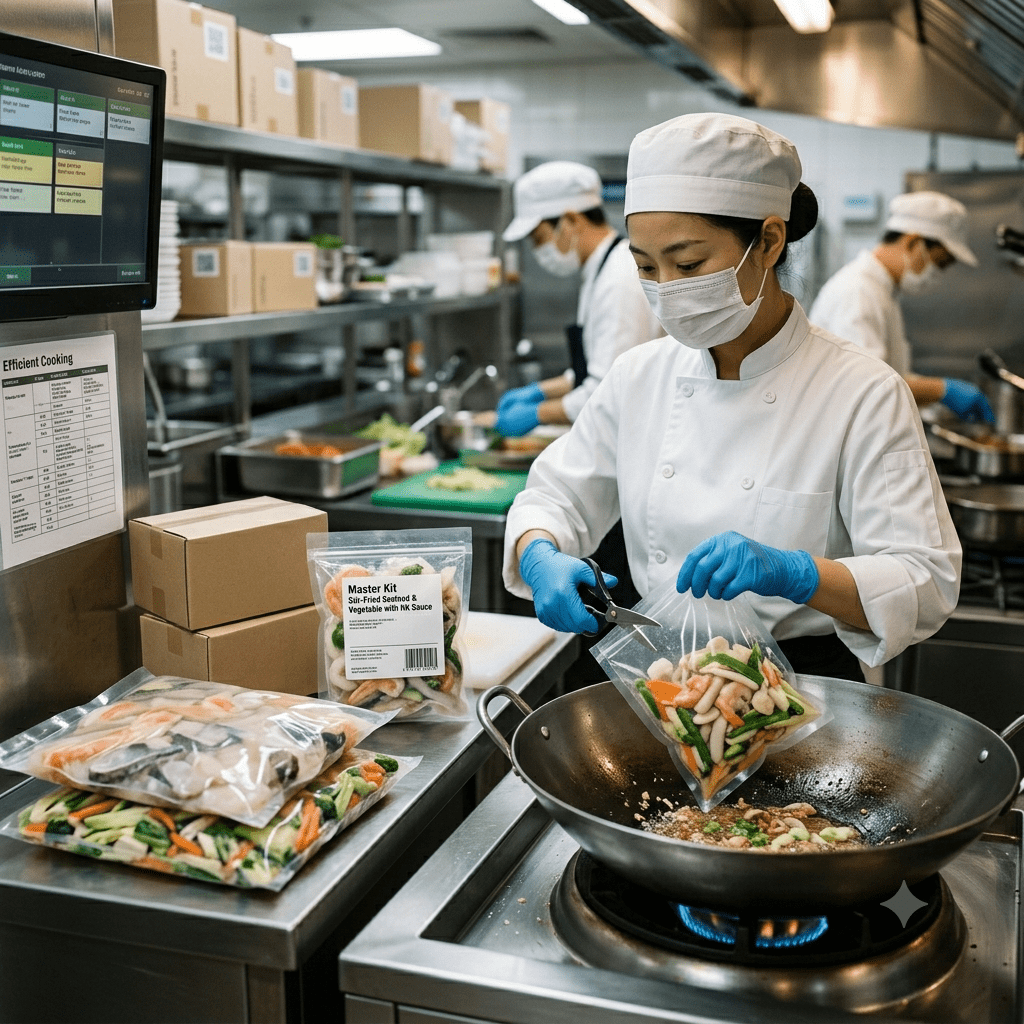
Singapore’s foodservice operators are under pressure to serve authentic Chinese dishes faster, with leaner kitchen teams and tighter margins. Ready to cook Chinese products, sourced from a reliable Chinese food supplier, are becoming a practical way to cut prep time without compromising on taste or food safety.
Why Singapore Foodservice Is Turning to Ready-to-Cook
Singapore imports more than 90% of its food supply, so operators already rely heavily on international sourcing to keep menus consistent and resilient against disruption. At the same time, the consumer foodservice sector reached about US$9.4 billion in sales in 2023, with growth driven by convenience, delivery and evolving dining habits.
Dining out is deeply embedded in local life: in a 2024 survey, 40% of Singaporeans said they dined out several times a week, and 20% ate out at least once a day. Labour constraints and rising costs mean many kitchens can no longer afford fully manual mise en place for every wok, steamer and fryer station, especially for multi-outlet brands and high-volume concepts.
For Chinese cuisine specifically, demand is expanding as more China-based restaurant brands and concepts establish outlets in Singapore, adding to competition and raising the bar on authenticity and speed of service. This combination of heavy import reliance, labour constraints and intense competition is pushing buyers to look at ready to cook Chinese food wholesale solutions.
What “Ready to Cook” Means for Chinese Menus
In a Chinese foodservice context, “ready to cook” typically refers to products that are fully prepped and seasoned, requiring only a final cooking step in the kitchen. These SKUs are designed to integrate into your existing recipes and operational flow, not replace your brand’s culinary identity.
Common Ready-to-Cook Chinese Categories
For Singaporean buyers, core ready-to-cook Chinese categories often include:
- Frozen dim sum and festive snacks (e.g., dumplings, buns, spring rolls) that go straight from freezer to steamer or fryer.
- Wok-ready proteins such as pre-marinated sliced beef, chicken or pork sized for quick stir-fry.
- Pre-battered or pre-fried items like sweet-and-sour pork pieces or crispy chicken for sauces to be added in-house.
- Soup bases, broths and concentrated sauces that let you finish signature dishes with your own garnishes and adjustments.
The global ready-to-eat and convenience-food market in Singapore is already growing, with the ready-to-eat meals segment alone expected to reach around US$124.76 million in 2025, growing at an estimated 3.35% annually through 2030. This broader shift toward convenient, prepared products creates a supportive environment for ready-to-cook solutions tailored to foodservice.
Operational Benefits for Central Kitchens, QSR and Catering
When planned correctly, ready-to-cook Chinese products can:
- Reduce on-site prep time and skill dependency by moving labour-intensive marination, cutting and par-cooking steps upstream to the factory.
- Improve portion control and yield, with consistent piece sizes, weights and marinade coverage in every bag or carton.
- Stabilise quality across outlets by using the same base product and cooking parameters, especially for chains and franchise models.
For central kitchens serving multiple outlets across Singapore, importing standardised ready-to-cook bases allows you to concentrate specialist labour (for finishing sauces, plating and localised touches) where it adds maximum value. This is particularly useful as the foodservice market scales with delivery platforms and multi-channel operations.
The Authenticity Question: Can Ready-to-Cook Still Taste “Like Home”?
A common concern among chefs and buyers is whether ready-to-cook Chinese products can deliver the depth of flavour that guests expect from wok-fried or steamed dishes cooked from scratch. Authenticity, however, is not inherently at odds with factory-prepared components if product development is done properly.t’s get practical. International food importers and distributors need more than culinary poetry—they need replicable processes that scale. Creating Lion’s Mane “crab” cakes or seafood-style sauces involves straightforward steps that maintain clean-label integrity while delivering restaurant-quality results. This isn’t molecular gastronomy requiring centrifuges and liquid nitrogen; it’s intelligent cooking that respects the ingredient.
Questions to Ask Your Ready-to-Cook Partner
When you evaluate a ready to cook & Chinese food supplier, it is helpful to probe beyond their product catalogue:
- Product scope: Which Chinese categories do they specialise in (dim sum, hotpot items, wok-ready meats, sauces)? Can they support your full menu roadmap or only a narrow slice?
- Quality and compliance: Which certifications do their factories hold (HACCP, ISO 22000, FDA, IFS)? How frequently are audits performed, and can you access reports or summaries?
- Capacity and lead times: What is their monthly output capacity for core SKUs, and how do they handle surge demand during festive peaks or menu promotions?
- Supply chain support: Can they assist with documentation, shipping and customs clearance into Singapore, or will you need a separate logistics partner?
These questions help distinguish between a basic exporter and a strategic foodservice partner who understands the realities of Singapore’s fast-moving F&B scene.
Where Ready-to-Cook Chinese Food Adds the Most Value in Singapore
Not every dish or outlet needs ready-to-cook solutions, but some use cases in Singapore are especially favorable.
- Quick-service and fast-casual Chinese concepts – where speed, consistency and labour-light operations are critical to unit economics.
- Multi-outlet restaurant groups and franchises – that need to standardise brand experience across neighbourhoods, malls and delivery kitchens.
- Cloud and dark kitchens – operating in smaller spaces with limited cold and prep areas, yet handling high order volumes via platforms.
- Catering and institutional foodservice – which require scale, food safety assurances and predictable yields for large groups.
As tech-enabled delivery and out-of-home consumption grow, ready-to-cook solutions help operators keep up without over-extending their in-house prep capacity. For Chinese cuisine in particular, they offer a way to replicate complex flavours at scale while leaving room for each operator’s finishing touches.
Working with Jade Premium
LThis is exactly the space where Jade Premium operates. We work with international buyers and Singapore-based importers who want to source authentic, ready to cook Chinese food products from trusted manufacturers in China — whether you need foodservice bulk SKUs, a private-label range, or a custom development tailored to your menu and central kitchen.
We help you identify the right factories for categories such as frozen dim sum, wok-ready meats, hotpot items and sauces, verify their certifications (HACCP, ISO 22000, FDA, IFS) and production standards, align product specifications with Singapore’s regulatory requirements, and manage end-to-end logistics from China to your warehouse. Our role is to ensure that your ready-to-cook Chinese portfolio delivers on authenticity, safety and operational efficiency, while fitting seamlessly into your existing sourcing and menu strategy.
If you are exploring how ready to cook Chinese food wholesale can support your next phase of growth in Singapore — whether for restaurant chains, cloud kitchens, catering or retail foodservice — we would welcome the conversation. Visit https://jadepremium.com and reach us through the Contact Us page to discuss your specific requirements.