
- The New Wave: Functional Foods and Modern Interpretations
- Regulatory Evolution: Building Trust Through Standards
- Consumer Behaviors: The Digital-First Marketplace
- Global Opportunities: China's Export Advantages
- Navigating Risks: Challenges in Chinese Food Exports
- Quick-Win Actions: Capitalizing on China's Food Innovation
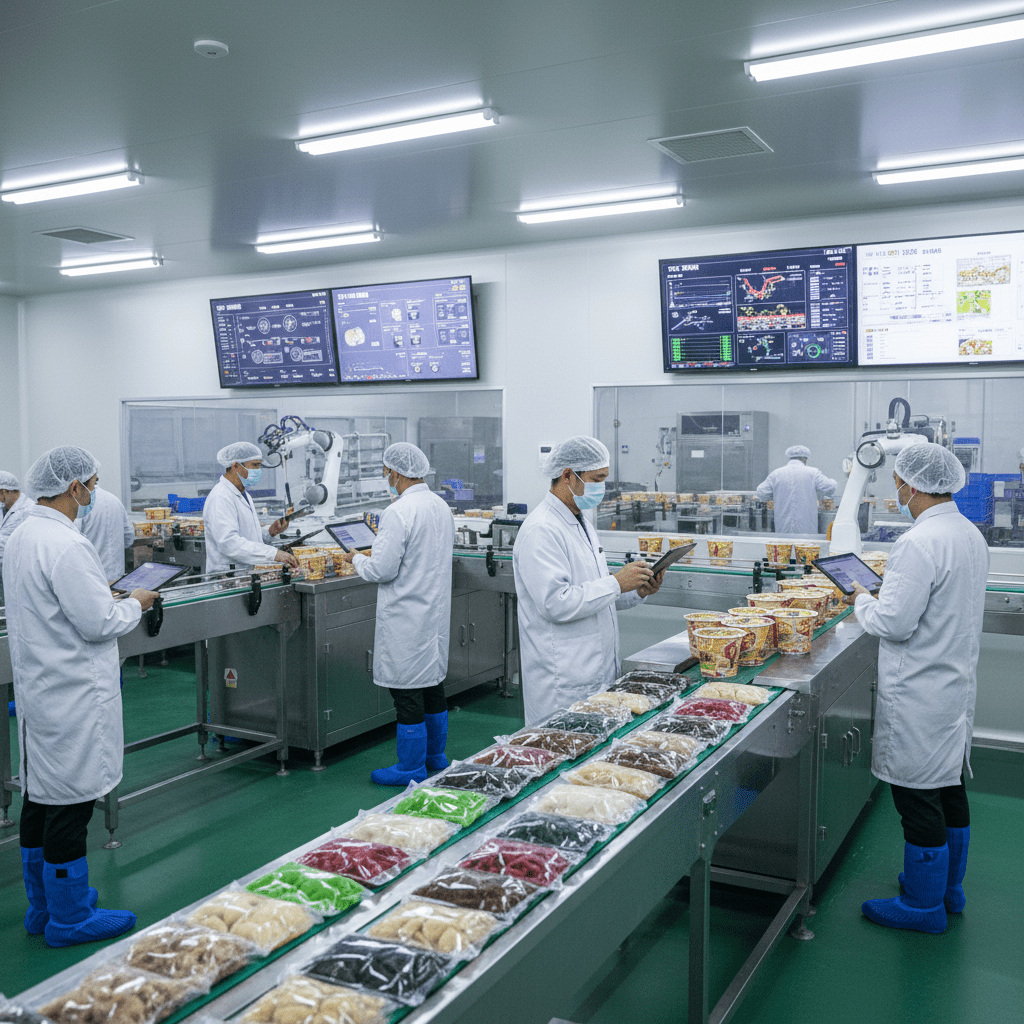
The global food landscape is undergoing a profound transformation, and China sits at the epicenter of this change. In 2025, Chinese food innovation has evolved far beyond traditional exports of noodles and soy sauce. Today, it represents a sophisticated fusion of ancient culinary wisdom and cutting-edge food technology that’s capturing the attention of international buyers, distributors, and consumers worldwide.
Three powerful forces are driving this revolution. First, digitalization has transformed how Chinese food producers operate, from farm-to-fork traceability systems to AI-powered quality control. Second, urbanization drives Chinese demand for premium, health-focused exports. Third, China’s evolving regulatory framework has matured into one of the world’s most comprehensive food safety systems, giving international buyers confidence in Chinese products.
What makes China food innovation particularly exciting in 2025 is its focus on health and premium quality. Chinese producers are no longer competing on price alone. They’re competing on innovation, safety, and the cultural stories behind their products. This shift mirrors what consumers worldwide are seeking: authentic, traceable, and meaningful food experiences. For international importers and food service operators, this represents an unprecedented opportunity to diversify their offerings with products that resonate with modern consumer values.
The New Wave: Functional Foods and Modern Interpretations
Walk into any international food expo in 2025, and you’ll notice something remarkable about Chinese exhibitors. Alongside traditional dim sum and hotpot ingredients, you’ll find innovative products that blur the lines between food and wellness. This is China food innovation in action—a strategic pivot toward functional foods that deliver specific health benefits beyond basic nutrition.
Functional foods from China now encompass everything from immunity-boosting mushroom extracts to fermented foods rich in probiotics. Chinese producers have discovered the potential in their traditional ingredients like goji berries, cordyceps and ginseng. These ingredients perfectly align with global wellness trends. The genius lies in modern packaging and presentation. These aren’t marketed as exotic curiosities but as serious functional ingredients backed by scientific research and quality certifications.
Plant-based proteins represent another frontier where Chinese innovation shines. While soy-based products have been staples of Chinese cuisine for millennia, today’s offerings are radically different. Chinese manufacturers are developing pea protein isolates, mung bean proteins, and innovative mushroom-based meat alternatives that rival Western plant-based brands in texture and taste. These products aren’t attempting to mimic Western food; instead, they offer authentic Chinese flavor profiles in convenient, health-conscious formats.
Smart packaging has become a differentiator for Chinese food exports. Temperature-sensitive indicators, QR codes linking to production videos, and modified atmosphere packaging that extends shelf life without preservatives. These technologies address the primary concerns of international buyers: safety, transparency, and quality maintenance during long-distance shipping. Ready-to-eat and ready-to-cook solutions have also gained traction. Chinese producers recognize that international consumers want authentic experiences without complexity. Pre-marinated proteins, portion-controlled dim sum, and complete hotpot kits bring restaurant-quality Chinese cuisine into homes worldwide, opening new distribution channels beyond traditional ethnic grocery stores into mainstream retail.
Regulatory Evolution: Building Trust Through Standards
China’s food regulatory landscape in 2025 reflects a government deeply committed to protecting consumers and facilitating international trade. The National Health Commission and State Administration for Market Regulation have rolled out comprehensive standards that govern everything from production facilities to labeling requirements. For international buyers, this regulatory maturation means Chinese products now meet or exceed international expectations.
The General Administration of Customs of China (GACC) has become increasingly stringent. In August 2025 alone, GACC rejected 617 batches of food imports that failed to meet standards. It’s a clear signal of how strictly China regulates food safety at its borders, reinforcing the compliance expectations Chinese exporters themselves must operate under. This reciprocal approach has elevated the entire industry. Chinese exporters know that maintaining international certifications isn’t optional; it’s the baseline for market access.
Compliance in 2025 centers on several key areas. First, traceability systems must document every step from raw material sourcing to final packaging. Blockchain-based tracking systems have become increasingly common among premium Chinese exporters, providing immutable records that satisfy the most demanding international auditors. Second, testing protocols now mirror international standards. Chinese facilities routinely test for pesticide residues, heavy metals, microbiological contamination, and allergens, with results typically available to buyers upon request or as part of commercial compliance documentation.
The revised General Principles for the Labeling of Prepackaged Foods (GB7718-2025) exemplifies how Chinese regulations are evolving to support global trade. These standards ensure Chinese products carry information that aligns more closely with what international consumers expect: clear ingredient lists, allergen warnings, nutritional facts, and origin declarations. For businesses like Jade Premium that bridge Chinese production and international markets, these regulations simplify the compliance transformation process, making it easier to prepare Chinese products for diverse international markets.
Consumer protection sits at the heart of China’s regulatory philosophy. The amended food safety law introduces licensing systems for transportation and storage, ensuring product integrity throughout the supply chain. This comprehensive approach gives international buyers confidence that Chinese products maintain quality from factory gate to final destination. The regulatory environment, rather than being a barrier, has become an enabler of china food innovation by establishing clear, predictable standards that serious exporters can meet.
Consumer Behaviors: The Digital-First Marketplace
Understanding consumer behavior in 2025 requires recognizing that the marketplace has fundamentally transformed. Chinese consumers—and increasingly, international buyers of Chinese products—expect digital integration at every touchpoint. E-commerce platforms aren’t simply sales channels; they’re discovery engines where consumers learn about products, verify quality, and make informed purchasing decisions.
Traceability has shifted from a nice-to-have feature to an absolute requirement. Consumers scan QR codes on packaging to watch videos of tea leaves being harvested, see certification documents, and read about the farmers who grew their ingredients. This transparency builds trust and transforms commodities into premium products with compelling stories. International distributors who understand this dynamic can command higher margins by emphasizing the provenance and quality assurance behind Chinese food products.
Social commerce has exploded in China, and its influence extends to international markets through diaspora communities and food enthusiasts. Livestream shopping events feature chefs demonstrating products, producers explaining their crafts, and real-time purchasing. This model is migrating to international markets, where influencers introduce audiences to authentic Chinese ingredients and preparation methods. For food service operators, this trend creates opportunities to connect with consumers before they visit restaurants, building anticipation and educating diners about authentic Chinese cuisine.
Distribution channels have diversified beyond traditional grocery stores. Direct-to-consumer models, subscription boxes focused on Asian ingredients, and partnerships with meal kit services are bringing Chinese food products to new audiences. Health food stores now stock Chinese functional ingredients alongside Western supplements. This channel expansion requires Chinese exporters to adapt packaging sizes, provide multilingual information, and understand varying regulatory requirements across markets—exactly the type of comprehensive support that experienced trade facilitators provide.
The rising demand for premium, traceable products represents a golden opportunity for foreign brands considering the Chinese market and Chinese exporters targeting international markets. Consumers worldwide are willing to pay premiums for products that deliver on quality, safety, and authenticity. Chinese producers who can document their quality systems, share compelling origin stories, and demonstrate consistent standards are perfectly positioned to capture this demand.
Global Opportunities: China’s Export Advantages
Chinese food exports in 2025 present extraordinary opportunities for international importers, distributors, and food service operators willing to look beyond stereotypes. The competitive advantages are substantial: unmatched production scale, competitive pricing without compromising quality, and access to ingredients and flavor profiles that remain unavailable from other sources.
Sustainability has become a core strength of leading Chinese food exporters. Many producers have implemented regenerative agriculture practices, reduced packaging waste, and achieved carbon-neutral certifications. These aren’t token gestures—they’re strategic responses to international buyer requirements and consumer expectations. For European and North American markets where sustainability is increasingly regulated, Chinese suppliers who’ve already made these investments offer competitive advantages over producers from countries with less stringent environmental standards.
Safety and quality control represent another competitive edge. The best Chinese food manufacturers have adopted HACCP systems, achieved ISO certifications, and implemented quality management systems that rival any global standard. Many facilities serving international markets exceed local Chinese requirements, recognizing that maintaining premium standards opens doors to the most lucrative markets. Regular third-party audits, transparent documentation, and proactive communication about quality measures have become standard practices among serious exporters.
Scalability is perhaps China’s most underappreciated advantage. Whether an international buyer needs container loads or full vessel shipments, Chinese producers can scale production while maintaining consistency. This scalability allows smaller international brands to test products without massive commitments, then scale rapidly if markets respond positively. The infrastructure supporting Chinese food exports has matured to support seamless international trade. This includes advanced cold chain logistics, specialized shipping containers, and efficient customs processing.
Authenticity combined with innovation positions Chinese food exports uniquely. International consumers increasingly seek genuine cultural experiences through food. Chinese exporters aren’t creating fusion products for Western tastes. They’re exporting authentic products and educating international markets about proper usage and cultural significance. This authenticity, combined with modern packaging and quality assurance, appeals to both Asian diaspora communities seeking nostalgic flavors and adventurous consumers exploring new cuisines.
For Jade Premium and similar facilitators, the opportunity lies in connecting international buyers with Chinese producers who meet these elevated standards. The challenge is no longer about finding Chinese products. It has shifted to identifying producers with the right systems and global orientation for demanding markets. Our extensive network across major Chinese production centers and deep understanding of both Chinese capabilities and international requirements allow us to make these critical connections efficiently.
Navigating Risks: Challenges in Chinese Food Exports
Despite tremendous opportunities, exporting Chinese food products involves real challenges that demand careful navigation. Regulatory changes top the list of concerns. The constant evolution of food safety regulations in major markets creates moving targets for exporters. Key drivers include Europe’s Farm to Fork strategy, U.S. FDA modernization, and stricter standards in Southeast Asia and the Middle East.
The August 2025 rejection of 617 import batches by Chinese customs illustrates how quickly compliant products can become non-compliant. A formulation that met standards six months ago might fail current tests due to updated pesticide limits or new testing methodologies. International buyers face similar risks when importing from China if they don’t have robust systems for monitoring regulatory changes and ensuring suppliers adapt accordingly.
Food safety expectations vary dramatically across international markets. What’s acceptable in one market may be prohibited in another. Certain food additives commonly used in Chinese production are banned in European markets. Packaging materials approved in China might not meet U.S. FDA standards for food contact. Labeling requirements differ not just between countries but sometimes between regions within countries. Managing this complexity requires expertise that most producers and importers lack.
Competition has intensified as china food innovation succeeds. More Chinese producers are entering export markets, and established players are expanding capacity. This competition benefits buyers through better pricing and more choices, but it also creates challenges in differentiating quality suppliers from those cutting corners. The race to the bottom on pricing tempts some buyers to compromise on quality, potentially damaging their brand reputations and customer relationships.
Strategies for addressing these challenges begin with choosing the right partners. Working with experienced trade facilitators who understand both Chinese production realities and international market requirements dramatically reduces risk. These partners monitor regulatory changes, verify supplier compliance, and provide candid assessments of whether specific products can succeed in target markets. They serve as early warning systems, identifying potential issues before they become expensive problems.
Investing in relationships with Chinese producers pays dividends. Suppliers who understand a buyer’s specific market requirements and quality expectations can adapt more quickly to changes. Regular communication, periodic facility visits, and collaborative problem-solving build partnerships that weather inevitable challenges. The most successful international buyers treat Chinese suppliers as extensions of their own operations, sharing market intelligence and providing feedback that helps producers improve.
Documentation and verification systems must be robust. Never assume compliance—verify through third-party testing, review certificates thoroughly, and maintain detailed records of all quality measures. Build redundancy into supply chains so that if one supplier encounters problems, alternatives exist. Diversification across multiple producers reduces concentration risk while creating healthy competition that incentivizes quality maintenance.
Quick-Win Actions: Capitalizing on China’s Food Innovation
For brands and businesses ready to capitalize on china food innovation, several immediate actions can accelerate success. First, align product selection with health and wellness trends. International consumers are prioritizing functional benefits, clean labels, and natural ingredients. Chinese products with inherent strengths offer exporters quick entry points. Categories like mushroom extracts, fermented foods, and herbal teas come with built-in consumer appeal.
Ensuring compliance before committing to shipments is non-negotiable. Engage food safety consultants or experienced trade partners to conduct gap analyses identifying regulatory hurdles before they become barriers. Review certifications, verify testing protocols, and confirm traceability systems meet target market requirements. This due diligence phase, while time-consuming, prevents costly mistakes and delays.
Storytelling transforms products from commodities into premium offerings. Every Chinese food product carries a story rooted in its region and tradition. This story is told through its ingredients, preserved methods, and family businesses upholding culinary heritage. Collect these stories, document them with photos and videos, and integrate them into marketing materials. Consumers connect emotionally with narratives about real people and authentic traditions. For food service operators, these stories become menu descriptions that educate diners and justify premium pricing.
Building relationships with knowledgeable trade facilitators accelerates market entry. Organizations like Jade Premium, with offices across major Chinese production centers and deep networks of verified suppliers, eliminate months of searching and vetting. We understand which producers can meet international standards, which products have genuine export potential, and how to navigate complex compliance requirements efficiently. Our integrated supply chain solutions reduce the risks and complexity of cross-border food trade. They encompass everything from sourcing verification to logistics optimization and quality control.
Testing small before scaling large is prudent strategy. Start with limited SKUs and modest volumes, gather market feedback, and refine offerings before major commitments. This approach minimizes financial risk while providing real-world data about consumer acceptance, pricing sensitivity, and operational challenges. Many successful importers of Chinese products began with single containers, validated demand, then scaled to regular shipments.
The Chinese food innovation story in 2025 is about possibility. The possibility of introducing international consumers to authentic Chinese flavors and functional ingredients that enhance their lives, the possibility of building profitable businesses based on cultural exchange and mutual benefit, and the possibility of participating in one of the most dynamic segments of global food trade. For those willing to approach the market thoughtfully, partner strategically, and commit to quality, the opportunities are extraordinary. China’s food exports aren’t just reshaping global menus; they’re redefining what’s possible when ancient culinary wisdom meets modern food innovation.