
When a chef in Paris prepares authentic Chinese dumplings or a restaurant in Melbourne serves genuine Sichuan hotpot, few diners realize the sophisticated journey those ingredients have traveled. Behind every plate of authentic Chinese cuisine served internationally lies a complex, carefully orchestrated supply chain that bridges continents, cultures, and culinary traditions. This isn’t just about moving products—it’s about preserving authenticity, ensuring quality, and connecting global markets with the rich heritage of Chinese food culture.
At Jade Premium, we’ve witnessed firsthand how China’s foodservice supply chain has evolved into one of the world’s most dynamic systems for delivering fresh, premium ingredients to international markets. Since our establishment in 2015, we’ve positioned ourselves as a bridge connecting authentic Chinese cuisine with global tables, helping international food importers, retail chains, and food service operators access the quality ingredients they need. Our presence across Hong Kong, Shenzhen, Guangzhou, Shanghai, Chengdu, Wuhan, and Changsha gives us unique insight into how China’s foodservice supply chain operates—from the farms where ingredients originate to the restaurants where they’re transformed into memorable dining experiences.
Understanding this supply chain matters because China isn’t just feeding its own massive population of 1.4 billion people. It’s increasingly becoming a source of premium, authentic ingredients for global markets. A significant portion of China foodservice market growth is driven by international demand for authentic Chinese ingredients. Whether you’re a restaurant operator seeking genuine Chinese sauces, an importer looking for quality frozen dim sum, or a retail buyer interested in premium Chinese seafood, understanding how this supply chain maintains freshness and quality is essential.
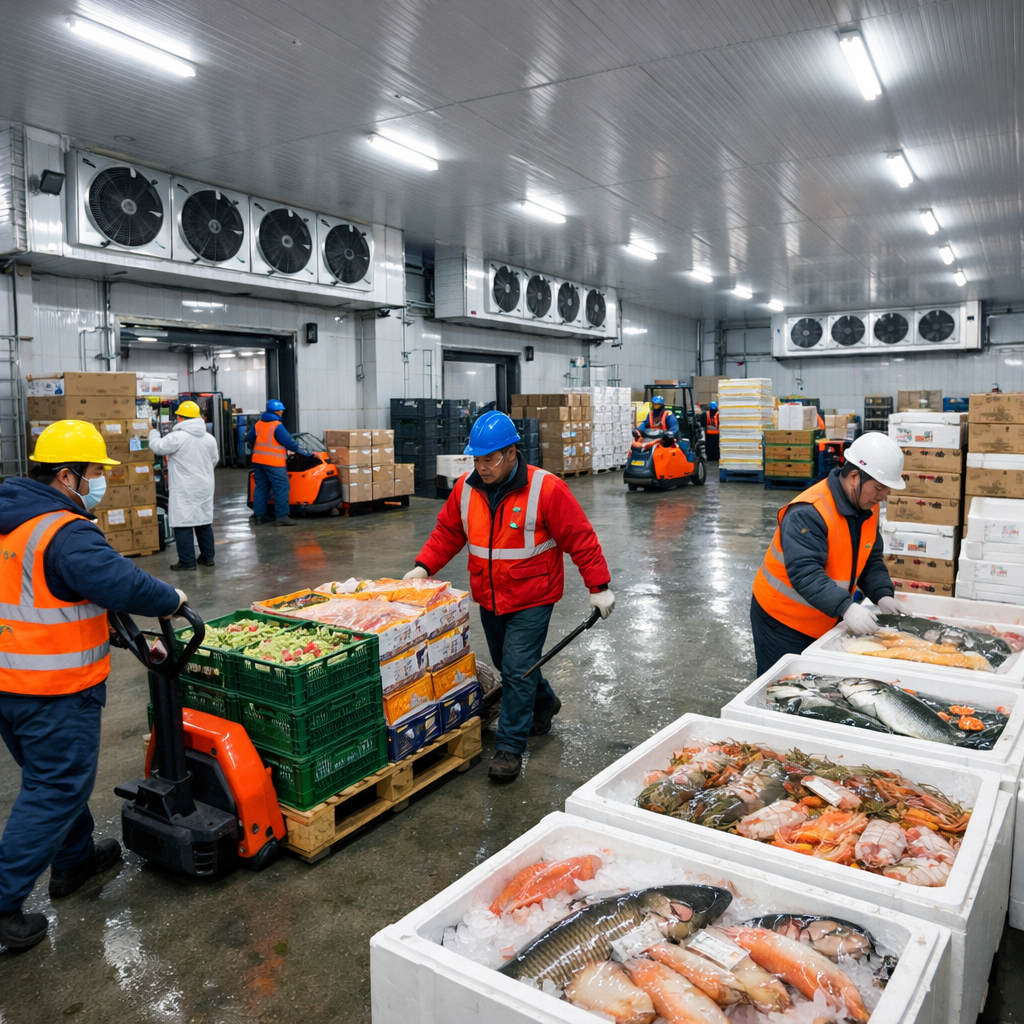
The Foundation: Core Components That Keep Ingredients Fresh
China’s foodservice supply chain functions like a well-rehearsed orchestra, with each component playing a critical role in maintaining ingredient quality from origin to destination. The system begins at the source—farms, fisheries, and food production facilities scattered across China’s diverse regions. From the seafood markets of coastal Guangdong to the agricultural heartlands of Sichuan and the manufacturing centers of Jiangsu, each region contributes its specialty ingredients.
The sourcing phase is where quality begins. Responsible suppliers in China have invested heavily in standardized farming and fishing practices, ensuring that raw materials meet both domestic and international food safety standards. At Jade Premium, our comprehensive supplier qualification verification process starts here. We don’t just assess products; we evaluate the entire production environment, from soil quality and water sources to feed ingredients and farming methods. This attention to detail at the sourcing stage prevents quality issues later in the supply chain.
Once sourced, ingredients move into processing facilities where they’re cleaned, sorted, portioned, and prepared for their journey. Modern Chinese food processing plants have embraced international standards, implementing HACCP (Hazard Analysis Critical Control Points) systems and obtaining certifications like ISO 22000. Processing is where raw materials transform into market-ready products—whole fish become precisely portioned fillets, fresh vegetables are cleaned and pre-cut for restaurant kitchens, and traditional recipes are scaled for commercial production while preserving authentic flavors.
Packaging represents the next critical stage. Advanced packaging technologies protect ingredients from contamination, extend shelf life, and maintain freshness during transport. Modified atmosphere packaging (MAP), vacuum sealing, and temperature-controlled packaging solutions have become standard in China’s foodservice supply chain. For frozen dim sum destined for European markets or fresh seafood heading to Middle Eastern restaurants, proper packaging makes the difference between product that arrives in perfect condition and product that’s compromised.
The true differentiator in China’s foodservice supply chain, however, lies in cold chain storage and transport. China’s cold storage capacity grew by approximately 8% year-on-year in 2024, reaching levels that support both domestic demand and international exports. This infrastructure includes refrigerated warehouses near production facilities, temperature-controlled distribution centers in major cities, and an expanding fleet of refrigerated trucks and containers. For products requiring consistent low temperatures—from premium beef to delicate seafood—this cold chain infrastructure ensures that the “farm to table” journey maintains product integrity.
Finally, distribution networks connect products with their destinations. In China’s domestic market, restaurant and supermarket networks have perfected supply chain services at competitive prices. For international markets, specialized export distributors work with freight forwarders, customs brokers, and logistics providers to navigate the complexities of cross-border food trade. At Jade Premium, our offices in major Chinese cities allow us to coordinate this final stage effectively, ensuring that products reach international partners according to schedule and specification.
Strategic Differentiators: What Sets Quality Apart
Within China’s vast foodservice supply chain, certain strategic capabilities distinguish premium suppliers from basic commodity traders. These differentiators directly impact product quality, reliability, and long-term partnership value.
Cold-chain logistics stands as perhaps the most critical differentiator. According to industry analysis, cold-chain logistics and traceability have become strategic advantages in the China food market. The difference between adequate cold chain management and excellent cold chain management becomes apparent when you examine temperature consistency. Premium suppliers invest in real-time temperature monitoring systems, automated alerts when temperature deviations occur, and backup cooling systems to prevent product loss during equipment failures. In 2024, sales of low-emission refrigerated trucks in China tripled, reflecting both environmental commitments and the growing sophistication of cold chain logistics.
For Jade Premium, maintaining cold chain integrity from Chinese production facilities to international destinations requires meticulous coordination. We work with logistics partners who share our commitment to quality, ensuring that products never experience temperature abuse during transfers between vehicles, during customs clearance, or in temporary storage. This attention to detail means that when a restaurant in Dubai receives our frozen dumplings or a European retailer stocks our seafood products, they arrive in the same condition as when they left the production facility.
Traceability systems represent another crucial differentiator. Modern consumers and businesses demand transparency about food origins, production methods, and handling throughout the supply chain. China has invested significantly in traceability infrastructure, particularly for cross-border e-commerce food imports that require specially designed bonded zones under customs supervision. For exports, leading suppliers implement similar traceability systems that track products from farm to final destination.
Robust traceability systems enable us at Jade Premium to confidently connect Chinese food producers with international markets. When we tell buyers in Europe or North America about the origin of their ingredients, we’re not sharing vague generalities—we’re providing specific farm locations, harvest dates, processing facility certifications, and shipping documentation. This transparency builds trust and allows international partners to make informed decisions about the products they’re bringing to their markets.
Standardization completes the triad of strategic differentiators. While China’s food industry includes countless small producers making traditional products using time-honored methods, the international foodservice supply chain demands consistency. Leading suppliers have developed standardization protocols that preserve authentic flavors and traditional production methods while ensuring that every batch meets the same quality specifications. Whether you order once or you order fifty times, the product should deliver identical taste, texture, and performance.
For Jade Premium, standardization extends beyond the products themselves to encompass our service delivery. Our end-to-end quality control processes, procurement planning methodologies, and logistics optimization frameworks ensure consistent experiences for international partners. This standardization makes us a reliable bridge between Eastern and Western culinary worlds—buyers know what to expect, producers understand requirements, and everyone benefits from reduced uncertainty.
Navigating Complexity: Regulatory and Compliance Considerations
The international foodservice supply chain operates within a complex web of regulations, certifications, and compliance requirements that vary by destination market. China’s food exporters must navigate these requirements successfully, and their ability to do so significantly influences their suitability as supply chain partners.
Different markets impose different requirements. European Union markets demand compliance with detailed food safety regulations covering everything from pesticide residues to labeling requirements. Middle Eastern markets often require halal certification. North American markets have their own USDA and FDA requirements. ASEAN regions present a patchwork of national regulations, each with unique specifications. For Chinese suppliers and their international partners, understanding and meeting these varied requirements represents both a challenge and an opportunity.
At Jade Premium, our comprehensive compliance know-how enables us to guide Chinese producers through these regulatory mazes while helping international buyers understand what Chinese suppliers can deliver. Our expertise in navigating complex international food regulations, certification requirements, and quality standards ensures smooth market entry for Chinese exports while building buyer confidence. We don’t just connect buyers and sellers—we ensure that products meet all necessary compliance requirements before they enter international commerce.
This compliance expertise influences logistics strategies as well. Some products require specific documentation during shipping, particular temperature maintenance logs, or specialized handling procedures to meet destination market requirements. Our product compliance transformation services help Chinese suppliers modify their processes, packaging, or documentation to meet international standards without compromising product authenticity. This capability makes the difference between products that successfully enter international markets and products that encounter customs delays or rejection.
The regulatory landscape also affects supplier selection. International buyers should prioritize Chinese suppliers who demonstrate established compliance frameworks, invest in certification maintenance, and show willingness to adapt to evolving requirements. At Jade Premium, we conduct thorough supplier qualification verification that includes compliance capabilities as a core criterion. This diligence protects our international partners from supply chain disruptions caused by regulatory issues.
Growth and Innovation: Market Dynamics and Digital Transformation
China’s foodservice supply chain continues evolving rapidly, driven by market growth and technological innovation. Understanding these dynamics helps international partners anticipate opportunities and prepare for changes in how ingredients move from Chinese farms to global tables.
The market size tells a compelling story. The China foodservice market is expected to reach $587.75 billion in 2025 and grow at a CAGR of 5.45% to reach $766.5 billion by 2030 ( Source: Mordor Intelligence “China Foodservice Market” report ). This growth reflects both domestic consumption increases and expanding international demand for Chinese food products. The growth is particularly strong in lower-tier Chinese cities, where rising incomes drive demand for higher-quality ingredients and more diverse dining experiences. For international partners, this domestic growth correlates with improved supply chain infrastructure and greater supplier sophistication.
Global cold chain logistics markets mirror this growth trajectory, projected to expand from $393.2 billion in 2025 to $1,632.6 billion by 2035, advancing at a CAGR of 15.3% (Source: Future Market Insights / Fact.MR “Cold Chain Logistics Market” forecasts). This expansion directly benefits international foodservice supply chains by improving the infrastructure available for maintaining product quality during long-distance transport. More cold storage capacity, better refrigerated vehicles, and improved cold chain management practices make it increasingly feasible to deliver premium Chinese ingredients to distant international markets.
Digitalization represents perhaps the most transformative trend in China’s foodservice supply chain. Online procurement platforms have emerged that connect buyers directly with suppliers, providing transparency about product specifications, pricing, and availability. These platforms leverage data analytics to predict demand, optimize inventory levels, and identify supply chain inefficiencies. At Jade Premium, we embrace these digital tools while adding the human expertise necessary to navigate cultural differences, manage relationships, and ensure quality.
Data-driven visibility throughout the supply chain enhances efficiency and resilience. Real-time tracking systems show exactly where products are at any moment, temperature sensors provide continuous monitoring, and predictive analytics identify potential disruptions before they impact delivery schedules. This visibility is particularly valuable for international shipments, where products cross multiple jurisdictions and transfer between various logistics providers. The ability to monitor conditions and anticipate issues transforms supply chain management from reactive problem-solving to proactive optimization.
Innovation extends to payment and transaction processes as well. Digital payment platforms, blockchain-based documentation systems, and automated customs clearance processes reduce friction in international food trade. These innovations particularly benefit small and medium-sized international buyers who might have struggled with the complexity of traditional cross-border procurement. At Jade Premium, our integrated platform delivers tailored procurement solutions that leverage these digital innovations while providing the personal service and market expertise that technology alone cannot replicate.
Practical Takeaways: Building Successful International Partnerships
For international food importers, retail buyers, and food service operators seeking to tap into China’s foodservice supply chain, several practical considerations can optimize outcomes and build lasting partnerships.
First, invest time in supplier selection and relationship building. China’s food supply landscape includes countless producers, processors, and distributors with varying capabilities and reliability. Look for suppliers with transparent practices, established compliance frameworks, and demonstrated export experience. At Jade Premium, our deep cultural and market expertise allows us to identify authentic products with global appeal while connecting international partners with suppliers who can consistently meet their requirements.
Second, prioritize cold chain integrity and traceability. These capabilities directly determine product quality and food safety. Ask prospective suppliers detailed questions about their cold chain infrastructure, temperature monitoring systems, and traceability protocols. Request documentation that demonstrates their ability to maintain product integrity throughout the supply chain. Our extensive local network across major Chinese cities enables us to verify these capabilities firsthand, providing assurance that extends beyond supplier claims.
Third, embrace standardization while respecting authenticity. International markets demand consistency, but the appeal of Chinese ingredients lies partly in their authentic character. Seek suppliers who can balance these requirements—delivering products that taste genuine while meeting specifications consistently. Our integrated supply chain solutions help manage this balance, preserving the cultural significance of Chinese food products while ensuring they meet international market expectations.
Fourth, leverage data and technology for supply chain visibility. Modern procurement platforms, tracking systems, and data analytics tools provide insights that improve decision-making and reduce risks. However, technology should complement rather than replace human expertise. At Jade Premium, we combine digital tools with market intelligence and personal relationships to deliver comprehensive solutions that address both operational efficiency and strategic positioning.
Fifth, plan for compliance and regulatory requirements early in the procurement process. Understanding destination market requirements before sourcing products prevents costly mistakes and delays. Work with partners who possess comprehensive compliance know-how and can guide products through regulatory requirements in multiple markets. Our brand internationalization support services help Chinese suppliers prepare products for specific international markets while helping international buyers navigate Chinese sourcing complexities.
Finally, think beyond individual transactions to long-term partnership value. The most successful international food trade relationships are built on mutual understanding, shared quality standards, and commitment to growth. Look for supply chain partners who invest in understanding your business needs, who communicate proactively, and who view their role as facilitating your success rather than merely completing transactions.
Conclusion: The Future of Global Food Trade
China’s foodservice supply chain represents far more than a logistics network—it’s a cultural bridge connecting the rich heritage of Chinese cuisine with global markets hungry for authentic, high-quality ingredients. As the China foodservice market continues growing, international opportunities expand correspondingly.
At Jade Premium, our vision centers on deepening the integration of global premium food resources while continuously improving service quality. We strive to promote mutually beneficial international food trade partnerships and deliver exceptional, safe culinary experiences to global consumers. This vision drives everything we do—from supplier qualification and quality control to logistics optimization and market intelligence.
The future of global food trade lies in partnerships built on transparency, quality, and cultural understanding. As China’s foodservice supply chain continues evolving through technological innovation, infrastructure investment, and standardization, international partners who engage thoughtfully with this system will find tremendous opportunities. Whether you’re an international food importer seeking authentic Chinese ingredients, a retail buyer expanding your ethnic food offerings, or a food service operator looking to enhance your menu with genuine Chinese products, the key lies in working with partners who understand both sides of this cultural and commercial bridge.
The journey from Chinese farms to global plates requires expertise, infrastructure, and commitment to quality at every stage. By understanding how China’s foodservice supply chain operates, recognizing the strategic differentiators that matter most, and building relationships with reliable partners, international businesses can successfully tap into one of the world’s most dynamic food supply systems. The ingredients are ready, the infrastructure exists, and the opportunity awaits those prepared to bring authentic Chinese cuisine to tables around the world.