
Walk into any major international food court from Singapore to London, and you’ll likely encounter the distinctive aromas of Chinese cuisine. Behind every plate of authentic Kung Pao chicken or bowl of hand-pulled noodles lies an intricate web of suppliers, logistics networks, and quality control systems that keep global restaurant chains running smoothly. Chinese ingredients have become the backbone of international culinary operations, not just for Chinese restaurants but for fusion concepts and mainstream chains seeking to diversify their menus with authentic Asian flavors.
The global appetite for Chinese cuisine shows no signs of slowing. As of 2025, Chinese food and beverage brands operated over 400 outlets in Singapore alone, while European and North American markets continue expanding their Chinese dining options. This growth isn’t accidental—it’s built on sophisticated supply chains that deliver consistent quality across continents. The challenge isn’t simply shipping ingredients from China to international kitchens. It’s about maintaining authenticity while meeting diverse regulatory requirements, preserving freshness across long distances, and adapting to local tastes without compromising the soul of the cuisine.
Standardization: The Foundation of Global Expansion
When Zhong Tianjiao, founder of 41Caijing, emphasized that global expansion requires more than just product standardization, she touched on a fundamental truth about Chinese cuisine’s international journey. The standardization of Chinese restaurant operations has become critical for chains seeking to scale across borders. Unlike traditional Chinese kitchens that relied on master chefs with decades of training, modern international chains implement standardized management practices that ensure consistency regardless of location.
This standardization begins with ingredient specifications. A restaurant chain operating in multiple countries needs to know that their Sichuan peppercorns deliver the same numbing sensation in New York as they do in London. The soy sauce used in their signature dish must maintain identical flavor profiles whether served in Dubai or Toronto. Achieving this consistency requires detailed product specifications, rigorous supplier vetting, and continuous quality monitoring.
However, standardization doesn’t mean sacrificing authenticity. Smart operators diversify their product lines to balance consistency with local market preferences. They create core ingredient lists that define their brand’s authentic flavors while allowing flexibility in complementary components. For instance, a chain might standardize their chili oil and fermented bean paste sourced from specific Chinese producers while adapting vegetable selections and protein cuts to local markets. This approach maintains the essence of Chinese flavors while acknowledging regional differences in taste preferences and ingredient availability.
Mixed Sourcing: Balancing Authenticity with Resilience
The most successful global restaurant chains don’t rely on a single sourcing strategy. Instead, they implement mixed sourcing models that balance authenticity with operational resilience. Core ingredients that define authentic Chinese flavors—specialty sauces, preserved vegetables, dried mushrooms, specific spice blends—typically come directly from China where traditional production methods and regional expertise create irreplaceable products.
Consider premium soy sauce aged in traditional ceramic jars, or authentic Pixian doubanjiang fermented for years in Sichuan’s unique climate. These products carry centuries of culinary knowledge and regional terroir that cannot be replicated elsewhere. Smart operators recognize that certain ingredients must come from their places of origin to maintain authenticity. They establish long-term relationships with specialized Chinese producers who understand not just the product but the cultural significance behind it.
Meanwhile, fresh components follow different sourcing logic. Vegetables, proteins, and other perishable items are often procured locally or regionally. A Chinese restaurant chain in Germany might import their chili bean paste and black vinegar from China but source fresh vegetables from European suppliers and meat from certified regional distributors. This mixed approach offers multiple advantages: reduced transportation costs for perishables, shorter lead times, better freshness, lower carbon footprint, and greater supply chain flexibility.
When supply disruptions occur—whether from weather events, port congestion, or regulatory changes—mixed sourcing provides crucial resilience. If direct shipments from China face delays, locally sourced fresh ingredients keep operations running while specialty items make their way through alternative routes.
End-to-End Logistics: The Cold Chain Challenge
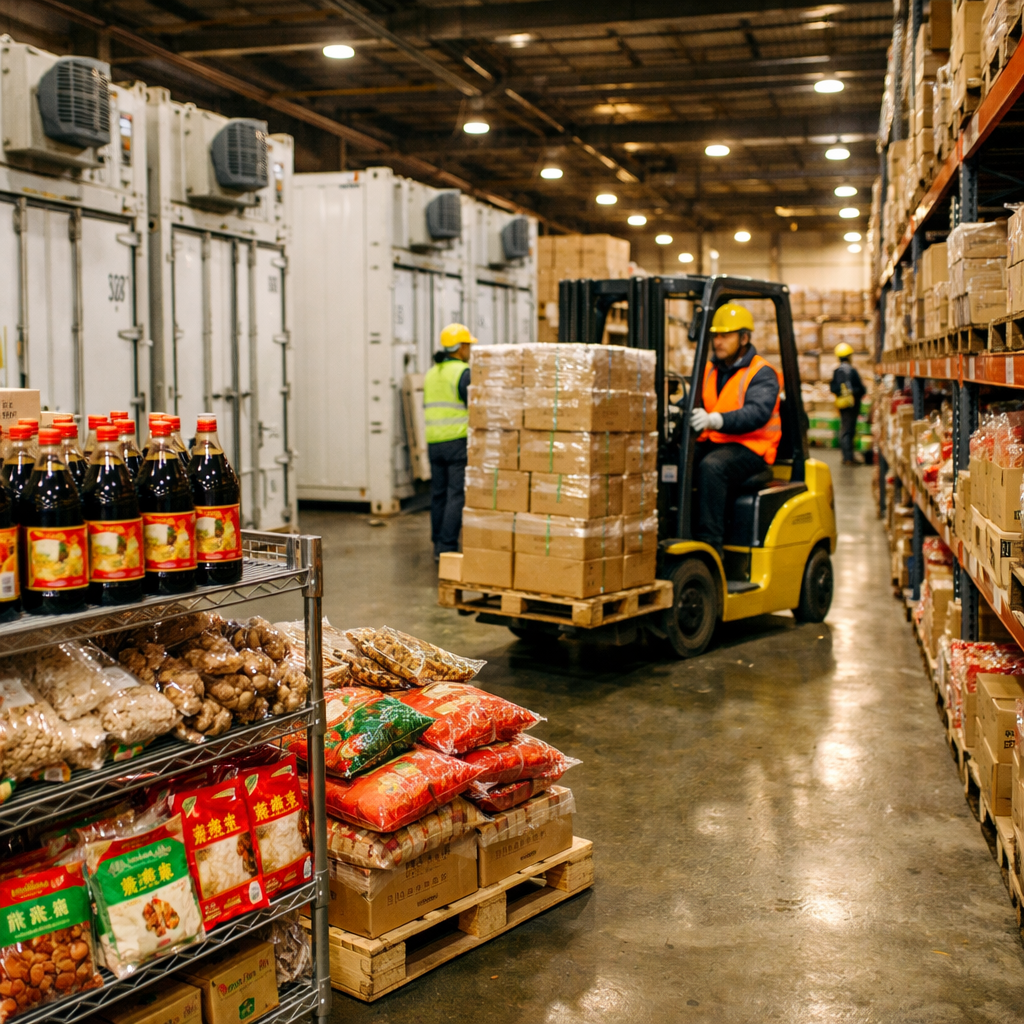
The journey of restaurant supply Chinese ingredients from farm to table involves sophisticated logistics networks that most diners never see. For perishable items and frozen products, cold chain management becomes critical. A single break in temperature control can compromise product safety and quality, making end-to-end cold chain integrity non-negotiable.
Consider frozen dumplings, a staple of many Chinese restaurant menus worldwide. From the production facility in China, these products must maintain consistent freezing temperatures through multiple touchpoints: factory storage, transportation to port, container loading, ocean freight, customs clearance, regional distribution, and final delivery to restaurant kitchens. Each handoff point presents risk. Professional logistics providers use temperature monitoring devices, insulated packaging, and rapid transfer protocols to minimize exposure.
Regional distribution centers have become essential infrastructure for maintaining quality and reducing lead times. Rather than shipping directly from China to individual restaurants—which would be cost-prohibitive and introduce delays—major chains establish distribution hubs in key markets. A container of specialty ingredients arrives at a regional center in Rotterdam, gets divided into smaller shipments, and reaches restaurants across Europe within days. This hub-and-spoke model combines the cost efficiency of bulk shipping with the responsiveness of local distribution.
For truly perishable items like fresh produce or certain seafood, air freight becomes necessary despite higher costs. Premium Chinese restaurants in international markets often air-ship specific ingredients weekly to maintain authenticity. The economics work because these items serve as signature differentiators—the hand-pulled noodles made from specific Chinese wheat flour, the live seafood that defines a restaurant’s reputation, the seasonal vegetables that connect diners to authentic regional cuisine.
Compliance and Quality: Building Trust Through Transparency
In international food trade, compliance and quality assurance aren’t just regulatory requirements—they’re the foundation of trust between suppliers and buyers. Every country has unique food safety standards, labeling requirements, and import regulations. Successfully navigating this complex landscape requires deep expertise and unwavering commitment to transparency.
Food safety frameworks like HACCP, ISO 22000, and country-specific certifications provide standardized approaches to quality management. Reputable Chinese suppliers working with international restaurant chains invest heavily in these certifications, understanding that credentials open doors to global markets. But certifications alone aren’t enough. Leading suppliers implement comprehensive quality control systems that trace ingredients from source to shipment.
Traceability has become a competitive advantage in modern food supply chains. When a buyer receives a shipment of dried shiitake mushrooms, they should be able to trace those mushrooms back to specific farms, verify cultivation methods, review inspection records, and confirm processing facility certifications. This farm-to-table transparency builds confidence and provides crucial accountability if quality issues arise.
For restaurant chains operating across multiple jurisdictions, compliance management becomes even more complex. A single product might need different certifications for European Union markets, additional documentation for Middle Eastern halal requirements, and specific labeling for North American food allergen regulations. Professional import-export partners manage these variations, ensuring products meet all applicable standards before they leave China.
Regulatory Environments: Navigating Trade Complexities
The regulatory and trade environment significantly influences sourcing decisions for restaurant supply Chinese ingredients. Import regulations vary dramatically between countries, affecting everything from permitted product categories to required documentation and inspection procedures. Some nations maintain strict biosecurity controls on agricultural products, while others focus primarily on processed food safety.
Tariffs and trade policies create another layer of complexity. Changes in import duties can suddenly shift the economic viability of certain sourcing relationships, as explained in comprehensive regulatory guides. A restaurant chain that built its menu around specific Chinese ingredients might face difficult decisions when tariff increases make those items cost-prohibitive. Geopolitical factors—trade tensions, diplomatic relationships, international agreements—shape the landscape in ways that individual businesses must navigate carefully.
Smart operators respond to this complexity through supplier diversification and strategic procurement planning. Rather than relying on a single source country or supplier, they develop relationships across multiple regions. For instance, a chain might source their primary soy sauce from China while maintaining relationships with Korean and Japanese producers as alternatives. This diversification provides negotiating leverage and supply security without compromising on quality standards.
The regulatory environment also influences product development and menu planning. Restaurants design menus considering ingredient availability and import feasibility, avoiding dishes that depend on items facing regulatory restrictions or prohibitive costs. They work with suppliers who understand destination market requirements and can adapt products accordingly—reformulating recipes to meet local food additive regulations, adjusting packaging to comply with labeling laws, or modifying processing methods to satisfy import criteria.
Market Dynamics: Authenticity Meets Local Tastes
One of the most delicate balancing acts in global Chinese restaurant operations involves maintaining authentic flavors while accommodating local taste preferences. Chinese cuisine encompasses tremendous regional diversity—the numbing spice of Sichuan, the delicate sweetness of Cantonese cooking, the vinegar-forward flavors of Shanxi, the complex fermented notes of Hunan cuisine. When these flavors travel internationally, they encounter palates shaped by different culinary traditions and varying tolerance for unfamiliar tastes.
Successful chains approach this challenge through thoughtful ingredient adjustment and recipe adaptation. They identify the core flavors that define authenticity—the essential ingredients and techniques that make a dish recognizably Chinese—and preserve those elements rigorously. Around that authentic core, they allow flexibility. Spice levels might be adjustable, vegetable combinations might vary, or cooking methods might adapt to local preferences while maintaining the dish’s essential character.
Packaging and branding play surprisingly important roles in consumer perception of authenticity. Products presented in traditional Chinese packaging with clear origin stories resonate differently than identical ingredients in generic containers. Smart suppliers and restaurant operators understand that consumers increasingly value transparency and cultural connection. They share stories about ingredient origins, traditional production methods, and the regional cuisines that inspire their dishes.
This storytelling approach serves multiple purposes. It educates consumers about Chinese culinary traditions, justifies premium pricing for authentic ingredients, differentiates operators in competitive markets, and builds emotional connections that transcend mere transactions. When diners understand that their noodles come from wheat grown in specific Chinese regions and milled using traditional methods, they’re not just eating food—they’re experiencing culture.
Challenges and Contingency Planning
Despite sophisticated supply chains and professional management, restaurant operators face ongoing challenges in sourcing Chinese ingredients. Supply disruptions can occur without warning—port congestion delays shipments, weather events damage crops, manufacturing facilities face temporary shutdowns, or new regulations suddenly restrict specific products. Each disruption threatens restaurant operations that depend on consistent ingredient availability.
Regulatory changes present particular challenges because they often arrive with limited advance notice. A country might suddenly tighten import requirements for certain food categories, require additional testing for specific ingredients, or ban particular additives used in traditional Chinese processing methods. Operators caught unprepared can face menu disruptions, financial losses, and disappointed customers.
Effective contingency planning has become essential for operational continuity. Leading restaurant chains maintain safety stock of critical ingredients, build relationships with multiple suppliers for essential items, develop menu alternatives that use different ingredient combinations, and establish communication protocols for rapid supply chain problem-solving. These measures add costs and complexity but provide crucial insurance against disruption.
Multi-sourcing strategies extend beyond simple supplier diversification. They involve geographic diversification (suppliers in different Chinese regions or alternative countries), product diversification (developing recipes that work with substitutable ingredients), and relationship diversification (maintaining connections with multiple tiers of suppliers). This redundancy might seem inefficient during normal operations, but it proves invaluable during disruptions.
Practical Implications for Stakeholders
The complex landscape of restaurant supply Chinese ingredients carries important implications for different stakeholders. Restaurant operators should invest in developing strong relationships with diversified suppliers who demonstrate consistent quality, regulatory expertise, and supply chain resilience. Rather than simply seeking the lowest prices, smart operators evaluate suppliers based on their ability to maintain standards across various conditions and their responsiveness when challenges arise.
Professional trade partners who understand both Chinese food production and international market requirements become invaluable allies. These intermediaries navigate cultural differences, manage compliance complexities, coordinate logistics, and provide market intelligence that helps operators make informed decisions. Companies like Jade Premium exemplify this professional trade facilitation model, bringing deep expertise in Chinese food exports, comprehensive compliance knowledge, and integrated supply chain solutions that connect authentic Chinese ingredients with global markets.
For suppliers looking to serve international restaurant chains, alignment with global standards is not optional. Investment in certifications, quality management systems, traceability infrastructure, and compliance expertise opens doors to premium markets. Equally important is the ability to tell compelling stories about products—their origins, production methods, and cultural significance—that help international buyers understand and communicate value to their customers.
Policymakers and industry associations play crucial roles in facilitating safe, efficient international food trade. Clear, science-based regulations that prioritize food safety without creating unnecessary barriers support market development. Programs that promote transparency, traceability, and sustainability in food supply chains benefit all stakeholders while protecting consumers and building long-term industry credibility.
The future of restaurant supply Chinese ingredients will likely involve increased emphasis on transparency, sustainability, and cultural authenticity. Consumers increasingly demand to know where their food comes from, how it’s produced, and whether its production aligns with their values. Restaurant operators and suppliers who embrace these expectations while maintaining the authentic flavors and cultural heritage of Chinese cuisine will thrive in evolving global markets.
Behind every successful Chinese restaurant operating internationally lies a sophisticated supply chain connecting authentic ingredients with skilled preparation. As global appetite for Chinese cuisine continues growing, the systems supporting this culinary exchange become increasingly vital. By understanding the complexities involved—from standardization to logistics, from compliance to cultural adaptation—stakeholders can build more resilient, transparent, and authentic food supply networks that bring the richness of Chinese culinary traditions to tables worldwide.