
The global appetite for authentic Chinese cuisine continues to grow, and with it, the demand for traditional Chinese sauces—from soy sauce and oyster sauce to chili oil and hoisin. However, behind every successful import transaction lies a complex web of regulatory requirements that can make or break your market access. For international food importers and distributors, understanding these compliance requirements isn’t just about avoiding fines; it’s about building sustainable, profitable relationships in a competitive marketplace.
At Jade Premium, we’ve witnessed firsthand how even experienced importers can stumble over seemingly minor compliance issues that cascade into major market access problems. Our role as a bridge connecting authentic Chinese cuisine with global markets has taught us that success in Chinese sauces wholesale depends not just on product quality, but on navigating the intricate landscape of international food regulations with precision and cultural understanding.
Understanding Shelf-Life: More Than Just a Date on the Label
One of the most overlooked aspects of Chinese sauces wholesale is proper shelf-life management. Many importers assume that fermented sauces like soy sauce are virtually indestructible, but this oversimplification can lead to quality issues and regulatory problems.
Proper storage allows unopened Chinese sauces to maintain their quality for typically 18 to 36 months. However, The clock starts ticking the moment someone opens a bottle. Soy sauce, for instance, maintains optimal quality for about six months after opening when refrigerated, while oyster sauce should be consumed within three months. These distinctions matter enormously for both compliance and customer satisfaction.
Proper storage is equally critical. Most Chinese sauces should be stored in cool, dry conditions away from direct sunlight. Temperature fluctuations can accelerate oxidation and degradation, particularly for products containing natural ingredients without artificial preservatives. At Jade Premium, our commitment to premium and healthy products means we work closely with suppliers to ensure proper storage conditions throughout the supply chain—from factory to warehouse to retail shelf.
Importers can fall into a real compliance trap if they fail to account for transit time, customs clearance delays, and the shelf-life expectations that retailers in the destination market hold. By the time a sauce with a 24 months shelf-life reaches retail shelves, only 18 months may remain. Major retailers typically require that products retain 75-80% of their total shelf-life upon delivery. Failure to meet these requirements can lead retailers to reject shipments, causing significant financial losses.
Navigating FDA Requirements: The US Market Labeling Fundamentals
The United States Food and Drug Administration sets rigorous standards for imported food products, and Chinese sauces are no exception. Understanding these requirements is essential for any importer targeting the American market.
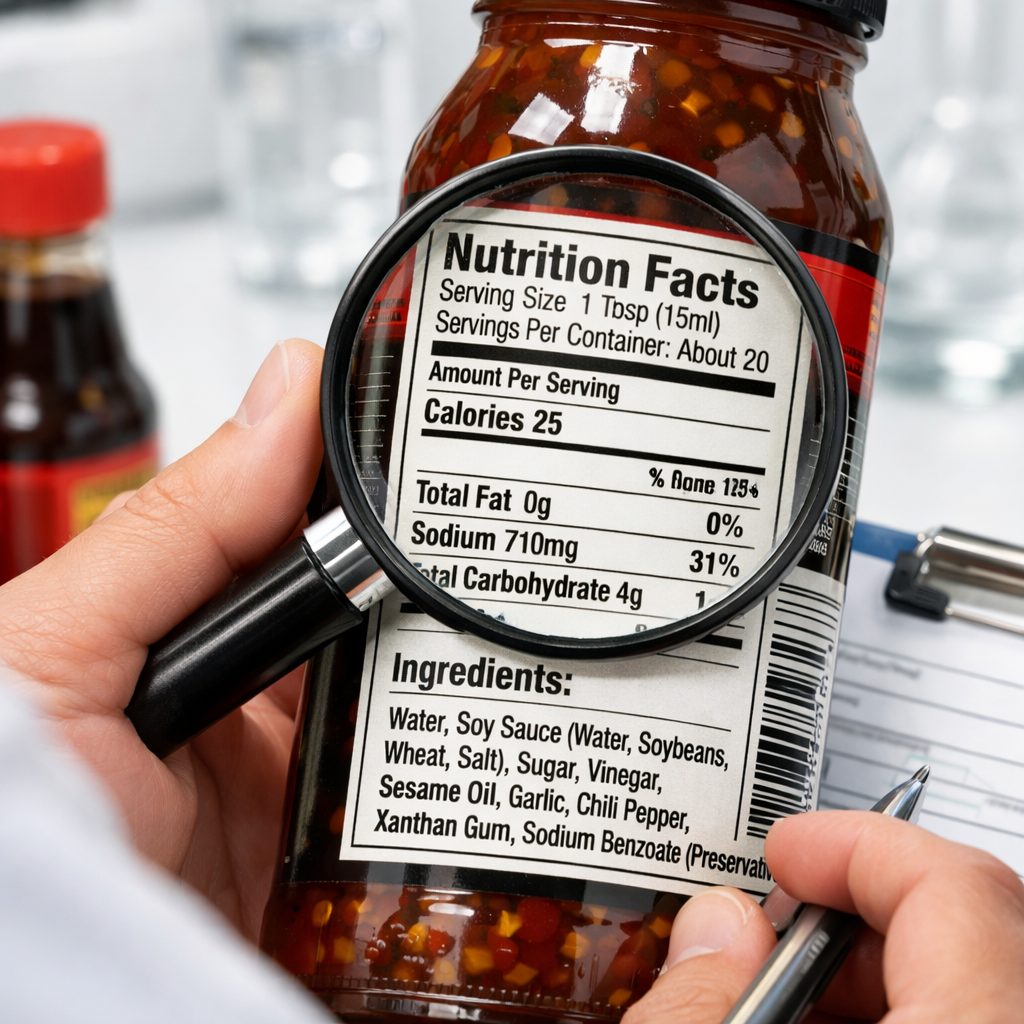
The FDA mandates that all food labels include several key elements: product identity, net quantity, ingredient list, manufacturer or distributor information, and nutrition facts panel. For Chinese sauces, The nutrition facts panel for Chinese sauces must comply with the current FDA nutrition labeling regulations, which emphasize serving sizes and added sugars —a particular concern for many traditional Chinese sauces that contain significant amounts of sugar or high-fructose corn syrup.
Allergen declarations present another critical compliance point. Under the Food Allergen Labeling and Consumer Protection Act, eight major allergens must be clearly identified: milk, eggs, fish, shellfish, tree nuts, peanuts, wheat, and soybeans. Since soy sauce and many other Chinese condiments contain soybeans and wheat, these allergens must be prominently declared. The allergen statement should appear either within the ingredient list using parenthetical declarations or in a separate “Contains” statement immediately following the ingredient list.
What catches many importers off-guard is the requirement for truthful and non-misleading labeling. Claims like “no additives” or “all-natural” trigger additional scrutiny and must meet specific FDA definitions. Recently, China has also cracked down on such claims domestically, recognizing that terms like “zero additives” can mislead consumers about product safety and manufacturing standards.
At Jade Premium, our expertise in navigating complex international food regulations means we help suppliers transform their labeling to meet FDA requirements while preserving the authentic character that makes Chinese sauces appealing to international consumers. This compliance transformation isn’t just about avoiding penalties—it’s about building consumer trust and brand reputation in competitive markets.
EU Market Requirements: A Different Compliance Landscape
While FDA requirements are comprehensive, the European Union operates under its own equally rigorous framework, primarily governed by Regulation 1169/2011 on food information to consumers. Understanding these differences is crucial for importers serving multiple markets.
The EU takes an even stricter approach to allergen labeling than the US. The EU mandates the clear declaration of 14 allergenic substances, including celery, mustard, sesame, and sulphur dioxide/sulphites (at levels above 10 mg/kg), among others—must be emphasized within the ingredient list itself, typically through bolding, underlining, or using a different typeface. A separate “Contains” statement is not sufficient for EU compliance.
Language compliance adds another layer of complexity. Food labels in the EU must appear in a language easily understood by consumers in the country of sale. This means that a single Chinese sauce product might require labels in English, German, French, Italian, Spanish, and other languages depending on the distribution strategy. The font size requirements are also specific: mandatory information must be printed with a minimum font height of 1.2mm, increasing to 1.8mm for packaging with a largest surface area less than 80 cm².
The EU has also implemented strict rules regarding misleading claims. With enforcement becoming more robust, importers must ensure that any health claims, nutritional claims, or quality assertions on Chinese sauce labels comply with approved EU standards. The term “traditional,” for instance, carries specific meanings in EU food law and cannot be used casually.
Jade Premium’s capabilities in providing end-to-end quality control and compliance transformation become particularly valuable in the EU context. We work with Chinese sauce manufacturers to develop labeling strategies that maintain brand authenticity while meeting the specific requirements of different European markets. Our localized operations across China and deep understanding of international standards enable us to identify potential compliance issues before products leave the factory.
FSMA and Foreign Supplier Verification: Building a Compliance Foundation
For US importers, the Food Safety Modernization Act represents one of the most significant regulatory shifts in decades. The Foreign Supplier Verification Programs (FSVP) regulation places direct responsibility on importers to verify that their foreign suppliers meet US food safety standards.
Under FSVP, importers must identify and evaluate potential hazards associated with each food product. They need to ensure that their foreign suppliers implement adequate preventive controls and actively verify that these controls work effectively. This obligation continues over time, requiring importers to maintain systematic documentation and conduct periodic reassessments.
For Chinese sauces wholesale, FSVP compliance means importers need to understand the manufacturing processes, ingredient sources, and quality control systems of their Chinese suppliers. Our guide on frozen dim sum wholesale offers insights into similar compliance challenges. This includes verifying that suppliers have implemented hazard analysis and preventive controls, maintain proper sanitation standards, and have systems in place to trace ingredients throughout the supply chain.
FSVP imposes substantial documentation requirements on importers. Importers must maintain records of their hazard analysis, supplier evaluation, verification activities, and corrective actions. With China facing increased tariff pressures and heightened scrutiny on fermented products like sauces, smaller importers may find it particularly challenging to afford robust safety checks and maintain comprehensive documentation systems.
This is where Jade Premium’s position as a trusted trade facilitator becomes invaluable. Our extensive local network across major Chinese cities allows us to conduct on-site supplier verification, document manufacturing processes, and maintain the detailed records that FSVP compliance demands. We don’t just connect buyers with sellers; we provide the comprehensive compliance infrastructure that modern food trade requires.
Practical Strategies for Multi-Market Compliance
Successfully managing compliance across both US and EU markets requires strategic planning and systematic execution. The key is developing processes that address both regulatory frameworks efficiently while maintaining product integrity and cost-effectiveness.
Start with supplier qualification. Before entering any purchase agreement, conduct thorough due diligence on Chinese sauce manufacturers. Learn more about selecting reliable suppliers in our comprehensive guide. This should include facility inspections, documentation review, and verification of existing certifications like HACCP, ISO 22000, or BRC. At Jade Premium, we leverage our deep cultural and market expertise to conduct these assessments with cultural sensitivity and technical rigor, understanding both what questions to ask and how to interpret responses within the Chinese manufacturing context.
Next, develop a master labeling strategy that accommodates both FDA and EU requirements. While maintaining separate label versions for each market is often necessary, identifying commonalities can reduce costs and complexity. Many elements—like ingredient lists, storage instructions, and basic product identity—can be harmonized across markets. Work with suppliers early in the product development process to ensure formulations can meet both US and EU standards for permitted ingredients and additives.
Implement robust documentation systems from day one. Digital platforms that track certificates of analysis, batch records, shipping documents, and compliance certifications create the traceability that both FSVP and EU regulations demand. These systems should link specific product batches to supplier records, creating an auditable chain of custody that demonstrates compliance throughout the supply chain.
Regular testing and verification are non-negotiable. Schedule periodic laboratory testing for microbiological safety, heavy metals, and other contaminants. For fermented Chinese sauces, particular attention should be paid to histamine levels, which can increase during fermentation and storage. These test results not only ensure consumer safety but provide the objective evidence that regulatory authorities expect during audits and inspections.
Jade Premium’s integrated supply chain solutions address these challenges holistically. Our market intelligence services help importers understand regulatory trends before they become requirements, allowing proactive adaptation rather than reactive scrambling. We monitor changes in both Chinese production standards and international import regulations, providing clients with the advance notice needed for smooth market entry and sustained market access.
Building Long-Term Compliance Success
The compliance landscape for Chinese sauces wholesale continues to evolve. China’s recent prohibition on misleading “no additives” claims signals a broader trend toward more sophisticated food regulation that aligns with international standards. Chinese food standards are continually updated, and exporters must ensure their products and claims comply with the latest specific national standards, each of which may have its own implementation timeline.
Successful importers recognize that compliance isn’t a burden to minimize but a competitive advantage to maximize. Products that consistently meet regulatory standards, carry accurate labeling, and demonstrate transparent supply chains command premium positioning in international markets. Consumers increasingly value authenticity backed by safety, and regulatory compliance provides the objective verification that builds this trust.
At Jade Premium, we’ve observed that the most successful international buyers share common characteristics: they view their Chinese suppliers as partners rather than vendors, they invest in understanding the cultural context behind the products they import, and they recognize that sustainable trade relationships require mutual investment in quality and compliance. Our expertise in foodservice supply chain management demonstrates this partnership approach in action.
Our comprehensive approach—combining supplier qualification verification, customized procurement planning, cross-cultural business negotiation support, product compliance transformation, and logistics optimization—reflects our belief that Chinese sauce exports represent more than just commercial transactions. They’re opportunities to share the rich culinary heritage of Chinese cuisine with global audiences while building bridges of understanding between Eastern and Western food cultures.
Conclusion: Your Pathway to Compliant Chinese Sauces Wholesale
The hidden compliance traps in Chinese sauces wholesale are real, but they’re also navigable with the right expertise and partnerships. From shelf-life management and FDA labeling requirements to EU regulations and FSVP verification, each compliance element represents both a potential obstacle and an opportunity to differentiate your offerings in competitive markets.
The key to success lies in continuous compliance vigilance and robust supplier verification supported by deep market knowledge and cultural understanding. As China’s food export industry continues to mature and international regulations become more sophisticated, the importers who thrive will be those who invest in comprehensive compliance infrastructure and strategic partnerships.
At Jade Premium, we invite international buyers—from food importers and distributors to retail chain buyers and food service operators—to leverage our deep cultural and market expertise for successful Chinese food exports. Our commitment to natural, premium, and healthy products, backed by stringent quality control and professional supply chain management, ensures that every product we facilitate meets international quality standards while preserving the authentic flavors that make Chinese cuisine extraordinary.
The global demand for authentic Chinese sauces will continue to grow. The question is whether you’ll access this opportunity through risky, compliance-challenged channels or through strategic partnerships that build sustainable market access. Your choice today determines your market position tomorrow.