
When the Regional Comprehensive Economic Partnership (RCEP) took effect in January 2022, it didn’t just create another trade agreement—it fundamentally transformed how food moves across the Asia-Pacific region. For food importers, distributors, and retailers working with Chinese suppliers, this isn’t abstract policy talk. It’s about real money sitting on the table, waiting to be claimed or lost to competitors who understand the new rules better.
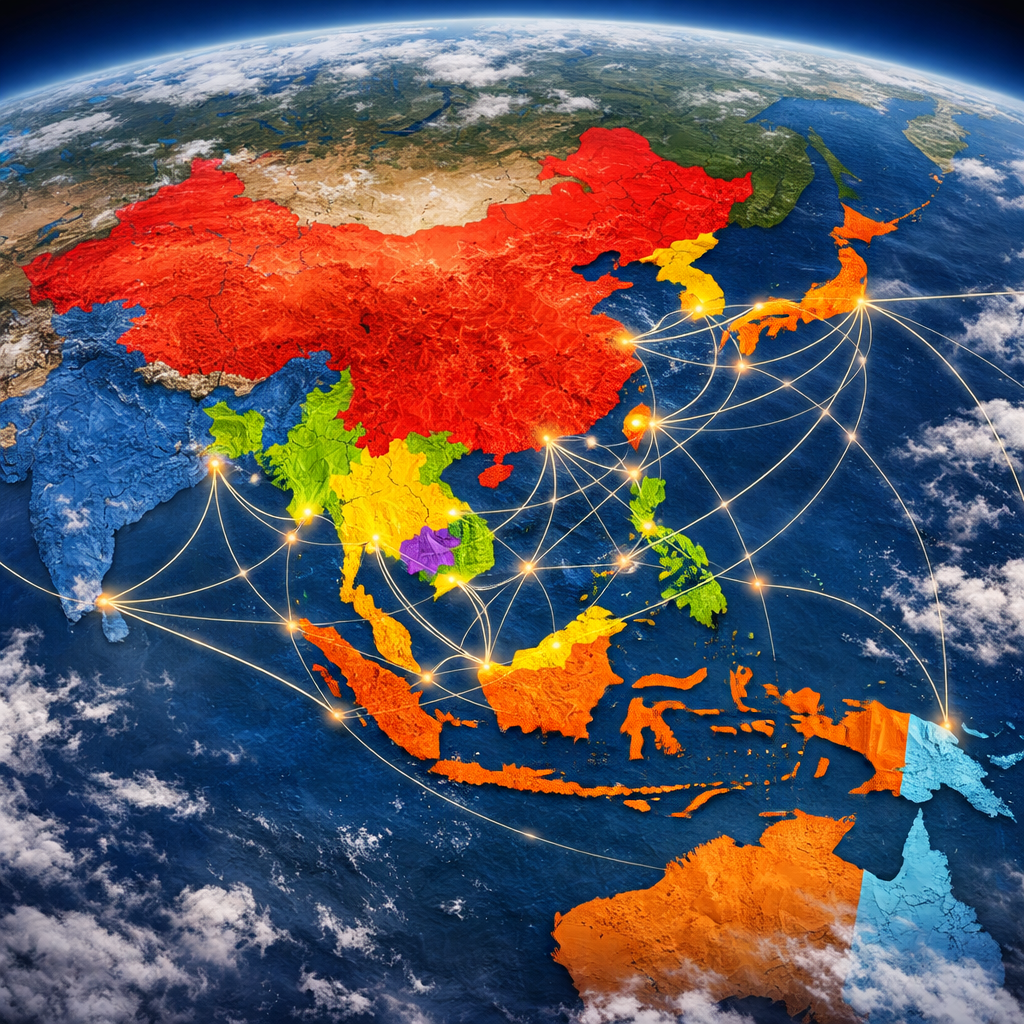
Think of RCEP as the world’s largest free trade zone, covering 15 countries including China, Japan, South Korea, Australia, New Zealand, and the 10 ASEAN nations. Together, these economies represent roughly 30% of global GDP and nearly a third of the world’s population. The scale alone is staggering, but what matters for your bottom line is this: RCEP aims to eliminate tariffs on the majority of goods among members over an extended transition period.
At the heart of RCEP’s impact lies a concept called Rules of Origin (ROO). This determines whether a product qualifies for preferential tariff treatment under the agreement. Here’s the simple version: if your frozen dumplings from China contain ingredients sourced from multiple RCEP countries and meet certain processing requirements, they can enter markets like Japan or Australia with significantly reduced or zero tariffs. Miss these requirements by a technicality, and you’re paying full freight.
The complexity of ROO isn’t just bureaucratic noise. It’s the mechanism that either unlocks substantial savings or keeps your costs unnecessarily high. Understanding whether your products meet the “wholly obtained” criteria, regional value content thresholds, or change in tariff classification rules can mean the difference between thriving and merely surviving in today’s competitive food distribution landscape.
The Real Cost Impact: Beyond Simple Tariff Cuts
Let’s talk numbers. Under RCEP, China has committed to eliminating tariffs on 86% of Japanese goods and 90% of South Korean products. For food products specifically, this translates to immediate and tangible benefits.A Japanese buyer importing Chinese hotpot ingredients that previously faced import tariffs can now benefit from significantly reduced or eliminated tariffs, subject to proper ROO compliance. That’s not a small margin improvement—it’s a complete restructuring of landed costs.
But the impact goes deeper than headline tariff rates. RCEP streamlines customs procedures and quality control systems across all member countries, creating standardized documentation requirements and electronic processing systems. For anyone who’s dealt with the nightmare of coordinating paperwork across multiple Asian markets, this matters enormously. The time saved at customs isn’t just about efficiency—it’s about maintaining cold chain integrity, reducing storage costs, and getting products to market faster.
Consider a real-world scenario: A European distributor working with a Chinese supplier to ship premium seafood products to Australia. Pre-RCEP, this involved navigating separate bilateral agreements, multiple documentation standards, and uncertainty about which products qualified for preferential treatment. Now, RCEP provides a single framework. The customs clearance process can be significantly shortened under RCEP frameworks, reducing spoilage risk and warehousing expenses for time-sensitive food products.
eater regulatory cooperation and transparency on phytosanitary standards and technical regulations under RCEP creates additional hidden savings. Instead of reformulating products or redesigning packaging for each market, manufacturers can increasingly work toward regional standards. This allows Chinese food exporters to achieve economies of scale that weren’t possible when each export destination demanded unique specifications.
Reshaping Food Value Chains Across Asia-Pacific
The RCEP impact on food distribution extends far beyond cost savings—it’s fundamentally restructuring where and how food is produced, processed, and distributed across the region. Market demand is expanding in ways that reward strategic thinking about supply chains.
Take the ready-to-eat meal sector as an example. China’s expertise in food processing, combined with tariff-free access to premium ingredients from Australia and New Zealand, creates opportunities for value-added products that weren’t economically viable before. A Chinese manufacturer can source grass-fed Australian beef, process it into premium dumplings or hotpot products, and export these finished goods back to Australia or to other RCEP markets without the tariff penalties that once made such circular trade patterns unprofitable.
The growth of regional value chains means food distributors need to think differently about sourcing. Instead of viewing China as just a manufacturing location or a market, RCEP enables a more integrated approach. Ingredients can move freely across borders for processing where it makes most sense, then distribute to final markets efficiently. This flexibility allows companies to optimize for quality, cost, and speed simultaneously.
We’re seeing this play out in the seafood sector particularly clearly. Chinese seafood processors are increasingly serving as regional hubs, importing raw materials from RCEP countries, processing them to international standards, and re-exporting finished products throughout the region. The tariff eliminations make this triangle trade economically attractive, while China’s processing infrastructure and expertise add value that justifies the additional handling.

For food distributors serving restaurant chains, hotel groups, or retail networks across multiple Asia-Pacific markets, RCEP enables a shift from country-specific sourcing to regional sourcing strategies. Instead of maintaining separate supplier relationships in each country, you can work with strategic partners who leverage RCEP benefits to serve multiple markets from optimized locations. This consolidation reduces complexity, improves negotiating leverage, and often enhances quality control.
Strategic Moves: Optimizing Your Sourcing Under RCEP
Understanding RCEP’s benefits is one thing—capturing them requires concrete action. Here’s how forward-thinking food distributors are restructuring their Asia-Pacific sourcing strategies.
Start with an ROO Audit: Review your current product portfolio against RCEP’s Rules of Origin requirements. This isn’t a one-time exercise. Work with your Chinese suppliers to document where ingredients come from, where processing occurs, and whether products meet regional value content thresholds. Many companies discover that products they assumed didn’t qualify actually do—or that minor adjustments to sourcing or processing could unlock significant tariff savings.
Jade Premium has seen this firsthand when working with international clients. A European importer of Chinese dim sum products discovered that by sourcing flour from within RCEP countries instead of from outside the region, their products qualified for preferential treatment in multiple markets, reducing their effective landed costs by 8-12%. That margin improvement turned a marginal product line into a profitable growth driver.
Diversify Strategically Within RCEP: The agreement creates incentives for multi-country sourcing strategies. Instead of single-sourcing from one location, consider how combining inputs from different RCEP members might improve both resilience and cost structure. A premium dumpling line might use Australian wheat, Chinese processing expertise, and distribution networks optimized for ASEAN markets—all while maintaining tariff-free status throughout.
This diversification isn’t just about cost optimization. It’s risk management. Supply chain disruptions, whether from weather events, policy changes, or logistical challenges, impact different regions differently. A sourcing strategy that leverages multiple RCEP countries builds in natural hedges against localized disruptions.
Optimize Landed Costs Holistically: RCEP tariff savings are just one component of total landed costs. Integrate these savings into a comprehensive cost analysis that includes freight, handling, storage, financing, and compliance costs. Sometimes the lowest tariff rate doesn’t deliver the lowest total cost if it requires longer lead times, smaller order quantities, or more complex logistics.
Work backward from your market requirements. If you’re serving restaurant chains that need consistent weekly deliveries, the supply chain that delivers reliable, quality-controlled products on schedule might justify slightly higher per-unit costs than an alternative that saves on tariffs but introduces delivery uncertainty.
Invest in Documentation Excellence: RCEP benefits depend entirely on proper documentation. Certificate of Origin requirements, customs declarations, and proof of compliance must be impeccable. This isn’t busywork—it’s the difference between paying 0% and 15% tariffs.
Partner with suppliers who understand this reality. Jade Premium maintains rigorous supplier audit and documentation standards precisely because we recognize that RCEP’s potential benefits evaporate if compliance falters. Every shipment includes complete traceability records, proper origin documentation, and compliance certificates that customs authorities accept without question. This attention to detail protects our clients from costly delays, penalties, or rejection at borders.
Enhance Supply Chain Visibility: RCEP’s streamlined customs procedures work best when paired with digital supply chain tracking. Real-time visibility into where products are, their condition, and their documentation status allows you to intervene proactively when issues arise. Given that food products often have limited shelf life, the ability to expedite clearance or reroute shipments can mean the difference between profit and loss on individual containers.
Navigating Complexity: Challenges and Practical Realities
RCEP creates enormous opportunities, but it’s not a magic solution that automatically reduces costs. The complexity of Rules of Origin requirements can be daunting, particularly for processed food products with multi-country ingredient sources. The regional value content calculations aren’t straightforward, and different product categories face different rules.
For example, meeting the 40% regional value content threshold sounds simple until you’re tracking ingredient origins across multiple suppliers, accounting for processing costs, and documenting everything to customs authorities’ satisfaction. Small errors in calculation or documentation can disqualify products from preferential treatment, leaving you paying full tariffs despite believing you were compliant.
Non-tariff barriers remain significant even as tariffs fall. Phytosanitary requirements, food safety standards, labeling regulations, and import licensing procedures vary across RCEP countries. While the agreement includes provisions for harmonization over time, today’s reality is that navigating these requirements demands expertise and attention to detail.
This is where working with experienced partners becomes crucial. At Jade Premium, our localized presence across major Chinese cities means we understand both production capabilities and export requirements intimately. We don’t just source products—we ensure they meet destination market requirements before they ship, eliminating the costly surprises that derail less careful operations.
Quick Takeaways for Immediate Action:
First, don’t assume your current sourcing strategy is RCEP-optimized. Most companies are leaving money on the table because they haven’t systematically reviewed their product portfolio against new opportunities.
Second, master Rules of Origin requirements for your key product categories. This knowledge is competitive advantage. Companies that understand how to structure sourcing and processing to maximize RCEP benefits will systematically undercut competitors who don’t.
Third, treat supplier selection as a strategic decision, not just a purchasing function. Suppliers who understand RCEP compliance, maintain excellent documentation practices, and can adapt to changing regulations are worth premium consideration.
Fourth, build flexibility into your supply chains. RCEP creates options, but capturing those options requires suppliers who can adjust sourcing, processing, or distribution as market conditions shift.
Building Resilient, Profitable Food Distribution Networks
The RCEP impact on food distribution ultimately comes down to strategic thinking and operational excellence. The agreement provides tools—tariff reductions, streamlined customs, harmonized standards—but capturing these benefits requires understanding, planning, and execution.
This aligns perfectly with Jade Premium’s philosophy of bridging markets through quality, compliance, and cultural understanding. We’ve built our business on the belief that international food trade succeeds when it combines authentic products with professional supply chain management. RCEP amplifies this approach by removing barriers that once made optimal sourcing strategies economically impractical.
For international buyers seeking high-quality Chinese food products, RCEP represents an inflection point. The companies that will thrive in the next decade are those treating it not as a static agreement but as a dynamic framework for building more efficient, resilient, and profitable supply chains.
Our vision has always been to promote mutually beneficial international food trade partnerships. RCEP provides unprecedented tools for achieving this vision. By connecting premium Chinese food producers with global markets through optimized supply chains, we’re not just reducing costs—we’re bringing authentic Chinese culinary experiences to tables worldwide while supporting Chinese producers in reaching their full export potential.
The question isn’t whether RCEP will reshape Asia-Pacific food distribution—it already is. The question is whether your sourcing strategy is positioned to benefit from these changes or being left behind by competitors who understand the new landscape better. The difference could determine not just your margins but your long-term competitiveness in the world’s most dynamic food markets.