
For international food importers, distributors, and retailers dealing in frozen products, the cold chain represents more than just a logistics process—it’s the lifeline that determines whether your investment arrives as premium product or expensive waste. Every day, billions of dollars worth of frozen foods travel across continents, passing through numerous handlers, storage facilities, and transport modes. The stakes couldn’t be higher: a single temperature deviation can transform quality merchandise into unsaleable goods, triggering financial losses, regulatory penalties, and irreparable damage to brand reputation.
Here’s the paradox that keeps supply chain managers awake at night: you’ve done everything right on paper. Your suppliers hold ISO 22000 certification. Your logistics partners are HACCP compliant. And your documentation is impeccable. Yet somewhere between the factory freezer and the retail shelf, something goes wrong. The product thaws. The certificates that promised safety and quality suddenly feel like empty assurances. How does this happen? More importantly, how do you prevent it?
Beyond the Certificate: What Makes a Cold Chain Truly Robust
A robust frozen food cold chain isn’t simply about maintaining temperatures below freezing—it demands precision control within narrow parameters, typically between -18°C and -23°C, throughout every stage of the journey. From the moment products leave the blast freezer to when they reach the consumer’s cart, this temperature window must remain unbroken.
The challenge lies in understanding what certifications actually guarantee. ISO 22000, HACCP, and similar standards establish frameworks for food safety management systems. They verify that a company has documented procedures, conducts risk assessments, and maintains certain operational protocols. These are crucial foundations, but here’s what they don’t guarantee: real-time operational excellence at every touchpoint, across every shipment, every single day.
Think of certification as a driver’s license. It confirms someone has demonstrated knowledge and passed a test. But it doesn’t prevent them from speeding, getting distracted, or making poor decisions on the road. Similarly, a certified facility might have excellent protocols, yet fail during implementation due to equipment malfunction, human error, or external pressures that weren’t anticipated during the audit.
The frozen food supply chain involves dozens of transitions—from production line to warehouse, warehouse to truck, truck to port, ship to destination port, customs clearance to distribution center, and finally to retail storage. Each transition introduces risk. A certificate validates the process at one point in time, at specific locations. It cannot account for the cargo door left open during a rushed loading session, the reefer unit that malfunctions mid-ocean, or the customs inspection that extends unexpectedly in summer heat.
Where the Chain Breaks: Common Sources of Failure
Understanding where cold chain failures occur requires looking beyond obvious equipment breakdowns. The reality is more nuanced, involving a combination of design flaws, technological limitations, logistical pressures, and the unpredictable human element.
Consider the case of a Shanghai-based seafood exporter shipping premium frozen dumplings to European retailers. The products left the facility at perfect temperature, loaded into a container with a functioning refrigeration unit. Documentation showed everything in order. Yet upon arrival, an entire shipment was rejected—internal temperatures had exceeded safe thresholds during transit. Investigation revealed that the container’s refrigeration unit, while operational, had been incorrectly calibrated. The sensor read -20°C while actual product temperature had climbed to -12°C during a particularly warm section of the journey through the Suez Canal.
Equipment vulnerabilities extend beyond simple malfunction. Refrigeration units can experience power interruptions during vessel loading, fuel supply issues for truck-mounted units, or electrical problems at storage facilities. Even brief exposures matter—a thirty-minute power outage in a poorly insulated container can raise internal temperatures significantly, especially in warmer climates.
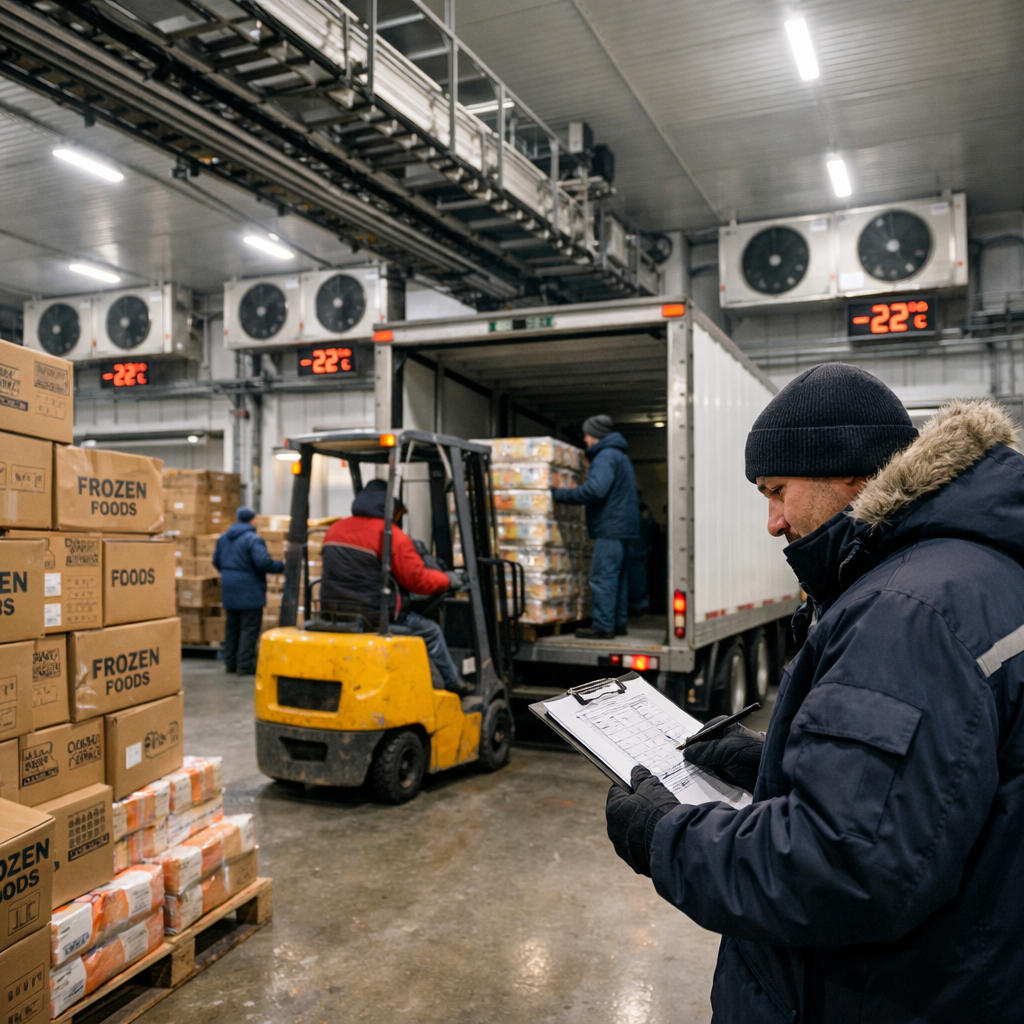
Transportation mishaps represent another critical failure point. Loading and unloading operations are particularly vulnerable. A container door open for extended periods while workers arrange or remove pallets, products stacked incorrectly blocking airflow, or insufficient pre-cooling of transport vehicles before loading all compromise temperature integrity. During peak seasons, rushed operations amplify these risks. One logistics coordinator shared how a delayed flight meant frozen goods sat on a hot tarmac for three hours while crews scrambled to reorganize shipments. The temperature monitoring system captured the exact moment products began thawing—data that transformed into expensive evidence during subsequent insurance claims.
Human error threads through virtually every failure scenario. Warehouse staff might adjust thermostat settings to save energy costs, not understanding the specific requirements for frozen versus chilled goods. Truck drivers might turn off refrigeration units during mandatory rest stops. Customs inspectors, focused on compliance documentation, might keep products at ambient temperature longer than advisable during thorough examinations. Training gaps, communication failures between shift changes, and simple forgetfulness during high-pressure situations create vulnerability even in otherwise well-designed systems.
The Real Cost of Cold Chain Failure
When frozen food cold chain failures occur, consequences cascade far beyond the immediate product loss. Food safety hazards emerge as the primary concern—thawed and refrozen products can harbor dangerous bacterial growth, even if they appear acceptable on the surface. Listeria, Salmonella, and E. coli thrive when temperature control breaks down, transforming premium ingredients into potential health threats.
Quality degradation often manifests in ways that erode consumer trust even when products remain technically safe. Freezer burn, texture changes, color deterioration, and flavor loss diminish the eating experience. For retailers building reputations on premium Chinese cuisine—authentic dumplings, handcrafted dim sum, specialized hotpot ingredients—compromised quality directly undermines brand positioning. Customers expecting restaurant-quality frozen foods won’t return if products disappoint, regardless of the explanation.
Financial losses accumulate quickly. Direct product loss represents just the beginning. Add recall costs if compromised products reached retail shelves, penalty fees from major buyers whose own supply chains were disrupted, expedited replacement shipments to maintain relationships, and investigation expenses to determine what went wrong. A single container of premium frozen seafood worth $100,000 can trigger total losses exceeding $250,000 when indirect costs are factored in.
Brand reputation damage extends beyond individual transactions. In our interconnected world, word spreads fast. A retailer discovering temperature abuse shares their experience with industry colleagues. Social media amplifies food safety concerns. Future buyers question your reliability, requiring additional assurances, more frequent audits, or higher insurance bonds. Rebuilding trust takes years; losing it takes moments.
For international food importers and distributors, these failures also complicate relationships with retail chain buyers and food service operators. Major retailers maintain strict vendor compliance standards. Multiple incidents can result in disqualification from supplier networks—consequences that extend far beyond single shipment losses.
Building Resilience: Practical Prevention Strategies
Preventing cold chain failures requires moving beyond checkbox compliance toward genuine operational resilience. Real-time monitoring systems form the foundation. Modern IoT sensors continuously track temperature, humidity, location, and even shock events throughout transit. These devices don’t just record data—they alert stakeholders immediately when parameters drift outside acceptable ranges, enabling rapid intervention.
Jade Premium’s approach to cold chain integrity exemplifies this proactive philosophy. Rather than relying solely on certifications as end goals, we view them as baseline requirements that must be reinforced through continuous verification and improvement. This means selecting partners not just for their certificates but for demonstrated performance history, implementing redundant monitoring across multiple points in the journey, and maintaining open communication channels that enable quick problem-solving when issues arise.
End-to-end traceability transforms how we understand and manage cold chain risks. By tracking products from production through final delivery, patterns emerge that reveal vulnerabilities before they cause failures. Perhaps a specific port consistently shows temperature excursions during customs processing. Maybe a particular logistics provider performs well domestically but struggles with international shipments. Data-driven insights enable strategic adjustments—rerouting shipments, changing partners, or implementing additional protective measures at identified risk points.
Staff training deserves far more attention than most organizations provide. Everyone touching frozen products throughout the supply chain must understand why temperature control matters, recognize early warning signs of problems, and know whom to contact when issues arise. This includes production workers, warehouse staff, transport drivers, customs agents, and retail handlers. Training shouldn’t occur once during onboarding—it needs regular refreshers, scenario-based learning, and accountability mechanisms that reinforce proper practices.
Enhanced packaging and equipment investment provides additional security layers. High-performance insulation, backup power systems for refrigeration units, and rapid-response repair capabilities minimize vulnerability to equipment failures. While these investments increase upfront costs, they prove economical when measured against potential losses from single cold chain breaks.
Communication protocols between transport modes and operators prevent common failure points. Clear handoff procedures, temperature verification at each transfer, and documented responsibility ensure nothing falls through gaps. When a container moves from truck to ship to truck again, each operator must verify conditions and accept responsibility for maintaining integrity during their portion of the journey.
Integrating these operational practices with certification standards creates genuine resilience. ISO 22000 and HACCP frameworks provide structure; real-time monitoring provides visibility; trained personnel provide reliability; and continuous improvement processes ensure adaptation as challenges evolve.
The Jade Premium Commitment to Excellence
At Jade Premium, we recognize that bringing authentic Chinese cuisine to global tables means more than connecting buyers with suppliers. It requires ensuring that the dumplings arriving in Berlin, the hotpot ingredients reaching Toronto, and the dim sum served in Dubai maintain the quality and safety standards worthy of their cultural heritage.
Our philosophy centers on understanding that certificates mark the beginning of quality assurance, not its completion. When we verify suppliers across China—from Guangzhou’s seafood processors to Chengdu’s specialty manufacturers—we look beyond documentation to operational reality. How do they respond when equipment fails? What backup systems exist? Who verifies actual product temperatures versus what displays indicate? These questions reveal whether a supplier will reliably deliver, or simply promise to.
Our comprehensive network across major Chinese cities enables hands-on verification that remote relationships cannot provide. We visit facilities, observe operations during different shifts, and build relationships with the people who actually handle products. This local presence, combined with our deep understanding of international market requirements, positions us to anticipate and prevent cold chain failures before they occur.
For international food importers, distributors, and retail chain buyers seeking reliable partners in Chinese food exports, the message is clear: certifications provide necessary foundations, but sustained excellence requires vigilance, innovation, and commitment to continuous improvement. The frozen food cold chain will always face challenges—equipment will malfunction, weather will be unpredictable, and human error will occur. The difference between suppliers who consistently deliver and those who don’t lies in how they prepare for these inevitable challenges.
When your certificate can’t stop the thaw, what will? The answer combines technology, training, transparency, and an unwavering commitment to excellence at every step. This is how Jade Premium ensures that authentic Chinese cuisine reaches global consumers with its quality, safety, and cultural significance intact—because some things are simply too valuable to compromise.