
- Trap 1: Mislabeling and Species Substitution
- Trap 2: Lack of End-to-End Traceability
- Trap 3: Antibiotic Use and Residue Risks
- Trap 4: Labor Rights Violations in Processing and Shipping
- Trap 5: Illegal, Unreported, and Unregulated (IUU) Fishing
- Trap 6: Contaminants and Chemical Residues
- Trap 7: Regulatory Compliance Gaps
- Navigating Forward with Confidence
When you’re sourcing seafood from China, you’re navigating one of the world’s most complex supply chains. China produces around 60% of the world’s farmed seafood and remains a dominant player in wild-catch processing. For international buyers—whether you’re an importer supplying European markets, a retail chain buyer stocking shelves in North America, or a restaurant operator seeking authentic ingredients—the opportunities are immense. But so are the risks.
The stakes couldn’t be higher. One contaminated shipment can destroy your brand reputation overnight. Mislabeled products can trigger regulatory penalties. Unverified suppliers might expose you to forced labor scandals. These aren’t theoretical concerns—they’re real pitfalls that trip up experienced buyers every single day.
At Jade Premium, we’ve spent nearly a decade building bridges between Chinese seafood producers and international markets. We’ve seen buyers lose millions because they didn’t know what to look for. We’ve also helped clients navigate these waters successfully by understanding exactly where the hidden traps lie. This article reveals seven critical pitfalls in reliable seafood sourcing from China—and more importantly, how to avoid them.
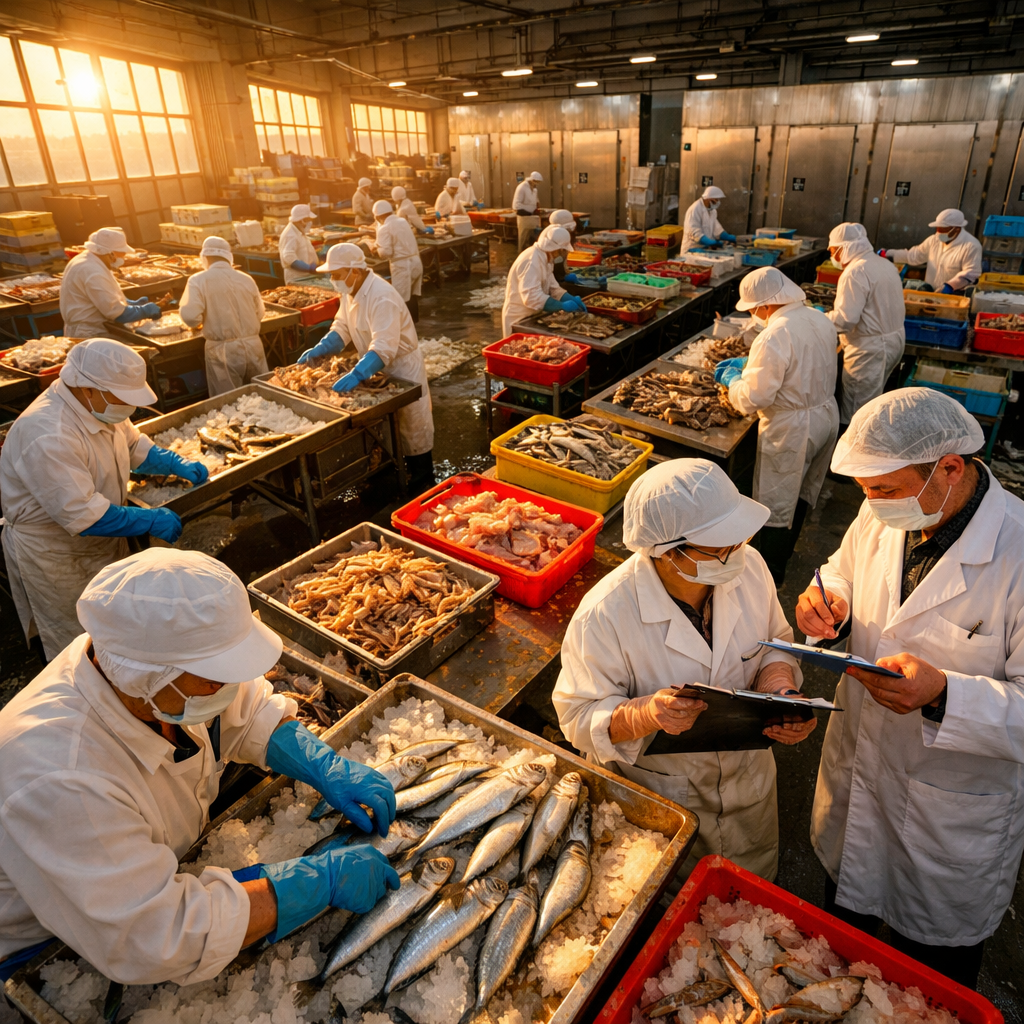
Trap 1: Mislabeling and Species Substitution
You order premium wild-caught grouper. What arrives might be farmed tilapia disguised under a fancy name. Species substitution isn’t just common in Chinese seafood exports—studies have identified seafood mislabeling rates of up to 30% in some markets, especially where supply chains are fragmented.
Here’s why this happens: Profit margins drive deception. When a lower-value species can pass for a premium one, some suppliers take that shortcut. The problem intensifies when dealing with processed products like fish fillets where visual identification becomes nearly impossible.
The consequences extend beyond financial loss. Mislabeling can trigger severe allergic reactions in consumers, violate import regulations, and expose your business to legal liability. When we helped a European distributor investigate quality issues, DNA testing revealed that 40% of their “high-grade snapper” was actually cheaper rockfish species.
How to protect yourself: Demand precise labeling with scientific species names, not just common names. Require batch codes that link products back to specific catch dates and locations. Work with suppliers who provide third-party verification—DNA testing has become affordable and reliable. At Jade Premium, we insist that our partner producers maintain verifiable species documentation for every shipment, creating an audit trail that protects both buyers and sellers.
Don’t accept vague descriptions. “White fish” or “mixed seafood” should raise immediate red flags. Reputable suppliers will proudly specify exactly what species you’re purchasing, complete with Latin names that eliminate ambiguity.
Trap 2: Lack of End-to-End Traceability
Imagine trying to verify your seafood’s journey from ocean to container, but hitting dead ends at every turn. That’s the reality for many buyers dealing with Chinese seafood supply chains. When something goes wrong—contamination, regulatory issues, or quality problems—the inability to trace products back to their source becomes catastrophic.
The Chinese seafood industry often involves multiple intermediaries: fishing vessels sell to landing sites, which sell to processors, who sell to exporters, who sell to trading companies. At each handoff, documentation becomes murkier. Without robust traceability systems, you’re essentially flying blind.
This fragmentation creates dangerous blind spots. Was the fish caught legally? Where exactly did it come from? How was it handled during processing? When critical information exists only on paper receipts that vanish into filing cabinets, these questions become impossible to answer.
The solution lies in demanding full traceability: Modern technology makes comprehensive tracking achievable. Look for suppliers who use digital traceability systems that record GPS coordinates of catch locations, time stamps for processing steps, and temperature logs during storage. Blockchain-based traceability platforms are emerging in China’s seafood sector, providing immutable records that buyers can verify independently.
We’ve implemented QR code systems with several of our partner producers. Scanning a code reveals the vessel that caught the fish, the date it was landed, the facility that processed it, and every checkpoint until export. This transparency doesn’t just reduce risk—it becomes a powerful marketing tool when you can prove authenticity to your end customers.
Reject suppliers who claim traceability is “too difficult” or “not standard practice.” The technology exists. The standards are clear. Companies serious about international trade invest in these systems because they understand that transparency builds lasting relationships.
Trap 3: Antibiotic Use and Residue Risks
Chinese aquaculture feeds the world, but intensive farming practices have historically relied heavily on antibiotics to prevent disease in crowded fish ponds. While regulations have tightened significantly, antibiotic residues remain a legitimate concern that can result in shipment rejections at borders and serious food safety violations.
The problem stems from economic pressure. When farmers stock ponds at maximum density to boost yields, disease spreads quickly. Preventive antibiotic use becomes tempting. However, these compounds don’t simply disappear—they accumulate in fish tissue, potentially creating antibiotic-resistant bacteria and posing health risks to consumers.
Testing by international monitoring agencies has detected concerning levels of quinolones, tetracyclines, and sulfonamides in some Chinese aquaculture products. These findings trigger automatic shipment rejections in markets like the EU and North America, where maximum residue limits are strictly enforced.
Your defense strategy must be proactive: Source from producers with verified “antibiotic-free” claims backed by regular testing. Look for GAP (Good Aquaculture Practice) or GMP (Good Manufacturing Practice) certifications that mandate strict antibiotic protocols. These aren’t just badges—they represent third-party audits and continuous monitoring.
When evaluating potential suppliers, ask detailed questions about their farming practices. What’s their disease prevention strategy? How do they maintain water quality? Do they practice pond rotation? Responsible farmers invest in biosecurity measures that reduce disease risk without chemical intervention.
Jade Premium works exclusively with aquaculture producers who provide quarterly residue testing reports from accredited laboratories. We’ve walked away from lucrative deals when suppliers couldn’t demonstrate clean testing histories. This vigilance protects our clients from the devastating consequences of contaminated shipments—rejected cargo, regulatory penalties, and destroyed reputations.
Trap 4: Labor Rights Violations in Processing and Shipping
The hidden human cost of cheap seafood has increasingly come under international scrutiny. Investigations have exposed forced labor, debt bondage, and exploitative working conditions in segments of China’s seafood processing sector and on fishing vessels operating in international waters. For buyers, ignorance provides no protection—your brand becomes associated with these abuses when they’re revealed.
US legislation now specifically targets Chinese seafood linked to forced labor, with customs authorities empowered to detain shipments lacking proper labor practice documentation. European markets are moving in the same direction. Beyond legal compliance, today’s consumers demand ethical sourcing. Social media can turn labor violations into public relations disasters within hours.
The complexity lies in verification. Labor practices exist behind closed doors in processing facilities and on ships far from shore. Surface-level facility tours reveal little about worker treatment, contract terms, or whether employees work voluntarily under fair conditions.
Due diligence requires going deeper: Prioritize suppliers with credible third-party labor certifications like SA8000 or SMETA audits conducted by independent auditors. These assessments examine working hours, wage payment, freedom of movement, and grievance mechanisms. Request access to recent audit reports, not just certificates.
Ask pointed questions during supplier evaluation: How are workers recruited? What are typical contract terms? Is there worker turnover data? Are there worker representatives or unions? Ethical employers welcome these questions and provide transparent answers.
At Jade Premium, our supplier vetting process includes labor standards assessment as a non-negotiable criterion. We maintain relationships with processing facilities that demonstrate fair labor practices through regular audits and worker interviews. We’ve terminated partnerships when labor concerns emerged, even at financial cost, because we understand that truly reliable seafood sourcing must account for human dignity throughout the supply chain.
Trap 5: Illegal, Unreported, and Unregulated (IUU) Fishing
IUU fishing represents one of the most serious threats to marine ecosystems and sustainable seafood supplies globally. When Chinese vessels operate without proper licensing, exceed catch quotas, or fish in protected areas, they contribute to depleted fish stocks that jeopardize long-term industry viability. For buyers, IUU-caught seafood creates legal jeopardy and reputational risk.
The scale is staggering. Estimates suggest IUU fishing accounts for up to 30% of wild catches in some regions. These illegal operations undercut responsible fishers who respect quotas and seasons. They also contaminate supply chains with products that violate international trade laws.
Import regulations increasingly target IUU products. The US Seafood Import Monitoring Program requires detailed catch documentation for specific species. The EU’s IUU regulation mandates catch certificates validated by flag state authorities. Products lacking proper documentation face seizure and destruction.
Protecting yourself means demanding proof of legality: Work with suppliers who hold recognized sustainability certifications like MSC (Marine Stewardship Council) for wild-caught seafood. These programs verify legal fishing practices through chain-of-custody documentation. Request vessel registry information, fishing licenses, and catch reports that demonstrate compliance.
For processed products, traceability becomes even more critical. When Chinese facilities process fish caught by multiple vessels, maintaining segregation between legal and potentially illegal catches requires robust systems. Suppliers committed to legal sourcing invest in these tracking capabilities.
We’ve implemented strict verification protocols at Jade Premium for all wild-caught seafood. Our procurement team verifies vessel licensing, reviews catch documentation, and cross-references fishing zones against protection areas. This diligence takes time but provides essential assurance that our clients receive legally caught products that won’t trigger import violations.

Trap 6: Contaminants and Chemical Residues
Heavy metals, pesticide residues, banned preservatives—the list of potential contaminants in seafood reads like a chemistry textbook. China’s rapid industrialization created environmental pollution that affects aquatic ecosystems. Additionally, some processors use chemical treatments to preserve appearance or extend shelf life, sometimes employing substances prohibited in international markets.
Mercury accumulation in large predatory fish species, cadmium in shellfish from polluted coastal areas, and illegal use of formaldehyde or other preservatives have all triggered shipment rejections. These contaminants pose genuine health risks and violate food safety regulations worldwide.
The challenge for buyers lies in the invisible nature of these risks. Contaminated products often look identical to clean ones. Without laboratory testing, detection is impossible. Yet the consequences of contaminated shipments include regulatory action, consumer illness, product recalls, and permanent damage to buyer credibility.
Robust testing protocols are non-negotiable: Demand recent third-party testing results from accredited laboratories that screen for heavy metals, pesticide residues, veterinary drug residues, and microbial contamination. “Recent” means within the last quarter, not last year. Testing from the buyer’s own selected laboratory provides additional assurance.
Choose producers operating in low-pollution areas with documented environmental monitoring. Visit facilities to assess sanitation practices and chemical storage. Ask about pest control methods—heavy pesticide use near processing areas raises contamination risk.
At Jade Premium, we’ve invested in relationships with certified testing laboratories across China. Every product category undergoes specified testing protocols before export approval. We’ve rejected shipments that passed casual inspection but failed laboratory screening. This commitment to safety means our clients trust that products arriving from our supply chain meet stringent international food safety standards.
Trap 7: Regulatory Compliance Gaps
International food regulations form a complex maze that changes constantly. Chinese seafood exporters face requirements from FDA (for US markets), EFSA (for EU), CFIA (for Canada), plus unique demands from markets across Asia, Middle East, and beyond. Compliance failures—from improper labeling to missing certificates—cause shipment delays, rejections, or penalties that destroy profit margins.
The trap springs when suppliers lack current knowledge of destination market requirements. Labeling errors represent one of the most common issues: missing allergen declarations, incorrect net weight statements, wrong country of origin, or inadequate nutritional information. These seemingly minor details trigger automatic rejections at customs.
Documentation requirements vary by product and destination. Health certificates, catch certificates, processing plant registration numbers, laboratory test reports—missing even one document stops shipments cold. Border rejections don’t just cost money; they disrupt your customers’ operations and damage your reputation as a reliable supplier.
Success requires expertise and verification: Work with export brokers and suppliers who demonstrate deep knowledge of your target markets’ regulations. Request evidence of GACC (General Administration of Customs China) registration for export facilities. Verify FDA establishment numbers for US-bound products or EU approval numbers for European markets.
Before confirming orders, review sample labels and documentation packages. Mistakes are far easier to correct before production than after shipment. Establish clear communication about regulatory requirements upfront, including any market-specific packaging or labeling needs.
Jade Premium serves as a compliance bridge for our clients. With offices across China and deep experience in multiple international markets, we ensure that products leaving our supply chain meet destination requirements before they ship. Our team stays current on regulatory changes, maintains relationships with certification bodies, and manages documentation with meticulous attention to detail. This expertise prevents the costly mistakes that plague buyers working directly with producers unfamiliar with international compliance complexities.
Navigating Forward with Confidence
Reliable seafood sourcing from China doesn’t require avoiding the market—it requires avoiding these seven traps through diligence, expertise, and partnerships with principled suppliers. The opportunities in China’s seafood sector remain extraordinary for buyers who approach them intelligently.
The common thread connecting these traps is information asymmetry. When buyers lack visibility into production practices, supply chain details, and compliance status, risk multiplies. Transparency, verification, and accountability become your most powerful tools.
At Jade Premium, we’ve built our business on eliminating these information gaps. Our local presence across China’s major seafood production regions gives us direct visibility into sourcing conditions. Our quality control systems provide verification at every stage. Our compliance expertise ensures smooth market entry. Most importantly, our commitment to bringing authentic Chinese cuisine to global tables means we stake our reputation on every shipment.
We understand that seafood carries cultural significance beyond nutrition—it represents culinary tradition, celebration, and connection. When international buyers source from China, they’re accessing centuries of fishing heritage and aquaculture expertise. Our role is ensuring that this rich tradition reaches global markets through supply chains built on transparency, quality, and integrity.
The traps outlined in this article represent genuine challenges, but they’re entirely avoidable with proper diligence and expert guidance. By demanding traceability, verifying labor practices, testing for contaminants, confirming regulatory compliance, and working with suppliers who share your values, you transform risk into competitive advantage.
Your next seafood shipment from China can arrive exactly as ordered—properly labeled, legally caught, safely processed, and fully compliant. It simply requires navigating with your eyes open, asking the right questions, and partnering with professionals who’ve already charted these waters. That’s the promise of truly reliable seafood sourcing from China, and it’s what we deliver every day at Jade Premium.