
The aroma of authentic Sichuan hotpot base, the delicate texture of handmade dim sum, the rich umami of premium soy sauce—Chinese food products represent a treasure trove of culinary opportunities for international buyers. These ingredients can transform your product lineup, delight your customers, and differentiate your business in competitive markets. Yet between placing your order and welcoming those containers to your warehouse lies a labyrinth that has frustrated countless importers: customs clearance.
You’ve done your homework. You’ve found reliable suppliers, negotiated favorable terms, and arranged shipping. Then your shipment hits customs, and everything stops. Days turn into weeks. Emails multiply. Costs escalate. For perishable goods, the clock isn’t just ticking—it’s counting down to potential spoilage and financial loss. Understanding why customs clearance gets stuck and how to prevent these delays isn’t just useful knowledge—it’s essential for anyone serious about importing food from China.
The Complex Reality of Chinese Food Import Customs
Customs clearance for food imports operates within a framework designed to protect public health, ensure product safety, and maintain regulatory compliance. Unlike importing textiles or electronics, food products face heightened scrutiny because they directly enter the food chain and impact consumer safety. The Chinese export system, combined with your destination country’s import requirements, creates multiple checkpoints where errors can derail your shipment.
At the heart of this process lies proper documentation and accurate product classification. Your shipment requires a commercial invoice detailing the transaction, a packing list specifying contents and quantities, bills of lading proving ownership and shipping arrangements, and inspection certificates confirming the products meet health and safety standards. Understanding Chinese food export compliance requirements helps you navigate these documentation demands effectively. But these documents alone won’t guarantee smooth passage. The accuracy of information within them determines whether your shipment sails through or gets detained for inspection.
The Harmonized System (HS) code represents your first critical decision point. This internationally standardized numerical classification system classifies traded goods, and for food imports from China, you’ll also encounter the HS-CIQ extension—a specialized classification system that Chinese customs uses to identify inspection and quarantine requirements. A frozen dumpling isn’t simply “frozen food.” Depending on its filling, wrapper ingredients, and processing method, it might fall under different HS codes, each carrying distinct tariff rates, inspection requirements, and regulatory obligations.
Consider the case of an importer who classified premium frozen meat-filled buns under a general “bakery products” HS code. The shipment was detained at customs when inspectors discovered the meat content, which required veterinary certificates, temperature monitoring records, and facility approvals that the importer hadn’t obtained. Learn from common mistakes importing Chinese food to avoid similar classification errors. The reclassification triggered additional inspections, quarantine holds, and ultimately a three-week delay. By the time clearance was granted, some products had exceeded safe storage periods and had to be destroyed—turning a promising order into a costly lesson about the importance of accurate classification.
The consequences of misclassification extend beyond delays. Incorrect HS codes can result in underpaid tariffs, triggering retrospective duty assessments, penalties, and increased scrutiny on future shipments. In severe cases, customs authorities may seize products or suspend import privileges. The financial impact multiplies when you factor in demurrage charges for containers sitting at ports, storage fees, expedited shipping costs to meet customer commitments, and the reputational damage of unreliable supply.
Common Pitfalls That Trigger Customs Detention
Beyond classification errors, several recurring issues cause customs clearance problems for food importers. Understanding these pitfalls helps you recognize vulnerabilities in your import process before they become expensive problems.
Labeling noncompliance ranks among the most frequent causes of detention. Different markets impose specific labeling requirements, and Chinese suppliers don’t always understand these nuances. For U.S. imports, the FDA mandates detailed nutritional information, allergen declarations, and proper ingredient listings in English. European markets require compliance with EU food labeling regulations, including specific formatting for mandatory information. Many Chinese producers create labels that meet domestic Chinese standards but fail to incorporate international requirements.
Imagine receiving a container of premium soy sauce only to discover the labels lack the required allergen warnings, nutritional panels don’t follow the prescribed format, and the ingredient list uses unapproved descriptors. Customs detains the shipment pending relabeling. You face a choice: return the products to China for proper labeling—absorbing shipping costs, delays, and potential order cancellations—or arrange for relabeling at the destination, which requires regulatory approval, additional inspections, and coordination with local service providers. Either option erodes margins and tests customer patience.
Documentation gaps create equally serious problems. Chinese food exports require inspection certificates from the General Administration of Customs China (GACC), confirming products meet sanitary and phytosanitary requirements. Verify your supplier has proper GACC export registration before placing orders to avoid documentation issues. These certificates must precisely match your commercial documents—any discrepancy in product descriptions, quantities, batch numbers, or production dates triggers red flags. Customs officers operate on strict matching protocols; if your inspection certificate lists “frozen meat dumplings” but your commercial invoice says “frozen pork dumplings,” the inconsistency demands investigation and explanation.
For certain products, additional certifications prove essential. Organic foods need organic certification recognized by your destination market. Products containing animal ingredients require veterinary health certificates. Processed foods might need certificates of free sale, confirming the products are legally marketed in China. Missing any required certificate stalls clearance while you scramble to obtain the proper documentation—often requiring coordination between multiple government agencies across different time zones.
The stakes escalate dramatically for perishable products. Frozen seafood, fresh produce, temperature-sensitive ingredients—these products have limited shelf lives and require continuous cold chain management. Proper cold chain logistics for Chinese food exports becomes critical for maintaining product quality through customs. Every day spent in customs detention increases spoilage risk. Temperature fluctuations during prolonged storage can compromise product quality even if items remain technically within safe parameters. One importer of premium frozen dim sum watched helplessly as a two-week customs delay left products with insufficient remaining shelf life for retail distribution. Despite eventually gaining clearance, the entire shipment became unsaleable and had to be disposed of at significant loss.
The financial impact of these issues compounds quickly. Direct costs include demurrage and detention charges from shipping lines—typically $100-$300 per container per day after the free period expires. Port storage fees add another layer of expense. For air freight shipments, storage costs at international airports can reach even higher rates. Then consider indirect costs: expedited shipping to rush replacement products, discounts offered to retain dissatisfied customers, lost sales opportunities, and the staff time consumed managing the crisis instead of growing your business.
Beyond financial consequences, customs problems damage your reputation with customers and suppliers. Retailers expecting timely delivery to support promotional campaigns lose confidence when containers arrive weeks late. Restaurant partners counting on specific ingredients for seasonal menus must find alternatives, possibly turning to competitors. Chinese suppliers question your professionalism when documentation issues force them to engage in time-consuming correspondence with Chinese customs authorities.
Practical Solutions for Smooth Customs Clearance
Preventing customs clearance issues requires proactive planning, thorough verification, and strategic partnerships. International buyers who consistently avoid delays share common practices that minimize risk and ensure compliance.
Start with rigorous supplier verification. Before committing to a purchase, confirm your Chinese supplier maintains necessary export licenses and understands international compliance requirements. Comprehensive supplier verification in food imports protects your business from regulatory gaps and quality issues. Request their export history—experienced exporters who regularly ship to your market understand documentation standards and labeling requirements. Ask about their quality management systems; suppliers with ISO 22000 or HACCP certification demonstrate commitment to international food safety standards that align with import requirements.
Examine sample products and documentation before placing large orders. Review product labels against your market’s specific requirements. For U.S. imports, compare labels to FDA regulations on nutrition facts panels, ingredient declarations, and mandatory warnings. For EU markets, verify compliance with Regulation (EU) No 1169/2011 on food information to consumers. Don’t assume suppliers understand these requirements—make compliance a clear contractual obligation and provide detailed specifications.
Ensure absolute accuracy in HS code classification. Invest time in proper classification or engage customs classification specialists who understand food products. The World Customs Organization provides detailed explanatory notes for each HS code chapter, offering guidance on distinguishing between similar products. For Chinese exports, verify both the standard six-digit HS code and the HS-CIQ extension, as Chinese customs documentation must reflect this detailed classification.
Consider the composition, processing method, and intended use when classifying food products. Frozen prepared meals containing multiple ingredients might classify differently than frozen meat products or frozen vegetables, despite similar storage requirements. Sauce products fall into various classifications depending on whether they’re primarily tomato-based, soy-based, vinegar-based, or contain significant amounts of herbs and spices. Getting classification right the first time prevents the cascading problems that follow misclassification.
Build comprehensive documentation packages. Create a customs clearance checklist specific to each product category you import. For Chinese food products destined for the U.S., your core documentation includes: detailed commercial invoices with accurate product descriptions matching HS codes, complete packing lists specifying carton contents and net/gross weights, ocean or air bills of lading, Chinese health certificates issued by GACC, any required product-specific certifications, and evidence of FDA prior notice submission.
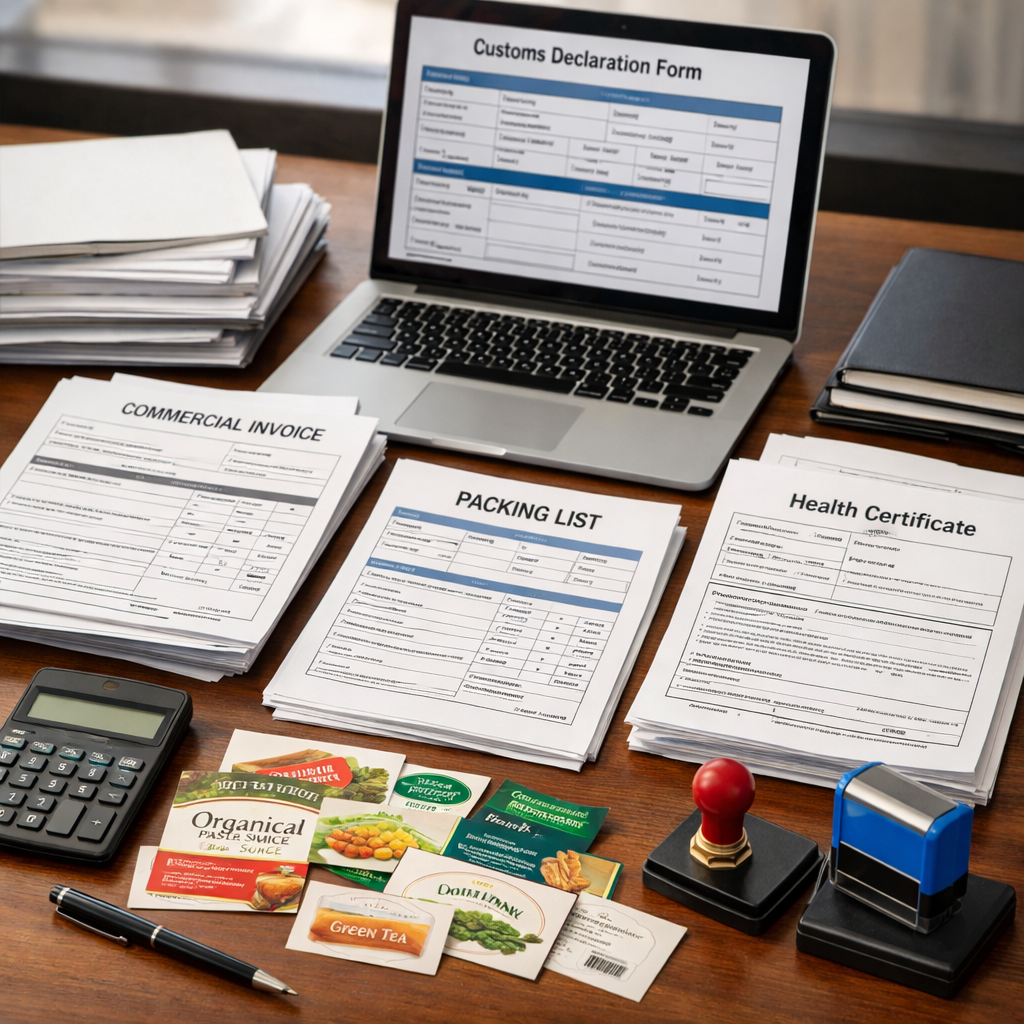
Verify consistency across all documents before shipment departs China. Product descriptions should use identical terminology in commercial invoices, packing lists, health certificates, and bills of lading. Quantities must match precisely—a discrepancy between declared quantities on different documents raises suspicion and triggers examination. Confirm that production dates, batch codes, and expiration dates align across documentation.
For U.S. imports, understand and comply with FDA requirements well in advance. The Prior Notice of Imported Food requirement mandates electronic submission of shipment information before goods arrive. The FDA’s import program ensures all imported foods meet the same safety standards as domestic products. This notice must include accurate product information, quantities, shipper details, and anticipated arrival time. Late or inaccurate prior notices can result in FDA refusal of entry. Additionally, products from facilities not registered with the FDA face automatic detention.
Consider working with professional customs brokers and compliance specialists. Licensed customs brokers bring expertise in navigating complex regulations, managing documentation, and communicating with customs authorities. They classify products correctly, calculate applicable duties and taxes, prepare and submit required filings, and coordinate inspections when necessary. For importers new to Chinese food products or those expanding into new product categories, this expertise proves invaluable.
Specialized food import compliance consultants offer another layer of support. These professionals understand both food safety regulations and international trade requirements, helping you navigate the intersection between these regulatory frameworks. They can review product formulations for compliance issues, advise on labeling requirements across different markets, and identify potential regulatory obstacles before they disrupt your supply chain.
Establish clear communication protocols with Chinese suppliers. Language and cultural differences can lead to misunderstandings about compliance requirements. Provide suppliers with detailed written specifications for documentation and labeling. Use clear, simple language and avoid industry jargon that might not translate well. Request confirmation that they understand requirements and ask them to provide documentation samples for your review before production begins.
Build contingency time into your supply chain planning. Even with perfect preparation, occasional customs examinations occur as part of routine oversight. Container examinations, document reviews, and product sampling add days to clearance timelines. Building buffer time into your planning prevents these routine delays from becoming supply chain crises.
Maintain meticulous records and learn from each shipment. Document all aspects of your import process—supplier communications, documentation packages, clearance timelines, and any issues encountered. This information creates institutional knowledge that improves future imports. When problems occur, conduct thorough post-mortems to identify root causes and implement corrective measures.
Stay informed about regulatory changes affecting Chinese food imports. Food safety regulations, import requirements, and customs procedures evolve continuously. Understanding differences between China food export standards vs international requirements helps you stay ahead of compliance changes. The UFLPA regulations affecting certain Chinese products, changes to tariff classifications, updates to food safety standards—these developments impact your compliance obligations. Subscribe to customs and regulatory agency updates, participate in industry associations, and maintain relationships with compliance professionals who track these changes.
Your Trusted Partner for Navigating Chinese Food Imports
Successfully importing premium Chinese food products requires more than finding quality suppliers—it demands deep understanding of international trade regulations, cultural expertise to bridge Eastern and Western business practices, and comprehensive supply chain management to transform products from Chinese factories into inventory ready for your market.
This is where Jade Premium’s unique value becomes clear. Since 2015, we’ve built our reputation on being more than a trading company—we’re your trusted partner in China, combining extensive local networks with profound understanding of international compliance requirements. Our offices across major Chinese cities give us direct access to premium Chinese food producers while our international perspective ensures every product meets global market standards.
We handle the complexity so you can focus on growing your business. Our team manages supplier qualification verification, ensuring your sources maintain necessary licenses and quality certifications. We coordinate proper documentation, working with suppliers to ensure labels meet your market’s specific requirements and all certificates accurately reflect product specifications. Our compliance expertise covers HS code classification, regulatory requirements, and customs procedures across multiple markets.
When you work with Jade Premium, customs clearance issues become rare exceptions rather than constant concerns. We’ve learned from hundreds of successful shipments what details matter, which potential problems to address proactively, and how to position your imports for smooth clearance. We understand the frustration of delayed shipments, the financial pressure of mounting storage charges, and the stress of explaining delays to impatient customers—and we’ve built our processes to prevent these situations.
Beyond logistics and compliance, we offer something equally valuable: authentic cultural insights into Chinese food products. We help you understand not just what you’re importing, but the culinary traditions, regional specialties, and artisanal techniques behind each product. This knowledge empowers you to market products more effectively, educate your customers, and build compelling narratives around your offerings.
The journey from Chinese production facilities to your customers’ tables shouldn’t be fraught with customs nightmares and clearance uncertainties. With proper planning, rigorous compliance, and the right partnership, importing premium Chinese food products becomes a competitive advantage rather than a logistical challenge. Whether you’re importing authentic hotpot ingredients, premium dim sum, specialty sauces, or any other Chinese culinary products, approaching customs clearance with knowledge and preparation ensures your shipments arrive on time, in compliance, and ready to delight your customers.
At Jade Premium, we’re committed to bringing authentic Chinese cuisine to global tables through reliable, compliant, and efficient trade services. Let us help you navigate the complexities of Chinese food imports, transforming potential obstacles into opportunities for growth. Because when customs clearance runs smoothly, everyone wins—your business thrives, your customers enjoy premium products, and the rich culinary heritage of Chinese cuisine reaches appreciative audiences worldwide.