
For international buyers sourcing Chinese food products, quality control is not just about compliance—it protects your business, customers, and brand reputation. As an international buyer sourcing from China, understanding the hidden safety systems protecting your purchases isn’t just about compliance—it’s about protecting your business, your customers, and your reputation.
The reality is stark: according to the 2024 Research Report on Food Safety Status in China, while the pass rate for food sampling inspections remained above 97% from 2019-2023, that remaining margin represents real risks for international buyers. One contaminated shipment, one documentation error, one missed certification can result in costly recalls, damaged relationships, and regulatory penalties in your home market.
At Jade Premium, we’ve spent nearly a decade navigating these complexities as your trusted partner in China. We’ve witnessed how the most successful international buyers approach quality control—not as a bureaucratic hurdle, but as a strategic advantage that separates reliable suppliers from risky ones. Let’s pull back the curtain on the quality control systems safeguarding Chinese food exports and show you how to verify they’re actually working for your purchases.
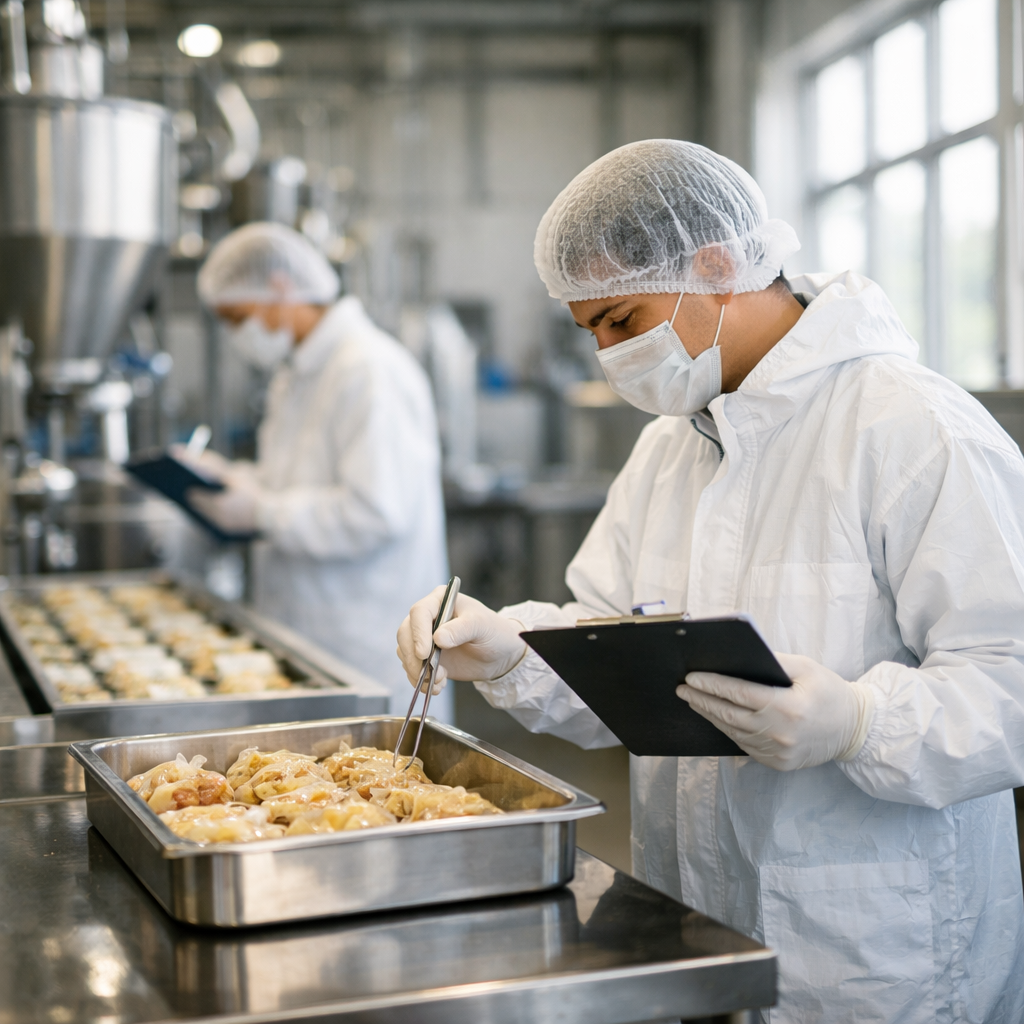
The Foundation: Understanding China’s Quality Control Ecosystem
The quality control landscape for Chinese food exports isn’t a single system—it’s a multi-layered framework combining international standards with China-specific regulations. When you source Chinese ingredients, your supplier should be operating within several overlapping quality systems, each addressing different aspects of food safety.
HACCP (Hazard Analysis and Critical Control Points) forms the backbone of preventive food safety and supplier qualification verification. Rather than simply testing finished products, HACCP requires manufacturers to identify potential hazards at every production stage—from raw material reception to final packaging—and implement control measures at critical points. For instance, a reputable Chinese mushroom processor doesn’t just test dried shiitakes for pesticides at the end; they monitor moisture levels during drying, control storage temperatures to prevent mold growth, and verify supplier certifications before accepting raw mushrooms. This systematic approach dramatically reduces contamination risks before they become problems.
ISO 22000 takes HACCP further by integrating it into a comprehensive food safety management system. This international standard requires documented procedures, regular internal audits, and continuous improvement protocols. When your Chinese supplier holds valid ISO 22000 certification, you’re seeing evidence of systematic quality control that extends beyond production floors into management accountability and traceability systems.
GMP (Good Manufacturing Practices) governs the physical production environment and operational hygiene. This covers everything from facility design and equipment maintenance to employee hygiene and pest control. A GMP-compliant Chinese food facility maintains separation between raw and cooked product zones, implements strict sanitation schedules, and trains workers in hygiene protocols—all creating the clean environment where safe food begins.
GB Standards (Guobiao), China’s national standards contrasting with international requirements, set specific requirements for different food categories. GB 2762-2025, recently updated with 34 new national food safety standards, establishes maximum limits for contaminants including heavy metals, mycotoxins, and pesticide residues in various food products. Understanding which GB standards apply to your specific products—whether soy sauce, dried noodles, or frozen dim sum—helps you verify your supplier’s compliance with Chinese baseline requirements.
GFSI-Recognized Schemes such as BRC, IFS, and FSSC 22000 represent the gold standard for international buyers. The Global Food Safety Initiative benchmarks certification programs against rigorous criteria. When Chinese exporters hold GFSI-recognized certifications, they’ve demonstrated food safety management that meets expectations across global markets, from European retailers to North American food service operators.
The pass rate above 97% mentioned earlier reflects how seriously Chinese food producers have embraced these systems. However, as an international buyer, your job isn’t just confirming these systems exist—it’s verifying they’re genuinely implemented and maintained.
China’s Export-Focused Regulatory Machinery
Beyond voluntary quality systems, Chinese food exports operate under strict government oversight designed specifically to protect China’s reputation in international markets. Understanding this regulatory landscape helps you identify suppliers who can consistently meet export requirements.
GACC (General Administration of Customs of China) serves as the primary gatekeeper for food exports. GACC Order No. 280, formalized in recent years, established mandatory registration rules for overseas food manufacturers exporting to China—and similar requirements exist for Chinese facilities exporting abroad. This registration system means legitimate exporters maintain active registrations, undergo facility inspections, and meet ongoing compliance requirements. When evaluating a potential Chinese supplier, verifying their GACC registration status should be your first step.
CIQ (Customs Inspection and Quarantine) personnel conduct physical inspections of export shipments, testing for contaminants, verifying labeling accuracy, and confirming documentation completeness. These inspections occur before products leave China, creating an additional quality checkpoint beyond supplier self-certification. However, CIQ inspections sample shipments rather than examining every container—they’re a safety net, not a substitute for your own supplier verification.
CNCA (Certification and Accreditation Administration of China) oversees the certification bodies that audit food facilities and grant quality certifications. This regulatory structure means that when your Chinese supplier presents an ISO 22000 certificate, it should come from a CNCA-accredited certification body—and you can verify that accreditation through official channels.
Looking ahead to 2025, significant regulatory updates are reshaping China’s food safety landscape. The National Food Safety Standard Review Committee announced plans for formulation and revision of 44 national food safety standards in 2025, with 30 standards already in drafting stages as of July 2025. These updates will tighten requirements across multiple areas, from infant formula supervision and organic food standards (effective December 1, 2025) to new food contact material regulations (GB 4806.10-2025 for coatings and GB 4806.16-2025 for silicone rubber).
For international buyers, these regulatory changes create both challenges and opportunities. Suppliers who proactively adapt to updated standards demonstrate the quality management sophistication you need in a long-term partner. Those who scramble to comply at the last minute or overlook new requirements signal potential future problems.
At Jade Premium, we’ve observed that successful exporters treat compliance as an ongoing process, not a one-time checklist. They build relationships with regulatory bodies, invest in upgrading facilities before new requirements take effect, and maintain open communication with international buyers about regulatory transitions. These are the suppliers who sustain their export capabilities through China’s evolving regulatory landscape.
Your Verification Toolkit: Practical Steps for International Buyers
Understanding quality control systems theoretically is one thing; practically verifying your Chinese suppliers actually implement them requires a systematic approach. Here’s how to move beyond accepting certificates at face value and conduct meaningful compliance verification.
Start with documentation review. Request current copies of all relevant certifications—HACCP plans, ISO 22000 certificates, GMP approvals, GACC registration, and any GFSI-recognized scheme certifications. Don’t just glance at these documents; verify they’re current (check expiration dates), issued by accredited bodies (cross-reference certification bodies against CNCA records), and cover the specific products you’re purchasing. A certificate for dried vegetables doesn’t cover frozen dumplings from the same facility.
Conduct supplier audits—or hire experienced partners who can. Physical facility inspections remain the most reliable verification method. During audits, move beyond conference rooms into production areas. Observe whether HACCP critical control points identified in documentation actually have monitoring equipment installed and records being maintained. Check if employee hygiene practices match written procedures. Inspect storage areas for proper temperature control and pest management. The gap between documented systems and actual practices reveals supplier reliability.
For buyers without the resources to conduct on-site audits in China, partnering with companies like Jade Premium provides local expertise. Our teams across Shenzhen, Guangzhou, Shanghai, Chengdu, Wuhan, and Changsha conduct facility assessments as part of our source-to-delivery procurement solutions, verifying that quality systems are genuinely operational before we recommend suppliers to international buyers.
Review laboratory testing protocols and results. Reputable Chinese food exporters conduct regular testing for relevant contaminants, allergens, and quality parameters. Request copies of recent batch testing reports from accredited laboratories. Compare results against both Chinese GB standards and your destination market’s requirements (FDA standards for the US, EU regulations for Europe, etc.). Consistent testing with results well within acceptable limits indicates robust quality control; results that barely pass or show variability signal potential issues.

Verify traceability systems. Effective control of product flow and assurance of food safety depend on robust traceability systems capable of identifying each unit from production to distribution. Ask suppliers to demonstrate backward traceability (tracking a finished product back to raw material sources) and forward traceability (identifying where specific batches were distributed). Suppliers with strong traceability can quickly isolate and recall affected products if problems arise, limiting your exposure.
Align with both Chinese and international regulations. A critical mistake many international buyers make is assuming Chinese quality certifications automatically translate to compliance in their home markets. They don’t. Chinese GB standards may differ from EU maximum residue levels for pesticides or FDA requirements for labeling allergens. Your supplier verification must confirm products meet both Chinese export requirements AND your destination market’s import requirements. This prevents the shipment rejections that occur when products cleared by Chinese customs still fail inspections upon arrival.
Establish ongoing monitoring, not just pre-purchase verification. Quality control isn’t a one-time exercise before your first order. Implement regular supplier reviews, request updated certificates as they renew, and periodically audit facilities or have your China-based partner do so. Production quality can deteriorate over time due to management changes, cost-cutting measures, or complacency. Continuous monitoring catches these shifts before they affect your shipments.
At Jade Premium, our comprehensive compliance know-how extends beyond initial supplier qualification to ongoing monitoring throughout our partnerships with international buyers. We don’t just connect you with certified Chinese producers—we help maintain the quality standards that made them reliable suppliers in the first place.
The Preventive Philosophy: Why Quality Control Systems Matter
The fundamental purpose of quality control systems in Chinese food exports isn’t catching contaminated products before shipment—it’s preventing contamination from occurring in the first place. This preventive philosophy aligns perfectly with the expectations of international buyers who recognize that recalls, rejections, and food safety incidents carry costs far exceeding the price of prevention.
Consider the economics: a contaminated shipment might cost you the product value, but the real expenses include damaged customer relationships, regulatory investigations, legal liabilities, and reputational harm that affects future sales. According to industry research, food recall costs average significantly higher than the product value itself when all impacts are calculated. Meanwhile, sourcing from suppliers with robust quality control systems adds minimal cost per unit while dramatically reducing contamination risks.
The traceability component of quality control systems provides additional protection. When an issue does arise—perhaps a customer complaint about product quality or a regulatory alert about contamination risks—suppliers with strong traceability can quickly identify affected batches, determine root causes, and implement corrective actions. This rapid response capability turns potential disasters into manageable incidents.
Documentation, often viewed as bureaucratic burden, serves critical business purposes for international buyers. Complete records of supplier certifications, test results, and audit findings protect you during regulatory inspections, support insurance claims if problems occur, and demonstrate due diligence to customers concerned about food safety. At Jade Premium, we maintain comprehensive documentation for all our procurement relationships, ensuring our international buyer partners have the evidence needed to satisfy stakeholders.
Celebrating Quality in Chinese Cuisine Export
Understanding quality control systems shouldn’t diminish your appreciation for the rich culinary traditions behind Chinese food exports—it should enhance it. The authentic flavors, traditional techniques, and cultural significance embodied in premium Chinese ingredients deserve protection through rigorous quality control that delivers them safely to global tables.
When you source Chinese dumpling wrappers made by manufacturers who’ve mastered both traditional craftsmanship and modern HACCP systems, you’re accessing centuries of culinary expertise supported by contemporary food safety science. When your Chinese mushroom supplier combines traditional cultivation knowledge with ISO 22000-certified processing, you’re experiencing cultural heritage preserved through quality assurance.
This is the vision that drives Jade Premium—bringing authentic Chinese cuisine to global tables while ensuring every product meets the stringent quality standards international buyers rightfully demand. Our extensive local network across major Chinese cities gives us unparalleled access to producers who honor culinary traditions while embracing modern quality control systems. Our deep cultural and market expertise helps us identify authentic products that satisfy both the palate and compliance requirements.
As China’s food safety regulatory landscape continues evolving through 2025 and beyond, international buyers need partners who navigate these changes proactively. The hidden safety systems behind your favorite Asian ingredients—HACCP protocols, ISO certifications, GMP compliance, GB standards, and government oversight—represent the infrastructure that makes Chinese food exports a reliable, safe choice for your business.
By understanding these systems, verifying their implementation, and partnering with experienced guides like Jade Premium, you transform quality control from a compliance burden into a strategic advantage. You’re not just buying ingredients—you’re accessing the stories, traditions, and people behind China’s food exports, protected by the sophisticated safety systems that bring them safely to your customers.
The next time you receive a shipment of authentic Chinese ingredients, remember: behind those flavors lies an intricate network of quality control systems working to protect your business and delight your customers. Understanding those systems makes you not just a buyer, but an informed partner in the global journey of Chinese cuisine.