
As an international buyer sourcing from China, you’ve probably noticed the growing trend of “clean label” products flooding your inbox. Suppliers eagerly tout their “all-natural” soy sauce, “additive-free” noodles, or “pure” sesame oil. The marketing looks perfect. The price is competitive. You’re ready to place that first order.
But here’s the uncomfortable truth: that “natural” label claim could be exactly what gets your shipment detained at customs.
The Clean Label Paradox: Marketing Promise vs. Regulatory Reality
“Clean label” has become one of the most powerful phrases in the global food industry. Walk through any supermarket in London, Sydney, or New York, and you’ll see products proudly displaying “no artificial additives,” “simple ingredients,” or “nothing to hide.” Consumer research consistently shows that shoppers are willing to pay premium prices for products they perceive as natural and minimally processed.
But here’s what most international buyers don’t realize: “clean label” isn’t a legal definition. It’s a marketing concept.
Unlike terms such as “organic” or “non-GMO,” which have specific regulatory frameworks and certification requirements, clean label exists in a gray zone. In the European Union, there’s no official clean label standard. The United States FDA doesn’t regulate the term. Australia’s food standards don’t define it. This creates a dangerous gap between consumer expectations and regulatory compliance.
For you as a buyer sourcing from China, this gap becomes a minefield. Your Chinese supplier might genuinely believe their product is “natural” based on local market understanding. They might use ingredients that are perfectly legal in China. The product might even be genuinely free from synthetic additives.
Yet your shipment can still be detained—not because the supplier lied, but because “natural” in Chinese food production doesn’t automatically translate to “compliant” in your target market.
Consider this real scenario: A European importer sourced what was labeled as “traditional fermented black beans” from a reputable Chinese manufacturer. The product ingredient list was short—black beans, salt, water. Clean and simple. The supplier had all the proper Chinese export licenses. Everything seemed perfect.
The shipment was detained at Rotterdam. Why? The black beans contained traces of a processing aid used during fermentation that was legal in China but hadn’t been approved for use in the EU. The supplier hadn’t lied. They simply didn’t understand that EU regulations examine not just final ingredients, but every substance that comes into contact with food during processing.
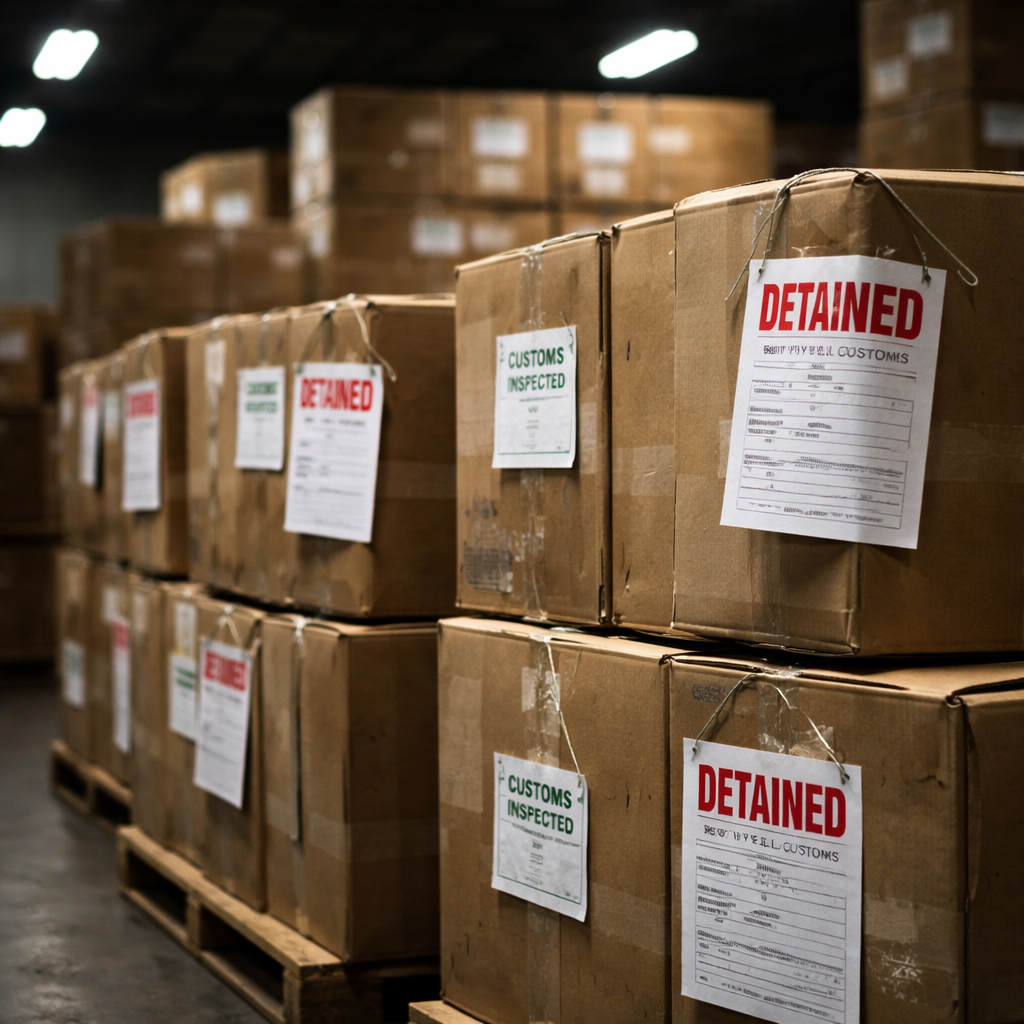
This is the clean label paradox: The simpler and more “natural” you want your product to appear, the more complex your compliance verification becomes. You’re not just checking what’s in the product. You’re verifying what touched the product, what processed the product, and what might have migrated into the product during every stage of production.
At Jade Premium, we’ve seen countless buyers drawn to clean label products from China, only to discover that their due diligence needs to go far deeper than reading an ingredient list. The cultural interpretation of “natural” varies significantly between Chinese producers and Western regulators, and bridging that gap requires expertise that goes beyond standard quality control.
The Detention Reality: When “Safe” in China Doesn’t Mean “Approved” Abroad
Here’s a fact that catches many buyers off guard: Your shipment can be detained without ever being physically opened or tested.
International customs authorities, particularly in the United States, European Union, and Australia, maintain sophisticated alert systems that can flag your shipment based solely on documentation review. If your product declares an ingredient that regulators deem unsafe, unapproved, or suspicious for your specific product category, detention can be automatic.
The U.S. FDA’s “Detention Without Physical Examination” (DWPE) authority is particularly powerful. When FDA identifies a pattern of violations from specific product categories or regions, they can issue import alerts that essentially create a blacklist. If your product falls under these alerts, it’s detained on sight—before any inspector even looks at the actual goods.
For Chinese food exports, several substances consistently trigger these automatic detentions:
Ractopamine has caused more shipment nightmares than perhaps any other additive. This beta-agonist is used in Chinese animal feed to promote lean muscle growth in pigs and cattle. It’s legal in China and the United States, but banned in many markets including the EU and restricted in China’s domestic livestock production. Buyers sourcing pork products from China have faced devastating losses when traces of ractopamine appeared in shipments destined for EU markets. Even though the Chinese supplier was operating completely legally under Chinese regulations for export-grade meat.
Melamine and cyanuric acid became global watchwords after the 2008 Chinese milk scandal. Though more than fifteen years have passed, international regulators maintain zero-tolerance positions on these substances in products from China. Even trace amounts—so small they pose no actual health risk—can trigger detention. Buyers of Chinese dairy products, protein powders, and infant formula face extraordinary scrutiny.
Beyond these headline-grabbing compounds, dozens of other additives create compliance challenges:
Certain food colorings approved in China haven’t received clearance in Western markets. Sunset Yellow (E110) and Ponceau 4R (E124) are commonly used in Chinese food manufacturing but subject to stricter usage limits or labeling requirements in some markets due to concerns about hyperactivity in children.
Preservatives present constant challenges. Sodium benzoate concentrations that are acceptable in China may exceed limits in your target market. Calcium propionate might be approved for bread in one country but not for noodles in another. Yet Chinese manufacturers may use it across product categories without realizing the distinction matters internationally.
Processing aids are perhaps the most insidious compliance trap. These substances—enzymes, antifoaming agents, clarifying agents—don’t appear in final ingredient lists because they’re theoretically removed during manufacturing. But “theoretically” and “actually” don’t always align. If residues remain and aren’t declared, or if the processing aid itself lacks approval in your market, detention follows.
What makes this situation particularly challenging for international buyers is the lag between Chinese regulatory updates and global harmonization. China has been rapidly modernizing its food safety standards, often adopting substances that are scientifically validated but haven’t yet completed approval processes in conservative markets like Japan or the European Union.
A Chinese supplier might proudly tell you their new preservation system uses cutting-edge technology approved by China’s National Health Commission. That’s genuinely good news—it likely means the product is safer than older formulations. But if that cutting-edge preservative hasn’t been evaluated by EFSA (European Food Safety Authority) or hasn’t appeared on Australia’s approved additives list, your shipment is still at risk.
The detention framework isn’t designed to be punitive—it’s meant to protect public health. But for you as a buyer, the effect is the same whether the substance is genuinely dangerous or simply unapproved: Your goods sit in a warehouse, your customer relationships suffer, and your cash flow takes a hit.
Understanding this reality is crucial: Chinese food additives compliance isn’t about whether a product is safe in absolute terms. It’s about whether every single substance in that product has been approved for that specific use in your specific target market. The burden of verifying this match falls on you, the buyer—not on the supplier, not on the freight forwarder, and not on customs authorities.

Your Compliance Roadmap: Verifying Labels Before They Become Liabilities
Smart international buyers recognize that effective compliance verification happens before the purchase order is signed, not after the shipment arrives. Here’s your practical roadmap for turning supplier labels into reliable compliance documentation.
Start with the complete formula disclosure. Don’t accept a simplified ingredient list. Request the full technical specification sheet that includes processing aids, carriers for flavorings or colorings, and any substances used during manufacturing—even if they’re supposedly removed before packaging. Chinese suppliers sometimes omit these details not from dishonesty but from different disclosure conventions. Be explicit that you need everything.
Make this request specific: “Please provide complete formulation including all processing aids, carrier substances, anti-caking agents, and any substance that contacts the product during manufacturing, even if removed before final packaging.” This level of detail signals to your supplier that you’re a serious, knowledgeable buyer.
Cross-reference every ingredient against your target market’s approved lists. This step requires patience, but it’s non-negotiable. The European Union maintains a comprehensive database of approved food additives with specific E-numbers. The FDA provides extensive guidance on GRAS (Generally Recognized as Safe) substances and approved food additives. Australia and New Zealand have their own approval schedules through Food Standards Australia New Zealand.
Don’t assume that similar names mean identical substances. “Modified starch” can refer to dozens of different chemical modifications, and not all modifications have the same approval status. “Natural flavoring” might sound safe, but some natural extraction methods use solvents that require declaration and approval.
Verify concentration levels and usage limitations. Approval often comes with conditions. A preservative might be approved for use in beverages but not in meat products. A sweetener might be acceptable at 0.5% concentration but not at 1.0%. Your Chinese supplier’s formulation might use approved substances but at concentrations or in applications that exceed what your market allows.
Request laboratory analysis reports showing actual measured concentrations of key additives, not just theoretical formulation levels. Manufacturing realities can create variations that push products over regulatory limits.
Understand the language barrier beyond simple translation. Chinese food additive names don’t always map cleanly to international nomenclature. The same substance might appear on Chinese labels with a name that sounds completely different from its English counterpart. We’ve seen situations where buyers thought they were getting different ingredients simply because translation created confusion.
Work with translators who have specific expertise in food chemistry and Chinese food regulations—not just general language skills. At Jade Premium, our bilingual technical team bridges this gap constantly, ensuring that “山梨酸钾” (sorbic acid potassium) on a Chinese spec sheet matches correctly to “potassium sorbate” in international databases, with all the regulatory nuances that come with that identification.
Request certificates of compliance specific to your market. Some Chinese manufacturers have invested in compliance testing for major export markets. Ask whether your supplier has obtained GFSI certification, achieved specific export registrations, or commissioned third-party laboratory testing against your target market’s standards.
But verify these claims independently. Request the actual certificate documents, check the issuing body’s credentials, and confirm that the certificate scope covers your specific product. Certificate fraud isn’t common, but misunderstandings about what a certificate actually covers are frequent.
Conduct your own label review before first shipment. Consider hiring a regulatory consultant in your target market to review the complete product formulation and proposed label. This investment—typically a few hundred to a few thousand dollars depending on complexity—can save tens of thousands in detained shipments and damaged relationships.
The consultant should verify not just additive compliance but also labeling accuracy. Nutrition panels, allergen declarations, country of origin statements, and marketing claims all face regulatory scrutiny. A mismatch between your label claim and regulatory allowances can trigger detention just as quickly as an unapproved additive.
Build compliance verification into your supplier qualification process. Before you commit to a long-term relationship with any Chinese supplier, assess their compliance infrastructure. Do they have a regulatory affairs department? Can they demonstrate knowledge of international food regulations? Have they successfully exported to your target market before?
Suppliers who have navigated international compliance requirements understand why you’re asking detailed questions. Suppliers who seem confused or annoyed by compliance inquiries are waving a red flag—they may not have the expertise to support your international business needs.
Create a compliance partnership, not just a buyer-seller relationship. The most successful international food sourcing relationships we see at Jade Premium involve buyers who educate their suppliers about target market requirements while suppliers educate buyers about Chinese production realities. This mutual education creates products that are both authentic and compliant.
Share your target market’s regulatory updates with your supplier. When the EU adds a new additive to its approved list or when Australia updates its food standards code, inform your Chinese partners. This proactive communication helps them adjust formulations before problems arise.
Similarly, listen when Chinese suppliers explain production realities. Traditional production methods sometimes create substances naturally (like trace alcohol from fermentation) that appear on additive lists but aren’t “added” in the conventional sense. Understanding these nuances helps you navigate regulatory conversations more effectively.
Plan for product reformulation if necessary. Sometimes compliance means your supplier needs to change their formula. Be prepared for this possibility and budget for it. Reformulation costs might include new ingredient sourcing, production trials, stability testing, and updated packaging.
The most compliance-savvy buyers approach this proactively: “If we need to modify the formula to meet our market requirements, can you support that development work?” Suppliers who respond positively to this question demonstrate the flexibility you need for long-term success.
Document everything meticulously. Maintain comprehensive records of all compliance verification steps. Save email exchanges where you requested formula information. Keep copies of certificates, lab reports, regulatory research, and consultant opinions. If your shipment does get detained, this documentation demonstrates your due diligence and can expedite release or help you build a case for appeal.
These records also protect you legally. If a compliance issue arises and you can demonstrate that you took reasonable steps to verify compliance, you’re in a much stronger position than if you simply trusted supplier claims without documentation.
The Jade Premium Approach: Your Partner in Navigating Chinese Food Additives Compliance
At Jade Premium, we’ve built our reputation on understanding that successful Chinese food exports require more than just product quality. They demand compliance excellence that bridges Chinese production realities with international regulatory expectations.
Our role goes far beyond traditional trading. We position ourselves as your trusted partner in China, someone who deeply understands both the rich heritage of Chinese food manufacturing and the complex requirements of global markets. When you work with us, you’re not just buying products. You’re accessing a compliance infrastructure built over years of navigating exactly the challenges this article describes.
Our bilingual technical team conducts thorough label verification before you even see a product proposal. We don’t just translate ingredient lists; we map Chinese formulations to international regulatory frameworks, identifying compliance gaps before they become shipment problems. Our deep relationships with Chinese manufacturers mean we can advocate for reformulations when necessary, helping suppliers understand not just what needs to change, but why international markets require those changes.
We maintain current knowledge of regulatory developments across major markets—from FDA import alerts to EU regulatory updates to Australia’s food standards revisions. This intelligence helps us guide both buyers and suppliers toward formulations that meet today’s requirements and anticipate tomorrow’s changes.
When we source products from China, compliance verification is built into every step. We request complete technical documentation, conduct independent regulatory reviews, coordinate third-party testing when needed, and ensure that labels accurately reflect both ingredients and regulatory status. We’ve learned through experience that preventing compliance problems is infinitely more valuable than solving them after detention occurs.
Our localized presence across China gives us the access needed to visit production facilities, review actual manufacturing processes, and verify that what happens on the factory floor matches what appears on specification sheets. This ground-level insight catches discrepancies that paper documentation might miss.
But perhaps most importantly, we understand the cultural dimensions of Chinese food additives compliance. We know that Chinese suppliers aren’t trying to deceive international buyers. They’re operating within their own regulatory and cultural context. Our role is to bridge that gap, creating mutual understanding that leads to products that are both authentically Chinese and internationally compliant.
The clean label trend isn’t going away. Consumer demand for natural, minimally processed products continues growing across global markets. Chinese food manufacturers are responding with innovative formulations that honor traditional production methods while meeting modern safety expectations.
Your opportunity as an international buyer is to tap into this evolution—but only if you navigate the compliance complexities with expertise and diligence. The “natural” product label that could trigger detention can instead become your competitive advantage when backed by thorough verification, proper documentation, and partners who understand both sides of the equation.
Chinese food additives compliance isn’t an obstacle to avoid. It’s a framework for building sustainable, profitable international trade relationships. When you get it right, you’re not just importing products. You’re bringing authentic Chinese culinary traditions to global tables with the safety, transparency, and regulatory confidence that modern consumers demand.
That’s the opportunity. That’s the challenge. And that’s exactly where Jade Premium stands ready to support your success.