
- The Clean Label Revolution Meets Ancient Wisdom
- Nature's Flavor Arsenal: How Traditional Chinese Cooking Creates Umami Without Additives
- The New Wave: Clean Label Innovation Meets Traditional Chinese Wisdom
- Building Buyer Confidence Through Transparency and Trust
- Preserving Heritage While Meeting Modern Expectations
Today’s consumers care more than ever about what goes into their food. But for vegan food lovers seeking authentic Chinese cuisine, it often feels like a frustrating compromise: choose rich, traditional flavors—or settle for simplified, “clean” but uninspiring products. Many plant-based options on the market are highly processed, filled with additives, stabilizers, and long ingredient lists that consumers struggle to understand. So the question is: can you actually enjoy authentic Chinese cuisine without sacrificing a clean label?
The Clean Label Revolution Meets Ancient Wisdom
The clean label movement isn’t just a passing trend—it’s a fundamental shift in how global consumers think about food. Walk into any supermarket in London, Sydney, or Toronto, and you’ll see shoppers scrutinizing ingredient lists, looking for products they can understand and trust. Clean label vegan food represents the pinnacle of this transparency: plant-based products made with recognizable, natural ingredients that their grandmothers would have known.
For international buyers, this presents both an opportunity and a challenge. The opportunity lies in meeting consumer demand for healthier, more transparent food options. The challenge? Finding suppliers who genuinely understand what clean label means, not just those who slap the term on packaging as a marketing gimmick.
This is where traditional Chinese cuisine offers something remarkable. Long before “clean label” became industry jargon, Chinese home cooks and temple chefs were creating deeply flavorful vegan dishes using nothing but whole foods, natural fermentation, and time-honored techniques. No mysterious additives. No laboratory-created flavor enhancers. Just real ingredients, skillfully combined.
Consider this: when a Chinese chef makes a traditional Buddha’s Delight (罗汉斋), the complex umami depths come from dried shiitake mushrooms, fermented bean curd, and naturally sweet root vegetables—not from a bottle of MSG or artificial broth powder. This isn’t clean label as a marketing strategy; it’s clean label as a way of life that’s been practiced for generations.
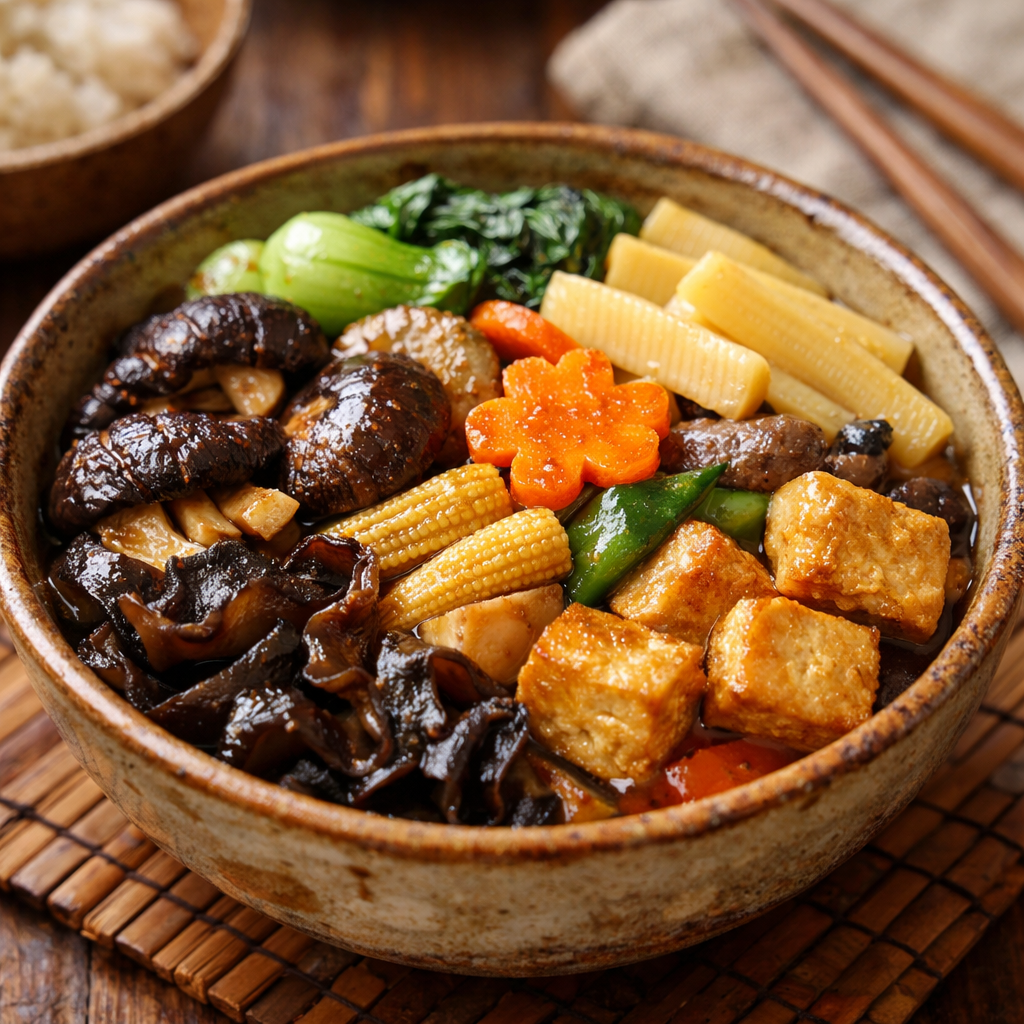
Nature’s Flavor Arsenal: How Traditional Chinese Cooking Creates Umami Without Additives
The secret to understanding clean label plant-based Chinese cuisine lies in grasping how traditional Chinese cooking builds flavor. Western plant-based products often struggle with taste because they’re trying to replace meat’s richness. Chinese cuisine never had this problem because it developed sophisticated techniques to coax maximum flavor from vegetables, fungi, and fermented ingredients.
Take dried shiitake mushrooms, a cornerstone of Chinese vegan cooking. When these mushrooms are properly rehydrated, they release guanosine monophosphate—a naturally occurring compound that creates the same savory depth as glutamates found in meat. A good Chinese cook knows to save that soaking liquid; it becomes a golden stock that forms the base for countless dishes. No bouillon cubes needed. No “natural flavoring” required. Just mushrooms, water, and patience.
Fermentation represents another pillar of traditional Chinese flavor building. Doubanjiang (broad bean paste), fermented black beans, and aged soy sauce all develop their complex taste profiles through natural microbial action over months or even years. These aren’t ultra-processed foods in the modern sense—they’re examples of controlled fermentation that humans have been practicing since ancient times. A spoonful of authentic doubanjiang from Pixian can transform a simple stir-fried vegetable dish into something memorable, using nothing but soybeans, salt, chili peppers, and time.
Seaweed and sea vegetables add another dimension. Kombu (kelp) contains naturally high levels of glutamic acid—the very compound that makes food taste savory and satisfying. Traditional Chinese medicinal soups often incorporate various seaweeds not just for their mineral content, but for the depth they bring to the broth. Modern food scientists are trying to extract and synthesize these compounds; traditional Chinese cooking has been using the whole ingredient all along.
Real-world example: A traditional Chinese temple restaurant in Chengdu serves a dish called “Three Fresh Treasures Soup” that contains nothing but bamboo shoots, wood ear mushrooms, and tofu skin in a clear broth. Yet diners describe it as having a richness that rivals any meat-based soup. The secret? The mushroom soaking water combined with the natural sweetness of bamboo shoots creates a synergy that’s greater than the sum of its parts. No additives. No tricks. Just ingredients and technique.
The New Wave: Clean Label Innovation Meets Traditional Chinese Wisdom
Today’s plant-based Chinese food market is experiencing fascinating evolution. Forward-thinking Chinese producers are recognizing that their traditional methods already align perfectly with global clean label demands. They’re updating packaging, obtaining international certifications, and telling their stories—but the core products remain rooted in centuries-old wisdom.
Consider the emerging market for ready-to-cook vegan dim sum. Traditional Chinese dumplings filled with mushrooms, bamboo shoots, and tofu can be frozen and exported with minimal processing. The ingredient list reads like a recipe your grandmother might have written: wheat flour, water, fresh vegetables, mushrooms, soy sauce, sesame oil, salt. These products naturally meet clean label criteria because they were never designed to contain anything else.
Market data supports this trend. According to recent industry analysis, health-conscious consumers in Western markets are increasingly seeking authentic Asian vegan foods that avoid ultra-processed meat alternatives. They’re moving away from plant-based burgers made with twenty unpronounceable ingredients toward products like Chinese vegetable buns, tofu-based dishes, and traditional noodle soups that list five or six recognizable components.
This shift creates opportunities for international buyers who understand the difference between novelty plant-based products and authentic tradition-based vegan cuisine. A restaurant chain in Melbourne recently switched from offering trendy plant-based “chicken” nuggets to serving traditional Chinese sweet and sour tofu. Customer satisfaction increased, and food costs decreased—because the simpler, more authentic dish required fewer processed ingredients and actually tasted more interesting.
For example, suppliers available through platforms like Jade Premium showcase how traditional Chinese ingredients naturally meet clean label expectations. Products such as lotus seed desserts, tremella soups, and minimally processed fruit-based items rely on simple, recognizable ingredients rather than complex formulations—demonstrating how plant-based Chinese food can deliver both authenticity and transparency at scale.
Even plant-based meat alternatives are evolving toward cleaner labels. Progressive Chinese food manufacturers are developing products that list “textured soy protein, mushroom extract, beetroot powder, and spices” instead of long lists of binders, gums, and isolated proteins. They’re recognizing that international buyers—and ultimately consumers—want transparency, not complexity.
The hotpot ingredient market provides another compelling example. Traditional Chinese hotpot restaurants have always offered extensive vegetable and tofu options alongside meat. Now, export-focused producers are packaging these ingredients specifically for international buyers: hand-cut tofu sheets, pre-sliced king oyster mushrooms, fresh noodles, and vegetable assortments with nothing added except perhaps a preservative-free packaging solution. These products succeed in foreign markets precisely because they’re so straightforward.

Building Buyer Confidence Through Transparency and Trust
For international buyers, the challenge isn’t just finding clean label vegan Chinese products—it’s verifying that what’s promised on the label matches what’s in the package. This is where understanding the Chinese supply chain becomes critical, and where having a knowledgeable partner makes all the difference.
Clear labeling starts with honest sourcing. When a product claims to contain “naturally fermented bean paste,” savvy buyers need to verify that it truly comes from traditional fermentation and not from a chemical shortcut. This requires either visiting production facilities personally or working with trade partners who have established relationships with verified producers.
At Jade Premium, we bridge this gap. We help international buyers source vegan Chinese food products that are not only authentic in flavor, but also naturally aligned with clean label expectations—because they are rooted in traditional cooking methods, not modern shortcuts.
Consider the case of a European food importer seeking vegan dim sum for their retail chain. They wanted products free from artificial flavors, colors, and preservatives, but they also needed assurance about sourcing practices. Through our local network, we connected them with a family-run manufacturer in Guangdong that’s been making vegetable dumplings using traditional methods for three generations. The facility tour revealed exactly what the ingredient list promised: fresh vegetables delivered daily from local farms, wheat flour milled on-site, and a production process that involved human hands more than industrial machinery.
This level of transparency builds the trust that international buyers need. It’s not enough to receive a product specification sheet; buyers need to understand the people, processes, and philosophy behind their products. When you’re selling healthy vegan Chinese ready meals to health-conscious consumers in Germany or Australia, your customers aren’t just buying food—they’re buying a story of authenticity and integrity.
Quality control becomes simpler with clean label products because there are fewer places for problems to hide. When a dumpling contains six ingredients instead of twenty-six, it’s easier to trace any quality issues back to their source. This is why many experienced international buyers are shifting toward simpler, more traditional Chinese food products even as the plant-based market grows more complex.
The certification landscape also matters. International buyers should look for suppliers who understand global standards—not just Chinese domestic requirements. Proper clean label certifications, organic credentials when applicable, and transparent supply chain documentation all contribute to buyer confidence. However, certifications alone aren’t enough; understanding the actual production process and ingredient sourcing remains essential.
Preserving Heritage While Meeting Modern Expectations
The synergy between traditional Chinese cooking and modern clean label demands isn’t coincidental—it reflects a deeper truth about food culture. Chinese cuisine developed over millennia in environments where preserving food naturally, maximizing flavor from limited ingredients, and understanding nutrition holistically were matters of survival and health.
Traditional Chinese medicine’s influence on cooking created a food culture that viewed ingredients as having both nutritional and therapeutic properties. This perspective naturally led to respecting ingredients in their whole form, understanding seasonal eating, and avoiding unnecessary additives. A Chinese grandmother selecting vegetables at a market isn’t thinking about “clean label”—but she’s absolutely applying those principles when she rejects overly processed products in favor of fresh, recognizable ingredients.
For international buyers, embracing this connection means tapping into a deep well of culinary heritage that happens to align perfectly with contemporary global food trends. The market opportunity is significant: health-conscious consumers in Western markets are hungry for authentic plant-based Asian cuisine that delivers both flavor and nutritional integrity.
Statistical evidence supports this convergence. Research shows that consumers increasingly associate “authentic” with “healthy” when it comes to ethnic cuisines. A vegan Chinese dish made with traditional ingredients and methods doesn’t need to explain why it’s clean label—the authenticity itself signals quality and trustworthiness.
This is why forward-thinking international buyers are looking beyond the plant-based burger trend toward the deeper potential of traditional vegan Asian cuisines. They’re recognizing that Chinese cooking has been perfecting plant-based meals for centuries, and those time-tested recipes offer something that laboratory-created alternatives cannot: genuine cultural connection combined with proven nutritional value.
The future of clean label vegan Chinese food exports lies in honoring this heritage while adapting to modern logistics and regulatory requirements. It means working with producers who understand both traditional methods and international market demands. It means transparent supply chains that let consumers trace their dim sum back to specific farms and producers. And it means recognizing that the “secret” to healthy plant-based meals isn’t found in a modern innovation lab—it’s been there all along in Chinese kitchens, where cooks have been creating naturally clean label vegan food for generations.
For international buyers, the real opportunity isn’t just selling vegan food—it’s offering products that deliver both authenticity and transparency. The advantage of traditional Chinese cuisine is simple: it was never designed to be processed in the first place. And that’s exactly what today’s consumers are looking for.