
Last year, a mid-sized Chinese food manufacturer lost over $2 million when their seafood shipment was detained at a U.S. port. The reason? A seemingly minor documentation error that revealed deeper compliance issues. Their story isn’t unique. Across the global food trade industry, countless exporters face similar setbacks—not because their products are unsafe, but because they haven’t identified the gaps between their current practices and what international regulations actually require.
This is where a Compliance Gap Assessment becomes your most valuable tool. Think of it as a health check-up for your export operations. Just as you wouldn’t wait for a medical emergency to visit a doctor, you shouldn’t wait for a costly recall or regulatory detention to understand where your compliance efforts fall short. For international food importers, distributors, and retail chain buyers, working with suppliers who conduct thorough gap assessments means fewer surprises, stronger partnerships, and smoother supply chains.
The stakes are high. Beyond immediate financial losses from detained shipments, non-compliance can lead to long-term consequences: damaged reputation, lost market access, and broken relationships with buyers who depend on consistency. Understanding Chinese food export compliance requirements is the first step toward preventing these costly outcomes. A Compliance Gap Assessment helps you spot these vulnerabilities before they become crises. It’s not just about avoiding penalties—it’s about building a foundation of trust that allows your business to thrive in competitive international markets.
Understanding the Standards That Shape Global Food Trade
Before you can assess gaps, you need to know what you’re measuring against. The international food trade operates under a complex web of standards and regulations, each designed to protect consumers and ensure fair trade practices. Let’s break down the key frameworks that matter most.
Codex Alimentarius serves as the international reference point. Developed by the Food and Agriculture Organization and World Health Organization, these standards cover everything from food additives to hygiene practices. While not legally binding, Codex standards form the baseline that many countries use to develop their own regulations. When trade disputes arise at the World Trade Organization level, Codex standards often become the benchmark for evaluation.
For exporters targeting the U.S. market, FSMA (Food Safety Modernization Act) and its FSVP (Foreign Supplier Verification Program) rules fundamentally changed the game. As detailed in our guide on supplier verification in food imports, these regulations shift responsibility onto importers to verify their foreign suppliers. Unlike older regulations that focused on responding to contamination, FSMA emphasizes prevention. It shifts responsibility onto importers to verify that their foreign suppliers meet U.S. safety standards. This means exporters must not only comply—they must be able to prove it through documented systems that importers can verify.
ISO 22000 provides an internationally recognized framework for food safety management systems. It combines the operational elements of HACCP with management system requirements similar to ISO 9001. What makes ISO 22000 particularly valuable is its focus on communication throughout the supply chain. It acknowledges that food safety isn’t just about your facility—it’s about every link in the chain, from raw material suppliers to end consumers.
Speaking of HACCP (Hazard Analysis and Critical Control Points), this systematic approach to food safety remains foundational across global markets. HACCP requires you to identify potential hazards, determine critical control points where these hazards can be prevented or controlled, and establish monitoring procedures. It’s not bureaucratic paperwork—it’s a practical methodology that, when properly implemented, prevents problems before they occur.
Understanding these standards isn’t just about checking regulatory boxes. When you align your practices with these frameworks, you’re speaking a language that buyers, regulators, and consumers worldwide understand. For practical implementation guidance, explore our compliance gap analysis template that simplifies this complex process. You’re demonstrating that quality and safety aren’t accidents—they’re the result of systematic, verifiable processes. At Jade Premium, we’ve seen how this understanding transforms relationships. Buyers gain confidence, negotiations become partnerships, and markets that once seemed impossible become accessible.
Your Step-by-Step Guide to Conducting a Compliance Gap Assessment
Conducting an effective Compliance Gap Assessment doesn’t require expensive consultants or months of work. What it requires is a systematic approach and honest evaluation. Here’s how to do it right.
Step 1: Define Your Scope and Objectives
Start by asking yourself: Which markets are you targeting? What products are you exporting? Different markets have different requirements, and not every assessment needs to cover everything. If you’re exporting frozen dumplings to the European Union, your priorities differ from those exporting fresh seafood to North America.
Be specific about your objectives. Are you preparing for initial market entry? Responding to buyer requirements? Getting ready for third-party certification? Your objectives will shape how deep and broad your assessment needs to be.
Step 2: Collect Relevant Regulatory Requirements
This is where many exporters stumble—not because they can’t find regulations, but because they don’t know which ones apply. Start with the destination country’s food safety authority. For the U.S., that’s FDA regulations. For the EU, it’s EU food law. And for Canada, it’s CFIA requirements.
But don’t stop there. Many buyers have requirements beyond basic regulatory compliance. Retail chains often require GFSI-benchmarked certifications. Learn more about private label food compliance challenges that retailers particularly scrutinize. Food service operators may have specific supplier qualification criteria. Gather all these requirements in one place. Create a compliance checklist that covers regulatory mandates, industry standards, and buyer-specific expectations.
Step 3: Map Your Current Practices
Now comes the honest part. Document what you actually do, not what you think you should do or what your procedures say you do. Walk through your facilities. Interview your staff. Review your records. How do you control temperatures? How do you verify supplier qualifications? What happens when you detect a potential hazard?
This mapping should cover your entire operation: receiving raw materials, processing, storage, packaging, documentation, training programs, and recall procedures. The goal isn’t to make yourself look good—it’s to see reality clearly.
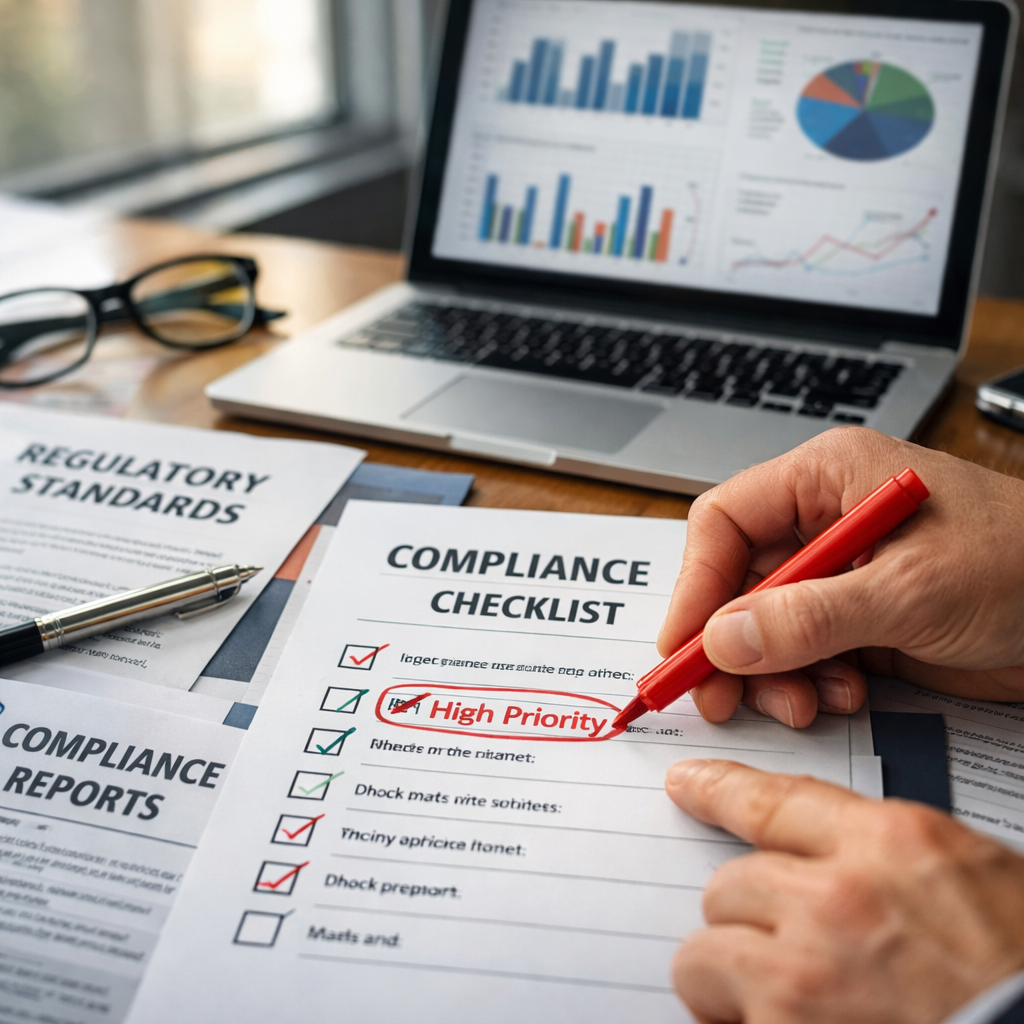
Step 4: Identify and Prioritize Gaps
With requirements on one side and current practices on the other, the gaps become visible. You might discover that while you control critical control points effectively, your documentation doesn’t adequately demonstrate this control. Many exporters overlook common mistakes in Chinese food imports that proper gap assessment would prevent. You might find that your supplier verification process exists on paper but isn’t consistently executed.
Not all gaps pose equal risk. Some require immediate attention because they could result in unsafe products or regulatory action. Others represent opportunities for improvement that can be addressed over time. Use a risk-based approach to prioritize: What’s the likelihood of this gap causing a problem? What would be the severity if it did?
Step 5: Develop Corrective Action Plans
For each significant gap, create a specific action plan. Vague commitments like “improve documentation” don’t drive change. Instead, be concrete: “Implement daily temperature logging forms in cold storage areas by March 15th. Train all warehouse staff on proper logging procedures by March 30th. Conduct weekly verification checks for the first month.”
Assign responsibility. Set deadlines. Identify resources needed. And critically—establish how you’ll verify that the corrective action actually closed the gap.
Making Your Compliance Gap Assessment Work in Practice
Having a process is one thing. Making it effective is another. Here’s how to ensure your Compliance Gap Assessment drives real improvement rather than gathering dust in a filing cabinet.
Involve Cross-Functional Teams
Compliance isn’t just a quality manager’s job. Your production team understands operational realities. Your purchasing team knows supplier capabilities. And your documentation team sees where information flows break down. Bring these perspectives together. A procurement officer once told us they identified a major gap simply by asking, “How would we actually execute a recall based on our current traceability system?” This question highlights why traceability in food supply chains has become mandatory rather than optional. That question, asked in a cross-functional meeting, revealed documentation gaps that single-department reviews had missed.
Use a Risk-Based Approach
Limited resources mean you can’t fix everything at once. Focus on what matters most. A facility exporting ready-to-eat products to vulnerable populations (children, elderly, immunocompromised) should prioritize pathogen control over packaging aesthetics. A company exporting ingredients to food manufacturers might prioritize allergen management and traceability over consumer-facing label compliance.
This risk-based thinking aligns with modern regulatory philosophy. Regulations like FSMA explicitly require risk-based preventive controls. By adopting this mindset in your gap assessment, you’re not just finding problems—you’re demonstrating the kind of thinking that regulators and sophisticated buyers expect.
Monitor and Reassess Regularly
Compliance isn’t a destination; it’s an ongoing journey. Regulations evolve. Your operations change. New risks emerge. Schedule regular reassessments—at minimum annually, but more frequently if you’re entering new markets, launching new products, or facing significant operational changes.
Build monitoring into your daily operations. Those corrective action plans you developed? Track them. Are deadlines being met? Are implemented controls working as intended? Early detection of implementation problems allows for quick course corrections rather than discovering issues during audits or, worse, after products reach market.
The Jade Premium Approach: Turning Compliance into Competitive Advantage
At Jade Premium, we’ve built our business on a fundamental belief: authentic Chinese cuisine deserves a place at global tables, and getting it there requires more than just good products—it requires systematic excellence in every aspect of the supply chain.
When we talk about Compliance Gap Assessment, we’re not talking about bureaucratic exercises. We’re talking about protecting the reputation of Chinese food exports, ensuring that every product reaching international markets represents the quality and safety that consumers deserve. Our comprehensive compliance know-how stems from years of navigating the complex landscape between Chinese production capabilities and international market requirements.
Consider the integrated supply chain solutions we provide. Source-to-delivery procurement isn’t just about logistics—it’s about verification at every step. When we conduct supplier qualification verification, we’re essentially performing mini compliance gap assessments, ensuring that our partner producers meet not just minimum standards but the level of excellence that builds long-term international relationships.
Our offices across Hong Kong, Shenzhen, Guangzhou, Shanghai, Chengdu, Wuhan, and Changsha aren’t just geographic coverage—they represent localized compliance expertise. Understanding the nuances between China food export standards and international requirements requires this on-the-ground presence. Food safety regulations in China continue to evolve and strengthen. Export requirements vary by destination market. Our presence on the ground means we understand both sides of this equation and can help bridge gaps before they become obstacles.
The product compliance transformation services we offer emerge directly from gap assessment insights. We’ve seen excellent Chinese products fail to reach their international potential not because of quality issues but because of compliance gaps: documentation that doesn’t meet import requirements, labeling that doesn’t satisfy destination market regulations, or traceability systems that can’t provide the rapid recall capability that modern supply chains demand.
For international food importers and distributors, retail chain buyers, and food service operators seeking authentic Chinese ingredients, working with a partner that prioritizes compliance gap assessment means several things:
First, it means predictability. You’re not dealing with surprises at the border or mid-way through a contract. Second, it means you’re protected. When problems do arise in supply chains, they disproportionately affect partners who can’t demonstrate systematic compliance. Third, it means growth potential. Markets that seem inaccessible become feasible when compliance challenges are systematically addressed.
The beauty of a thorough Compliance Gap Assessment is that it transforms what seems like a barrier into a roadmap. Those gaps you identify? They’re not failures—they’re opportunities. Each one you close makes your operations stronger, your products more competitive, and your business more resilient.
This philosophy extends beyond just meeting requirements. When we say we’re “Bringing Authentic Chinese Cuisine to Global Tables,” we mean doing it right—with full transparency, documented safety, and systematic quality. We’re not just facilitating transactions; we’re building understanding between Eastern and Western food markets, one verified, compliant, authentic product at a time.
Conclusion: From Assessment to Action
The compliance gap assessment isn’t the hidden roadblock—the failure to conduct one is. Those millions lost to detentions, recalls, and market access denials? They’re preventable. The answer lies not in avoiding compliance challenges but in systematically identifying and addressing them.
Whether you’re a Chinese exporter looking to expand into international markets or an international buyer seeking reliable Chinese food suppliers, understanding and conducting compliance gap assessments changes the equation. For buyers specifically, knowing food sourcing risks from China helps you ask the right questions during supplier evaluation. It transforms uncertainty into clarity, reactive scrambling into proactive management, and costly mistakes into competitive advantages.
The global food trade continues to grow more complex, with regulations evolving and buyer expectations rising. But complexity doesn’t have to mean impossibility. With systematic gap assessment, cross-functional collaboration, and a genuine commitment to closing the gaps you find, you can navigate this landscape successfully.
At Jade Premium, we believe that premium quality, authentic products, and systematic compliance aren’t competing priorities—they’re inseparable elements of bringing the best of Chinese cuisine to global markets. Every gap you identify and close doesn’t just reduce risk. It builds trust, opens markets, and creates the foundation for lasting international partnerships.
The question isn’t whether you can afford to conduct a compliance gap assessment. It’s whether you can afford not to.