
The shelves are changing. Walk through any major supermarket today, and you’ll notice something different—more private label products occupying premium shelf stapace. In 2024, private-label products reached a new all-time high in market share across North America and Europe, with growth accelerating particularly in the food and beverage category. For international retailers seeking their next competitive advantage, the question isn’t whether to launch private label offerings, but where to source them effectively.
Private labeling—the practice of selling products manufactured by third parties under your own brand—has evolved from a budget alternative to a strategic cornerstone for forward-thinking retailers. It’s not just about margins anymore. Today’s consumers actively seek private label products, with 53% of shoppers choosing them either regularly or exclusively. They’re looking for value, yes, but also quality, innovation, and variety that matches or exceeds national brands.
The numbers tell a compelling story. Private-label food sales are projected to continue their upward trajectory through 2026, driven by consumer acceptance, improved quality perception, and retailers’ desire for differentiation in an increasingly competitive landscape. For international buyers, this presents both opportunity and challenge—where can you find manufacturing partners capable of delivering quality, compliance, and innovation at scale?
China’s Emergence as a Private Label Powerhouse
China isn’t just the world’s factory anymore—it’s becoming the strategic partner for retailers building private label portfolios. The reasons go beyond cost advantages, though those remain significant. China offers something unique: a diversified manufacturing ecosystem that can handle everything from traditional Asian specialties to Western-style convenience foods, all within a framework increasingly attuned to international quality standards.
The manufacturing base is genuinely impressive. Cities like Shanghai, Guangzhou, and Chengdu host facilities equipped with modern food processing technology comparable to plants in Europe or North America. These aren’t makeshift operations—they’re ISO-certified, HACCP-compliant facilities producing for global brands daily. What makes them particularly attractive for private label is their flexibility. Unlike large-scale manufacturers locked into long-term contracts with major brands, many Chinese co-packers actively welcome private label partnerships, offering reasonable minimum order quantities and customization services that make market testing feasible.
Co-packing services in China have matured considerably. You’re no longer limited to standard formulations with minor tweaks. Today’s Chinese co-packers offer genuine product development partnerships—reformulating recipes to meet specific nutritional targets, adjusting flavor profiles for regional preferences, and designing packaging that resonates with target demographics. Whether you need halal certification for Middle Eastern markets, organic certification for European retailers, or kosher approval for North American distribution, experienced Chinese manufacturers can navigate these requirements.
Packaging innovation deserves particular attention. Chinese manufacturers have invested heavily in sustainable packaging technologies, responding to global demand for environmentally responsible solutions. You’ll find facilities producing bagasse containers, PLA-based materials, and kraft paper solutions alongside traditional packaging options. This matters because consumers increasingly make purchasing decisions based on packaging sustainability—particularly in Europe and North America, where regulatory pressure around single-use plastics continues mounting.
Product Categories Worth Exploring
The breadth of possibilities can feel overwhelming. Where should international retailers focus their private label sourcing efforts in Chinese foods? Several categories stand out for their combination of manufacturing capability, quality consistency, and market demand.
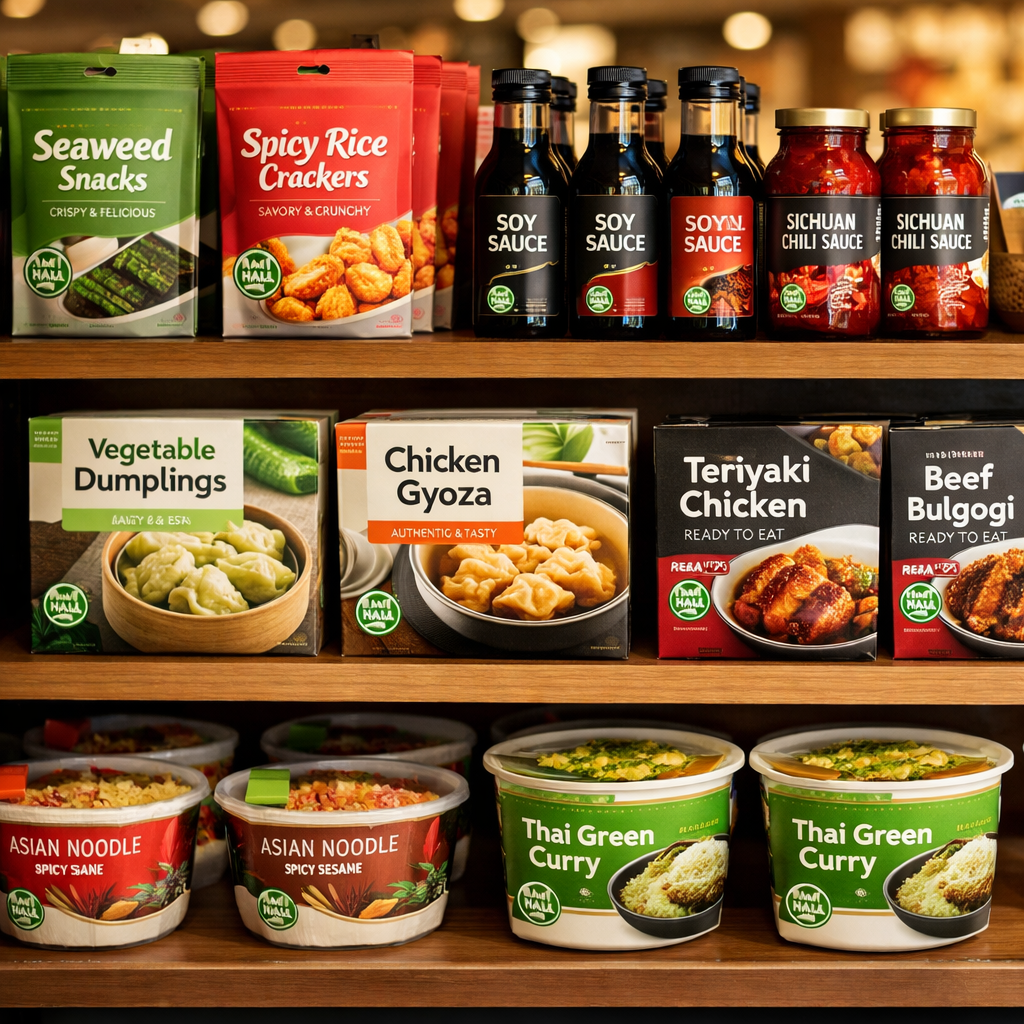
Snacks and convenience foods represent immediate opportunities. Chinese manufacturers excel at producing shelf-stable snacks—think rice crackers, seaweed snacks, dried fruits, and nut mixes. These products travel well, have extended shelf lives, and tap into consumer trends around healthier snacking options. The customization potential is significant: adjust sodium levels, experiment with flavor combinations, design packaging that speaks to your target demographic. One European retailer we work with successfully launched a private label Asian snack line that now accounts for 12% of their snack category sales.
Ready-to-eat and ready-to-cook meals offer different advantages. Chinese factories produce dim sum, dumplings, spring rolls, and noodle dishes that meet rigorous food safety standards while delivering authentic taste profiles. The frozen food infrastructure in China has advanced dramatically, ensuring cold chain integrity from production through export. For retailers in markets with growing Asian populations—virtually every major Western city—these products fill genuine consumer needs while carrying attractive margins.
Sauces and condiments deserve consideration for any private label strategy. Whether you’re targeting mainstream consumers with familiar Asian flavors or food service operators seeking bulk ingredients, Chinese manufacturers can deliver. Soy sauces, chili oils, dumpling dips, stir-fry sauces—the category extends well beyond stereotypes. What’s particularly interesting is the growing segment of fusion products: Asian-inspired sauces designed specifically for Western applications. Think teriyaki marinades optimized for grilling, or sweet chili mayo for burger chains.
Beverages present both opportunity and complexity. Tea products—from traditional loose-leaf to ready-to-drink bottled teas—leverage China’s inherent expertise. The manufacturing quality for tea beverages has reached world-class standards, with facilities producing for international chains operating in China. The challenge lies in understanding regional preferences: European consumers prefer less sweetness than North American buyers, while Middle Eastern markets often favor different flavor profiles entirely. Work with manufacturers who understand these nuances.
Across all categories, halal certification opens doors to substantial markets. According to the State of the Global Islamic Economy Report by DinarStandard, the global halal food market exceeds $2 trillion, with strong growth projected through 2027. Many Chinese manufacturers—particularly those in regions with Muslim populations—maintain halal-certified production lines. For retailers targeting Middle Eastern, Southeast Asian, or Muslim communities in Western countries, this certification transforms products from interesting to essential. It’s not an afterthought; it’s a market access requirement that forward-thinking Chinese manufacturers have embraced.
Managing Supply Chain Risks
Private labeling from China offers tremendous potential, but it’s not without challenges. The retailers who succeed are those who approach sourcing with clear-eyed understanding of risks and proactive mitigation strategies. At Jade Premium, we’ve seen both successful launches and cautionary tales—the difference usually comes down to how seriously buyers take supply chain management.
Allergen management sits at the top of the risk hierarchy. Food recalls can devastate a private label program, and allergen contamination remains a leading cause. When evaluating Chinese manufacturers, don’t just ask about allergen controls—visit the facilities if possible, or work with partners who can verify procedures on your behalf. You want to see physical separation between allergen and non-allergen production areas, dedicated equipment, rigorous cleaning protocols, and testing regimes. Documentation matters, but seeing the actual practices matters more.
Traceability has evolved from nice-to-have to table stakes. European regulations around food traceability continue tightening, and North American buyers increasingly demand visibility into supply chains. Your Chinese manufacturing partner should provide complete traceability—from raw ingredient sourcing through processing, packaging, and shipping. This means batch coding that allows you to track individual production runs, supplier documentation for all ingredients, and testing records at critical control points. If a manufacturer can’t or won’t provide this transparency, that tells you something important.
Regulatory compliance varies dramatically by destination market. A product perfectly acceptable for Middle Eastern import might face barriers in the European Union. Someone needs to know these requirements cold—ideally your sourcing partner, but ultimately it’s your responsibility as the brand owner. Label requirements differ: Europe’s detailed nutritional disclosure standards, North America’s specific allergen callouts, halal markets’ certification visibility. Chinese manufacturers familiar with export markets understand these distinctions, but verification remains essential.
Digital labeling trends are emerging as the next compliance frontier. QR codes linking to detailed product information, blockchain-based supply chain transparency, and enhanced nutritional data disclosure—these aren’t future concepts, they’re current requirements in some markets and strong differentiators in others. Chinese manufacturers comfortable with these technologies offer competitive advantages as regulations evolve.
Practical Steps for Getting Started
Theory only takes you so far. International retailers serious about private label sourcing from China need concrete next steps. Here’s how successful buyers approach the process, drawn from hundreds of partnerships we’ve facilitated.
Start with product selection aligned to your market. Don’t choose products because they’re interesting—choose them because your customers will buy them repeatedly. Analyze your existing sales data: which imported products perform well? Where do you see gaps that private label could fill? Are there products customers request that you don’t currently stock? This market-driven approach prevents the classic mistake of falling in love with products your target consumers won’t purchase.
Identify potential manufacturing partners carefully. This step makes or breaks your program. You need manufacturers with genuine export experience—not just aspirations of entering international markets. Ask for their current export destinations, verification of certifications relevant to your target markets, and references from existing international clients. If possible, conduct facility visits, whether personally or through qualified third-party auditors. What you’re assessing goes beyond equipment—you’re evaluating quality culture, management competence, and genuine capability to meet your standards consistently.
Develop specifications collaboratively. The best private label partnerships feel like genuine collaboration, not transactional procurement. Share your quality expectations clearly, but also listen when manufacturers explain technical limitations or suggest improvements. Chinese manufacturers often possess deep product knowledge that can enhance your specifications. That said, be specific about non-negotiables: nutritional targets, ingredient restrictions, allergen requirements, shelf life expectations. Ambiguity at this stage creates disappointment later.
Test before committing to volume. Start with smaller production runs when feasible. This allows you to verify product quality, assess consumer response, and identify any issues before making significant inventory commitments. Many Chinese co-packers accommodate this approach—they understand that successful test markets lead to long-term partnerships. Use this phase to stress-test logistics as well: how does the product travel? Does packaging hold up during shipping? Do products arrive in the condition you expect?
Build compliance documentation from day one. Don’t wait until you have containers on the water to think about import documentation. Work with your manufacturing partner to assemble complete technical files: specifications, testing certificates, processing information, allergen statements, nutritional analyses. Different markets require different documentation, so clarify requirements early. This is where experienced sourcing partners earn their value—they know what customs officials in Rotterdam, Dubai, or Los Angeles expect to see.
Establish quality assurance protocols. Regular testing isn’t optional—it’s essential for brand protection. Develop a testing schedule that includes raw material verification, in-process checks, and finished product analysis. Third-party testing provides additional assurance and creates documentation that protects you if issues arise. Yes, this adds cost, but consider it insurance against far more expensive problems: recalls, market withdrawals, or reputation damage.
Looking Ahead: Trends Shaping 2025-2026
The private label landscape continues evolving. Retailers building programs today need to anticipate where the market moves tomorrow. Several trends deserve attention as you develop your strategy.
Sustainability-focused packaging will shift from differentiator to expectation. European regulations around single-use plastics are driving change across global markets, and consumer pressure reinforces regulatory requirements. Chinese manufacturers investing in sustainable packaging solutions position their partners well for these changes. Look for facilities with genuine commitment—not just marketing claims—evidenced by investments in alternative materials, reduced packaging designs, and measurable waste reduction programs.
Expansion of halal programs represents significant growth potential. As Muslim populations grow in Western countries and purchasing power increases in traditional halal markets, certified products access expanding customer bases. Chinese manufacturers in regions like Ningxia, Gansu, and Xinjiang have developed particular expertise in halal production, combining local knowledge with international quality standards. For retailers, halal certification opens doors to communities actively seeking products that meet their requirements—communities often underserved by existing private label offerings.
Nutritional transparency continues intensifying. Consumers increasingly scrutinize labels for calorie content, sodium levels, added sugars, and artificial ingredients. Private label products that deliver clean labels with transparent sourcing stories resonate strongly. This trend favors Chinese manufacturers willing to work with simplified ingredient lists and natural processing methods rather than relying on additives to extend shelf life or enhance flavor. Your reformulation conversations should address these expectations from the outset.
Regional customization grows more sophisticated. Generic “Asian foods” don’t cut it anymore. Consumers and retailers recognize that Chinese cuisine encompasses vast regional diversity—Sichuan’s heat differs from Cantonese subtlety, which differs from Shanghai’s sweetness. Manufacturers capable of producing regionally authentic products tap into more discerning consumer knowledge. This matters particularly in cities with significant Chinese diaspora communities, where authenticity isn’t optional—it’s the purchase decision.
Several potential pitfalls deserve mention. Inadequate supplier due diligence remains the leading cause of private label failures. Rushing to market without proper testing, overlooking cultural differences in business practices, or underestimating the complexity of maintaining quality across production runs—these mistakes are avoidable with proper planning and qualified partners.
The most dangerous pitfall might be misalignment between products and market requirements. A product formulated for Middle Eastern preferences won’t necessarily succeed in North America, even with Arabic labeling. Regional taste preferences, dietary restrictions, and cultural considerations require genuine understanding, not assumptions. This is where partnerships with sourcing specialists who know both Chinese manufacturing and target markets prove invaluable.
Building Sustainable Private Label Success
Private label food sourcing from China offers international retailers a path to differentiation, margin improvement, and customer satisfaction. But success requires more than finding factories and placing orders. It requires understanding how to bridge Eastern manufacturing capabilities with Western market demands—how to verify quality, ensure compliance, and maintain consistency as your program scales.
At Jade Premium, we’ve built our practice around exactly this bridge. We understand Chinese food manufacturing from the inside—which facilities maintain genuine quality standards, which can handle complexity, which will partner with you for long-term success rather than maximizing short-term transactions. We also understand international markets—their regulatory requirements, their consumer preferences, their logistical realities.
The opportunities in private label Chinese foods are real and substantial. Retailers who approach sourcing strategically, who invest in proper partner selection and quality assurance, who understand that sustainable programs require genuine partnerships—these retailers build private label offerings that drive traffic, build loyalty, and deliver margins that strengthen their businesses.
The question for international retailers isn’t whether China can support their private label ambitions. The manufacturing capability, quality infrastructure, and partnership willingness exist. The question is whether you’ll approach this opportunity with the seriousness it deserves—with proper planning, qualified partners, and commitment to getting the details right. Because in private label sourcing, details determine success. The retailers understanding this, building programs on solid foundations of verified quality and genuine partnerships, are the ones discovering their next bestsellers in the world’s most dynamic food manufacturing ecosystem.
Your customers want quality, variety, and value. Chinese manufacturing partners can deliver all three, when you know how to find and work with the right ones. That’s the opportunity—and the challenge—defining private label food trends as we move through 2025 and beyond.