
- Understanding Customized Procurement Planning in China's Food Landscape
- Strategic Pillars That Shield Your Business
- Proactive Risk Management as Your Safety Net
- Practical Implementation Steps for International Buyers
- Navigating China-Specific Compliance Complexities
- Building Resilience Through Strategic Partnership
When Sarah, a retail buyer from a European specialty food chain, first approached Chinese suppliers for authentic dim sum products, she thought the process would be straightforward. Find a factory, negotiate prices, place orders, and wait for shipments. Six months later, her business faced a nightmare: contaminated ingredients traced back to an unverified sub-supplier, delayed shipments during Chinese New Year, and compliance issues that nearly got her products pulled from shelves.
Sarah’s story isn’t unique. Every day, international buyers sourcing food from China face hidden risks that can destroy years of business building in mere weeks. The difference between buyers who thrive and those who barely survive? A customized procurement planning approach that anticipates disasters before they strike.
Understanding Customized Procurement Planning in China’s Food Landscape
Customized procurement planning goes far beyond creating a simple supplier list or negotiating better prices. It’s a strategic framework that tailors every aspect of your sourcing operation to your specific business needs, market requirements, and risk tolerance. Much like conducting a compliance gap assessment, customized procurement planning identifies vulnerabilities before they become operational nightmares. For international buyers sourcing food products from China, this approach transforms procurement from a transactional activity into a protective shield around your business.
Think of generic procurement as buying an off-the-rack suit—it might fit, but it won’t account for your unique proportions. Customized procurement planning, by contrast, is like having a master tailor who measures every detail, understands your lifestyle, and creates something that protects you perfectly. In China’s complex food supply landscape, where production practices vary dramatically between regions and regulatory environments shift rapidly, this tailored approach isn’t a luxury—it’s survival equipment.
The foundation of effective customized planning starts with understanding that China isn’t a monolithic supplier market. A seafood processor in Zhoushan operates under entirely different conditions than a meat processor in Inner Mongolia. Your procurement plan must account for these regional variations, seasonal production cycles, and the intricate web of relationships that define Chinese business culture. When you source frozen dumplings from Henan versus Guangdong, you’re not just choosing between factories—you’re selecting entire ecosystems with different risk profiles, logistics capabilities, and quality control traditions. Understanding these regional variations is as critical as conducting proper supplier qualification verification for each production facility.
Strategic Pillars That Shield Your Business
Supply chain mapping forms the first critical pillar of protection. Most buyers who encounter disasters never truly understood their supply chain beyond their direct supplier. They didn’t know where the pork in their dumplings originated, which farm supplied the vegetables, or how many intermediaries touched their products before shipping. Comprehensive supply chain mapping means tracing every ingredient back to its source, identifying every facility involved in processing, and understanding every transportation link in your chain.
Real supply chain mapping revealed to one North American importer that their “premium” Chinese sausages contained pork from three different provinces, processed through two intermediary facilities they never knew existed. This level of transparency requires understanding China’s complex export networks and tracing ingredients beyond first-tier suppliers. When African swine fever hit one region, they had weeks of advance warning to shift sourcing—while their competitors faced sudden shortages and scrambled for alternatives at inflated prices.
Supplier segmentation represents another essential strategy that protects buyers from over-dependence. Not all suppliers deserve the same level of trust, investment, or order volume. Customized procurement planning categorizes your Chinese suppliers into strategic partners, transactional suppliers, and backup options based on criticality, performance history, and capability. Your core dumpling supplier who consistently delivers quality deserves different treatment than an occasional sauce supplier or an untested backup factory.
This segmentation directly informs your risk mitigation strategy. Strategic suppliers receive longer-term commitments, deeper relationship investments, and collaborative quality improvements. Transactional suppliers get shorter contracts and more intensive monitoring. Backup suppliers undergo regular qualification audits even when not actively supplying, ensuring they’re ready when needed. One European food service operator credits this approach with saving their business when their primary supplier faced unexpected regulatory closure—their pre-qualified backup supplier absorbed 70% of volume within two weeks.
Demand forecasting alignment bridges your market needs with China’s production realities. Chinese food manufacturers, especially smaller premium producers, operate with different planning horizons than Western buyers expect. They purchase raw materials seasonally, schedule production around Chinese holidays, and often require longer lead times than international buyers prefer. Misalignment between your demand patterns and their production capabilities creates constant friction, rushed orders, and quality compromises. Strategic buyers use integrated source-to-delivery solutions that synchronize demand forecasting with supplier production cycles.
Effective customized planning means sharing your demand forecasts early, understanding your supplier’s production constraints, and building buffer inventory at strategic points. When you know your soup dumpling supplier needs six weeks’ notice for spring production and shuts down entirely for Chinese New Year, you plan accordingly rather than creating emergency situations that force quality shortcuts.
Proactive Risk Management as Your Safety Net
Diversification and dual sourcing for critical ingredients provide insurance against single points of failure. While relationship-building is important in Chinese business culture, relying entirely on one supplier for mission-critical products exposes you to catastrophic risks. Factory fires, regulatory shutdowns, quality failures, and even sudden business closures happen more frequently than most international buyers realize.
A practical dual-sourcing strategy doesn’t mean splitting every order 50/50. It means maintaining qualified alternatives for your most critical products, placing enough orders to keep relationships active, and structuring contracts that allow rapid volume shifts when disasters strike. For specialized products like seafood imports, diversification becomes even more critical given product perishability and regulatory complexity. One Australian retailer maintained two qualified suppliers for their bestselling Chinese dumpling line, allocating 80% to their primary partner and 20% to their backup. When regulatory changes forced their primary supplier to suspend exports for three months, they scaled up the backup supplier and maintained shelf presence while competitors faced empty slots.
Geopolitical risk management has become increasingly critical for buyers sourcing from China. Trade tensions, tariff changes, export restrictions, and regulatory shifts can materially impact your procurement operations overnight. Customized planning means monitoring policy developments, maintaining alternative sourcing options in other countries for truly critical items, and structuring contracts with flexibility clauses that protect both parties during policy disruptions.
The key isn’t abandoning China sourcing—Chinese food products often offer unmatched quality-to-cost ratios and authentic flavors impossible to replicate elsewhere. Instead, sophisticated buyers build optionality into their procurement plans. They might maintain 80% of their Asian sauce sourcing in China while qualifying Thai or Vietnamese alternatives for 20%, providing flexibility without sacrificing the quality and innovation advantages that drew them to Chinese suppliers initially.
Practical Implementation Steps for International Buyers
Establishing rigorous quality assurance protocols forms your first line of defense against product disasters. This goes beyond occasional factory visits and hoping for the best. Comprehensive QA for China food sourcing includes pre-production material verification, in-process inspections during manufacturing, pre-shipment final inspections, and destination testing for critical parameters.
Smart buyers implement three-stage verification systems: supplier self-inspection against detailed specifications, third-party inspection before shipping, and sample testing at destination before full container release. Yes, this adds cost and time—but it’s infinitely cheaper than recalling contaminated products or losing distributor relationships over quality failures. One Middle Eastern food service company discovered through destination testing that their supplier had substituted cheaper vegetable oil for the specified peanut oil in their kung pao sauce, catching a potential allergen disaster before products reached consumers.
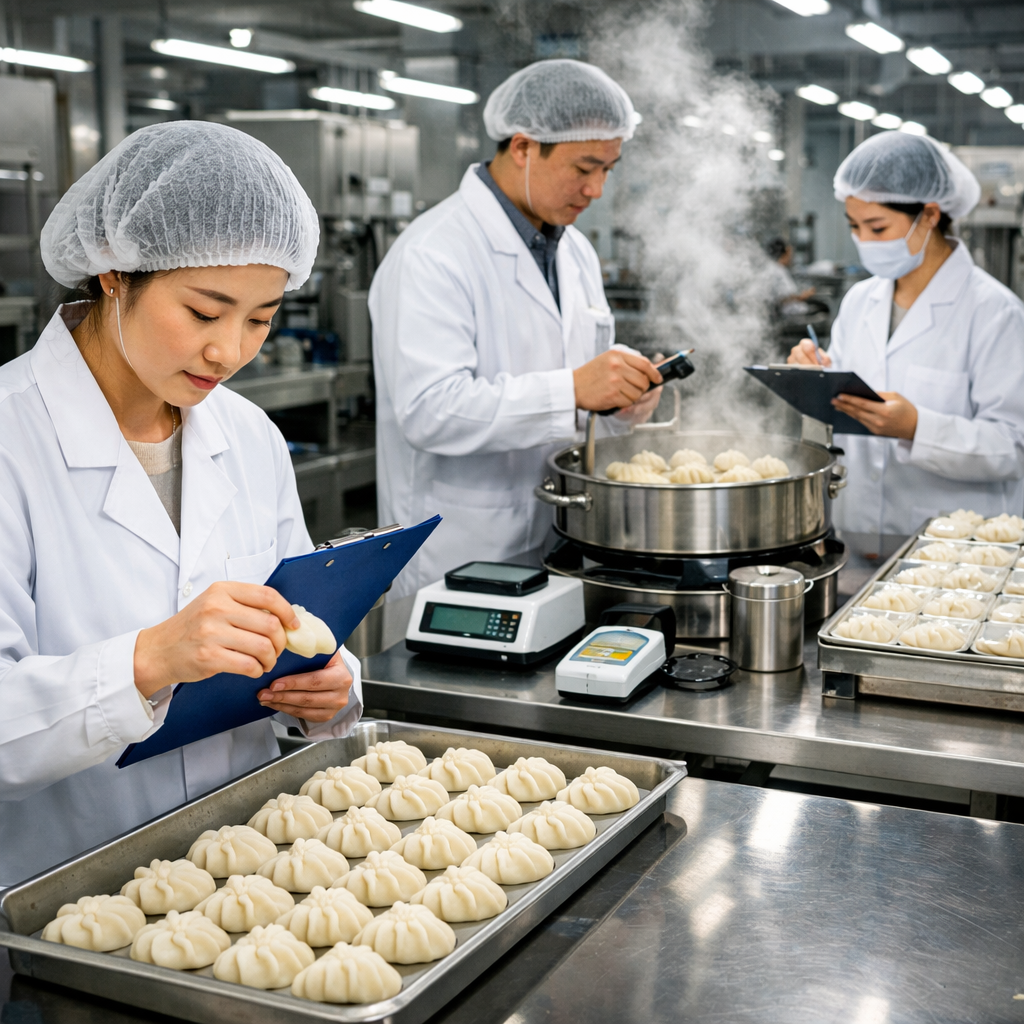
Data-driven decision making transforms procurement from gut-feel guesswork into strategic advantage. Modern buyers track supplier performance metrics religiously: on-time delivery rates, quality acceptance rates, compliance scores, responsiveness to issues, and cost competitiveness. This data reveals patterns invisible to casual observation and enables proactive rather than reactive management.
When data showed one supplier’s quality acceptance rate declining from 97% to 89% over six months, a European buyer initiated joint improvement projects before quality deteriorated further. Root cause analysis revealed equipment maintenance issues, which they helped address through technical support. Without systematic data tracking, they would have noticed the problem only after a major rejection, damaging both the relationship and their supply continuity.
Fostering strong supplier relationships while maintaining professional boundaries represents a delicate balance essential for long-term success. Chinese business culture values relationships deeply, and suppliers often provide better service, priority during shortages, and advance warning of issues to buyers they consider partners rather than customers. Building these relationships requires time, regular communication, face-to-face visits, and demonstrated commitment beyond just extracting lowest prices.
However, effective relationships aren’t about becoming friends or compromising standards. The strongest partnerships combine personal warmth with professional rigor. You can share meals and build rapport while still enforcing strict quality requirements and holding suppliers accountable for performance. One successful North American buyer visits their Chinese suppliers twice annually, brings small gifts reflecting their culture, asks about families—and also conducts thorough facility audits and reviews detailed performance data during the same trips.
Navigating China-Specific Compliance Complexities
Understanding China’s evolving regulatory landscape protects buyers from compliance disasters that can halt shipments and damage reputations. China’s food safety regulations have strengthened dramatically in recent years, with authorities implementing what they call the ““four strictest”” approach—strictest standards, supervision, punishment, and accountability. For international buyers, this means suppliers face increasing compliance pressure, but it also means regulatory changes can disrupt established supply relationships.
Effective procurement planning includes monitoring China’s General Administration of Customs announcements, tracking changes to export registration requirements, and ensuring suppliers maintain current certifications. Understanding health certificate requirements specific to your destination market prevents costly shipment rejections at customs. Different countries have varying recognition agreements with Chinese authorities, meaning your supplier’s certification sufficient for European export might not satisfy Middle Eastern or North American requirements. One Asian food importer discovered too late that their supplier’s registration only covered Europe, delaying their North American market launch by four months while securing proper certification.
Product compliance transformation often represents the biggest hidden challenge for buyers unfamiliar with both Chinese production capabilities and destination market requirements. Chinese manufacturers produce excellent food products—but they design them for Chinese consumers under Chinese regulations. Taking these products to international markets requires systematic transformation: reformulating for local taste preferences, adjusting ingredient declarations for destination regulations, redesigning packaging for different language and labeling requirements, and modifying production processes to meet importing country standards. For U.S.-bound shipments, navigating FDA labeling requirements correctly prevents the detention issues that affect 40% of Chinese food imports.
This transformation requires deep knowledge of both markets. You need to understand what Chinese suppliers can realistically deliver, which modifications are simple versus complex, how changes affect cost and production timelines, and how to communicate requirements in ways Chinese manufacturers understand. Many buyers attempting this alone face frustrating cycles of near-misses where products almost meet requirements but fail on technicalities. Successful buyers either develop this expertise internally through dedicated personnel or partner with specialists who bridge these gaps.
Transparent contracts and traceability requirements provide legal protection and operational clarity that prevents disputes and enables rapid response when issues arise. Chinese business culture sometimes views contracts differently than Western legal traditions, preferring relationship trust over contractual precision. However, international food trade requires detailed written agreements covering specifications, quality standards, testing protocols, delivery terms, payment conditions, and dispute resolution procedures.
Beyond standard commercial terms, contracts for China food sourcing should explicitly address traceability requirements. Specify that suppliers must maintain records tracking raw materials to source, production batch records, and shipping documentation that enables complete chain-of-custody verification. Implementing systematic batch testing protocols creates the documentation trail regulators demand and enables surgical responses to quality issues. When food safety issues emerge, this traceability transforms investigation from impossible guesswork into systematic root cause identification. Several international buyers have avoided costly recalls by rapidly identifying that issues affected only specific production batches, allowing surgical responses rather than blanket withdrawals.
Building Resilience Through Strategic Partnership
The most successful international buyers sourcing food from China recognize they’re not just buying products—they’re building bridges between dramatically different business environments. This requires cultural intelligence, patience, and willingness to invest in capabilities beyond simple transaction management.
At Jade Premium, our philosophy centers on being that bridge, combining deep understanding of Chinese food production traditions with sophisticated knowledge of international market requirements. We’ve witnessed countless buyers struggle unnecessarily because they lacked the contextual knowledge to anticipate risks or the local presence to respond rapidly when issues emerged. Customized procurement planning isn’t about creating bureaucracy—it’s about building resilience through strategic foresight.
Consider two different approaches to the same sourcing challenge: Buyer A finds a factory making excellent dumplings, negotiates hard on price, places large orders, and hopes everything works out. Buyer B maps the entire supply chain, qualifies backup suppliers, implements staged QA protocols, maintains regular communication, tracks performance data, and builds relationships while enforcing standards. When inevitable disruptions occur—and they always do—Buyer A faces crisis and scrambles for solutions. Buyer B experiences minor inconveniences, activates contingency plans, and maintains business continuity.
The difference isn’t luck. It’s planning. Customized procurement planning acknowledges that sourcing food from China presents genuine complexities and risks, then systematically addresses each vulnerability before it becomes a disaster. It recognizes that Chinese food products offer tremendous opportunities—authentic flavors, innovative ingredients, competitive pricing, and manufacturing expertise—but accessing these opportunities safely requires sophisticated approach rather than naive optimism.
Your procurement plan should reflect your unique business model, risk tolerance, product portfolio, and market requirements. A small specialty importer focused on artisan products needs different strategies than a large retail chain sourcing high-volume staples. Both can succeed, but only if their procurement planning matches their specific context rather than following generic templates.
The global food trade connecting Chinese expertise with international markets creates opportunities for businesses worldwide to offer authentic, high-quality products their customers love. But these opportunities come with responsibilities—to consumers expecting safe products, to business partners depending on reliable supply, and to your own organization counting on sustainable operations. Customized procurement planning is how you honor these responsibilities while building profitable, resilient businesses.
When you invest in understanding your supply chain deeply, building strategic supplier relationships thoughtfully, managing risks proactively, and implementing systems that catch problems early, you transform procurement from your biggest vulnerability into your competitive advantage. The disasters that destroy unprepared buyers become minor bumps for those who planned carefully. That’s the real power of customized procurement planning—not preventing every possible problem, but ensuring none of them destroys what you’ve built.