
- Understanding HPP: The Non-Thermal Pasteurization Revolutionizing Clean Label Claims
- The Frozen HPP Advantage: Solving Cold-Chain Logistics for International Distribution
- Market Motivations: Why International Buyers Are Turning to Chinese HPP Capacity
- Verified HPP Juice Suppliers: What Real Capability Looks Like
- Production and Technical Verification: How to Validate Real HPP Capability (and Where Most Buyers Fail)
- Regulatory Compliance and Safety Validation: Building Importer Confidence
- Challenges and Risk Mitigation: Realistic Obstacles in Chinese HPP Juice Sourcing
- Actionable Takeaways: Strategic Steps for Buyers Entering the Chinese HPP Juice Market
As an international buyer sourcing beverages from China, your biggest risk isn’t finding a supplier—it’s trusting one.
On paper, many Chinese juice manufacturers now offer “HPP”, “cold-pressed”, or “clean-label” products. But without the ability to verify processing standards, cold-chain integrity, and regulatory compliance, these claims can quickly turn into costly mistakes at customs or in the market.
At the same time, your customers still demand fresh-tasting, natural juices with recognizable ingredients, yet your distribution network requires products that can survive weeks of transit and cold-chain logistics without degrading. Traditional thermal pasteurization extends shelf life but often compromises the very freshness your market craves. Chemical preservatives solve the stability problem but contradict clean-label commitments. This is where China’s rapidly advancing High Pressure Processing (HPP) infrastructure is creating unprecedented opportunities for overseas buyers—particularly when combined with frozen distribution strategies.
Welcome to what industry observers are calling “Juice 4.0“—a tech-driven era where Chinese HPP technology meets global demand for beverages that taste freshly pressed while maintaining commercial viability across international supply chains. Unlike previous generations of juice production that forced buyers to choose between authenticity and practicality, this new paradigm delivers both. Chinese manufacturers have invested heavily in HPP capacity over the past five years, with installations growing from a handful of experimental lines to dozens of commercial-scale facilities capable of processing millions of liters monthly. For buyers targeting North American, European, and Middle Eastern markets where clean-label trends dominate purchasing decisions, understanding how to leverage China’s frozen HPP juice capabilities has become a competitive necessity rather than a novelty.
The significance extends beyond operational convenience. When you source frozen HPP juice from qualified Chinese suppliers, you’re accessing a production model that addresses the fundamental tension in modern beverage distribution: delivering the sensory experience consumers associate with fresh juice while meeting the regulatory, safety, and logistical requirements of professional importation. The frozen component stabilizes the product during ocean freight, while HPP technology ensures that once thawed, the juice delivers the color vibrancy, flavor complexity, and nutrient profile that justify premium positioning. For private label programs and branded importers alike, this combination represents a pathway to differentiation in increasingly crowded retail segments.
Understanding HPP: The Non-Thermal Pasteurization Revolutionizing Clean Label Claims
High Pressure Processing operates on a principle fundamentally different from the heat-based methods that have dominated food safety protocols for over a century. However, for overseas buyers, the challenge is not understanding HPP as a technology—it’s verifying whether a supplier is truly operating validated HPP processes, or simply using the term as a marketing label. The technology subjects sealed juice packages to extreme isostatic pressure—typically between 4,000 and 6,000 bar (58,000 to 87,000 psi)—transmitted through cold water. At these pressure levels, pathogenic microorganisms and spoilage bacteria are inactivated through cellular membrane disruption, yet the chemical bonds responsible for flavor compounds, pigments, and heat-sensitive vitamins remain largely intact.
The practical implications for clean-label formulation are substantial. Traditional thermal pasteurization, while effective at pathogen elimination, applies heat that degrades anthocyanins in berry juices, carotenoids in citrus products, and volatile aromatics across all fruit categories. The result is the familiar “cooked” taste and color shift that consumers increasingly reject. HPP operates at temperatures below 40°C throughout the pressure cycle, preserving the sensory characteristics that distinguish premium juice from commodity products. When formulating for markets like Germany, where juice quality regulations are stringent, or the United States, where “cold-pressed” positioning commands price premiums, HPP becomes the enabling technology that makes clean-label claims commercially viable rather than merely aspirational.
From a regulatory perspective, HPP-treated products qualify as minimally processed in most jurisdictions, supporting label statements that resonate with health-conscious consumers: “No preservatives added,” “No heat pasteurization,” “Natural flavor and color.” The process inactivates Listeria, Salmonella, E. coli, and other target pathogens to levels meeting FDA and EU safety standards without requiring potassium sorbate, sodium benzoate, or other chemical interventions. For buyers developing private label ranges that compete with premium brands like Suja or Innocent, this alignment of safety compliance and clean-label authenticity provides the foundation for credible market positioning.
Chinese suppliers have recognized this value proposition. Advanced facilities in Shandong, Fujian, and Guangdong provinces have installed Quintus QIF 600L systems and comparable equipment, achieving throughput capacities that support container-load production runs. These installations represent significant capital investment—individual HPP presses cost USD 2-3 million—signaling long-term commitment to quality-focused export programs rather than opportunistic contract filling. When evaluating potential Chinese juice suppliers, the presence of dedicated HPP capacity with documented validation studies becomes a primary qualification criterion, distinguishing sophisticated manufacturers from those merely offering thermal processing with misleading “fresh” claims.

The Frozen HPP Advantage: Solving Cold-Chain Logistics for International Distribution
The integration of freezing with HPP treatment creates a distribution model specifically suited to the realities of China-to-international-market supply chains. Consider the typical scenario: a thermal-pasteurized juice with 45-60 day refrigerated shelf life requires uninterrupted cold chain from Chinese production facility through customs clearance, warehousing, and final delivery to retail. Temperature excursions during any segment risk accelerated spoilage and quality degradation. The narrow timeline leaves minimal buffer for shipping delays, customs inspections, or buyer’s warehouse scheduling, creating chronic stress in supply chain management.
Frozen HPP juice fundamentally alters this equation—but only when executed correctly. For buyers, the real concern is whether freezing protocols, pressure treatment, and cold-chain handling are consistently applied. Without verification, even “frozen HPP” products can suffer from quality degradation or compliance gaps. After HPP treatment and initial chilling, product is frozen to -18°C or below, halting virtually all microbial and enzymatic activity. Shelf life extends from weeks to 12-24 months, transforming logistics from a race against time to a managed inventory flow. Ocean freight transit of 25-35 days becomes insignificant when measured against year-long stability. Temperature monitoring requirements remain important but the consequences of brief excursions diminish substantially. For buyers operating multi-warehouse distribution networks across regions with varying infrastructure quality, this stability provides operational confidence that refrigerated-only products cannot match.
The quality implications are equally significant. Unlike juice that is frozen without HPP pre-treatment—where ice crystal formation damages cellular structure and creates separation upon thawing—HPP-then-frozen product demonstrates superior reconstitution characteristics. The pressure treatment has already inactivated enzymes responsible for cloud loss and pectin degradation, so the frozen storage period doesn’t compound quality decline. Independent sensory studies conducted by Chinese research institutes have documented that properly frozen HPP juice, when thawed under controlled conditions, exhibits flavor profiles and nutrient retention rates comparable to fresh-pressed juice held under ideal refrigeration for 3-5 days.
China’s export infrastructure has evolved to support frozen distribution at scale. Major ports including Shanghai, Shenzhen, and Qingdao feature dedicated cold storage zones with -18°C capacity measured in tens of thousands of pallets. Freight forwarders specializing in frozen food exports maintain established protocols for container selection, pre-cooling verification, and continuous temperature monitoring throughout transit. For buyers in Dubai, Rotterdam, or Los Angeles, receiving containers of frozen HPP juice leverages mature logistics capabilities rather than requiring custom arrangements. The frozen format also enables strategic inventory positioning—importing bulk quantities during favorable freight periods and managing thaw-to-distribution schedules according to retail demand cycles rather than producer shipping calendars.
Market Motivations: Why International Buyers Are Turning to Chinese HPP Capacity
The decision to source frozen HPP juice from China reflects multiple converging factors that extend beyond simple cost arbitrage. First is the matter of scale and consistency. Chinese citrus production in Jiangxi and Hunan provinces, berry cultivation in Liaoning, and tropical fruit harvests in Guangxi provide reliable, high-volume fruit supplies that support consistent year-round manufacturing. Unlike regions where seasonal constraints or weather volatility create supply gaps, Chinese agricultural zones span sufficient latitudes and microclimates to enable supply chain continuity that international buyers require for retail programs with 52-week distribution commitments. This is exactly where experienced partners become critical. At Jade Premium, we don’t just identify HPP suppliers—we verify their actual processing capability, audit cold-chain systems, and ensure their production standards align with international regulatory expectations. Our role is to bridge the gap between what suppliers claim and what buyers can safely trust.
Second is the growing sophistication of Chinese HPP operators in managing the complete production sequence. Leading facilities don’t simply install HPP equipment and continue otherwise traditional operations—they’ve redesigned entire processing workflows to optimize the technology’s benefits. This includes pre-treatment protocols that maximize pressure effectiveness, validated cold-chain handling between HPP and freezing stages, and packaging specifications engineered for pressure transmission efficiency. When you partner with these advanced suppliers, you’re accessing integrated capabilities that would require substantial capital and expertise to replicate elsewhere.
Third is the regulatory and certification infrastructure that Chinese exporters have developed in response to international market requirements. Major juice facilities serving export markets maintain HACCP certification, ISO 22000 food safety management systems, and often facility registrations with FDA and equivalent authorities in target markets. These aren’t merely compliance formalities—they represent operational disciplines that align with the quality assurance expectations of professional buyers. For importers seeking FDA-compliant suppliers under FSMA regulations, or EU buyers requiring traceability documentation, qualified Chinese HPP juice manufacturers can demonstrate systems comparable to suppliers in traditionally dominant export nations.
The economic consideration remains relevant but manifests differently than in commodity categories. Chinese HPP juice doesn’t necessarily compete on lowest-cost positioning—the technology investment, specialized handling, and frozen logistics create cost structures that exceed basic thermal-processed alternatives. Rather, the value proposition centers on the combination of clean-label authenticity and commercial practicality at price points that create viable margin structures for premium retail positioning. When you compare to domestic HPP production in higher-cost markets, Chinese sourcing offers 20-35% cost advantages that enable competitive pricing while maintaining the product integrity that premium segments demand.
Verified HPP Juice Suppliers: What Real Capability Looks Like
For buyers ready to move beyond theory, the next question is simple: which suppliers can actually deliver verified HPP capability at scale?
Jade Premium works with a curated network of certified Chinese manufacturers that meet international food safety and processing standards. Rather than listing generic suppliers, we pre-verify production facilities, audit HPP processing parameters, and ensure alignment with export market requirements such as FDA registration and HACCP systems.
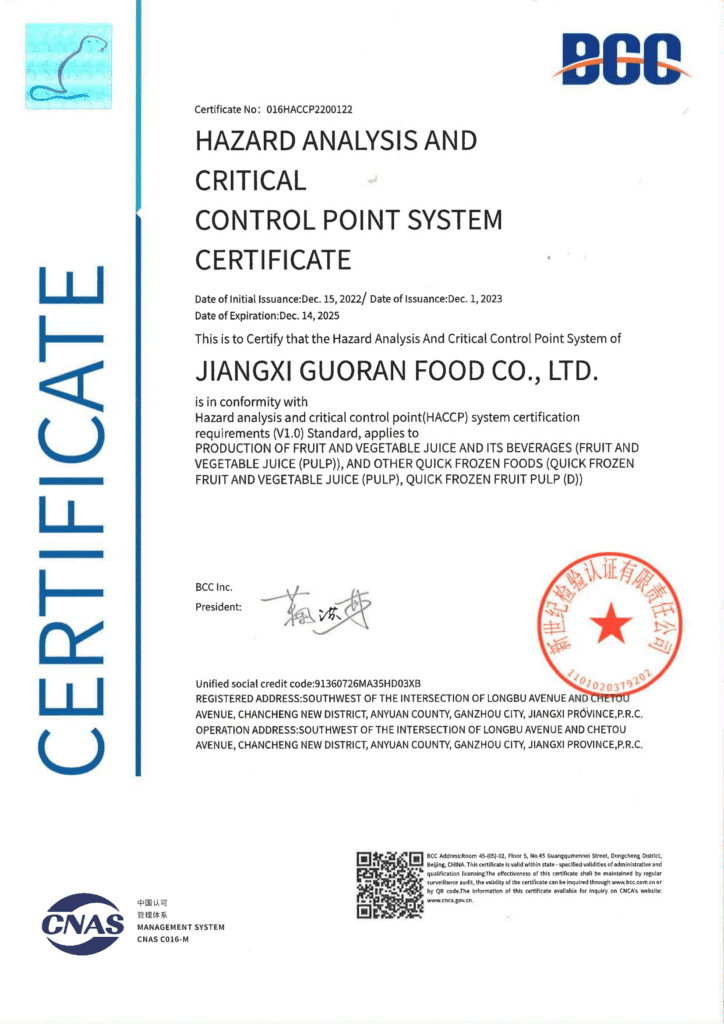
For buyers, this means you are not starting from scratch—you are working with suppliers that have already passed baseline compliance and capability verification, significantly reducing sourcing risk.
More importantly, Jade Premium doesn’t stop at supplier identification. We conduct on-site audits, monitor critical control points, and manage end-to-end supply chain execution—from production validation to export documentation—ensuring that what is promised by the supplier is actually delivered in your shipment.
Production and Technical Verification: How to Validate Real HPP Capability (and Where Most Buyers Fail)
The technical execution of frozen HPP juice production involves specific parameters that directly impact your product’s market performance. When conducting supplier due diligence, request detailed information about HPP equipment specifications and processing protocols. Commercial HPP systems operate in batch or semi-continuous modes—verify that your supplier’s equipment cycle time and vessel capacity align with your volume requirements. A facility operating a single 55-liter chamber will struggle to meet container-load orders with reasonable lead times, while those running multiple 600-liter vessels can accommodate significant scale.
Processing pressure and hold time represent critical quality determinants. Most juice applications target 5,000-6,000 bar pressure maintained for 2-5 minutes to achieve appropriate pathogen reduction while preserving quality attributes. Request validation documentation showing microbial inactivation rates achieved under these parameters, preferably tested against specific pathogens relevant to your target market’s regulatory concerns. Chinese HPP suppliers working with international buyers should maintain these validation records as standard practice—if they cannot produce them readily, consider this a qualification concern.
The freezing protocol following HPP treatment requires equal attention. Rapid freezing using blast tunnels or plate freezers minimizes ice crystal size, preserving cellular structure better than slow-freeze methods. Verify that your supplier’s freezing equipment achieves core product temperature of -18°C within 2-4 hours of HPP treatment. Extended freezing times create larger ice crystals that compromise texture and increase separation tendency when thawed. Request information about frozen storage conditions and maximum hold times before shipping—while frozen HPP juice demonstrates excellent long-term stability, maintaining quality requires disciplined warehouse management and inventory rotation.
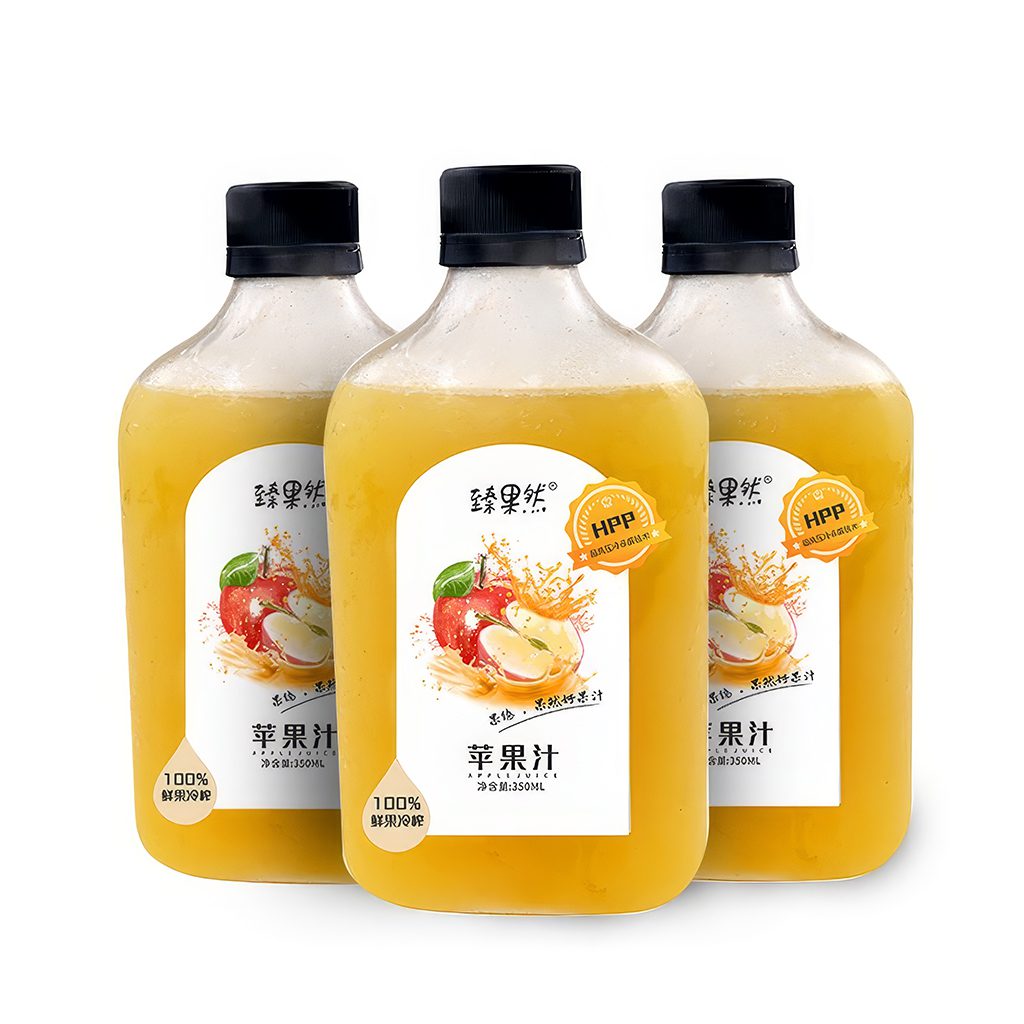
Packaging material selection influences both HPP effectiveness and final product performance. The pressure transmission process requires flexible containers—rigid bottles or metal cans resist the pressure cycle and may compromise seal integrity. Most Chinese HPP juice suppliers utilize multilayer pouches or thermoformed cups with flexible film seals engineered to transmit pressure efficiently while maintaining barrier properties against oxygen and light. When developing private label specifications, work with your supplier to select packaging formats that balance HPP requirements, frozen distribution needs, and your target market’s retail presentation expectations.
Automation and production capacity deserve evaluation for supply chain reliability. Advanced Chinese facilities have implemented automated filling lines operating at 2,000-5,000 units per hour, with integrated quality control systems monitoring fill volume, seal integrity, and metal detection. This automation level supports consistent production quality across container-load quantities and enables rapid response to reorder requirements. During facility audits or virtual assessments, observe whether processing follows documented procedures and whether quality control checkpoints align with HACCP principles and international best practices.
Regulatory Compliance and Safety Validation: Building Importer Confidence
For international buyers, especially those targeting the U.S. and EU markets, regulatory compliance is not just a requirement—it’s the primary point of failure when supplier claims cannot be verified. The foundation starts with facility registration appropriate to your target market—FDA registration for U.S. imports under the Bioterrorism Act, EU approval for European markets, and equivalent registrations for other jurisdictions. Verify that your prospective supplier maintains current registrations and understands the ongoing compliance obligations these involve.
HACCP certification represents the operational backbone of food safety management in juice production. Chinese facilities exporting HPP juice should demonstrate comprehensive HACCP plans addressing biological, chemical, and physical hazards throughout production, with particular attention to critical control points in HPP processing and frozen storage. Review these HACCP plans to confirm they identify appropriate critical limits for HPP pressure/time parameters, freezing rates, and cold storage temperatures, with documented monitoring and corrective action procedures.
Pathogen testing protocols provide the empirical evidence supporting safety claims. Request documentation of your supplier’s finished product testing program, including testing frequency, laboratory credentials, and target organisms. For juice products, testing should encompass Salmonella, Listeria monocytogenes, and E. coli at minimum, with negative results documented across representative production lots. Chinese testing laboratories accredited under ISO 17025 or equivalent standards provide credible analytical support—verify that your supplier utilizes accredited facilities rather than unvalidated in-house testing.
Shelf-life validation under your intended distribution conditions represents a critical but sometimes overlooked qualification step. Chinese suppliers may conduct accelerated shelf-life studies demonstrating 18-24 month stability at -18°C, but these must align with your actual cold-chain conditions. Consider requesting samples subjected to controlled temperature cycling that simulates realistic distribution scenarios—brief temperature fluctuations during transloading, customs inspection periods at variable temperatures, and final retail handling. Products that demonstrate quality maintenance under these practical conditions provide greater assurance than those validated only under ideal laboratory storage.
Traceability systems enable rapid response if quality issues emerge and increasingly represent regulatory expectations in major markets. Modern Chinese HPP juice facilities implement lot coding systems that trace finished products back through HPP batch records, fruit sourcing, and incoming material inspections. Request demonstration of this traceability capability—ideally, suppliers should be able to provide complete documentation for any finished product lot within hours of inquiry. This capability not only supports compliance but indicates operational sophistication and quality commitment.
Jade Premium supports buyers by pre-validating supplier compliance status, including FDA registration checks, HACCP documentation review, and alignment with FSMA requirements—reducing the risk of shipment rejection or import delays.
Challenges and Risk Mitigation: Realistic Obstacles in Chinese HPP Juice Sourcing
The frozen HPP juice opportunity from China comes with practical challenges that buyers should anticipate and address proactively. Capital intensity remains a significant constraint for suppliers—the multi-million dollar investment required for commercial HPP equipment limits the pool of Chinese manufacturers with genuine capability. This concentration means that during peak production periods, lead times may extend and smaller buyers may face allocation challenges. Establish relationships early, potentially committing to forecast volumes that justify supplier production planning, and maintain backup qualified suppliers to manage capacity risk.
Many of these challenges are not caused by the technology itself, but by a lack of transparency and reliable verification mechanisms between suppliers and overseas buyers.
Energy costs for HPP operation are substantial—the pressure generation cycle requires significant electrical input, and frozen storage compounds ongoing energy consumption. These operational costs make Chinese HPP juice production less flexible than thermal processing, where producers can readily adjust production schedules to match demand fluctuations. For buyers, this manifests as minimum order quantities and production slot commitments that require careful demand forecasting. Consider developing rolling forecast agreements with suppliers that balance your need for volume flexibility against their requirement for production planning certainty.
Quality variation across Chinese suppliers remains a legitimate concern. While leading facilities demonstrate capabilities matching international standards, others may operate HPP equipment without fully optimizing processing parameters or maintaining rigorous validation protocols. This variation necessitates thorough supplier qualification—don’t assume HPP capability alone ensures quality. Conduct facility audits, request validation documentation, run pilot production trials, and evaluate samples under realistic distribution conditions before committing to full-scale programs. The due diligence investment pays dividends in avoiding costly quality failures post-importation.
Communication and cultural differences occasionally create misunderstandings about technical specifications or quality expectations. Chinese suppliers may interpret “clean label” differently than your target market understands it, or may not appreciate regulatory nuances that distinguish acceptable from non-compliant claims in your jurisdiction. Address this through detailed written specifications, reference standards, and if possible, examples of competitive products that illustrate your quality targets. Consider engaging sourcing partners with food technology expertise and cross-cultural communication capabilities—at Jade Premium, our role frequently involves translating buyers’ market positioning goals into technical specifications that Chinese manufacturers can execute reliably.
Logistics coordination for frozen products requires more sophisticated management than ambient goods. Temperature monitoring, container pre-trip inspections, and rapid customs clearance become operational imperatives. Work with freight forwarders experienced in frozen food logistics who can navigate documentation requirements, coordinate cold storage at destination ports, and provide contingency plans for transit delays. Build temperature monitoring protocols into your import procedures, including reject criteria if temperature excursions exceed acceptable thresholds. These disciplines transform frozen distribution from a risk into a manageable operational routine.
This is why experienced sourcing partners play a critical role—not as middlemen, but as trust validators within the supply chain.
Actionable Takeaways: Strategic Steps for Buyers Entering the Chinese HPP Juice Market
For international buyers ready to explore frozen HPP juice sourcing from China, begin with rigorous supplier qualification focused on genuine capability verification rather than surface-level compliance documentation. Request detailed information about HPP equipment specifications, annual processing volumes, and client references from buyers serving markets similar to yours. Conduct facility audits either in-person or via qualified third-party inspectors who can assess operational practices beyond what documentation reveals. Pay particular attention to cold-chain discipline between HPP and freezing stages—this transition period critically impacts final quality.
Validate product performance through comprehensive pilot programs before committing to full-scale importation. Request production samples subjected to your anticipated distribution conditions—freeze duration matching your typical inventory cycle, thaw protocols matching your warehouse capabilities, and storage conditions reflecting retail display environments. Conduct sensory evaluation comparing fresh-thawed product against your quality benchmarks and competitive standards. Consider engaging independent laboratories to verify microbial safety, nutrient retention, and shelf-life projections under documented conditions. These validation investments identify potential issues during low-risk pilot phases rather than after substantial commercial commitments.
Align labeling and marketing claims with regulatory requirements in your target markets while leveraging clean-label positioning opportunities. Work with regulatory consultants familiar with juice labeling standards in your jurisdiction to ensure claims like “cold-pressure processed,” “no preservatives,” and “natural” comply with applicable definitions. Chinese suppliers can provide compliant processing, but responsibility for final label accuracy rests with importers—verify that production practices support intended claims before finalizing packaging artwork.
Structure supplier relationships for long-term partnership rather than transactional procurement. The capital intensity and technical sophistication of HPP production reward stable, collaborative relationships where suppliers understand your quality expectations and market positioning while you provide forecast visibility supporting their production planning. Consider annual agreements with defined volume commitments and pricing structures that recognize the investment your supplier makes in dedicated capacity. These partnerships create mutual accountability that drives continuous quality improvement.
Leverage China’s HPP infrastructure as a strategic capability supporting market differentiation and competitive positioning. The technology enables clean-label products meeting consumer demand for natural, minimally processed beverages while the frozen distribution model provides logistics practicality that refrigerated-only products cannot match. For buyers targeting premium segments in North American natural food channels, European quality-conscious retailers, or Middle Eastern markets seeking innovative beverages, Chinese frozen HPP juice offers a pathway to distinctive positioning supported by reliable supply.
The frozen HPP revolution in Chinese juice manufacturing is not just about better technology—it’s about closing the trust gap in global sourcing. At Jade Premium, we act as your on-the-ground partner in China, helping you verify suppliers, ensure regulatory compliance, and build transparent, reliable supply chains for clean-label beverage programs. Because in today’s market, success doesn’t come from finding more suppliers—it comes from working with the right ones you can trust.