
- Why "Clean Label" Has Become Singapore's Quiet Retail Revolution
- What Clean Label Actually Means (and What It Doesn't)
- The Five Clean Label Sub-Trends Driving Singapore Buying Decisions in 2026
- What This Means for Overseas Buyers Sourcing from China
- A Clean Label Product Worth a Closer Look: Lion's Mane Vegetarian Crab-Flavoured Sauce
- How to Get Started
Why “Clean Label” Has Become Singapore’s Quiet Retail Revolution
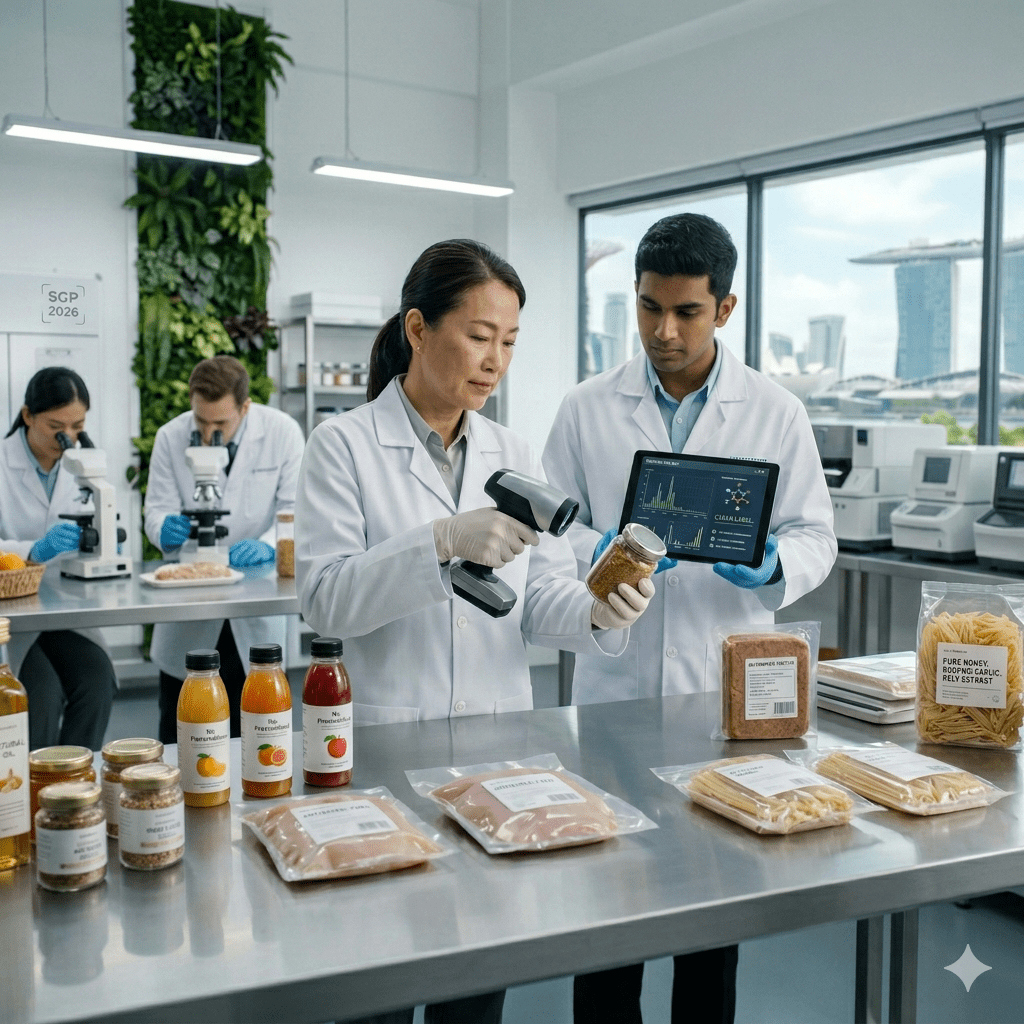
Walk down the chilled aisle of any FairPrice Finest, Cold Storage, or Little Farms in Singapore and you’ll notice something has changed. Shoppers are no longer just flipping packets to check the price — they’re reading the ingredient list first. A jar with fourteen unpronounceable additives goes back on the shelf. A jar with eight recognisable ingredients ends up in the basket.
This is the clean label movement, and according to THAIFEX-Anuga Asia’s 2025 industry report, around 60% of Asian consumers now say clean label claims directly influence what they buy. Euromonitor projects natural product sales across the region will more than double over the next several years, and Singapore — with its high disposable income, multicultural palate, and concentration of health-conscious consumers — is one of the markets leading that shift.
For overseas buyers sourcing food into Singapore, this is no longer a “nice to have” trend. It is a baseline expectation.
What Clean Label Actually Means (and What It Doesn’t)
Let’s get practical. International food importers and distributors need more than culinary poetry—they need replicable processes that scale. Creating Lion’s Mane “crab” cakes or seafood-style sauces involves straightforward steps that maintain clean-label integrity while delivering restaurant-quality results. This isn’t molecular gastronomy requiring centrifuges and liquid nitrogen; it’s intelligent cooking that respects the ingredient.There is no single legal definition of “clean label” in Singapore or globally. The Singapore Food Agency (SFA) regulates specific claims like “no preservatives,” “natural,” and “organic” under the Sale of Food Act and the Food Regulations, but the umbrella term “clean label” is defined by consumer expectation rather than statute.
In practice, a product is widely considered clean label when it meets most or all of the following: a short, recognisable ingredient list; no artificial colours, flavours, or preservatives; minimal processing; no high-fructose corn syrup or hydrogenated fats; ingredients a home cook would actually have in their kitchen; and full transparency about origin and processing methods.
It is worth noting that the SFA has tightened prepacked food labelling rules taking effect in 2026, with stricter alignment to international standards on nutrition declarations, allergen labelling, and the use of claims. Importers bringing products into Singapore should treat clean label not just as a marketing layer but as a compliance discipline — every claim on the front of the pack must be defensible against what is in the ingredient panel on the back.
The Five Clean Label Sub-Trends Driving Singapore Buying Decisions in 2026
The first is plant-based clean label, which has matured significantly. Singaporean consumers have moved past first-generation plant-based products that mimicked meat using long lists of isolates, gums, and methylcellulose. The new demand is for plant-based foods built from whole, identifiable ingredients — mushrooms, legumes, seaweed, koji — where the protein source is something you can picture, not something synthesised in a lab.
The second is functional and adaptogenic ingredients. Mintel’s 2026 outlook on Singapore singles out functional ingredients as a defining theme, and mushrooms in particular have become the breakout category. The Straits Times named lion’s mane (Hericium erinaceus) one of the best ingredients of 2024, and it has only grown more visible since, appearing in everything from rendang to pasta sauces across Singapore’s restaurant scene.
The third is additive reduction over additive replacement. Sophisticated consumers can spot a swap when “artificial flavour” is simply replaced by “natural flavour” with no real change in processing. The brands winning shelf space are those genuinely reformulating to remove additives rather than relabelling them.
The fourth is traceability and country-of-origin transparency. Post-pandemic supply chain awareness means Singaporean buyers — both retail and HORECA — increasingly want to know which province a raw material came from, which factory processed it, and what certifications the manufacturer holds. Vague “Made in Asia” labelling no longer cuts it.
The fifth is allergen-friendly and “free-from” formats that overlap with clean label. Products free from the five pungent spices (onion, garlic, chives, leeks, scallions) are particularly relevant in Singapore’s significant Buddhist vegetarian community, and gluten-free, soy-free, and palm-oil-free claims continue to broaden the addressable market.
What This Means for Overseas Buyers Sourcing from China
China remains one of the largest and most cost-competitive food manufacturing bases in the world, but it has historically carried a reputational headwind on additives and transparency. That reality is changing fast. A new generation of Chinese manufacturers — many founded after 2020 — have built their entire brand identity around clean label, GMP-certified facilities, frozen-fresh processing, and export-ready documentation.
For a Singapore-based importer or private-label buyer, the opportunity is significant: clean label products manufactured in China can land at a meaningfully lower cost than equivalent products from Europe, Japan, or domestic Singapore production, while meeting the same ingredient-panel standards consumers now expect. The challenge is finding the right suppliers, vetting their certifications, and ensuring labelling will pass SFA review on import.
This is the gap Jade Premium was built to close. We help overseas buyers — distributors, retailers, F&B chains, and private-label brand owners — source vetted clean label food products directly from manufacturers across China, with full documentation, sample logistics, and compliance support tailored to destination markets including Singapore.
A Clean Label Product Worth a Closer Look: Lion’s Mane Vegetarian Crab-Flavoured Sauce
If you want a concrete example of where clean label, plant-based, and functional-ingredient trends converge in a single SKU, our Lion’s Mane Mushroom Vegetarian Crab-Flavored Sauce by Wishwill (Jiangsu, China) is a strong illustration.
The product checks the boxes Singaporean consumers and buyers are actively looking for: it is fully vegan and free from the five pungent spices, making it suitable for both mainstream plant-based shoppers and the Buddhist vegetarian segment; it contains zero artificial flavours, zero added preservatives, and zero artificial colourings; lion’s mane mushroom content exceeds 13%, so the functional ingredient is genuinely present rather than just named on the front of the pack; and it is processed using frozen fresh-locked technology to retain nutritional activity and the natural flavour of the raw material.
In application, it works as a direct replacement for crab paste or XO-style sauces in noodles, congee, fried rice, dim sum fillings, and chilled appetisers — giving F&B operators in Singapore an easy way to add a credible plant-based, clean label option to existing menus without reformulating their kitchen workflow.
How to Get Started
If you are a Singapore-based importer, distributor, or brand owner exploring clean label sourcing from China, the most useful first step is usually a short scoping call: which categories you’re looking at, your target retail price band, certification requirements, and volume expectations. From there, we can shortlist matching manufacturers, arrange samples to Singapore, and walk through SFA labelling alignment before any commitment.
You can browse our current clean label catalogue at jadepremium.com.hk or reach out directly to discuss a sourcing brief.
Clean label is no longer a premium niche in Singapore — it is becoming the default. The buyers who move first to lock in compliant, cost-effective supply will be the ones setting shelf prices in 2027, not chasing them.