
The phone call came at 3 AM. A major retail chain buyer discovered that their Asian food supplier had shipped contaminated products across three continents. Within hours, recalls were issued, store shelves emptied, and a distribution partnership worth millions collapsed. This wasn’t a nightmare scenario—it was last Tuesday for a European importer who thought they had done their homework.
For international food importers, distributors, and retail chain buyers, selecting the right Asian food suppliers represents far more than a business decision. It’s a calculated risk that can either establish your reputation as a trusted provider of authentic, quality products or destroy your entire distribution network in a single regulatory violation. The stakes have never been higher, and the margin for error has never been smaller.
The complexity of Asian food supply chains—spanning diverse regulatory environments, cultural business practices, and quality standards—creates unique vulnerabilities. A supplier who appears legitimate on paper might lack proper food safety protocols. A factory with impressive certifications might subcontract production to unverified facilities. A long-standing relationship might blind you to gradual quality deterioration. These hidden risks don’t announce themselves until they explode into public relations disasters, regulatory sanctions, or worse—consumer health crises.
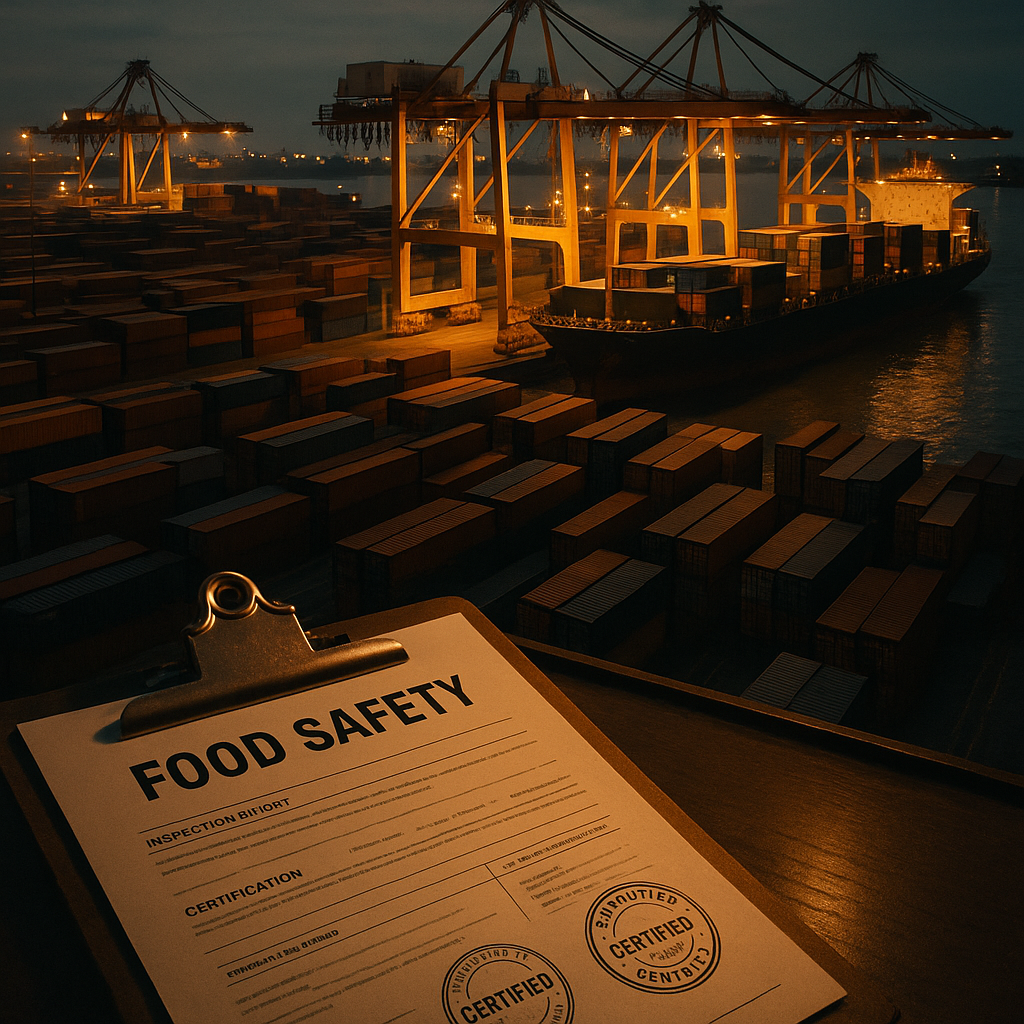
The Foundation: Understanding Due Diligence in Asian Food Supplier Selection
Due diligence in Asian food supplier selection isn’t a checkbox exercise—it’s a systematic framework designed to ensure safety, compliance, reliability, and continuity of supply. The objective extends beyond avoiding disasters; it’s about building sustainable partnerships with suppliers who share your commitment to quality and integrity.
Effective due diligence aligns with globally recognized standards, particularly GFSI-recognized schemes such as BRC, FSSC 22000, and SQF. These frameworks provide a common language for food safety management across borders, but they’re only the starting point. Asian markets require additional layers of verification due to varying enforcement levels, cultural communication differences, and the prevalence of complex subcontracting arrangements.
The due diligence framework rests on three interconnected pillars. First, pre-screen qualification establishes baseline standards before investing significant resources. This phase filters out suppliers who lack fundamental capabilities or documentation. Second, formal audits and verification confirm that claimed capabilities match reality through on-site inspections and evidence review. Third, ongoing performance monitoring ensures that approved suppliers maintain standards over time, catching drift before it becomes disaster.
These three pillars work together as an early warning system. Pre-screening prevents wasted effort on unsuitable partners. Verification catches misrepresentation before products enter your supply chain. Monitoring detects degradation in real-time, protecting the investments you’ve already made in supplier relationships.
Deep Dive: Executing Each Phase of Due Diligence
Pre-screening begins with risk stratification. Not all suppliers pose equal risk, and your due diligence intensity should reflect this reality. High-risk categories include ready-to-eat products, items with complex ingredient matrices, and suppliers in regions with inconsistent regulatory enforcement. Low-risk categories might include single-ingredient frozen vegetables from established production zones. Understanding where each potential supplier falls on this spectrum determines how deep you need to dig.
Documentation gathering forms the backbone of pre-screening. Request business licenses, food production permits, and export registration certificates. In China, for example, legitimate food exporters should hold registration with the General Administration of Customs. In Southeast Asian nations, look for compliance with local food safety authorities and export licensing bodies. Missing or outdated documentation at this stage is a red flag that saves you from more expensive discoveries later.
Certification verification requires more than accepting PDF files. Contact certifying bodies directly to confirm validity. Check that certifications cover the specific products and facilities you plan to use, not just the corporate entity. I’ve seen cases where suppliers presented valid HACCP certificates for one facility while planning to manufacture your products at an entirely different, uncertified location.
Food safety management documentation tells you whether a supplier thinks systematically about quality. Review their HACCP plans, allergen control procedures, sanitation protocols, and traceability systems. Strong suppliers provide detailed, facility-specific documents that show adaptation to their actual production environment. Weak suppliers offer generic templates downloaded from the internet with minimal customization.
Facility evidence provides visual confirmation of capabilities. Request recent photos or videos showing production areas, storage conditions, and quality control laboratories. Modern suppliers should readily provide this documentation. Resistance or excuses often indicate conditions they’d prefer you didn’t see. Compare what you receive against claimed certifications—a facility supposedly operating under BRC standards should demonstrate appropriate zoning, pest control, and equipment sanitation.
The risk-based supplier approval process converts information into decisions. High-risk suppliers require on-site audits before approval, ideally conducted by independent third parties with local expertise and language capabilities. Medium-risk suppliers might qualify through remote verification if documentation is exceptional and certifications are current. Low-risk suppliers with established track records might receive provisional approval pending routine verification visits.
Audit approaches vary based on supplier risk profile and relationship stage. Pre-approval audits focus on capability assessment—can this supplier consistently produce what they claim? These audits examine production processes, quality systems, facility conditions, and management competence. Post-approval audits shift to performance verification—is this supplier maintaining their standards? These focus on batch records, complaint logs, corrective action effectiveness, and systematic improvement.
Cultural understanding dramatically impacts audit effectiveness in Asian contexts. In many Asian business cultures, saving face influences communication patterns. Direct confrontation or public criticism of problems might trigger defensive responses that obscure truth rather than reveal it. Effective auditors build rapport, ask open-ended questions, and observe carefully rather than relying solely on explicit statements. They verify claims through triangulation—asking the same question of different people and comparing answers with physical evidence.
Pay particular attention to subcontracting practices. In some Asian food production environments, suppliers might outsource specific processes or entire production runs without disclosure. Understanding global versus local sourcing strategies helps you evaluate these arrangements. Contract manufacturers, seasonal overflow arrangements, and specialized processing steps can introduce uncontrolled risks into your supply chain. Explicitly require disclosure of all facilities that might touch your products, and build audit rights into supply agreements.

Recognizing Red Flags: What to Watch For in Asian Suppliers
Certain warning signs appear repeatedly in problematic Asian supplier relationships. Learning to recognize them early saves you from expensive mistakes.
Certification inconsistencies warrant immediate investigation. Does the supplier claim certifications but hesitate to provide certificate numbers for verification? Do audit dates seem suspicious—perhaps too recent given the supplier’s claimed history? Are certificates in languages you can’t verify, with no contact information for the certifying body? These patterns suggest potential fraud or misrepresentation.
Communication barriers extend beyond language. A supplier who struggles to answer basic questions about their quality management system might lack actual implementation. Vague responses about traceability, frequent subject changes when discussing critical control points, or inability to explain their own procedures indicate superficial compliance rather than genuine food safety culture.
Facility visit resistance is perhaps the strongest red flag. Legitimate suppliers welcome customer visits as opportunities to showcase capabilities and build relationships. Suppliers who delay, impose unusual conditions, or outright refuse facility access often hide problems. Even if they eventually allow visits, watch for theatrical preparation—spotless show areas that don’t match the condition of actual production zones, or tours that carefully avoid certain areas.
Price anomalies deserve scrutiny. In commodity food markets, prices cluster around known cost structures. A supplier offering prices dramatically below market might be cutting corners on safety, using inferior ingredients, or planning to subcontract to lower-quality facilities. While cost efficiency is valuable, prices that seem too good to be true usually are.
Quality system gaps reveal themselves through documentation patterns. Generic procedures that don’t reference specific equipment or processes suggest paper systems rather than working systems. Batch records with suspiciously perfect data—no deviations, no adjustments, no normal production variation—might indicate falsification. Lack of meaningful corrective actions after customer complaints suggests a reactive rather than preventive approach.
Practical Implementation: Building Your Due Diligence System
Standardize your supplier questionnaires across all Asian markets while building in regional flexibility. Core questions about certifications, facility capabilities, and quality systems remain consistent. Regional questions address market-specific regulations—China’s registration requirements differ from Thailand’s export licensing, for example. This approach provides comparable data while respecting local contexts.
Build a master file for each approved supplier containing all verification documents, audit reports, performance metrics, and communication records. Organize information chronologically so you can track changes over time. Include both positive indicators (successful audits, quality improvements) and concerns (complaint patterns, delayed responses) to maintain balanced perspective.
Establish clear approval criteria that remove subjective judgment from go/no-go decisions. Define minimum acceptable scores for audits, required certifications for product categories, maximum acceptable defect rates, and mandatory response times for inquiries. When a potential supplier fails to meet criteria, your decision is made—no exceptions based on price pressure or relationship considerations.
Schedule regular review cycles for approved suppliers. High-risk suppliers might require quarterly reviews, medium-risk suppliers semi-annual checks, and low-risk suppliers annual assessments. These reviews examine ongoing performance data, verify certification renewals, and confirm continued compliance with your standards. Catch problems early while they’re still manageable.
Develop relationships with local food safety experts and independent audit providers in key Asian markets. These partnerships provide cultural insight, language capabilities, and on-the-ground verification that remote management can’t achieve. They serve as your eyes and ears in markets where you can’t maintain constant presence.
The Jade Premium Standard: Due Diligence as Competitive Advantage
At Jade Premium, our supplier selection process embodies the principles outlined above, elevated through our deep cultural expertise and commitment to authentic quality. With offices across China’s major food production regions—from Shenzhen’s seafood processors to Sichuan’s specialty ingredient manufacturers—we’ve built verification capabilities that transform due diligence from risk management into competitive advantage.
Our approach recognizes that authentic Asian cuisine depends on suppliers who understand traditional production methods while meeting modern safety standards. We don’t simply audit facilities against checklists; we evaluate whether suppliers honor the cultural significance and quality traditions behind their products. A dim sum producer must demonstrate not just food safety compliance but mastery of techniques that have defined Chinese cuisine for generations.
This philosophy aligns perfectly with rigorous due diligence. Premium products require premium processes. Natural ingredients demand transparent supply chains. Healthy products depend on suppliers who prioritize safety over shortcuts. When we verify a supplier’s certifications, we’re confirming their capability to deliver the authentic, high-quality Chinese food products that international markets increasingly demand.
Our vision of promoting mutually beneficial international food trade partnerships starts with supplier selection. By implementing thorough due diligence, we protect our retail chain buyers and international distributors from risks while connecting them with suppliers who represent the best of Chinese food production. This creates sustainable relationships where quality and safety strengthen over time rather than deteriorate.
The hidden risks in Asian food supplier selection aren’t inevitable—they’re preventable through systematic due diligence, cultural understanding, and unwavering commitment to quality standards. For international food service operators, retail buyers, and trading companies, investing in proper supplier verification protects your business, your customers, and your reputation. In an industry where a single mistake can destroy years of relationship-building, due diligence isn’t optional—it’s the foundation of sustainable success.
The choice is yours: implement rigorous supplier selection processes today, or risk discovering your vulnerabilities through disaster tomorrow. The suppliers you choose don’t just affect your bottom line—they define whether you’ll still have a business to worry about when that 3 AM phone call comes.