
When you’re importing food products from China, every shipment represents more than just goods crossing borders—it’s your brand’s promise to customers, your company’s reputation, and potentially your business’s future. One contaminated batch, one delayed container, or one regulatory misstep can unravel years of carefully built trust. Yet many importers approach Chinese supply chains with an optimistic mindset, focusing on competitive pricing and product variety while underestimating the hidden complexities that lie beneath the surface.
The reality is stark: China has become the world’s food manufacturing powerhouse, but this position comes with intricate challenges that demand sophisticated understanding and proactive management. As international food trade becomes increasingly complex, the difference between successful importers and those facing costly disruptions often comes down to how well they anticipate and mitigate supply chain risks before problems emerge.
Understanding the Risk Landscape
Chinese supply chains present five major risk categories that every importer must monitor: regulatory and compliance risks, quality and safety concerns, supplier performance issues, logistics challenges, and geopolitical market fluctuations. Each category carries the potential to derail your shipments, but they rarely operate in isolation—instead, they compound each other in ways that can catch even experienced importers off guard.
Regulatory risks are particularly deceptive. China’s food safety requirements have evolved rapidly over the past decade, with new standards emerging regularly. When a Shanghai-based seafood exporter shipped frozen shrimp to Europe in 2023, they discovered mid-transit that China had updated its export certification requirements just weeks earlier. The shipment was rejected at customs, resulting in complete product loss and damaged relationships with buyers. This wasn’t a case of negligence—it was a failure to track regulatory changes in real-time.
Quality and safety risks extend beyond obvious contamination concerns. Understanding proper quality control protocols is essential for preventing such disasters. Consider the case of a North American importer who regularly purchased dried mushrooms from a certified Chinese supplier. For three years, everything went smoothly. Then, without warning, heavy metal testing revealed cadmium levels above acceptable limits. Investigation revealed that the supplier’s sourcing region had changed due to weather patterns, but no one communicated this shift. The importer faced not only financial losses but also regulatory scrutiny and reputational damage that took months to repair.
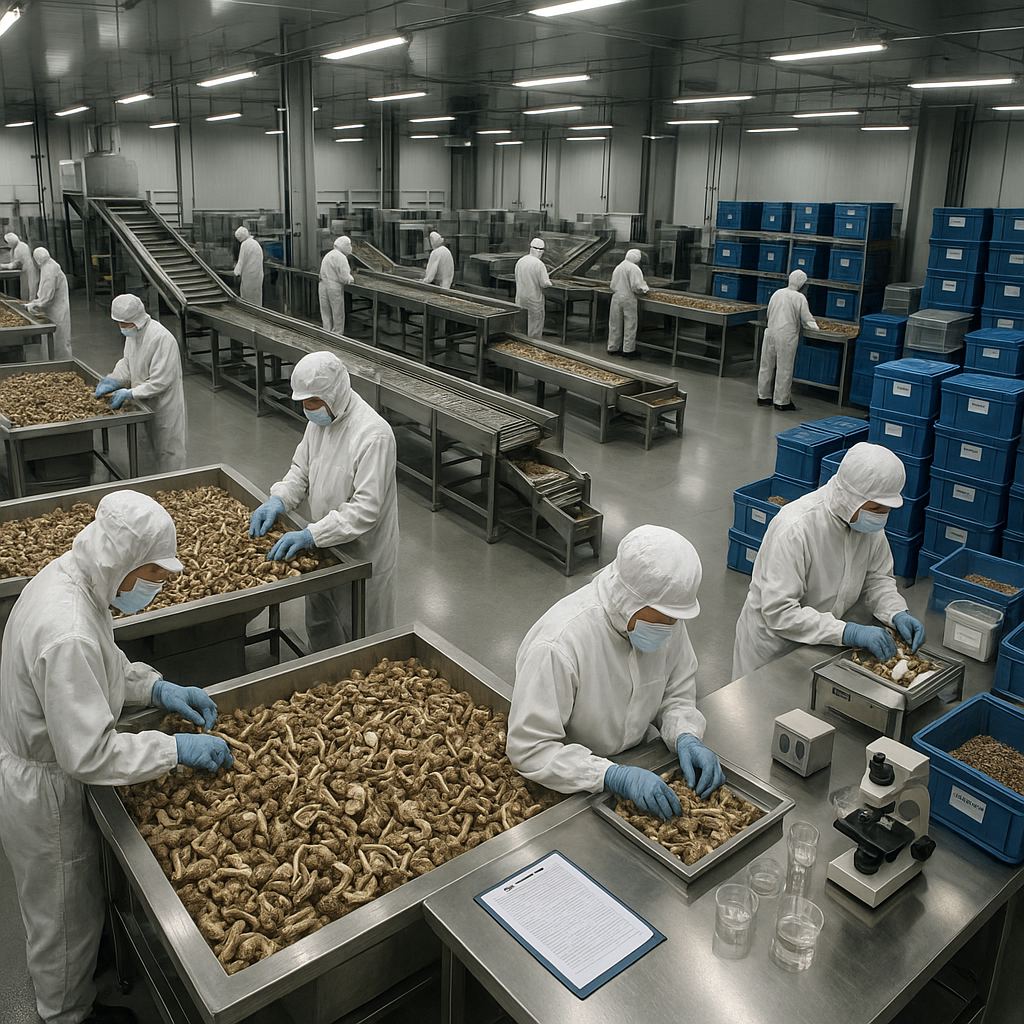
Supplier performance issues manifest in unexpected ways. Payment terms that worked perfectly for two years suddenly become problematic when your supplier faces cash flow pressures from other clients. Production schedules you relied upon shift when a factory prioritizes a larger order. These aren’t theoretical concerns—they’re daily realities in Chinese manufacturing hubs where suppliers balance multiple relationships and competing demands.
Logistics challenges have intensified as global trade patterns shift. The concentration of China’s import reliance on specific products from particular countries creates vulnerability. China imports 61% of the world’s traded soybean supplies, predominantly from the United States and South America. When geopolitical tensions or climate events disrupt these flows, ripple effects cascade through related supply chains. Your hotpot ingredient shipment might face delays not because of anything related to your products, but because port congestion from grain imports has overwhelmed handling capacity.
Market fluctuations add another layer of complexity. China’s food imports surged by 696% from 2001 to 2021, but this growth hasn’t been linear or predictable. Trade tensions, currency fluctuations, and shifting consumer preferences create volatility that affects pricing, availability, and supplier relationships. One European distributor found their reliable dim sum supplier suddenly unable to fulfill orders at agreed prices because rising domestic Chinese demand had fundamentally altered market dynamics.
Navigating the Regulatory Maze
The regulatory landscape for importing Chinese food products resembles a constantly shifting puzzle where pieces change shape while you’re assembling them. China’s food safety framework has matured significantly, introducing stricter production standards, enhanced traceability requirements, and more rigorous export controls. Simultaneously, destination countries continue tightening their import regulations, creating a dual compliance challenge that demands constant vigilance.
Recent regulatory updates illustrate this complexity. In March 2025, China published revised standards governing food labeling that impact all food sectors. On March 16, 2027, new food labeling regulations will take effect, requiring international manufacturers to ensure compliance well in advance. These aren’t minor administrative updates—they represent fundamental shifts in how products must be documented, traced, and presented to regulators and consumers.
The challenge intensifies when you consider that compliance isn’t just about meeting Chinese export requirements. Your products must simultaneously satisfy destination country regulations, which often differ substantially from Chinese standards. A product that clears Chinese customs might still face rejection in Europe or North America if it doesn’t meet specific labeling, additive, or processing requirements unique to those markets.
Effective regulatory navigation requires building relationships with compliance experts who understand both systems. Our comprehensive guide on Chinese food product certification helps importers navigate these documentation requirements systematically. It means establishing monitoring mechanisms that track regulatory changes across multiple jurisdictions. Most importantly, it demands proactive communication with suppliers about compliance expectations, rather than assuming they understand destination market requirements without explicit guidance.
Implementing Rigorous Quality and Safety Controls
Food safety isn’t negotiable—it’s the foundation upon which all other business considerations rest. Yet ensuring consistent safety in Chinese supply chains requires more than periodic inspections or basic certifications. It demands systematic implementation of internationally recognized protocols, robust traceability systems, and independent verification mechanisms that operate continuously rather than sporadically.
HACCP (Hazard Analysis Critical Control Points) and GMP (Good Manufacturing Practices) aren’t just acronyms to check off—they’re operational frameworks that should govern every stage of production. When properly implemented, these systems identify potential contamination points, establish monitoring procedures, define corrective actions, and create documentation trails that prove compliance. However, certification alone doesn’t guarantee implementation. Successful importers verify that their suppliers don’t just possess certificates, but actively operate according to these principles daily.
Traceability systems have evolved from nice-to-have features to essential requirements. Being able to trace every ingredient back to its source allows you to respond quickly when issues arise, demonstrate due diligence to regulators, and maintain consumer trust. This means working with suppliers who maintain detailed records, use batch coding systems, and can provide documentation at every supply chain stage—from raw material sourcing through final packaging.
Third-party inspections provide an essential independent verification layer. While your supplier’s internal quality controls matter, external auditors bring objectivity and specialized expertise that internal systems can’t replicate. Regular third-party inspections—not just pre-shipment checks but periodic facility audits—help identify emerging issues before they become crises. These inspections should cover not just final products but production processes, storage conditions, sanitation practices, and employee training.
The investment in quality control infrastructure pays dividends beyond risk mitigation. It builds relationships with suppliers who understand you’re committed to mutual success rather than just extracting lowest prices. It creates documentation that protects you if disputes arise. Most importantly, it ensures that when consumers purchase products bearing your brand, they’re getting exactly the quality and safety you promised.
Building Effective Supplier and Supply Chain Governance
The traditional approach of finding one reliable supplier and depending on them indefinitely carries significant risk in today’s volatile environment. Diversifying your supplier base isn’t about lacking trust—it’s about building resilience into your business model. When one supplier faces production issues, regulatory challenges, or capacity constraints, alternative sources ensure business continuity.
Diversification requires thoughtful strategy. It doesn’t mean spreading orders so thin that you lose negotiating leverage or supplier commitment. Instead, it means identifying critical products where supply interruption would significantly impact your business, then developing qualified alternative sources for those items. This might involve maintaining a primary supplier while keeping secondary suppliers engaged through smaller regular orders that sustain the relationship without overcomplicating operations.
Comprehensive due diligence extends far beyond initial supplier qualification. Learn detailed supplier verification protocols that protect your business from hidden risks. It’s an ongoing process that examines financial stability, production capacity, quality systems, regulatory compliance, and business reputation. Before partnering with a new supplier, visit their facilities personally. Review their customer list and contact references. Verify certifications through issuing bodies rather than accepting documents at face value. Examine their supply chain—understanding their suppliers helps you assess risks beyond their direct control.
Supplier scorecards transform subjective assessments into objective data. By tracking metrics like on-time delivery rates, quality defect rates, documentation accuracy, communication responsiveness, and compliance performance, you create quantifiable standards that guide decision-making. These scorecards shouldn’t be punitive tools—they’re collaborative frameworks that help suppliers understand your expectations and identify improvement opportunities. Regular performance reviews based on scorecard data create accountability while strengthening partnerships through transparency.
Building strong supplier relationships involves balancing firmness about requirements with fairness in expectations. Chinese suppliers appreciate clear communication about specifications, quality standards, and delivery timelines. They respond well to partners who understand manufacturing realities and work collaboratively to solve problems rather than simply demanding perfection. This doesn’t mean accepting substandard performance—it means approaching the relationship as a partnership where both parties have responsibilities and shared interests in success.
Implementing Successful Risk Management Practices
Effective risk management happens in layers, with controls at every stage preventing small issues from becoming catastrophic failures. Pre-shipment controls start at the source, verifying that products meet specifications before they enter the logistics pipeline. This includes production oversight, in-process inspections, and pre-departure verification. Catching problems before shipment saves money, time, and relationships compared to discovering issues upon arrival.
Post-shipment controls provide a final verification layer. Random sampling and testing of arriving goods ensures that what you ordered matches what you received. This might seem redundant after pre-shipment inspection, but conditions during transport can affect quality, and occasional verification keeps everyone honest. Documentation of these checks creates the evidence trail you’ll need if disputes arise.
Documentation discipline separates professional importers from amateurs. Every shipment should have complete, organized records: purchase orders, specifications, certificates of analysis, inspection reports, shipping documents, customs declarations, and correspondence. This documentation serves multiple purposes—it proves compliance to regulators, provides evidence if legal disputes arise, enables traceability if recalls occur, and creates institutional knowledge that protects your business if key personnel leave.
Insurance might feel like an unnecessary expense when everything runs smoothly, but it’s essential protection against scenarios that could otherwise destroy your business. Product liability insurance, cargo insurance, and business interruption insurance each protect against different risks. Work with insurance professionals who understand food import challenges to ensure you have appropriate coverage without paying for redundant protection.
Recall readiness planning is something most companies avoid thinking about, assuming problems won’t happen to them. This optimism becomes expensive when issues occur. A recall readiness plan outlines exactly what happens if you discover a product safety issue: who gets notified, how products get tracked, what communications go to customers and regulators, and how costs get managed. Having this plan developed, documented, and periodically tested means you can respond professionally and quickly when problems occur, minimizing damage and demonstrating responsibility.
Building Logistical Resilience
Logistics resilience requires thinking beyond normal operations to consider what happens when disruptions occur. Creating redundancy doesn’t mean duplicating everything—it means identifying critical pathways and establishing alternatives. If you typically ship through a specific port, understand backup options if that port faces congestion, labor disputes, or capacity constraints. If you rely on one shipping line, know which alternatives could handle your cargo if your primary carrier faces issues.
Inventory buffers protect against supply chain variability. While just-in-time inventory management reduces costs, it creates vulnerability to disruptions. Strategic inventory positioning—maintaining stock at key points in your supply chain—provides cushioning when delays occur. This doesn’t mean warehousing months of inventory, but rather calculating appropriate safety stock levels based on lead time variability and demand patterns.
Data analytics has transformed supply chain management from reactive to proactive. Real-time shipment tracking allows you to monitor cargo location, condition, and expected arrival. Predictive analytics help forecast potential delays based on weather patterns, port congestion trends, and historical data. These insights allow you to alert customers about potential delays before they complain, reroute shipments to avoid congestion, and make informed decisions about expediting critical orders.
Building relationships with multiple logistics providers creates flexibility. Different providers excel in different lanes—one might offer superior rates for ocean freight while another provides better air freight options. During disruptions, having established relationships with multiple providers means you can quickly shift volume rather than scrambling to onboard new partners during crises.
Practical Action Checklist for Risk Management
Mapping your entire supply chain provides visibility that most importers lack. Document every link from raw material sources through production facilities to your warehouse. Identify where each ingredient originates, which suppliers provide components, who handles processing, and what routes products travel. This mapping reveals hidden dependencies and concentration risks you can’t see when viewing suppliers in isolation.
Conduct regular supplier audits beyond standard pre-qualification. Annual facility visits allow you to observe operations firsthand, identify changes since previous visits, and demonstrate your commitment to partnership. These audits should examine not just production quality but also financial health, management stability, and operational capacity.
Establish clear contingency plans for different disruption scenarios. What happens if your primary supplier can’t deliver? If port strikes delay shipments? If regulatory changes affect product clearance? If quality issues require product destruction? Writing these plans forces you to think through scenarios before stress and time pressure affect decision-making.
Develop communication protocols that ensure information flows smoothly during normal operations and crises. Your suppliers should know exactly who to contact about different issues and what information you need. Your internal team should understand who makes decisions during disruptions and how to escalate problems. Your customers should receive proactive updates about potential delays rather than discovering problems when shipments don’t arrive.
Invest in building expertise within your organization. Whether through hiring experienced professionals, partnering with specialized consultants, or developing internal capabilities through training, understanding Chinese supply chains deeply provides competitive advantage that can’t be easily replicated.
Key Takeaways for Successful Navigation
Several central principles emerge from examining Chinese supply chain risks. First, regulatory clarity isn’t optional—it’s foundational. Invest time and resources in understanding both Chinese export requirements and destination market regulations. Build relationships with compliance experts who can guide you through complexity and alert you to changes before they affect operations.
Second, food safety commitment must be unwavering. This isn’t an area where cutting corners saves money—it’s where shortcuts destroy businesses. Implement robust quality control systems, verify supplier compliance rigorously, and maintain documentation that proves your diligence. The cost of quality control is negligible compared to the cost of quality failures.
Third, diversification provides resilience that single-source relationships can’t match. Whether diversifying suppliers, logistics routes, or markets, spreading risk protects your business from disruptions beyond your control. This doesn’t mean abandoning relationships that work—it means thoughtfully building alternatives before you desperately need them.
Fourth, data-driven decision-making transforms supply chain management from gut feelings to informed strategy. Invest in systems that provide visibility, track performance metrics, and enable predictive analysis. Use this data to make proactive decisions rather than reactive responses.
Finally, remember that navigating Chinese supply chains successfully isn’t about eliminating all risks—that’s impossible. It’s about understanding risks clearly, implementing systematic controls that mitigate them, and building resilience that allows your business to absorb disruptions without catastrophic impact. At Jade Premium, we’ve built our business on this foundation—combining deep understanding of Chinese production capabilities with rigorous quality standards and comprehensive supply chain management. Every product we source undergoes verification at multiple stages, every supplier relationship includes contingency planning, and every shipment benefits from our local presence across major Chinese production centers. This approach doesn’t eliminate challenges, but it transforms them from business-threatening crises into manageable problems with clear solutions.
The global food trade connecting Chinese production with international markets will continue growing, but success belongs to those who approach it with sophistication matching its complexity. Understanding the risks isn’t pessimism—it’s professionalism. Building controls isn’t distrust—it’s prudence. And investing in resilience isn’t expense—it’s the foundation of sustainable international trade partnerships that benefit everyone involved.