
- Understanding Cross-Border Food Recalls: More Than Just Taking Products Off Shelves
- The Complexity of Cross-Border Coordination: Where Things Get Real
- The Recall Lifecycle: From Detection to Resolution
- Data and Technology: The Backbone of Modern Recall Management
- Partnerships and Governance: You're Only as Strong as Your Weakest Link
- Best Practices: Building Your Recall Readiness
- Managing Risks and Protecting Your Business
- Conclusion: Recall Management as Strategic Imperative
Picture this: A container of premium Chinese dumplings arrives at a European port. Within days, they’re distributed across five countries, sitting on supermarket shelves from Berlin to Madrid. Then comes the call no one wants to receive—a potential allergen labeling issue has been identified. Now what? You have extremely tight timeframes to trace every unit, notify multiple regulatory agencies in different languages, coordinate with distributors across time zones, and manage the cascade of questions from panicked retailers. Welcome to the high-stakes world of cross-border food recalls.
For international food importers and distributors working with Chinese food products, this scenario isn’t just theoretical. It’s an operational reality that can materialize at any moment. The difference between companies that weather these storms and those that crumble often comes down to one thing: how well they’ve prepared for export recall management. In an era where a single contaminated batch can traverse continents in hours and social media amplifies concerns instantly, your recall readiness isn’t just about compliance—it’s about survival.

Understanding Cross-Border Food Recalls: More Than Just Taking Products Off Shelves
A cross-border food recall is the systematic removal and recovery of food products from international markets when they pose potential health risks or fail to meet regulatory standards. Unlike domestic recalls, these operations involve navigating multiple legal frameworks, coordinating across different regulatory bodies, and managing communication in various languages and cultural contexts.
The primary objective is straightforward: protect public health by swiftly removing unsafe products from the supply chain. But the execution is anything but simple. Cross-border recalls demand what food safety experts call “traceability” which means tracking a product’s journey from farm to fork. This means knowing exactly where every batch originated, which intermediaries handled it, where it was distributed, and who purchased it.
At the heart of effective recall management lies HACCP (Hazard Analysis and Critical Control Points) principles. This systematic approach identifies potential hazards at each stage of production and distribution, establishing critical control points where risks can be managed or eliminated. When a recall becomes necessary, companies with robust HACCP systems can quickly pinpoint exactly which production batches were affected, dramatically reducing the scope and cost of the recall.
Regulatory authorities across different countries play distinct but interconnected roles. The FDA in the United States, EFSA in Europe, and Chinese regulators such as SAMR (State Administration for Market Regulation) and GACC each have their own reporting requirements, timelines, and enforcement mechanisms. What constitutes a Class I recall (imminent health hazard) in one jurisdiction might be classified differently elsewhere. For companies like Jade Premium, which bridges Chinese producers with global markets, understanding these nuances isn’t optional—it’s foundational to protecting both our partners and end consumers.
The Complexity of Cross-Border Coordination: Where Things Get Real
International traceability requirements represent one of the most challenging aspects of cross-border recall management. The FDA’s Rule 204, which is scheduled to come fully into force in 2026, requires companies to maintain detailed records including lot codes, harvest dates, cooling information, and even the location where products were packed. European regulations demand similar granularity, with additional emphasis on sustainability and origin documentation. Meanwhile, China’s draft food recall rules are tightening timelines and expanding oversight to cross-border e-commerce platforms.
Information sharing standards create another layer of complexity. When a recall is initiated in Europe, how quickly does that information reach distributors in North America or the Middle East? Different markets use different data formats and communication protocols. Some regions rely on centralized recall notification systems, while others depend on direct company-to-regulator communication. This fragmentation means that companies must maintain multiple reporting channels and ensure information flows seamlessly across all of them.
Language alignment might seem like a minor concern until you’re trying to communicate the difference between “may contain” and “contains” in a bilingual allergen warning during a time-sensitive recall. Mistranslations in recall notices have led to confusion about which products are actually affected, resulting in either inadequate responses that left dangerous products on shelves or overly broad recalls that destroyed safe inventory unnecessarily. At Jade Premium, we’ve seen how critical precise multilingual communication becomes when coordinating between Chinese suppliers and international buyers. Every word matters when public health is at stake.
Documentation discipline is where many companies falter. It’s not enough to have records; they must be organized, accessible, and verifiable in real-time. FDA foreign facility inspections declined significantly during recent years, the burden of proof shifted even more heavily onto importers and distributors. You must be able to demonstrate, within hours, that your products meet safety standards and that you know exactly where every unit is located. This requires systems that capture and organize data continuously, not just during crisis moments.
The Recall Lifecycle: From Detection to Resolution
Issue detection marks the critical first phase. Sometimes it comes from internal quality control—a batch test reveals salmonella contamination. Other times, it emerges from customer complaints or, worse, reports of illness. The speed of detection directly impacts the severity of consequences. Companies with robust monitoring systems often identify problems before products reach consumers, allowing for quiet market withdrawals rather than public recalls.
Once an issue is detected, regulatory reporting begins immediately. In the United States, companies typically have 24 hours to notify the FDA of a serious hazard. The European Union has similar rapid reporting requirements through the RASFF (Rapid Alert System for Food and Feed). Recent regulatory drafts and enforcement updates in China increasingly emphasize, requiring them to appoint a domestic company to assist with recall procedures. Missing these deadlines can transform a manageable recall into a regulatory nightmare involving penalties, import bans, and damaged relationships with authorities.
The public notification phase demands careful calibration. Say too little, and you appear to be hiding information. Say too much, and you risk creating panic that extends beyond the actual risk. The most effective recall notices clearly define the scope of affected products, provide specific identification information (lot numbers, expiration dates, packaging details), explain the nature of the risk without being alarmist, and offer clear guidance on what consumers should do. Transparency builds trust even in crisis. Consumers remember not just that a recall happened, but how the company handled it.
Product recovery and verification represent the operational heavy lifting. Every unit must be accounted for, whether still in distribution channels or already in consumer hands. This is where traceability systems prove their worth. Companies using GS1 Standards and serialized tracking can identify affected products within hours. Those relying on manual record-keeping might take weeks—during which time more people are exposed to potential harm. The Food Safety Modernization Act (FSMA) specifically requires written food safety plans prepared by qualified individuals precisely because effective recalls demand preparation, not improvisation.
Data and Technology: The Backbone of Modern Recall Management
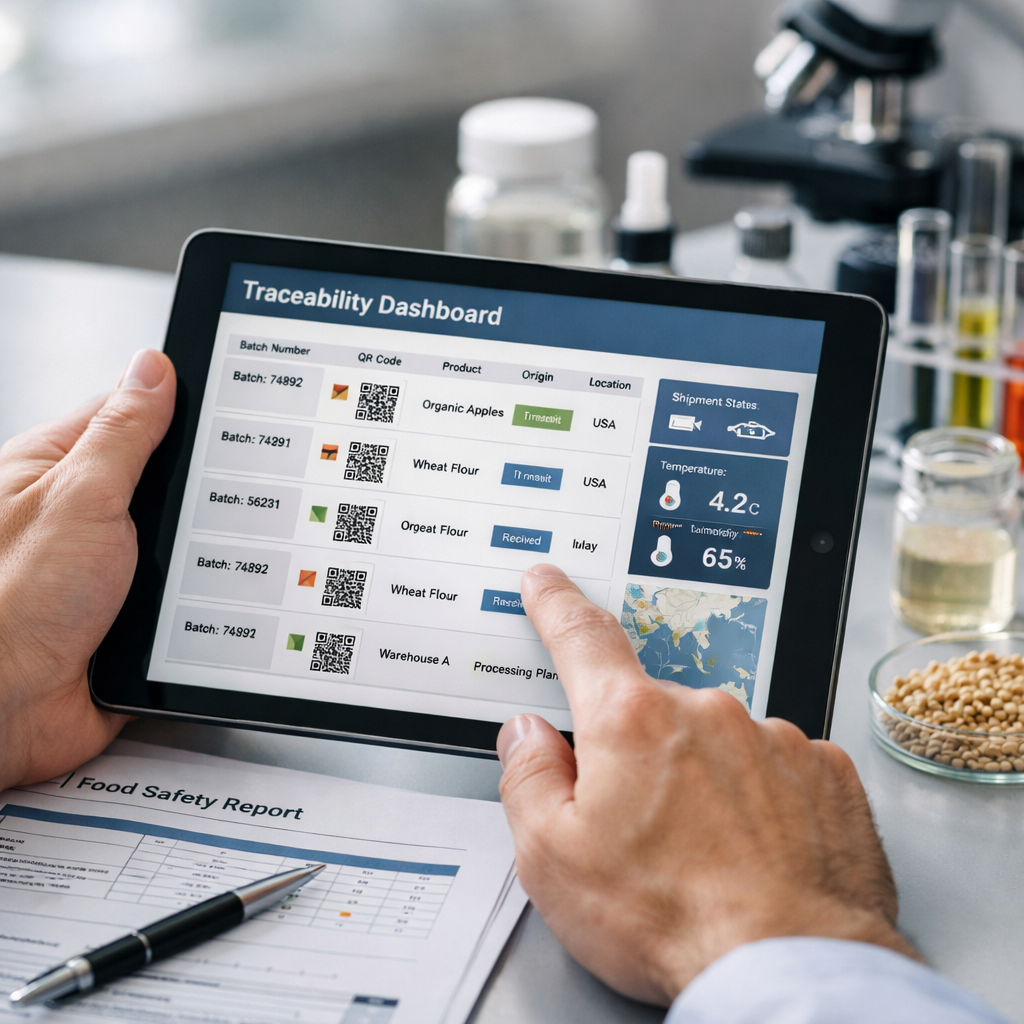
Traceability systems have evolved from paper logbooks to sophisticated digital platforms that capture every transaction in real-time. Modern systems use QR codes and batch numbers to link physical products with comprehensive digital records covering origin, processing, storage conditions, transportation routes, and distribution points. When a recall occurs, these systems allow managers to run queries that instantly identify every location holding affected products. The difference between a one-day and a one-week product recovery often comes down to data infrastructure.
Regulatory reporting platforms streamline the complex task of notifying multiple authorities. Rather than manually preparing separate reports for the FDA, EFSA, and other agencies, integrated platforms allow companies to input information once and automatically format it according to each regulator’s requirements. These systems also track submission deadlines, maintain audit trails, and store historical recall data. They’re critical for demonstrating compliance during inspections. As industry reports indicate that global food recalls have been rising in early 2025, reflecting broader upward trends in international product safety incidents, these platforms have become essential rather than optional.
Communications tools extend beyond regulatory reporting to include customer notifications, media relations, and internal coordination. Crisis communication platforms manage email blasts, social media updates, and customer service scripting from a single dashboard. They track who has been notified, monitor response rates, and flag areas where messages aren’t getting through. During recalls, clear communication across all audiences can contain a crisis. It can also prevent the situation from spiraling out of control.
The integration of these technologies creates resilience. Systems must communicate seamlessly. This allows traceability data to automate reports and notifications, cutting response times from days to hours. Companies that have adopted comprehensive digital recall management frameworks consistently outperform those relying on manual processes, with faster containment, lower costs, and better preservation of brand reputation.
Partnerships and Governance: You’re Only as Strong as Your Weakest Link
Supplier due diligence forms the foundation of recall prevention. Before a product ever enters your supply chain, you need confidence in the supplier’s food safety systems, traceability capabilities, and recall readiness. At Jade Premium, our supplier qualification verification process examines not just product quality but also the systems suppliers have in place to detect and respond to safety issues. We look for evidence of HACCP implementation, GMP adherence, regular testing protocols, and documented recall procedures. Because in cross-border trade, a supplier’s recall failure becomes your recall failure.
International cooperation requires establishing clear roles and responsibilities before crises occur. When Jade Premium connects Chinese producers with international buyers, we facilitate agreements that specify who does what during a recall. Will the producer handle product recovery in China while the distributor manages international markets? Who covers the costs of product destruction? How quickly must information flow between parties? These aren’t comfortable conversations, but having them during contract negotiation rather than mid-crisis saves relationships and reduces response times.
Legal considerations in cross-border recalls are labyrinthine. Product liability laws vary dramatically across jurisdictions. Some countries hold importers strictly liable for defects regardless of fault, while others require proof of negligence. Insurance coverage for recalls may have territorial limitations or exclude certain types of hazards. Contractual indemnification clauses that seem clear in one country’s legal system may be unenforceable in another. Jade Premium works with legal experts across key markets—Europe, North America, the Middle East, and ASEAN.This ensures our trade agreements clarify liability and provide dispute resolution.
The governance structure for recall management should be clearly defined in writing. Who has authority to initiate a recall? What are the escalation procedures? How is the recall team assembled and coordinated? A cross-functional recall team typically includes quality assurance, regulatory affairs, logistics, legal, communications, and senior management representatives. But simply having a team isn’t enough. They need regular training, updated contact information, and clarity about decision-making authority. The companies that handle recalls most effectively are those that have practiced their response through regular drills and tabletop exercises.
Best Practices: Building Your Recall Readiness
Establishing cross-functional recall teams means pulling together expertise from across your organization. Your quality team understands the technical aspects of the hazard. Logistics knows where products are located. Legal understands liability implications. Communications manages public messaging. No single department can handle a recall alone, yet many companies discover this only when crisis strikes. Regular team meetings keep everyone aligned and informed about evolving responsibilities.
Conducting regular recall drills transforms theoretical plans into operational muscle memory. Simulate a contamination event: Set a timer and see how quickly your team can identify affected products, draft regulatory notifications, and coordinate with partners. These exercises invariably reveal gaps in your procedures—missing contact information, unclear authority chains, incompatible data systems. Better to discover these issues during a drill than a real recall when every minute counts and real health risks are at stake.
Maintaining accurate and accessible records requires discipline that transcends individual transactions. Every shipment, every lot number, every quality test result must be captured and stored in systems that allow rapid retrieval. The FDA’s emphasis on traceability under FSMA isn’t bureaucratic busywork—it reflects the reality that recalls succeed or fail based on information quality. Companies that treat record-keeping as integral to operations rather than administrative burden consistently demonstrate faster, more complete recalls.
Building a culture of food safety means moving beyond compliance checkbox mentality to genuine commitment. When employees at every level—from warehouse workers to executives—understand that their actions directly impact consumer safety, behaviors change. Problems get reported rather than hidden. Shortcuts get questioned rather than normalized. At Jade Premium, this cultural commitment to quality and safety is embedded in how we evaluate suppliers, design logistics solutions, and train our teams. We don’t just facilitate trade; we serve as custodians of food safety across borders.
Managing Risks and Protecting Your Business
The potential risks of inadequate recall management are severe and multifaceted. Financial costs include not just product recovery and destruction, but also legal settlements, regulatory fines, and lost sales during and after the recall. Brand reputation damage can persist for years—57% of consumers admit to discarding recalled food even when their region wasn’t affected, with millennials showing even stronger avoidance. Regulatory consequences might include increased inspection frequency, import bans, or mandatory compliance audits that disrupt operations for months.
Mitigation strategies begin with prevention but must extend to preparedness. Rigorous supplier vetting, comprehensive quality control, and proactive testing reduce the likelihood of safety issues entering your supply chain. But when problems do occur, having tested recall procedures, established communication channels, and integrated technology systems minimizes damage. Insurance can provide financial protection, but policies must be carefully structured to cover international operations and the specific types of hazards relevant to your product portfolio.
The integration of Jade Premium’s philosophy—connecting authentic Chinese cuisine with global markets while maintaining unwavering commitment to quality—means we view recall management not as regulatory burden but as fundamental to our mission. We can only successfully bring Chinese food products to international tables if those products consistently meet the highest safety standards. Our comprehensive supply chain solutions, from source verification to logistics optimization to compliance support, are designed to prevent recalls while ensuring swift, effective response when issues arise.
Our positioning as a bridge between Chinese producers and global markets gives us unique insight into the challenges of cross-border recall management. We understand the regulatory requirements in Europe, North America, the Middle East, and ASEAN regions. We maintain relationships with suppliers across major Chinese production centers. And we’ve built systems that provide the traceability, documentation, and coordination capabilities essential for managing recalls that span continents and cultures.
Conclusion: Recall Management as Strategic Imperative
Cross-border food recalls represent one of the most challenging scenarios in international trade, demanding rapid coordination across regulatory systems, languages, and time zones. Yet companies that approach recall management strategically—investing in traceability systems, establishing clear governance structures, conducting regular drills, and maintaining robust supplier relationships—transform this risk into a competitive advantage.
The rising complexity of global food supply chains means recall risks will only increase. Products travel further, pass through more hands, and reach more diverse markets than ever before. Simultaneously, detection technologies improve, regulations tighten, and consumer expectations for transparency rise. In this environment, recall readiness isn’t a luxury—it’s table stakes for companies serious about international food trade.
Jade Premium’s commitment to quality, compliance, and comprehensive supply chain management positions us as more than a trade facilitator—we’re a strategic partner helping navigate these challenges. Our extensive local network across Chinese production centers, deep cultural and market expertise, and integrated compliance know-how mean we understand both the products we source and the markets they serve. When recalls occur—and statistically, they will—our partners benefit from systems designed for speed, accuracy, and transparency.
The question isn’t whether you’ll face a cross-border recall, but whether you’ll be ready when it happens. The companies that thrive in global food trade are those that treat recall management not as an afterthought but as a core operational capability. They invest in the people, systems, and relationships necessary to protect consumers, preserve brand reputation, and maintain the trust that underlies all successful trade relationships.
In bringing authentic Chinese cuisine to global tables, Jade Premium recognizes that every product carries not just ingredients but trust. Managing that trust through rigorous quality control and recall readiness isn’t just good business—it’s our responsibility to the producers we represent, the buyers we serve, and the consumers who ultimately enjoy these products. Because in international food trade, your recall management capabilities don’t just protect your business—they can define it.