
Walk into any Chinese restaurant outside of China, and you’ll likely see the word “authentic” proudly displayed. But here’s an uncomfortable truth: many of these establishments are missing the most fundamental component of genuine Chinese cuisine—authentic Chinese seasonings and spices sourced directly from their regions of origin.
The global appetite for Chinese food has never been stronger. From bustling restaurants in London to trendy fusion spots in New York, everyone claims to offer the real deal. Yet the difference between truly authentic Chinese dishes and their watered-down versions often comes down to one critical factor: the quality and authenticity of the seasonings and spices used. While a chef might perfect their knife skills and master traditional cooking techniques, without genuine Chinese seasonings, they’re building a house on sand.
This isn’t about being a purist for the sake of it. Real Chinese seasonings carry the terroir of their regions, the complexity of traditional processing methods, and flavor profiles that simply cannot be replicated by generic substitutes. When a Sichuan restaurant uses locally-produced “Sichuan pepper” instead of authentic 花椒 (huājiāo) from Sichuan province, they’re not just cutting corners—they’re fundamentally altering the dish’s DNA.
The Foundation: Understanding Authentic Chinese Seasoning Sourcing
Authentic Chinese cuisine begins long before the wok touches the flame. It starts with cross-border procurement from the actual producers and distributors in China who understand the traditional methods, regional specifications, and quality standards that have been refined over centuries.
Global sourcing for Chinese seasonings means establishing direct relationships with manufacturers in specific provinces where these ingredients have been cultivated and processed for generations. Star anise from Guangxi province tastes distinctly different from star anise grown elsewhere. Sichuan peppercorns from Hanyuan County possess that characteristic numbing quality—known as 麻 (má)—that cannot be found in peppercorns from other regions. These aren’t minor variations; they’re the difference between an authentic experience and a poor imitation.

Why does this level of authenticity matter? First, it’s about capturing genuine regional flavor profiles. Chinese cuisine isn’t monolithic—it’s a tapestry of eight major culinary traditions, each with distinct characteristics. Cantonese cuisine emphasizes fresh, delicate flavors with light seasoning. Sichuan cuisine delivers bold, spicy, and numbing sensations. Hunan cuisine brings fierce heat and sourness. Without the right regional ingredients, these distinctions blur into generic “Chinese food.”
Second, today’s consumers are increasingly sophisticated and transparency-minded. They want to know where their food comes from, how it’s processed, and whether it meets clean-label standards. A restaurant that can trace its Shaoxing wine back to traditional producers in Zhejiang province or its fermented bean paste to artisan makers in Sichuan builds trust and credibility with discerning diners.
The Essential Arsenal: Core Product Categories
Building an authentic Chinese kitchen requires understanding the fundamental seasoning categories that form the backbone of Chinese cooking. These aren’t optional garnishes—they’re structural elements that define entire cuisines.
Five-spice blends represent perhaps the most iconic Chinese seasoning combination, though what many Western suppliers sell as “five-spice powder” often bears little resemblance to the real thing. Authentic Chinese five-spice typically combines star anise, Sichuan peppercorns, fennel seeds, cinnamon, and cloves, but the proportions and quality of each component matter enormously. Premium versions source star anise directly from indigenous farmers in Guangxi or Northern Vietnam, where the soil and climate produce the most aromatic specimens.
Dried spices form another crucial category. Beyond the five-spice components, this includes dried chili peppers (with countless varieties offering different heat levels and flavor profiles), dried ginger, white pepper, and cassia bark. Sichuan cuisine alone uses multiple types of dried chilies—facing heaven peppers for their intense heat, erjingtiao chilies for their fruity notes, and bullet head chilies for both color and moderate spice. Using generic “red chili flakes” instead of these specific varieties is like painting a masterpiece with only primary colors.
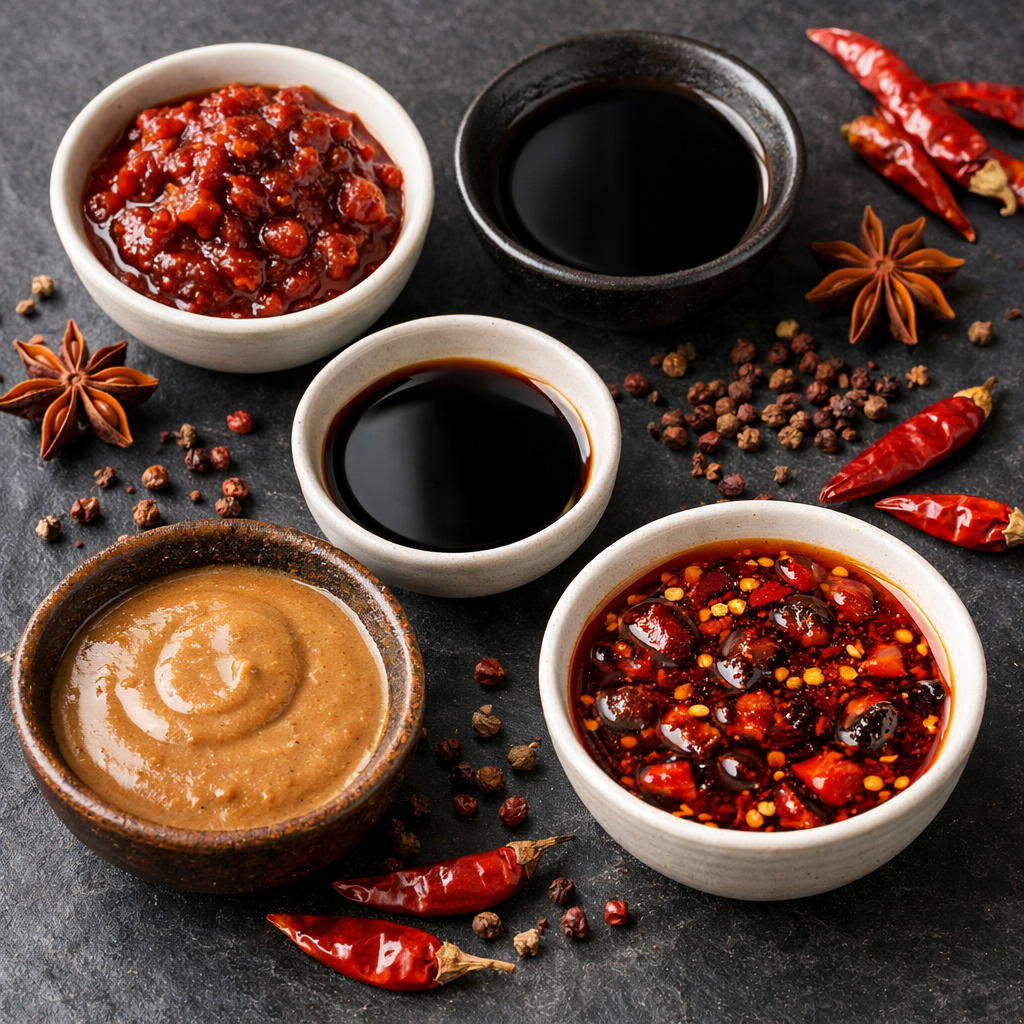
Soy sauces and fermented condiments might seem straightforward, but the category encompasses remarkable diversity. Light soy sauce, dark soy sauce, mushroom soy sauce, and aged soy sauces each serve distinct culinary purposes. Then there are fermented bean pastes—doubanjiang (broad bean paste), tianmianjiang (sweet wheat paste), and countless regional variations. A genuine Sichuan mapo tofu demands Pixian doubanjiang, a specific type of fermented broad bean paste from Pixian County that has been aged for months or years, developing complex umami depth that cannot be rushed or replicated.
Aromatic pastes and specialty condiments complete the arsenal. This includes sesame paste, chili oil (with proper preparation involving multiple types of chilies, Sichuan peppercorns, and aromatic spices), black bean sauce, and XO sauce for Cantonese cuisine. Each represents a craft tradition with specific quality markers that separate authentic products from industrial approximations.
Sourcing Channels: Finding the Real Deal
The question facing restaurant operators and food importers is straightforward: where do you actually source these authentic ingredients? The answer requires navigating a complex landscape of suppliers, certifications, and quality verification.
Direct sourcing from producers offers the highest level of authenticity and traceability. This means establishing relationships with manufacturers in China who specialize in specific products. A soy sauce producer in Guangdong that has been fermenting sauces using traditional methods for decades. A Sichuan pepper processor in Hanyuan who works directly with local farmers. Companies like Jade Premium bridge this gap, leveraging their extensive network across major Chinese cities—from Guangzhou to Chengdu to Shanghai—to connect international buyers with these authentic producers.
Wholesale suppliers and distributors provide another channel, particularly for buyers who need diverse product ranges and reliable logistics. However, not all wholesalers are created equal. The best combine product expertise with rigorous supplier vetting, ensuring that what they label as “Pixian doubanjiang” actually comes from Pixian County and meets traditional production standards.
Reputable brands offer a third path. Pearl River Bridge, Lee Kum Kee, and other established Chinese condiment producers have built reputations over generations. Their products undergo consistent quality control and meet international food safety standards, making them reliable choices for commercial kitchens.
Quality Assurance: Beyond the Label
Sourcing authentic Chinese seasonings isn’t just about finding suppliers who claim to offer the real thing. It requires rigorous quality assurance protocols that verify authenticity, safety, and consistency.
Traceability should be non-negotiable. A supplier should be able to trace products back to specific production facilities, and ideally to the source farms or regions. This isn’t just about food safety—it’s about verifying authenticity. When Jade Premium sources Sichuan peppercorns, they can trace them back to specific growing regions and verify traditional processing methods.
Certifications provide third-party validation. Look for products with GACC (General Administration of Customs of China) registration for the manufacturing facility, organic certifications where relevant, and compliance with destination country import regulations. For products entering Western markets, HACCP certification and facility inspections provide additional assurance.
Analytical checks should verify both safety and authenticity. This includes testing for contaminants, pesticide residues, and heavy metals, but also for authenticity markers—the chemical compounds that verify regional origin and traditional processing. A genuine aged doubanjiang should show specific fermentation byproducts that develop only through proper aging.
Packaging integrity matters more than it might seem. Traditional Chinese seasonings are often sensitive to light, air, and moisture. Premium suppliers understand proper packaging requirements—using dark glass bottles for sensitive oils, vacuum-sealed bags for dried spices, and appropriate barrier materials for fermented products.
Navigating Regulations: The Compliance Maze
Importing Chinese seasonings into Western markets means navigating a complex web of regulations that vary by destination country and product category.
Import regulations typically require documentation proving that the manufacturing facility is registered with Chinese authorities (GACC registration) and meets destination country standards. The United States, European Union, and other markets maintain lists of approved facilities. Products from non-registered facilities will be rejected at the border, regardless of quality.
Labeling requirements demand attention to detail. Ingredient lists must be accurate and in the destination country’s language. Nutritional information must meet local standards. Allergen declarations must be clear. For Chinese products with complex ingredient lists, professional translation and labeling consultation become essential.
Sanitary controls focus on pathogen testing and production facility standards. The FDA’s Import Alert system, for example, targets products that appear adulterated due to Salmonella or other pathogens. Working with suppliers who understand these requirements and conduct pre-export testing reduces the risk of costly rejections.
Different product categories face different regulations. Spices are regulated as agricultural commodities, subject to plant quarantine rules and phytosanitary inspections. Fermented products require additional documentation regarding fermentation processes and safety controls. Understanding these nuances prevents expensive mistakes.
Market Dynamics: Riding the Authenticity Wave
The global market for authentic Chinese seasonings is experiencing remarkable growth, driven by several converging trends that smart sourcing strategies can capitalize on.
Demand for region-specific flavors has exploded as consumers become more knowledgeable about Chinese cuisine’s diversity. Twenty years ago, “Chinese food” meant a generic category. Today, diners seek out specifically Sichuan, Cantonese, or Hunan experiences—and they know the difference. This sophistication creates opportunities for restaurants and retailers who invest in authentic regional ingredients.
Clean-label sourcing has moved from niche concern to mainstream expectation. Consumers want products with recognizable ingredients, minimal processing, and transparent supply chains. Chinese seasoning producers who embrace traditional methods—using time and natural fermentation rather than artificial accelerants—align perfectly with this trend.
Supply chain diversification has become a strategic priority for many food businesses following recent disruptions. While China remains the authentic source for Chinese seasonings, buyers are exploring multiple suppliers, alternative logistics routes, and strategic inventory management to ensure continuity.
Online wholesale platforms have democratized access to authentic Chinese ingredients. International buyers who once needed to visit trade shows or hire sourcing agents can now connect with verified Chinese suppliers through B2B platforms, though expertise in quality verification remains crucial.
Practical Sourcing Tips: Getting Started
For restaurants, distributors, or retailers looking to upgrade their Chinese seasoning sourcing, here’s a practical roadmap:
Start with a core shortlist. Don’t try to source everything at once. Identify the 10-15 most essential items for your menu or product line—perhaps light soy sauce, dark soy sauce, Sichuan peppercorns, doubanjiang, rice wine, sesame oil, dried chilies, five-spice powder, black vinegar, and a few specialty items. Master sourcing these before expanding.
Request samples from multiple suppliers. Taste is the ultimate test. A doubanjiang that looks identical on paper can taste dramatically different depending on aging time, bean quality, and production methods. Compare samples side by side, ideally with someone who has extensive experience with authentic Chinese ingredients.
Verify certifications and documentation before committing to large orders. Ask suppliers to provide copies of facility registrations, test reports, and compliance documentation. If they’re hesitant or unable to provide these, that’s a red flag.
Build relationships with multiple suppliers to avoid dependence on a single source. This doesn’t mean abandoning loyalty—it means having backup options when disruptions occur or when you need products outside a supplier’s core range.
Consider working with a specialized trade partner like Jade Premium that has established networks, quality control systems, and cross-cultural expertise. The cost of their services often pales compared to the risks of going it alone—rejected shipments, quality issues, or selecting the wrong products.
Common Challenges and Solutions
Even with careful planning, Chinese seasoning sourcing presents predictable challenges. Understanding them in advance allows for better mitigation strategies.
Quality variability affects even reputable suppliers. Agricultural products vary by harvest, fermentation batches differ slightly, and production methods evolve. Solution: Establish clear quality specifications in contracts, conduct batch testing, and maintain communication with suppliers about any production changes.
Counterfeits and mislabeling plague premium products. When genuine Pixian doubanjiang commands premium prices, inferior products inevitably claim that origin. Solution: Work with suppliers who can provide verifiable documentation of origin, conduct authentication testing when necessary, and build relationships that allow you to visit production facilities.
Price volatility reflects agricultural commodity markets. Sichuan pepper prices might spike following weather events in growing regions. Solution: Understand typical price ranges, negotiate fixed-price contracts when possible, and build some flexibility into your costing models.
Regulatory changes occur regularly in both China and destination markets. New labeling requirements, updated facility registration rules, or changing phytosanitary standards can disrupt established supply chains. Solution: Partner with suppliers or trade facilitators who actively monitor regulatory developments and proactively adapt to changes.
The Path Forward: Building Authenticity Into Your Supply Chain
Sourcing authentic Chinese seasonings and spices represents more than a procurement decision—it’s a commitment to culinary integrity that connects centuries of Chinese food tradition with modern global supply chains.
The restaurants, retailers, and food service operators who win in today’s market are those who understand that authenticity starts with ingredients. They recognize that the numbing sensation of real Sichuan peppercorns, the complex umami of properly aged doubanjiang, and the aromatic depth of authentic five-spice cannot be faked or approximated. These elements aren’t luxury add-ons—they’re fundamental to delivering the Chinese food experiences that consumers increasingly demand.
At Jade Premium, we’ve built our business around being that bridge between Chinese culinary heritage and global markets. With offices spanning from Hong Kong to Chengdu, we’ve developed deep relationships with the producers who maintain traditional methods while meeting modern safety standards. Our commitment goes beyond moving products across borders—we’re committed to preserving and promoting the authentic flavors that make Chinese cuisine extraordinary.
The crucial element your restaurant might be missing isn’t a secret technique or expensive equipment. It’s the authenticity that comes from sourcing seasonings and spices from their true origins, processed according to methods refined over generations, and verified through rigorous quality control. That authenticity is the difference between Chinese food and authentic Chinese cuisine—and it’s more accessible than ever for those willing to seek it out.
As you build or refine your Chinese seasoning supply chain, remember that you’re not just buying ingredients. You’re connecting your customers to the terroir of Sichuan’s pepper-growing regions, the fermentation traditions of Shandong, and the spice-blending expertise of Guangdong. That connection—that thread of authenticity running from Chinese farms through your kitchen to your customers’ plates—is what transforms a meal into an experience worth remembering.