
Picture this: You’re sitting in a bustling Seoul restaurant, savoring authentic Sichuan hotpot ingredients that arrived from Chengdu just three days ago, still perfectly fresh. Or perhaps you’re in Melbourne, enjoying premium Chinese dim sum that tastes as if it just left a Hong Kong kitchen. This isn’t science fiction—it’s the reality that cross-border food distribution in Asia is building toward 2026, and the transformation is already underway.
Asia’s food distribution landscape stands at an extraordinary inflection point. The region’s rapid urbanization continues to reshape consumer expectations, with city dwellers increasingly demanding diverse, high-quality food products from across borders. By the mid-2020s, Asia’s urban population exceeded over 2 billion people, creating unprecedented demand for international food products that simply didn’t exist a decade ago. These urban consumers aren’t just looking for novelty—they’re seeking authentic culinary experiences, quality assurance, and the stories behind their food.
Regional trade agreements are accelerating this transformation at breakneck speed. The Regional Comprehensive Economic Partnership (RCEP), which came into force in 2022, has created the world’s largest free trade bloc, covering nearly a third of global GDP and population. ASEAN integration efforts complement these developments, systematically removing trade barriers and harmonizing standards across Southeast Asia. These agreements aren’t merely political achievements—they’re reshaping the physical infrastructure and regulatory frameworks that determine how quickly and safely your favorite foods can cross borders. By 2026, experts predict that intra-Asian food trade will increase by 35% compared to 2023 levels, fundamentally changing the variety and accessibility of products on supermarket shelves from Singapore to Shanghai.

The Foundation: Understanding Cross-Border Food Distribution
At its core, cross-border food distribution involves more than simply moving products from point A to point B. It’s a complex orchestration of temperature control, regulatory compliance, quality preservation, and cultural understanding that ensures the Thai mango or Japanese wagyu you purchase abroad tastes exactly as intended.
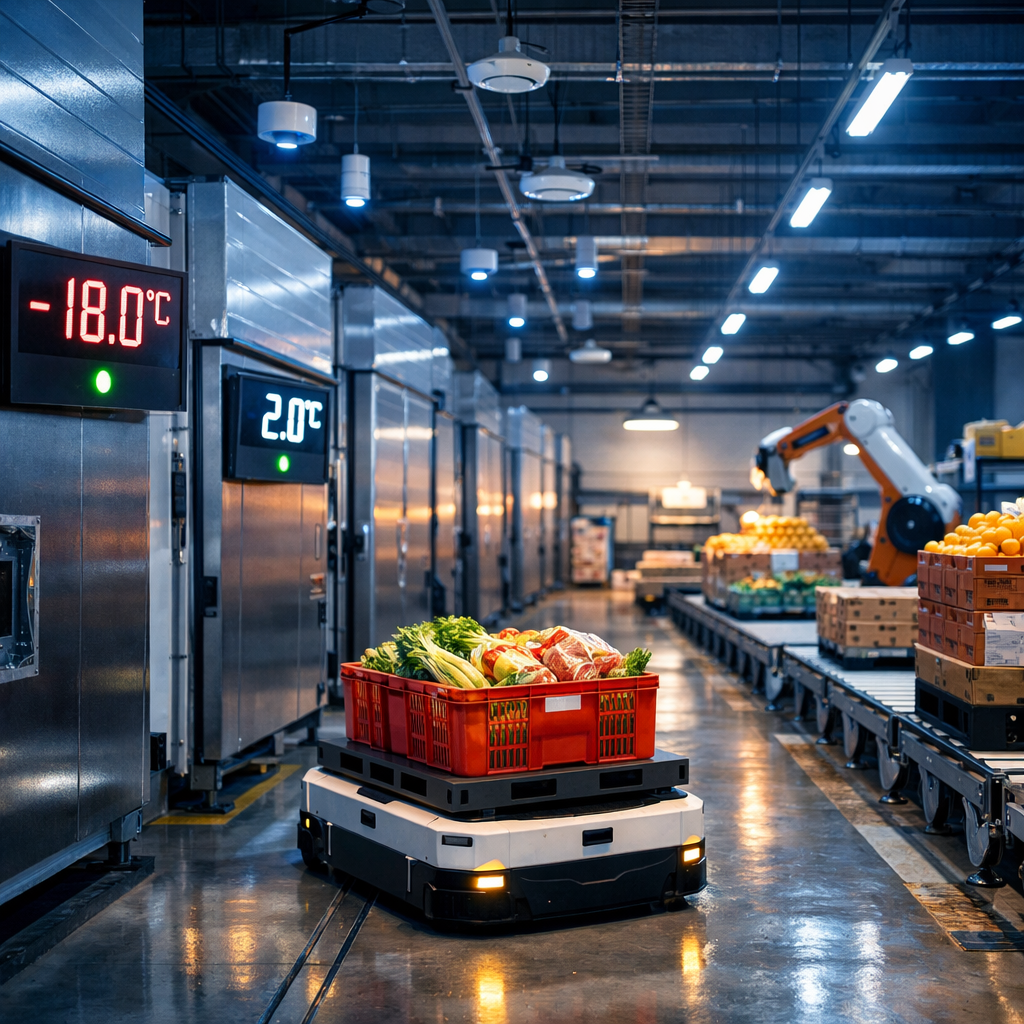
The cold chain represents the backbone of this system. Unlike traditional logistics, cold chain management requires unbroken temperature control from the moment a product leaves the producer until it reaches the consumer’s table. A single break in this chain—whether during loading, customs clearance, or final delivery—can compromise food safety and quality. Modern cold chain infrastructure employs IoT sensors that monitor temperature, humidity, and storage conditions in real time, significantly reducing spoilage rates in well-managed operations.
These technological advances matter enormously for Asian food products with global appeal. Consider Chinese dim sum or hotpot ingredients—products deeply rooted in culinary tradition that require precise temperature management and rapid delivery to maintain their authentic taste and texture. Companies like Jade Premium have built comprehensive quality control systems around these requirements, ensuring that the cultural authenticity of Chinese cuisine survives the journey to international markets. This isn’t just about refrigeration—it’s about understanding the specific requirements of different food categories and adapting logistics solutions accordingly.
Digital platforms are revolutionizing how producers, distributors, and consumers connect across borders. These platforms provide transparency throughout the supply chain, offering real-time tracking, documentation management, and quality verification. For international buyers seeking authentic Chinese food products, digital platforms eliminate the opacity that traditionally plagued cross-border trade. They can now verify supplier credentials, track shipments in real-time, and access comprehensive product information—from sourcing location to quality certifications—all through integrated digital systems.
The integration of blockchain technology further enhances this transparency. By creating immutable records of every transaction and movement along the supply chain, blockchain builds trust between parties who may be operating thousands of miles apart. This technological foundation supports the kind of rapid, reliable food distribution that 2026 demands.
The Strategic Playbook for 2026 and Beyond
As we approach 2026, successful cross-border food distribution requires a strategic approach built on three pillars: trade facilitation, regulatory alignment, and infrastructure investment.
Trade facilitation initiatives across Asia are streamlining customs procedures and reducing clearance times that have historically bottlenecked food distribution. Countries participating in RCEP and ASEAN agreements are implementing “single window” systems that allow traders to submit regulatory documents through one digital platform rather than navigating multiple agencies. Early adopters are already seeing customs clearance times reduced from days to hours—a critical improvement for perishable goods.
Regulatory alignment presents both challenges and opportunities. Different countries maintain varying food safety standards, labeling requirements, and import restrictions based on their domestic priorities. However, 2025 and 2026 are witnessing unprecedented cooperation on regulatory harmonization. For example, China’s recent updates to organic product certification rules, while tightening requirements, are simultaneously aligning more closely with international standards. This convergence makes it easier for Chinese food exporters to meet multiple market requirements without completely redesigning their operations for each destination.
This is precisely where Jade Premium’s expertise becomes invaluable. With offices strategically located across major Chinese cities and deep understanding of international market requirements, the company serves as a bridge between Eastern and Western markets. Rather than forcing international buyers to navigate China’s complex regulatory landscape alone, Jade Premium provides comprehensive compliance support, transforming products to meet specific market requirements while preserving their authentic qualities. This dual expertise—understanding both Chinese production capabilities and international buyer expectations—addresses one of the most persistent challenges in cross-border food trade.
Cold chain infrastructure investment represents the physical manifestation of Asia’s food distribution transformation. Governments and private sector players are pouring billions into refrigerated warehouses, temperature-controlled transportation fleets, and port facilities equipped for perishable goods. China and ASEAN countries are committing tens of billions of dollars to cold chain infrastructure through a combination of public investment and private sector expansion. These aren’t just numbers—they represent tangible capacity increases that will directly expand the variety and volume of food products crossing borders.
The Digital Revolution: Platforms, Data, and Intelligence
Digital platforms and data interoperability are revolutionizing visibility and traceability across borders. Traditional cross-border food distribution suffered from information black holes—moments when products disappeared into customs facilities, transferred between carriers, or sat in warehouses without clear status updates. Modern digital platforms eliminate these blind spots through continuous tracking and documentation sharing.
Real-time visibility means that when a container of premium Chinese seafood leaves Guangzhou port, stakeholders across the supply chain—from the producer to the importer to the retailer—can track its location, temperature, and estimated arrival time. If temperature fluctuations occur during a transshipment in Singapore, automated alerts trigger immediate corrective action. This level of visibility wasn’t technically feasible five years ago; by 2026, it will be standard practice.
Artificial intelligence and IoT technologies are taking this revolution further by transforming demand forecasting and routing optimization. Machine learning algorithms analyze historical sales data, seasonal patterns, weather forecasts, and even social media trends to predict demand with remarkable accuracy. For perishable food products, this forecasting capability directly reduces waste. Instead of overstocking popular items that might spoil or understocking and missing sales opportunities, distributors can match supply to demand with precision.
Route optimization powered by AI considers multiple variables simultaneously—traffic patterns, customs clearance histories, fuel costs, and temperature control requirements—to determine the most efficient path from producer to consumer. In pilot programs across Southeast Asia, AI-optimized routing has reduced transportation costs by 15-20% while simultaneously decreasing delivery times. For food products where freshness directly correlates with value, these improvements are transformative.
Jade Premium leverages these digital innovations to provide international buyers with unprecedented transparency into Chinese food exports. Clients can access detailed information about product origins, production methods, quality certifications, and the cultural significance behind the products they’re importing. This approach recognizes that modern food trade isn’t merely transactional—it’s about sharing stories, building understanding, and creating connections between producers and consumers across cultures.
Stakeholder Actions: Who Does What?
The transformation of cross-border food distribution requires coordinated action from multiple stakeholders, each playing distinct but interconnected roles.
Governments hold primary responsibility for regulatory alignment and infrastructure investment. Beyond maintaining food safety standards, forward-thinking governments are actively facilitating trade through digital customs systems, mutual recognition agreements on certifications, and coordinated inspection protocols. The most successful examples demonstrate that protecting public health and facilitating trade aren’t contradictory goals—they’re complementary objectives that require smart policy design.
Logistics providers are investing heavily in cold chain capabilities and digital tracking systems. Major logistics companies operating in Asia are upgrading their fleets with advanced temperature control technology, training staff on handling perishable goods, and integrating their systems with digital platforms for seamless information sharing. These investments create network effects—as more logistics providers upgrade capabilities, the entire ecosystem becomes more reliable and efficient.
Retailers and food service operators are demanding higher standards from their suppliers while simultaneously seeking greater product variety. International supermarket chains operating in Asia are pushing for complete traceability, stringent quality controls, and ethical sourcing practices. These demands filter back through the supply chain, incentivizing producers and distributors to upgrade their operations.
For companies like Jade Premium operating at the nexus of production and distribution, the role involves comprehensive supply chain solutions that minimize risks in international food trade. This includes supplier qualification verification—ensuring that producers meet international standards before products ever enter the export pipeline. It involves product compliance transformation—adapting authentic Chinese food products to meet specific destination market requirements without compromising their essential character. And it requires end-to-end quality control, from initial sourcing through final delivery, building confidence among international buyers who might otherwise hesitate to import unfamiliar products.
Jade Premium’s extensive local network across Chinese production regions provides unparalleled access to high-quality, authentic Chinese food products. But access alone isn’t enough—the company’s value lies in its ability to bridge cultural and regulatory gaps, helping international buyers understand not just what they’re purchasing, but the culinary traditions and craftsmanship behind those products. This cultural dimension distinguishes commodity trading from building lasting partnerships that benefit producers, distributors, and consumers alike.
Looking Forward: Outcomes, Opportunities, and Challenges
By 2026, if current trajectories continue, cross-border food distribution in Asia will look dramatically different than it does today. Border clearance times for food products are expected to decline substantially across major trade corridors as digital customs systems mature and regulatory harmonization deepens. A shipment of Chinese hotpot ingredients that currently takes five days to clear customs in some Southeast Asian markets might clear in less than 24 hours.
Trade volumes will increase substantially, with projections suggesting 30-35% growth in intra-Asian food trade between 2024 and 2026. This growth won’t be evenly distributed—products that combine authentic cultural appeal with international quality standards will capture disproportionate market share. Chinese dim sum, ready-to-cook meals, and premium ingredients that meet international buyers’ demands for both quality and cultural authenticity are particularly well-positioned.
Product variety on supermarket shelves and restaurant menus will expand as improved cold chain infrastructure and faster clearance times make it economically viable to import smaller quantities of specialized products. Consumers will benefit from greater choice and better quality as competition intensifies and logistics efficiency improves.
However, significant challenges remain. Climate change threatens to disrupt agricultural production patterns and strain cold chain infrastructure during extreme weather events. Geopolitical tensions could reverse progress on regulatory harmonization if countries retreat into protectionism. And the digital divide—where some producers and regions lack access to the technology powering modern food distribution—could create winners and losers rather than broadly shared prosperity.
The solution lies in coordinated, sustained effort from all stakeholders. Governments must continue pursuing regulatory alignment while investing in resilient infrastructure. Logistics providers need to maintain their focus on capability upgrades and digital integration. Retailers should demand high standards while supporting producers’ efforts to meet those standards. And companies operating across the supply chain—like Jade Premium—must continue serving as bridges that connect markets, share knowledge, and build trust across cultural and regulatory boundaries.
The transformation of cross-border food distribution in Asia by 2026 represents more than logistical improvement—it’s about connecting people through food, sharing culinary traditions across borders, and building economic relationships that benefit communities on both sides of each transaction. When you enjoy authentic Chinese dim sum in London or premium Australian beef in Shanghai in 2026, you’ll be experiencing the culmination of this transformation—one that makes the world’s diverse food cultures more accessible while preserving the authenticity and quality that make them special.