
When a diner orders Kung Pao chicken or Mapo tofu, they’re not just ordering a meal. They’re seeking an experience rooted in centuries of culinary tradition. The difference between a dish that transports them to the streets of Chengdu and one that falls flat often comes down to a single, critical factor: the authenticity of your ingredients.
In today’s global food landscape, authentic Chinese ingredients sourcing isn’t merely a nice-to-have. It’s the foundation upon which your menu’s reputation stands. At Jade Premium, we’ve witnessed firsthand how the right ingredients can transform a restaurant’s success, bridging the gap between China’s rich culinary heritage and international markets hungry for genuine flavor experiences. Our mission goes beyond simple supply. We’re dedicated to bringing authentic Chinese cuisine to global tables by connecting you with ingredients that carry the soul of their regional origins.
The question isn’t whether authentic ingredients matter—it’s whether you can afford to compromise on them. Every shortcut taken, every substitute used, chips away at the trust your customers place in your establishment. In an era where diners are more educated and discerning than ever, authenticity isn’t just appreciated; it’s expected.
Understanding the Core Principles of Authentic Sourcing
Authentic Chinese ingredients sourcing begins with four fundamental principles that separate genuine products from convenient substitutes: provenance, traceability, certifications, and quality consistency.
Provenance tells the story of where your ingredients come from. Just as Champagne can only come from Champagne, France, authentic Sichuan peppercorns must originate from Sichuan province to deliver their distinctive numbing sensation. The terroir—the unique combination of soil, climate, and traditional cultivation methods—creates flavors that cannot be replicated elsewhere. When you source Shaoxing wine from anywhere but Shaoxing, or Zhenjiang vinegar from outside Zhenjiang, you’re fundamentally altering the dish’s character.
Traceability provides the roadmap from farm to kitchen. In China’s vast food production landscape, comprehensive traceability systems have become essential. Modern blockchain-based tracking systems now allow buyers to verify every step of a product’s journey. From the specific farm where ingredients were grown to the processing facility, storage conditions, and transportation methods. This transparency isn’t just about food safety; it’s about maintaining the integrity of ingredients that have been cultivated using methods passed down through generations.
A 2023 study on Chinese food supply chains revealed that products with full traceability documentation showed 43% fewer quality inconsistencies compared to those without verified origin data. At Jade Premium, we’ve implemented rigorous traceability protocols across our supplier network, ensuring that every product carries verifiable documentation of its authentic origins.
Certifications serve as your guarantee of quality and authenticity. Look beyond basic food safety certifications to seek out region-specific designations, organic certifications where applicable, and quality marks that verify traditional production methods. China’s National Food Safety Standard certification, combined with international certifications like ISO 22000 or HACCP, provides a comprehensive framework for ingredient quality.
Quality consistency ensures that the ingredients you receive today match what you’ll receive six months from now. This consistency comes from working with suppliers who understand both traditional production methods and modern quality control. It means establishing relationships with producers who prioritize craft over mass production, who maintain the same harvesting techniques and aging processes that give their products distinctive character.
The temptation to use substitutes is understandable. They’re often cheaper, more readily available, and seemingly “close enough.” But consider this: when a restaurant in London uses imitation oyster sauce made from synthetic flavorings instead of authentic oyster extract, or replaces genuine Chinese dark soy sauce with a sweetened grocery store alternative, they’re not just altering taste. They’re breaking an unspoken promise to their customers. The depth, complexity, and balance that define authentic Chinese cuisine simply cannot be achieved through shortcuts.
Key Ingredient Categories That Demand Authenticity
Certain ingredient categories form the backbone of Chinese cuisine, and compromising on any of them fundamentally alters the integrity of your dishes.
Sauces and condiments represent the soul of Chinese cooking. Light soy sauce, dark soy sauce, oyster sauce, and rice wine aren’t interchangeable commodities. Each carries specific flavor profiles developed through traditional fermentation processes. Authentic light soy sauce, naturally brewed over months, delivers a clean, savory umami that synthetic versions simply cannot match. Similarly, genuine oyster sauce, made from concentrated oyster extracts, provides a rich, oceanic sweetness that artificial versions merely approximate.
Shaoxing wine, the cornerstone of Chinese cooking wine, undergoes years of fermentation that develops its complex, slightly sweet character. Substituting it with regular cooking wine or sherry fundamentally changes how proteins tenderize and how flavors develop during cooking. At Jade Premium, we work directly with traditional producers in Shaoxing who maintain centuries-old fermentation techniques, ensuring the wine you receive carries the authentic character that chefs depend on.
Dried goods deserve special attention. Dried mushrooms, particularly varieties like shiitake and wood ear, develop concentrated flavors through specific drying processes. The difference between sun-dried mushrooms from their native regions and mechanically dried alternatives is immediately apparent to anyone familiar with authentic Chinese cuisine. Similarly, dried seafood items like scallops, shrimp, and abalone used in Cantonese cooking carry umami intensity that forms the foundation of complex broths and sauces.
Noodles and wheat products vary dramatically by region, with production methods refined over centuries. Hand-pulled noodles from Lanzhou require specific wheat varieties and mineral-rich water that contribute to their characteristic chew and elasticity. Shanghai thick noodles, Beijing’s zhajiangmian noodles, and Sichuan’s dandan noodles each have unique textures and wheat-to-water ratios that can’t be replicated by generic Asian noodles.
Specialty items like Sichuan peppercorns, aged black vinegar from Zhenjiang, and premium tea oils carry the distinctive characteristics of their regions. Sichuan peppercorns from Hanyuan county deliver the authentic málà (numbing-spicy) sensation that defines the province’s cuisine, while versions from other regions lack the same potency and complexity. These aren’t minor difference. They’re the elements that determine whether your Mapo tofu tastes like an authentic Sichuan dish or merely a spicy imitation.
Establishing Reliable Sourcing Channels
Building a reliable supply network for authentic Chinese ingredients requires understanding both traditional distribution channels and modern procurement platforms.
Specialty distributors who focus exclusively on Chinese food products offer curated selections backed by deep market knowledge. These distributors maintain relationships with verified producers across China’s diverse regions, ensuring access to ingredients that meet international quality standards while preserving authentic characteristics. Look for distributors who can provide detailed provenance information, conduct regular facility audits, and offer technical support for ingredient usage.
Online platforms have revolutionized access to authentic ingredients, connecting international buyers directly with Chinese producers. However, not all platforms maintain the same quality standards. Reputable platforms implement seller verification systems, require documentation of product origins, and often include buyer protection programs. Some platforms specialize in premium ingredients, offering smaller producers and artisanal products access to global markets.
At Jade Premium, we’ve developed a comprehensive procurement system that combines both approaches. We operate offices across seven major Chinese cities. This local presence allows us to verify product quality firsthand at the source. By working directly with regional producers, we maintain high supply chain efficiency for international buyers. This ensures the delivery of authentic goods, from Cantonese sauces to Sichuan chili oils.
Evaluating and Vetting Your Suppliers
Thorough supplier evaluation protects your business from quality inconsistencies and food safety risks while ensuring ingredient authenticity.
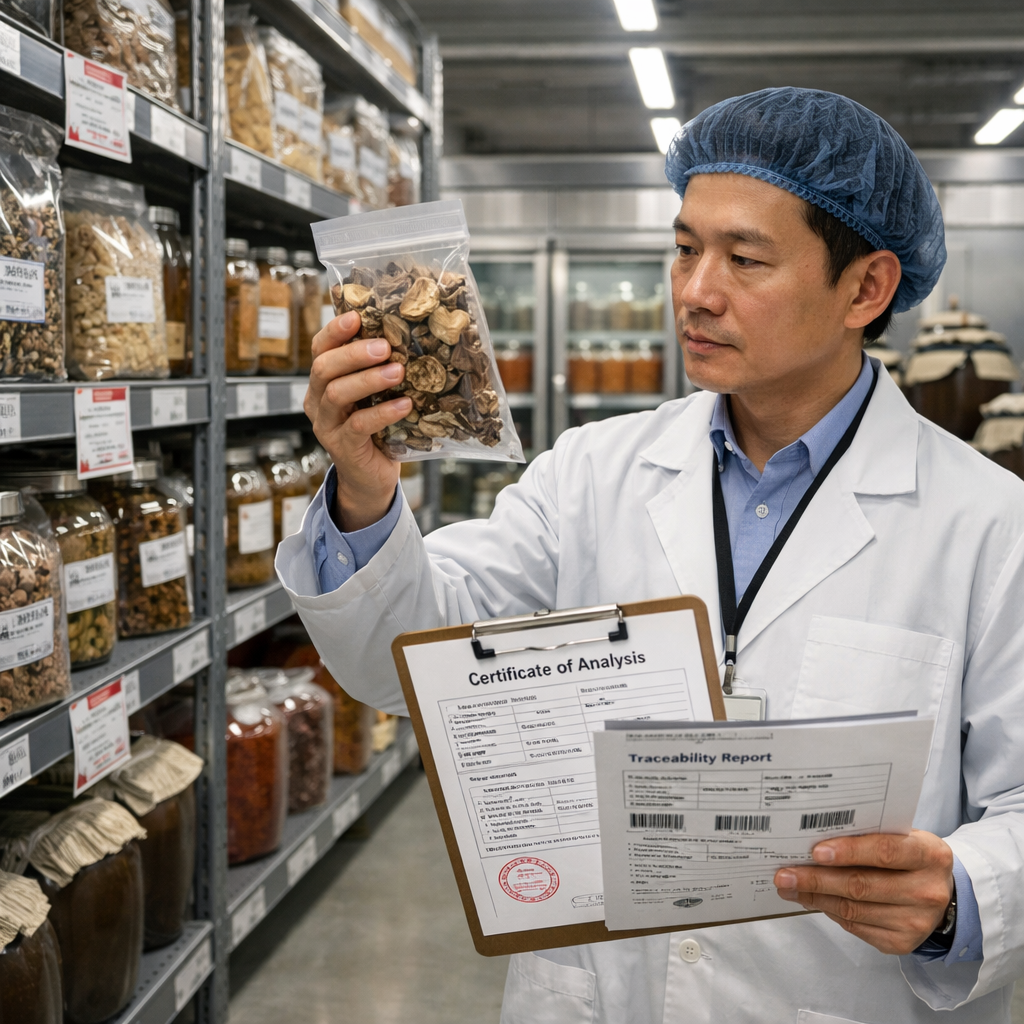
Documentation review should be your first step. Request comprehensive supplier profiles including business licenses, production facility certifications, export licenses, and quality control documentation. Authentic producers typically possess region-specific certifications that verify their products’ geographic origins and traditional production methods. Don’t hesitate to ask for test reports, processing procedure descriptions, and ingredient sourcing information.
Facility audits provide invaluable insights into production standards. If possible, conduct site visits to observe production processes, storage conditions, and quality control procedures. For international buyers, partnering with local representatives or third-party auditors can facilitate this process. At Jade Premium, our extensive local presence allows us to conduct regular facility inspections, ensuring our partner producers maintain the standards our clients expect.
Product testing should occur before establishing long-term relationships. Order samples, conduct taste tests with your culinary team, and compare products against benchmark standards. Authentic ingredients often exhibit subtle characteristics. Specific color depths, aroma profiles, or texture qualities distinguish them from imitations. For critical ingredients, consider laboratory testing to verify authenticity and absence of adulterants.
Certifications verification extends beyond accepting certificates at face value. Contact certification bodies directly to verify validity, check expiration dates, and ensure certifications cover the specific products and facilities relevant to your needs. International certifications like organic designations, halal or kosher certificates, and allergen-free verifications may be important depending on your market.
Common pitfalls include prioritizing convenience over authenticity, failing to establish minimum quality standards, neglecting to diversify supplier bases, and overlooking the importance of consistent communication. The distributor who offers the fastest shipping or lowest prices may not provide the authentic ingredients your menu requires. Building successful sourcing relationships takes time, but the investment pays dividends through consistent quality and customer satisfaction.
Implementing Practical Procurement Strategies
Successful authentic Chinese ingredients sourcing requires systematic procurement processes that balance quality, cost, and operational efficiency.
Menu mapping starts the process. Analyze your menu to identify which dishes require authentic ingredients and which components are most critical to flavor profiles. Prioritize ingredients that significantly impact taste. Your Sichuan hot pot base, dumpling wrappers, and signature sauce ingredients where slight variations have minimal effect. This strategic approach allows you to allocate resources effectively while maintaining authenticity where it matters most.
Supplier vetting should follow a structured evaluation process. Develop scorecards that assess suppliers across multiple criteria: product authenticity, quality consistency, documentation completeness, pricing competitiveness, minimum order requirements, delivery reliability, and communication responsiveness. Compare multiple suppliers for each critical ingredient category, maintaining at least two approved sources for essential items to ensure supply continuity.
Pilot programs reduce risk when establishing new supplier relationships. Begin with small orders to evaluate product quality, packaging integrity, delivery timing, and customer service responsiveness. Use these initial shipments to train your culinary team on proper storage and usage, allowing them to provide feedback on ingredient performance. Document results systematically, noting any discrepancies between promised and delivered quality.
Approved supplier lists formalize successful partnerships. Once suppliers consistently meet your standards through multiple orders, add them to your approved list with detailed profiles including contact information, product specializations, lead times, and order history. Regularly review and update this list, removing suppliers who fail to maintain standards and adding new sources as your menu evolves.
Quality control protocols must extend beyond initial receipt. Implement incoming inspection procedures that verify product specifications match order details, check packaging integrity, confirm proper labeling, and assess visible quality indicators. Establish proper storage practices that maintain ingredient quality. Many authentic Chinese ingredients like aged vinegars, fermented sauces, and dried goods require specific temperature and humidity conditions.
Inventory management for authentic ingredients often differs from standard practices. Some items have longer lead times due to traditional production methods or seasonal availability. Build these considerations into your ordering cycles, maintaining appropriate safety stock for critical ingredients while avoiding overstocking items with limited shelf life.
Building Long-Term Success Through Authentic Sourcing
The investment in authentic Chinese ingredients sourcing creates competitive advantages that extend far beyond individual dishes. Restaurants known for ingredient authenticity build loyal customer bases who trust them to deliver genuine experiences. These establishments attract food enthusiasts, cultural ambassadors, and customers seeking connections to their heritage. Patrons willing to pay premium prices and become vocal advocates.
In London, a Sichuan restaurant partnered with Jade Premium to overhaul their ingredient sourcing, replacing generic substitutes with authentic products from Sichuan province. Within six months, their customer reviews dramatically improved, with diners specifically noting the “authentic taste” and “genuine Sichuan experience.” Their business grew 35%, driven primarily by word-of-mouth recommendations from satisfied customers.
This success story illustrates a fundamental truth: authentic ingredients create authentic experiences, and authentic experiences build sustainable businesses. The cost differential between genuine and substitute ingredients often appears significant in isolation, but when measured against increased customer satisfaction, higher check averages, and enhanced reputation, authentic sourcing becomes an investment rather than an expense.
At Jade Premium, our commitment goes beyond simply supplying ingredients. We serve as your partner in navigating China’s complex food production landscape, connecting you with the stories, traditions, and people behind each product. Our deep cultural and market expertise, extensive local network, comprehensive compliance knowledge, and integrated supply chain solutions ensure you can focus on creating exceptional dining experiences while we handle the complexities of sourcing.
Your Next Steps Toward Ingredient Authenticity
Transform your menu through authentic Chinese ingredients sourcing. Begin by auditing your current ingredients against authenticity standard. Identify where substitutes compromise your dishes and which items deserve immediate attention. Connect with specialty distributors or platforms that demonstrate comprehensive quality control and supplier verification.
Consider partnering with experienced facilitators who understand both Chinese food production and international market requirements. The right partner provides more than products. They offer market intelligence, cultural insights, regulatory guidance, and ongoing support that helps your business thrive.
Remember: every dish you serve either builds or diminishes trust with your customers. Authentic ingredients aren’t just about taste. They’re about honoring culinary traditions, respecting your customers’ expectations, and building a reputation for quality that sustains your business long-term.
The question isn’t whether you can afford to prioritize authentic Chinese ingredients sourcing. It’s whether you can afford not to. Your menu’s success depends on getting it right.