
When you’re sourcing authentic Chinese food products for your international market, there’s a critical moment that determines whether your shipment becomes a success story or a costly disaster: batch testing. It’s not just a regulatory checkbox—it’s the difference between filling your shelves with quality products and facing rejected containers at customs.
Let me tell you about a European importer who learned this lesson the hard way. They ordered 10,000 units of frozen dumplings from a reputable Chinese supplier. The factory sent samples that passed all tests beautifully. Confident, the buyer approved the full shipment. But when the container arrived in Hamburg, random inspections revealed bacterial contamination in certain batches. The entire shipment was rejected, resulting in costly shipment rejection and damaged retail relationships.
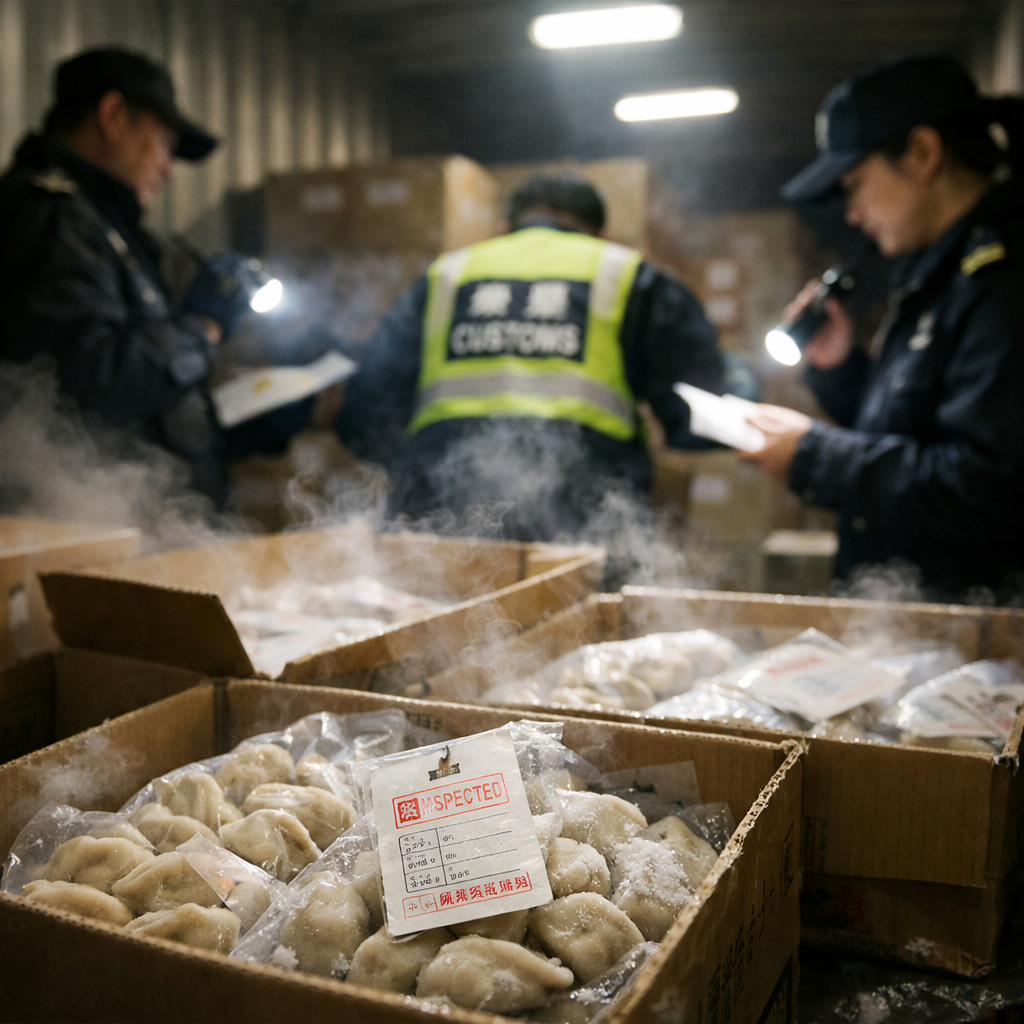
The culprit? A misunderstanding of what constitutes a “batch” versus a “lot,” and inadequate sampling procedures that missed the contaminated production run.
As international buyers sourcing from China, understanding batch testing isn’t optional—it’s essential to protecting your business, your customers, and your brand reputation. At Jade Premium, we’ve witnessed firsthand how proper batch testing transforms risky imports into reliable supply chains. This article will walk you through everything you need to know about batch testing Chinese food products, so you can make informed decisions and avoid costly mistakes.
Understanding Lots, Batches, and Why They Matter to Your Bottom Line
Before we dive into testing procedures, let’s clarify two terms that often confuse buyers: “lot” and “batch.”
A batch refers to food produced during a specific production cycle under uniform conditions. Think of it as one continuous production run—maybe everything made on Tuesday morning using the same ingredients, same equipment, and same process. Each batch gets a unique identifier, which becomes crucial for traceability.
A lot, on the other hand, is a collection of batches grouped together for commercial purposes—typically for a single shipment or delivery. Your container might contain multiple batches produced over several days, all packaged together as one lot for export.
Here’s why this distinction matters: Different batches within the same lot can have varying quality characteristics. That Tuesday morning batch might be perfect, while Wednesday afternoon’s production—made with a slightly different ingredient batch or after equipment maintenance—could have issues.
When you’re testing Chinese food products, you need to ensure your sampling strategy accounts for this variation. If you only test samples from the best batch, you might miss problems lurking in others. This is particularly critical for Chinese exports, where production volumes are often large and manufacturing may span multiple days or even weeks to fulfill international orders.
Chinese food manufacturers typically operate at significant scale. A single dumpling factory might produce 50 tons daily across multiple production lines. Without understanding batch-level variation, you’re essentially gambling with your shipment’s safety and quality.
Sampling Methods That Actually Protect Your Investment
So how do you test a shipment effectively without inspecting every single unit? This is where statistical sampling comes in—and it’s more accessible than you might think.
Let’s say you’re importing 10,000 packages of Chinese moon cakes. Testing all 10,000 is impractical and prohibitively expensive. But testing just one package is clearly insufficient. The solution lies in smart sampling methods that give you statistically valid results without breaking the bank.
Simple Random Sampling is exactly what it sounds like: every unit in your lot has an equal chance of being selected. Imagine writing numbers on pieces of paper, throwing them in a hat, and drawing out your sample size. For our moon cake example, you might randomly select 50 packages from across the entire shipment. This method works well when your lot is relatively homogeneous and comes from similar production conditions.
However, random sampling has limitations. If your shipment contains multiple batches produced on different days, pure randomness might accidentally oversample from one batch and undersample from another, missing potential issues.
That’s where Systematic Sampling becomes valuable. Instead of random selection, you sample at regular intervals—say, every 200th package. If your moon cakes are packed in order of production, this approach automatically spreads your testing across different production times. One buyer we work with uses this method for frozen seafood: they test every 50th carton as it comes off the production line, ensuring coverage across the entire manufacturing period.
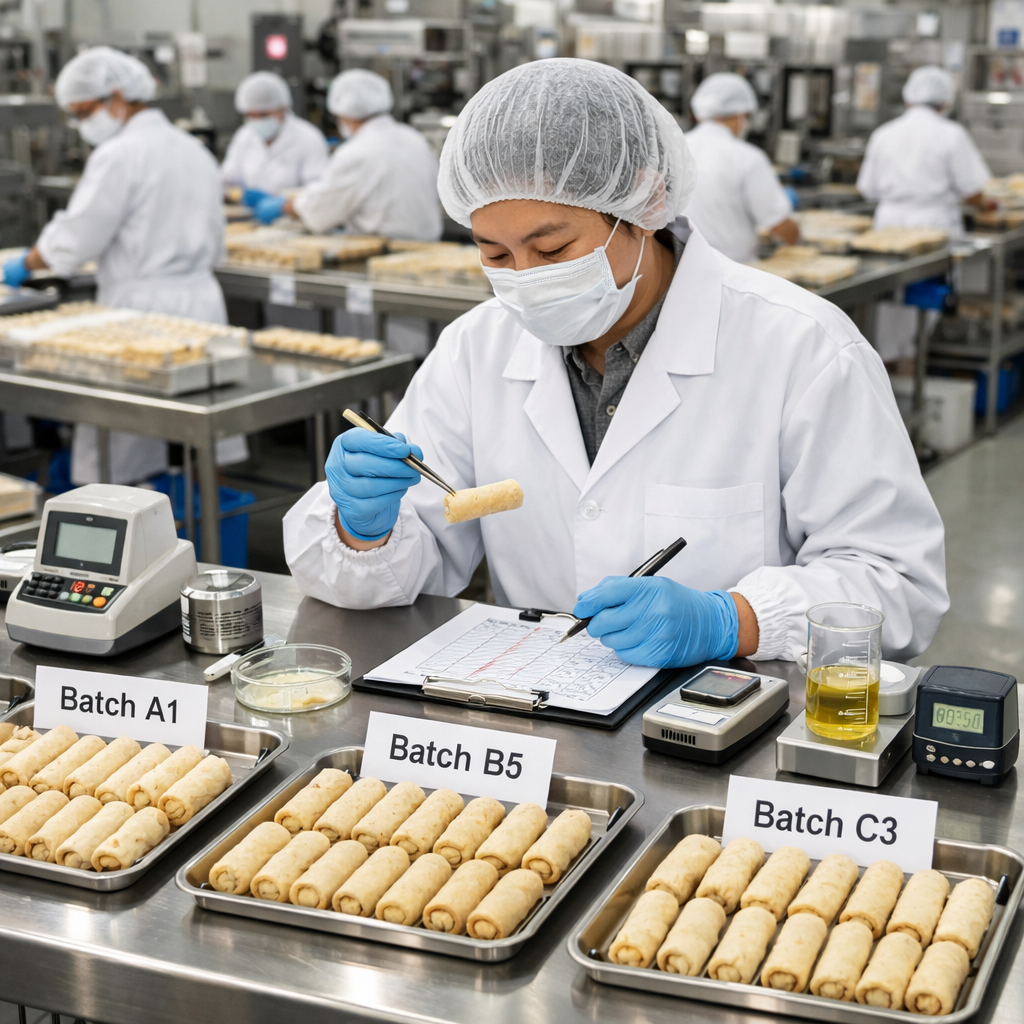
The most sophisticated approach is Stratified Random Sampling, which combines organization with randomness. You divide your lot into subgroups (strata) based on batch numbers, production dates, or other relevant factors, then randomly sample from each stratum.
Here’s a real-world example: You’re importing spring rolls produced over three days, with each day’s production representing one batch. Instead of random sampling across the entire lot, you divide it into three strata (Day 1, Day 2, Day 3) and randomly select samples from each day’s production proportionally. If Day 1 represents 40% of your shipment, it gets 40% of your samples.
This method is particularly powerful for Chinese food exports because it accounts for the reality of large-scale production. Chinese manufacturers often fulfill big orders over extended periods, and production conditions can vary—different ingredient deliveries, equipment maintenance, staff changes, environmental factors. Stratified sampling catches these variations that simple random sampling might miss.
International Standards That Guide Smart Testing Decisions
Understanding sampling methods is one thing, but knowing how many samples to take and what acceptance criteria to use requires following established international standards. This is where frameworks like ISO 2859-1 and Codex Alimentarius guidelines come into play—and where many buyers feel lost in technical jargon.
Let’s demystify this.
ISO 2859-1 provides standardized sampling plans based on what’s called the Acceptable Quality Limit (AQL). The AQL represents the maximum percentage of defects you’re willing to tolerate in a lot while still considering it acceptable. Lower AQL values mean stricter standards.
For food safety, you typically work with very low AQL values—often 0.65% or even lower for critical defects like contamination. For quality characteristics like packaging appearance, you might accept a higher AQL like 2.5%.
Here’s how it works practically: Say you have a lot size of 10,000 units with an AQL of 1.0% for microbiological contamination. ISO 2859-1 tables tell you exactly how many samples to test (typically around 80 units for this scenario) and how many defects you can accept before rejecting the entire lot (usually 2-3 defects maximum).
The beauty of this system is consistency. Your Chinese supplier, your testing lab, and your customs officials are all working from the same playbook, reducing disputes and misunderstandings.
Codex Alimentarius guidelines, developed by the WHO and FAO, provide complementary frameworks specifically for food safety. These guidelines emphasize risk-based sampling—you test more intensively for high-risk products (like raw seafood) and less intensively for lower-risk items (like dried spices). Codex also provides specific sampling protocols for various contaminants: heavy metals, pesticide residues, mycotoxins, and microbiological hazards.
When importing Chinese food, understanding these standards helps you in several ways. First, you can verify that your supplier’s quality control procedures align with international norms. Second, you can confidently design your own testing protocol that satisfies your destination country’s import requirements. Third, you have a clear framework for accepting or rejecting shipments based on objective criteria rather than subjective judgment.
If your test results show that 4 out of 80 sampled units exceed heavy metal limits, and your AQL allows only 2 defects, the decision is clear: reject the lot. This isn’t about being difficult with suppliers—it’s about protecting your customers and complying with food safety regulations.
Chinese customs authorities themselves increasingly reference these international standards when conducting export inspections, so familiarizing yourself with them creates alignment throughout your supply chain.
Practical Steps for Setting Up Effective Batch Testing
Now that you understand the concepts, let’s talk implementation. How do you actually set up batch testing for your Chinese food imports in a way that’s effective, efficient, and economically feasible?
Step 1: Define Your Lots and Batches Clearly
Before production begins, establish clear definitions with your Chinese supplier. What constitutes one batch? Is it one day’s production? One production line’s output? One shift? Get this in writing and ensure the supplier marks batch numbers clearly on packaging.
At Jade Premium, we help buyers establish these parameters upfront. For a client importing soy sauce, we defined each batch as a single fermenting tank’s output, clearly labeled on every bottle. This made sampling straightforward and traceability simple.
Step 2: Select Your Sampling Plan Based on Risk
Not all products require the same testing intensity. Raw frozen seafood carries higher food safety risks than packaged dry noodles, and your sampling should reflect this.
For high-risk products, use stricter AQL values (0.65% or lower) and larger sample sizes. For lower-risk products, moderate AQL values (1.0%-2.5%) might suffice. Work with your testing lab or a trade service partner like Jade Premium to design a plan that balances thoroughness with cost-effectiveness.
Step 3: Implement Multi-Stage Testing
Smart buyers don’t rely on a single testing point. Consider a three-stage approach:
- Pre-production testing: Test raw materials and ingredients before manufacturing begins
- In-process testing: Conduct inspections during production to catch issues early
- Final batch testing: Comprehensive testing before shipment approval
This staged approach catches problems when they’re cheapest to fix. Finding contamination before 10,000 units are produced is far better than discovering it after they’re packaged and sitting in a warehouse awaiting export.
Step 4: Understand China-Specific Export Controls
Chinese authorities have tightened export controls significantly in recent years. The General Administration of Customs of China (GACC) requires overseas manufacturers to register and maintain detailed batch records. Chinese exporters must provide batch traceability documentation, including cold-chain logs for frozen products and veterinary certifications for animal-based ingredients.
As an importer, request these documents upfront. They’re not optional extras—they’re required for legal export from China. Your supplier should provide a batch certificate for each tested lot, showing production date, batch number, test results, and inspector signatures.
Step 5: Work with Accredited Testing Laboratories
Not all testing labs are created equal. For Chinese food exports, work with laboratories accredited to international standards (ISO/IEC 17025) and recognized by both Chinese and destination country authorities. These labs appear on official lists maintained by GACC and foreign food safety agencies.
Many international buyers we work with use third-party labs in China for pre-shipment testing, then arrange confirmatory testing in their destination country. This dual approach provides extra assurance and helps resolve disputes if results differ.
Step 6: Maintain Clear Acceptance/Rejection Criteria
Before testing begins, establish and document your acceptance criteria. What test results will trigger rejection? What defect levels are acceptable? And what happens if results are borderline?
Having these criteria in writing—shared with your supplier, testing lab, and internal team—prevents the emotional, high-pressure decisions that often happen when a container is waiting at port and test results come back questionable.
One European buyer we assisted established a clear three-tier system: automatic acceptance (all tests pass with margins), automatic rejection (critical failures), and conditional acceptance (minor issues that trigger increased testing on next shipment). This framework saved them from dozens of difficult judgment calls.
Jade Premium: Your Bridge to Confident Chinese Food Sourcing
Navigating batch testing for Chinese food products doesn’t have to feel overwhelming. While the technical details matter, what matters more is having a partner who understands both the Chinese production landscape and international quality standards—someone who can bridge the gap between Eastern manufacturing practices and Western safety expectations.
At Jade Premium, we’ve built our business on exactly this bridge. Since 2015, we’ve helped international buyers source authentic Chinese food products with confidence, knowing that every batch meets rigorous quality standards and regulatory requirements. Our offices across China’s major production centers—from Hong Kong and Shenzhen to Shanghai, Chengdu, and beyond—give us direct access to manufacturers and real-time visibility into production processes.
We don’t just connect you with suppliers; we act as your quality assurance partner throughout the entire process. Our team verifies supplier qualifications, designs sampling plans tailored to your risk profile and destination market requirements, coordinates with accredited testing laboratories, and manages the end-to-end compliance documentation that makes customs clearance smooth.
More than logistics, we bring cultural understanding. Chinese food products carry rich culinary traditions and careful craftsmanship that deserve to reach global tables. But bringing authentic Chinese cuisine to international markets requires more than appreciation—it requires professional expertise in quality control, regulatory compliance, and supply chain management.
Whether you’re importing frozen dim sum for European restaurants, dried spices for North American retailers, or hotpot ingredients for ASEAN food service operations, proper batch testing is your foundation for success. It protects your customers, satisfies regulators, and builds the trust that turns one-time purchases into long-term supply relationships.
Your next shipment doesn’t have to be a gamble. With the right understanding of batch testing principles, appropriate sampling methods, and a trusted partner who knows Chinese food production inside and out, you can source confidently and build a reliable supply chain that delivers authentic Chinese cuisine to your customers—safely, consistently, and profitably.
At Jade Premium, we’re committed to making that happen. Because when Chinese food crosses borders successfully, it creates more than commercial transactions—it builds cultural connections and shared culinary experiences that enrich lives around the world.