
- Understanding the Key Regulatory Bodies Governing Chinese Meat Exports
- What Meeting International Export Standards Really Means
- How China's Meat Export Framework Actually Operates
- Practical Steps for Sourcing Compliant Chinese Meat Products
- Your Comprehensive Sourcing Checklist
- Building Partnerships That Last
When you’re sourcing meat products from China, understanding the regulatory landscape isn’t just about paperwork—it’s about protecting your business, your customers, and your reputation. At Jade Premium, we’ve spent years helping international buyers navigate the complex world of Chinese meat exports, and we know that compliance is the foundation of every successful partnership.
The Chinese meat industry has transformed dramatically over the past decade. Today, China’s meat processors operate under some of the world’s most rigorous export standards, implementing international food safety systems and meeting stringent requirements from destination countries. But here’s the reality: these standards exist in a complicated web of regulations, certifications, and procedures that can overwhelm even experienced importers.
That’s why we’ve created this comprehensive guide. We’re not here to teach Chinese factories what to do—we’re here to help you, the international buyer, understand exactly what to look for, what questions to ask, and how to verify that your Chinese suppliers truly meet the standards your market demands. Because at Jade Premium, our philosophy is simple: authentic, quality food products built on transparency and trust.
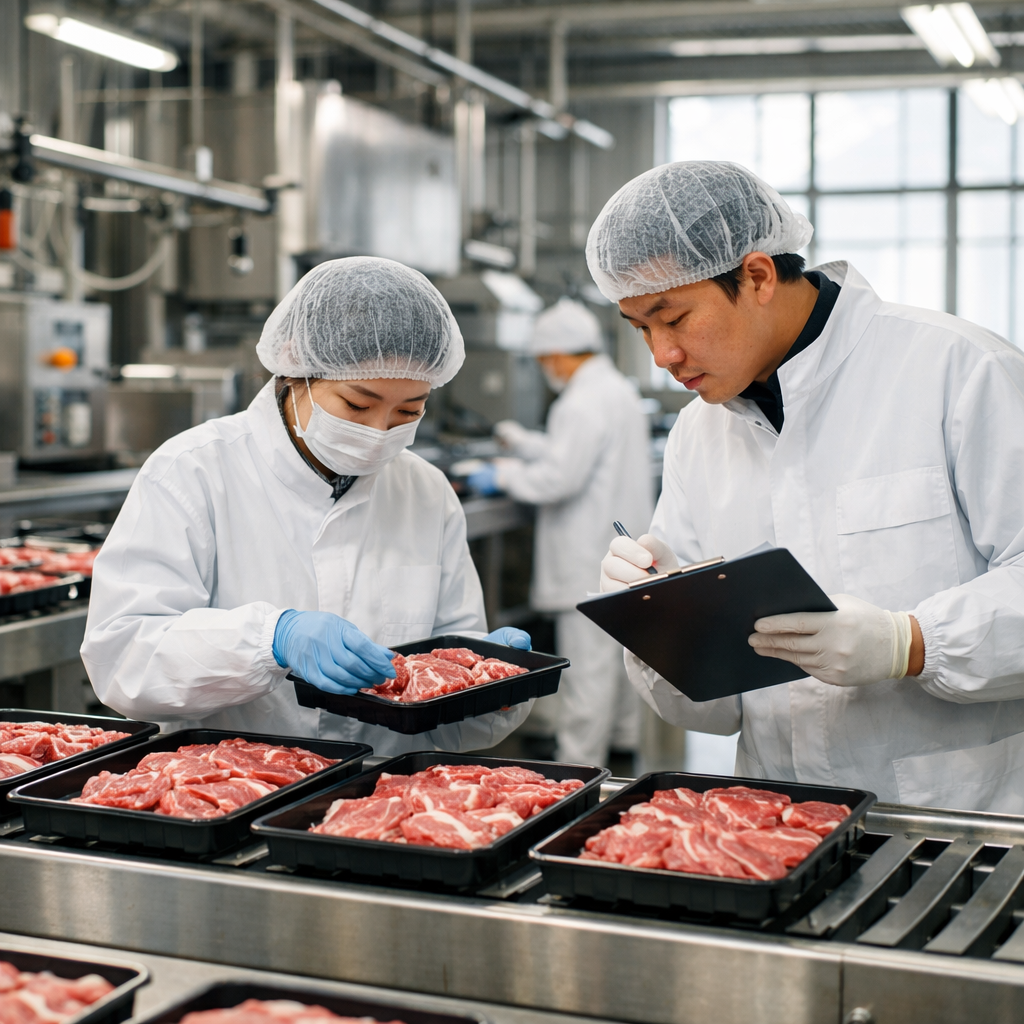
Understanding the Key Regulatory Bodies Governing Chinese Meat Exports
Before you place your first order, you need to know who’s watching over the process. Chinese meat exports operate under the oversight of several crucial regulatory bodies, each playing a specific role in ensuring product safety and quality.
GACC (General Administration of Customs of China) stands at the center of China’s export control system. This powerful agency manages the registration of overseas food manufacturers, oversees export inspections, and issues the certificates that allow meat products to leave Chinese borders. When a Chinese meat processor tells you they’re “GACC-registered,” they’re saying they’ve met the baseline requirements to export their products internationally. This registration isn’t automatic—it requires documented proof of facility standards, quality control systems, and production capacity.
AQSIQ/CNCA (now integrated into GACC) historically handled certification and accreditation functions. While these agencies have been reorganized, their legacy systems still influence how certifications work today. You’ll often see references to AQSIQ standards in older documentation, and understanding this historical context helps you interpret what you’re reading.
FSIS (Food Safety and Inspection Service) represents the U.S. side of the equation for American buyers. If you’re importing to the United States, your Chinese supplier’s facility must appear on FSIS’s list of approved foreign establishments. This approval means the facility has undergone evaluation and meets FSIS equivalency standards. Check this list before committing to a supplier—it’s publicly available and regularly updated.
Codex Alimentarius provides the international baseline standards that most countries reference. While not a regulatory body that directly certifies facilities, Codex standards influence how Chinese meat processors design their food safety programs. When your supplier mentions Codex compliance, they’re indicating alignment with internationally recognized best practices.
Here’s what this means for you practically: your supplier should be registered with GACC at minimum. Depending on your destination market, they may need additional approvals from agencies like FSIS or equivalent bodies in the EU, Middle East, or other regions. Always verify these registrations independently—don’t just take a supplier’s word for it.
What Meeting International Export Standards Really Means
When a Chinese meat processor claims they meet “international export standards,” what does that actually involve? Let’s break down the critical components.
HACCP (Hazard Analysis and Critical Control Points) forms the backbone of modern food safety management. This systematic approach identifies potential hazards at every stage of production—from receiving raw materials through processing, packaging, and storage. A proper HACCP system doesn’t just exist on paper; it requires documented monitoring, corrective actions, and regular verification. When you visit a supplier (or have someone visit on your behalf), ask to see their HACCP records. Real implementation shows consistent daily documentation, not just a binder full of templates.
GMP (Good Manufacturing Practices) covers the basics that every food facility must maintain: personnel hygiene protocols, equipment cleanliness standards, pest control programs, and environmental monitoring. These aren’t glamorous requirements, but they’re absolutely essential. We’ve seen facilities with impressive processing equipment fail basic GMP requirements because they neglected foundational sanitation practices. Look for evidence of daily cleaning schedules, handwashing stations at every critical entry point, and proper separation between raw and cooked product zones.
Sanitary controls extend beyond GMP to include temperature monitoring, water quality testing, air filtration in processing areas, and microbial testing programs. Chinese meat facilities exporting internationally should conduct regular testing for pathogens like Salmonella, E. coli, and Listeria. Ask your potential supplier about their testing frequency and laboratory partnerships.
Export certificates and health certificates represent the official documentation that accompanies every shipment. These certificates, issued by Chinese authorities, confirm that the specific batch of products meets both Chinese export requirements and the importing country’s standards. Each certificate contains unique information about the shipment: production dates, facility registration numbers, product descriptions, and destination details.
Country-specific approvals add another layer of complexity. The European Union maintains its own list of approved Chinese establishments. Australia has specific requirements for meat imports. The Middle Eastern markets often require Halal certification from recognized Islamic authorities. Before you select a supplier, confirm they hold all the approvals your destination market requires—not just generic export capability.
At Jade Premium, we’ve learned that truly compliant facilities don’t just meet these standards—they embrace them as part of their quality culture. When we evaluate suppliers for our clients, we look beyond certificates to see how deeply safety and quality are embedded in daily operations.
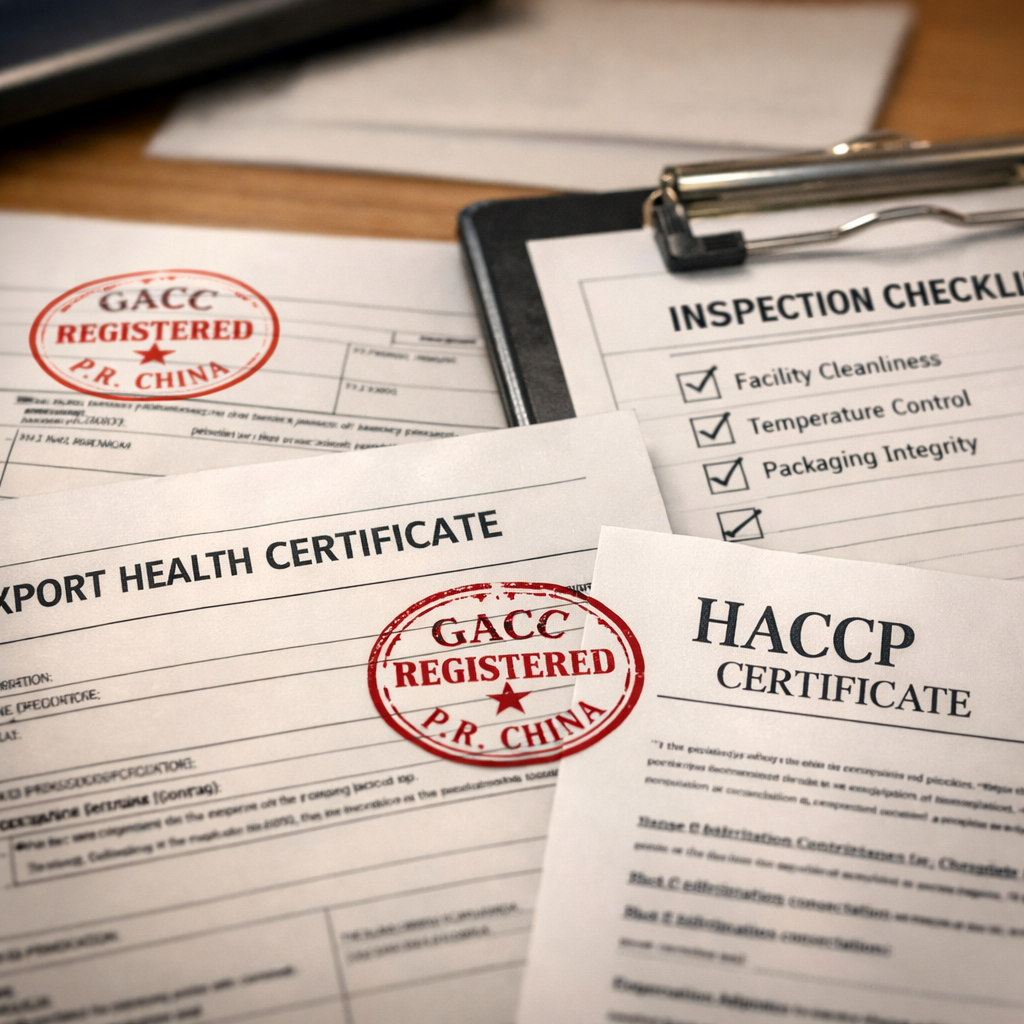
How China’s Meat Export Framework Actually Operates
Understanding the mechanics of China’s export system helps you anticipate timelines and requirements for your sourcing process.
GACC registration and filing starts with the supplier. Meat processing facilities must file detailed applications with GACC, including facility plans, equipment specifications, quality management documentation, and production capacity information. This registration process can take several months for new facilities. Once approved, facilities receive a registration number that appears on all their export documentation.
Pre-export assessments happen before products can ship. Chinese inspection officials visit facilities to verify compliance with both Chinese export standards and destination country requirements. These aren’t quick walkthroughs—inspectors examine production records, review testing results, and physically inspect facilities and products.
The Single Window system streamlines customs procedures by consolidating various regulatory requirements into one online platform. Your supplier will submit export declarations, health certificates, and other documentation through this system. As a buyer, you won’t interact with the Single Window directly, but understanding its role helps you appreciate why proper documentation matters—everything is digitally tracked and verified.
Post-entry checks continue even after products leave China. Destination country customs authorities conduct their own inspections, verify documentation, and may request additional testing. If products fail these checks, they can be rejected, requiring costly re-export or destruction. This is why pre-shipment verification is so critical.
The practical reality: expect the first order from a new supplier to take longer as everyone navigates the documentation requirements. Subsequent orders typically move more smoothly once systems are established and all parties understand the requirements.
Practical Steps for Sourcing Compliant Chinese Meat Products
Now let’s get specific about what you need to do to source meat products that will actually clear customs in your destination market.
Step one: Verify GACC registration. Before any detailed discussions, confirm your potential supplier’s GACC registration number and check it against official GACC databases. This registration should be current and match the specific facility you’re planning to work with. Some companies operate multiple facilities—make sure you’re verifying the right one.
Step two: Confirm destination-specific approvals. If you’re buying for the U.S. market, check the FSIS list of eligible foreign establishments. EU buyers should verify the establishment appears on the European Commission’s approved list. These lists are publicly available online, and checking them takes just a few minutes but can save you from costly mistakes.
Step three: Request and verify certificates. Ask for copies of the facility’s export health certificate, HACCP certification, and any other relevant certifications. Don’t just accept these at face value—verify them with the issuing authorities when possible. At Jade Premium, we maintain relationships with certification bodies and can help verify authenticity for our clients.
Step four: Understand pre-export procedures. Discuss with your supplier exactly what happens before shipment: What testing will be conducted? When will official inspections occur? How long does certificate issuance typically take? A supplier experienced in international trade will have clear answers to these questions.
Step five: Review packaging and labeling requirements. Different markets have different requirements for product labeling, packaging materials, and marking. Your Chinese supplier needs to understand your market’s specific requirements. This goes beyond translation—it includes information like ingredient declarations, allergen statements, storage instructions, and traceability codes.
Step six: Establish quality agreements. Put everything in writing. Define exactly what standards the products must meet, what documentation will be provided, and what happens if products don’t meet specifications. These agreements protect both parties and prevent misunderstandings.
Your Comprehensive Sourcing Checklist
Here’s your practical checklist for evaluating and working with Chinese meat suppliers:
Essential Documentation:
- Current GACC registration certificate (verify the registration number independently)
- Destination country approval (FSIS, EU listing, etc., as applicable)
- Export health certificate template (see what will accompany your shipments)
- HACCP certification from a recognized certification body
- Production license and business registration documents
- Recent third-party audit reports (if available)
Facility Evidence:
- Processing facility photos or video tour
- Quality management system documentation
- Pest control program details
- Personnel hygiene protocols
- Temperature monitoring systems
- Testing laboratory partnership information
Product-Specific Information:
- Product specifications and ingredient statements
- Microbiological testing results (recent samples)
- Shelf-life studies and storage requirements
- Packaging materials specifications
- Sample labels meeting your market requirements
Process Verification:
- Understanding of your market’s specific import requirements
- Clear timeline for order processing and documentation
- Communication protocols in English (or your preferred language)
- References from other international buyers (if possible)
- Flexibility to accommodate your quality control visits or third-party inspections
Common Hurdles and How to Navigate Them:
Language barriers remain a reality in international trade. Even suppliers with “English-speaking staff” may struggle with technical regulatory terminology. Be patient, use simple language, and confirm understanding by asking suppliers to explain things back to you. Written communication often works better than phone calls for complex technical details.
Evolving standards mean what was acceptable last year might not be sufficient today. Regulations change, certification requirements update, and new testing protocols emerge. Choose suppliers who demonstrate awareness of these changes and proactively update their systems. A supplier who says “we’ve always done it this way” is a red flag.
Documentation delays can derail timelines. Chinese bureaucratic processes sometimes move slowly, especially around holidays like Spring Festival. Build buffer time into your planning, and work with suppliers to submit applications and requests well in advance of when you need them.
Minimum order quantities for meat products can be substantial due to container requirements and economies of scale. Discuss MOQs upfront and be realistic about your capacity to take on inventory. Some suppliers offer flexibility for first-time buyers to prove the market before committing to larger volumes.
Building Partnerships That Last
At Jade Premium, we’ve learned that the best sourcing relationships go far beyond transactions. They’re built on mutual understanding, clear communication, and shared commitment to quality.
When we evaluate Chinese meat suppliers for our international clients, we’re not just checking boxes on a compliance list. We’re looking for partners who understand the cultural significance of food, who take pride in their craft, and who view quality as a personal commitment rather than just a business requirement. We’re looking for facilities where workers follow hygiene protocols even when inspectors aren’t watching, where management invests in continuous improvement, and where quality culture is genuine.
This philosophy of authenticity and trust has guided Jade Premium since our founding. We position ourselves as a bridge—connecting the rich heritage of Chinese food production with the demanding standards of international markets. We understand both sides of the equation: the capabilities and challenges of Chinese producers, and the requirements and concerns of international buyers.
Our comprehensive supply chain solutions address every aspect of sourcing Chinese meat products: from initial supplier qualification through order management, quality control, logistics coordination, and post-delivery support. We maintain offices across China’s major food production regions, giving us direct access to facilities and real-time insight into production conditions.
But more importantly, we bring market intelligence and cultural expertise. We help international buyers understand not just the regulatory requirements, but the context behind them. We explain how Chinese food safety culture has evolved, what drives quality improvements, and how to interpret what you see and hear when evaluating suppliers.
The Chinese meat industry has made remarkable progress in recent years, with many facilities now matching or exceeding international standards. The challenge isn’t finding quality—it’s knowing how to identify it, verify it, and maintain it across every shipment. That’s where having a knowledgeable partner makes all the difference.
Whether you’re a food importer establishing new supply lines, a retailer looking for authentic Chinese meat products, or a food service operator seeking reliable ingredients, the principles remain the same: verify credentials independently, understand the regulatory framework, establish clear quality agreements, and build relationships based on transparency and trust.
Chinese meat products export standards aren’t barriers—they’re assurances. They represent China’s commitment to participating in global food trade according to internationally recognized principles. For international buyers willing to do their due diligence, these standards create a foundation for successful, long-term sourcing partnerships.