
- Why International Retailers Are Scrambling for Shelf Space
- The Channels Bringing Regional Specialties to Global Shelves
- Regulatory and Packaging: The Make-or-Break Details
- Case Study: Sichuan Pepper's International Journey
- A Practical Playbook for Market Entry
- Managing Risks and Challenges
- Measuring Success: Metrics That Matter
- The Road Ahead
Walk into a Whole Foods in Los Angeles, a Carrefour in Paris, or a specialty food hall in London today, and you’ll notice something remarkable on the shelves: authentic Chinese regional food specialties that were rarely found in mainstream Western supermarkets five years ago. Sichuan peppercorns from Hanyuan, preserved Jinhua ham, fermented black beans from Yangjiang, and artisanal chili oils from Guizhou are no longer relegated to tiny Chinatown grocers. They’re claiming premium shelf space in mainstream retail, commanding prices that reflect their authenticity and cultural significance.
This isn’t a passing trend. It’s a fundamental shift in how global retailers are approaching Chinese food imports.vIn recent years, several categories of Chinese agricultural exports, including fruit, have recorded strong growth in overseas markets. But the real story isn’t just in volume—it’s in variety. Retailers are racing to stock regional specialties tied to specific geographies and traditional production methods, products that offer something mass-produced alternatives simply cannot: genuine flavor profiles rooted in centuries of culinary heritage.
These regional foods carry what the modern consumer craves most—authenticity. A bottle of Zhenjiang vinegar isn’t just vinegar; it’s a product of specific rice varieties, local water sources, and aging techniques passed down through generations. Yunnan mushrooms aren’t interchangeable with cultivated varieties; they represent wild-harvested ingredients from specific mountain ecosystems. This geographic and cultural specificity is precisely what makes these products irresistible to retailers looking to differentiate their offerings in increasingly crowded markets.
Why International Retailers Are Scrambling for Shelf Space
The demand driving this retail rush comes from a sophisticated consumer base that has moved far beyond “generic Asian food.” Global consumers—particularly millennials and Gen Z shoppers—are actively seeking authentic culinary experiences. They’ve traveled to China, eaten at regional Chinese restaurants run by diaspora communities demanding “proper Chinese food,” and watched cooking videos featuring traditional techniques and ingredients.
For retailers, this represents a premium opportunity. Regional Chinese specialties typically command higher price points than mass-produced alternatives. A jar of authentic Pixian doubanjiang (broad bean paste from Sichuan) can sell for three to five times the price of generic chili paste, yet it moves off shelves quickly among consumers who understand its significance in creating authentic mapo tofu or twice-cooked pork.
These products also create differentiation that matters. In markets where major retailers compete primarily on price and convenience, offering hard-to-find regional ingredients provides a competitive edge. When your competitor stocks standard soy sauce but you carry both light soy sauce from Guangdong and dark soy sauce aged in Shanxi, you’re not just offering variety—you’re positioning your store as a destination for serious home cooks and food enthusiasts.
According to a 2025 iiMedia Research report cited at the International Supply Chain Conference of Chinese Cuisine, the global Chinese cuisine market expanded from about RMB 227.55 billion in 2020 to around RMB 359.39 billion in 2024, reflecting steady growth in international demand. This expansion creates natural demand for authentic ingredients. When a consumer tastes genuine Sichuan hot pot at a restaurant, they want to recreate that experience at home—and they’re willing to pay for the right ingredients.
The Channels Bringing Regional Specialties to Global Shelves
So how are these products actually reaching international retail shelves? The pathways are more sophisticated than you might expect, and success requires understanding which channel fits your product category and target market.
Cross-border e-commerce platforms have emerged as crucial entry points, particularly for test-marketing new regional specialties. Platforms like Tmall Global, JD Worldwide, and specialized international marketplaces allow Chinese producers to reach global consumers without establishing physical entities abroad. For regional specialty producers, this provides low-risk market validation—you can test consumer response to your Yunnan coffee beans or Guangxi rice noodles before committing to large-scale distribution partnerships.
However, the real volume for retail distribution flows through specialized food importers and distributors. These companies understand both the Chinese production landscape and the specific requirements of their local retail markets. A good importer doesn’t just move products; they provide crucial services like regulatory compliance transformation, label adaptation for local markets, and quality verification that builds retailer confidence.
At Jade Premium, we’ve seen firsthand how effective distributor partnerships work. When we help connect a producer of authentic Chaozhou preserved vegetables with a European importer, we’re not just facilitating a transaction. We’re ensuring that the product meets EU food safety standards, that packaging communicates the product’s regional heritage in ways European consumers understand, and that the supply chain can maintain consistent quality and delivery schedules that retail partners demand.
Specialty food stores and Asian supermarket chains represent another vital channel, particularly for products in the early stages of market education. These retailers cater to knowledgeable consumers already familiar with regional Chinese cuisine and willing to pay premium prices for authenticity. Success here can build the brand recognition and sales history that eventually opens doors to mainstream supermarket chains.
Large supermarket chains are increasingly creating dedicated sections for authentic Asian ingredients, moving beyond token “ethnic food” aisles. Major retailers like Carrefour, Tesco, and Kroger now feature curated selections of regional Chinese specialties, often positioned near premium or organic sections rather than isolated in separate areas. Breaking into these channels requires demonstrated market demand, impeccable compliance records, and often the endorsement of influential food media or chefs.
Regulatory and Packaging: The Make-or-Break Details
Here’s where many promising regional products stumble: regulatory compliance and packaging that works for international retail. Your grandmother’s secret recipe for fermented tofu might be extraordinary, but if it can’t navigate food safety regulations or communicate its value on a crowded shelf, it won’t succeed in global retail.
Labeling compliance is non-negotiable. Different markets have vastly different requirements for ingredient listings, nutritional information, allergen warnings, and country-of-origin statements. The FDA’s requirements for the U.S. market differ significantly from the European Union’s regulations, which differ again from standards in Australia or the Middle East. What works for domestic Chinese retail simply won’t pass import inspections abroad.
Smart producers invest in professional label design that accomplishes multiple goals simultaneously. Your labels must meet technical regulatory requirements while also communicating cultural authenticity and product differentiation. A bottle of Shanxi aged vinegar should explain not just what’s inside, but why it matters—the traditional brewing methods, the geographic significance, the culinary applications that make it irreplaceable in certain dishes.
Traceability has become increasingly critical, particularly for premium regional specialties. Retailers want to know—and be able to prove to consumers—exactly where products come from and how they’re produced. This is where traceability systems and regulatory compliance become essential for cross-border food trade. This is where certifications like HACCP, BRC, or IFS provide enormous value, building retailer confidence that your products meet international food safety standards.
For regional specialties tied to specific geographic areas, protected geographical indication (PGI) certifications or similar designations can justify premium pricing and protect against imitations. If your Longjing tea actually comes from the designated production area in Hangzhou, certification proves it—and allows you to command prices that reflect that authenticity.
Packaging design must balance cultural authenticity with retail functionality. Many traditional Chinese food products come in packaging that works perfectly for wet markets or small shops in China but fails in international retail contexts. Your packaging needs to survive international shipping, fit standardized retail shelving systems, and communicate value to consumers who may be encountering your product for the first time.
Case Study: Sichuan Pepper’s International Journey
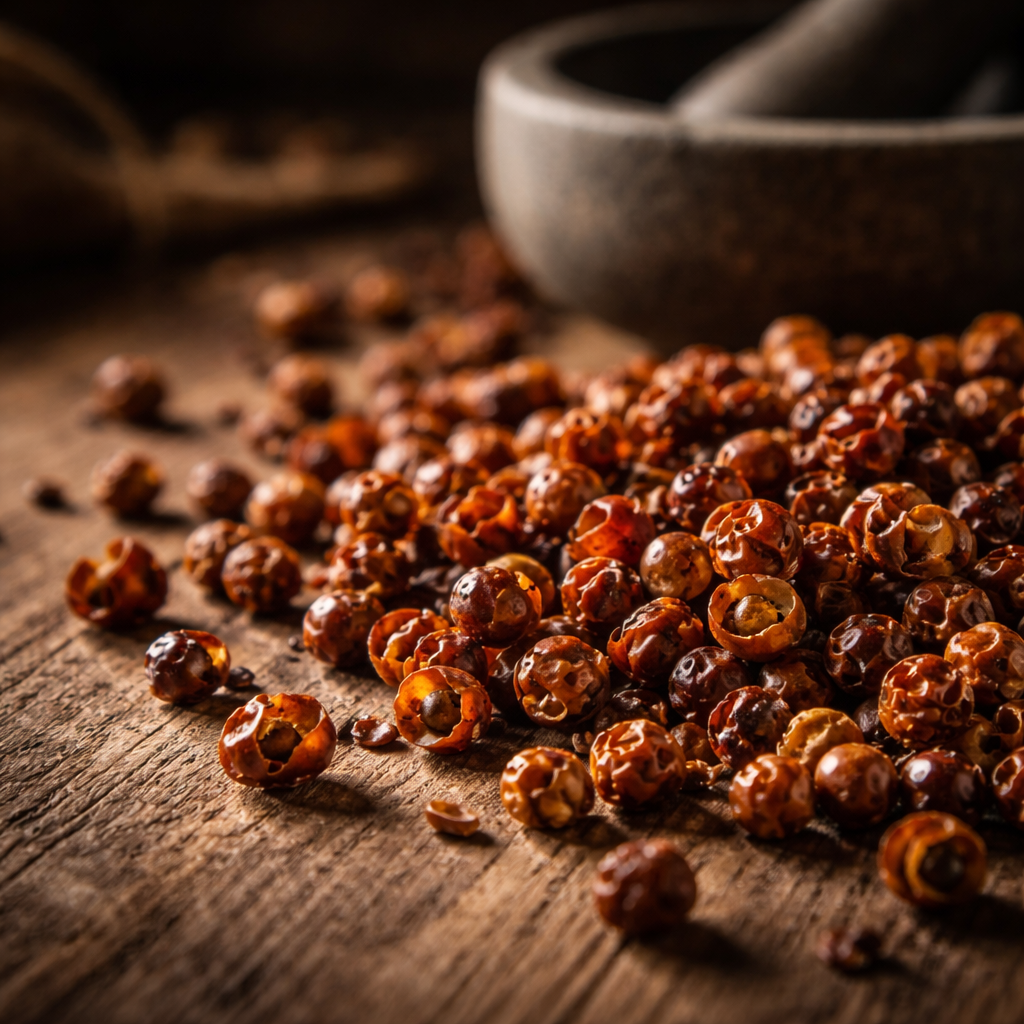
Consider how Sichuan pepper evolved from a niche ingredient to a must-stock item for serious food retailers globally. Five years ago, most Western consumers had never heard of the tongue-numbing sensation called “málà.” Today, high-quality Sichuan peppercorns from Hanyuan command premium prices at specialty food stores and mainstream supermarkets alike.
This transformation didn’t happen by accident. It resulted from a perfect convergence of factors: diaspora chefs opening authentic Sichuan restaurants in global cities, food media coverage of Sichuan cuisine as one of China’s great regional traditions, and social media amplification of the unique sensory experience málà provides.
Smart importers and retailers recognized the trend early and established supply chains for authentic, high-quality Sichuan peppercorns—not the dusty, flavorless versions that had occasionally appeared in Asian grocery stores, but premium, recently harvested peppercorns with the intense aroma and numbing potency that defines the ingredient.
The storytelling around Sichuan pepper mattered enormously. Retailers didn’t just stock it; they educated consumers about its role in one of China’s eight great cuisines, its unique chemical compounds that create the málà sensation, and the specific dishes where it’s irreplaceable. This created not just sales, but repeat customers who understood the product’s value and were willing to pay for quality.
Social media accelerated adoption dramatically. Food bloggers and home cooks posted videos of their Sichuan cooking experiments, often prominently featuring the ingredients they sourced from specific retailers. Each viral mapo tofu or hot pot video translated into consumers seeking out authentic Sichuan peppercorns at their local stores.
The lesson for other regional specialties is clear: success requires more than just a good product. It demands strategic storytelling, quality that justifies premium pricing, and retail partnerships that can educate consumers while maintaining consistent supply.
A Practical Playbook for Market Entry
If you’re a producer or brand representative looking to get your regional specialty into international retail, here’s a practical approach based on what actually works:
Start by defining your origin story. What makes your product uniquely tied to your region? Is it the local climate, water sources, traditional production methods, or centuries-old recipes? This story becomes the foundation of your marketing and the justification for premium pricing. A jar of fermented bean curd is a commodity; fermented bean curd made using 300-year-old techniques in Guangdong’s Shiwan town is a specialty.
Validate market fit with pilot programs. Before committing to large-scale production for export, test your product through cross-border e-commerce platforms or small specialty retailers. This provides crucial market feedback: Do international consumers understand your product? Can they figure out how to use it? Is your packaging surviving shipping and attracting attention on shelves?
Invest seriously in packaging and labeling. This isn’t where to cut costs. Your packaging is your sales representative in every store. Work with designers who understand both Chinese cultural aesthetics and international retail requirements. Your labels need to pass regulatory scrutiny while also communicating value and authenticity to consumers.
Build relationships with quality-focused importers and distributors. The right distribution partner does much more than move products. They provide market intelligence, handle regulatory compliance, manage retailer relationships, and often contribute to marketing efforts. At Jade Premium, we work with international buyers specifically because we understand this end-to-end process—from verifying supplier credentials in China to ensuring products meet destination market requirements.
Maintain obsessive quality control and supply chain transparency. International retailers demand consistency. If your first shipment of Yunnan coffee is exceptional but your third shipment is mediocre, you’ll lose shelf space permanently. This is why quality control systems and batch testing are non-negotiable for sustainable export success. Implement rigorous quality control systems and be prepared to provide complete supply chain transparency.
Managing Risks and Challenges
Let’s be honest about the challenges, because they’re substantial. Regulatory complexity varies dramatically by market and can change unexpectedly. A product that easily enters European markets might face significant hurdles in the United States, or vice versa. Staying current with evolving food safety regulations requires dedicated resources.
Supply chain risks are real, particularly for regional specialties dependent on specific growing conditions or traditional production methods. A poor harvest season, climate variability, or disruption to traditional production facilities can impact your ability to meet retailer commitments. Smart producers maintain safety stock and develop contingency plans for supply disruptions.
Cultural adaptation sometimes requires compromise. While authenticity is valuable, products may need adjustment for international palates or usage patterns. This doesn’t mean diluting your product’s essence, but it might mean offering different heat levels of your chili oil or providing clear English-language recipes that help consumers understand how to use your product.
Measuring Success: Metrics That Matter
How do you know if your international retail strategy is working? Track these key indicators:
Sales growth and velocity tell you if consumers are actually buying your product, not just if retailers stocked it once. Retailers closely monitor how quickly products move off shelves. Strong velocity earns you better shelf placement and expanded distribution.
Retail shelf presence should expand over time if your strategy is working. Starting in specialty stores and progressively moving into mainstream supermarkets indicates growing market acceptance and brand recognition.
Repeat purchase rates distinguish novelty purchases from genuine product adoption. If consumers buy your product once out of curiosity but never return, something isn’t working—whether it’s pricing, packaging, consumer education, or product-market fit.
Consumer engagement on social media and review platforms provides qualitative feedback that raw sales numbers can’t capture. Are consumers posting recipes using your product? Recommending it to friends? Providing feedback that helps you improve?
The ultimate measure of success is building sustainable demand that outlasts any individual marketing campaign or retail promotion. The best regional specialties become pantry staples for their target consumers—products that shoppers actively seek out and purchase regularly.
The Road Ahead
The race to stock authentic Chinese regional specialties on international retail shelves isn’t slowing down. As global consumers become more sophisticated about Chinese cuisine and more demanding about ingredient authenticity, opportunities for genuine regional products will only expand.
But success requires more than just a great product. It demands understanding international retail requirements, investing in compliance and packaging, building strategic partnerships with knowledgeable distributors, and maintaining the quality consistency that retail partnerships require.
For international buyers, the opportunity is clear: regional Chinese specialties represent a growing category with strong consumer interest, premium pricing potential, and competitive differentiation. The key is finding reliable supply chain partners who understand both the Chinese production landscape and international retail requirements.
At Jade Premium, we’ve built our business specifically to bridge this gap—connecting authentic Chinese regional products with international buyers while ensuring the compliance, quality control, and supply chain reliability that makes retail partnerships successful. Because we believe the world’s consumers deserve access to China’s extraordinary regional food heritage, and China’s regional producers deserve access to global markets that value their authentic products.
The global retail shelves are ready for your regional favorites. The question is whether you’re ready to meet the standards those shelves demand.