
You’re scrolling through TikTok during your lunch break, and suddenly there it is—a video of someone biting into a perfectly golden Korean egg sandwich, the yolk oozing out in slow motion. Within 48 hours, that same sandwich is everywhere. Your customers are asking for it. Your competitors are stocking it. And you’re wondering: how did this happen so fast?
Welcome to the new reality of retail buying. TikTok isn’t just entertainment anymore—it’s become the most powerful discovery engine for Asian food products in international markets. For retail buyers sourcing from China and across Asia, understanding this platform’s influence isn’t optional. It’s essential.
The platform has fundamentally changed how consumers discover, validate, and demand Asian food products. What once took months of gradual market acceptance now happens in days. A single video featuring cloud-like Japanese soufflé pancakes or salted egg snacks can generate millions of views overnight, creating immediate pressure on retail shelves across Europe, North America, and beyond. For international buyers working with suppliers in China, this phenomenon represents both an extraordinary opportunity and a significant operational challenge.
A striking example is latiao, the chewy, chili-oil-coated wheat gluten snack from China. Once a nostalgic school snack, it has exploded globally through TikTok reaction videos and spicy snack challenges. Creators film their first bite—often reacting to the intense spice and unusual chewy texture—turning a simple packaged snack into viral entertainment. Today, latiao frequently appears in “viral snack” compilations across TikTok, illustrating how a local Chinese snack can suddenly become a global curiosity—and eventually a retail opportunity.
From Screen to Shelf: Understanding the Viral Food Cycle
The journey from a TikTok video to your stockroom follows a predictable pattern, and understanding this cycle is crucial for staying ahead. It begins with discovery—a food influencer or everyday user posts content featuring an Asian product that’s visually striking, culturally intriguing, or simply delicious-looking. The algorithm does its work, pushing the content to users who’ve shown interest in food content, Asian culture, or similar products.
Next comes validation. Other creators jump on the trend, posting their own versions, reviews, or “where to find it” guides. Comments sections fill with questions: “What store sells this?” “Can I get this in London?” “I need to try this!” This social proof accelerates exponentially. Within days, a product that was previously known only to Asian diaspora communities becomes a must-have item for mainstream consumers.
Then the pressure reaches you. Customer service teams start fielding inquiries. Store managers report shoppers asking by name for specific products they saw online. Your sales data doesn’t yet reflect the trend because the product isn’t on your shelves—but the demand is building invisibly, waiting to be captured.
What makes this cycle particularly powerful for Asian food products is the role of user-generated content. Unlike traditional advertising, these videos come from real people sharing genuine excitement. A home cook in Manchester films herself making Korean tteokbokki for the first time. A student in Toronto does a “haul” video from an Asian supermarket, showcasing viral peach ice cream or unique Chinese snacks. Each piece of content acts as an authentic endorsement that crosses geographic and cultural boundaries.
Influencers amplify this effect, but you don’t need millions of followers to create impact. Micro-influencers with highly engaged audiences can drive significant local demand. When they feature products available through accessible retail channels, the conversion from view to purchase happens rapidly.
What This Means for Your Buying Strategy
The implications for retail buyers are profound and immediate. Your traditional approach to category management—analyzing quarterly sales data, testing products in limited markets, gradually expanding successful lines—no longer matches the speed of consumer demand creation.
You need to think in terms of trend-driven micro-collections. Instead of committing to large volumes of established products, consider allocating space and budget for smaller, flexible assortments that can rotate quickly. These “TikTok-ready” sections allow you to test viral products without overcommitting resources. Think of it as a permanent pop-up concept within your Asian food category.
The challenge is maintaining agility in your supply chain. When a product goes viral on a Friday, your customers expect to find it by the following week. This creates pressure on your relationships with suppliers in China. The traditional model of ordering containers months in advance doesn’t work when trends can emerge and peak within 30 days.
Forecasting becomes exponentially more complex. Historical sales data becomes less predictive when social media can create demand patterns that have never existed before. A product might sit quietly on shelves for months, then suddenly experience a 500% spike in demand because a creator with the right audience discovered it.
This volatility extends beyond individual products to entire subcategories. TikTok can suddenly make Korean convenience store snacks a must-stock category, or create mainstream awareness of Chinese dim sum varieties that previously only sold in specialty stores. Your category architecture needs flexibility to accommodate these shifts.
Building Your Trend-Detection Playbook
Smart retail buyers are developing systematic approaches to identifying and responding to viral Asian food trends before they peak. This starts with active monitoring. Assign someone on your team to track food-related TikTok content, focusing on hashtags like #AsianFood, #FoodTikTok, and region-specific tags. Look for early signals: products appearing in multiple unrelated videos, comment sections asking where to buy, or creators explicitly stating “this needs to be in more stores.”
But observation alone isn’t enough. You need partnerships with suppliers who can move quickly. When sourcing from China through partners like Jade Premium, transparent communication about emerging trends becomes crucial. Share what you’re seeing on social media. Ask if they’re hearing similar signals from other markets. The best supplier relationships function as intelligence-sharing networks, not just transactional fulfillments.
Consider establishing flexible order structures specifically for trend-responsive products. This might mean smaller initial orders with pre-negotiated terms for rapid reorders. Some buyers are even creating standing agreements that allow them to add trending products to existing container shipments with minimal lead time adjustments.
Data analytics become your competitive advantage here. Track not just what’s selling, but what customers are searching for on your website. Monitor social media mentions of your retail brand alongside specific product names. Use Google Trends data to validate that TikTok phenomena are translating into real search behavior in your market.
Optimize your inventory formats for different consumption occasions. A viral snack might perform differently as a single-serve impulse item near checkout versus a family-size pack in the snack aisle. Understanding how TikTok users discover products—often looking for something to try once—can inform your pack-size strategy for trend-driven items.
Retail Execution That Amplifies the Trend
Once you’ve identified and secured trending products, execution in-store determines whether you capture the full opportunity. The most successful retailers are creating explicit connections between social media content and physical retail presence.
In-store promotions aligned with creator content work remarkably well. Digital displays showing actual TikTok videos (with proper permissions) next to product placement help customers make the connection. Shelf tags that say “As Seen on TikTok” or “Trending Now” signal to shoppers that you’re tuned into what’s current, building trust that your Asian food section offers discoveries, not just staples.
Cross-merchandising opportunities multiply when you understand how TikTok users actually consume these products. That Korean egg sandwich might sell well near bread and eggs, but it could perform even better in a prepared foods section with an execution-focused setup. Viral hotpot ingredients could anchor a complete meal solution display rather than sitting isolated in their traditional category.
Create sampling opportunities when possible. If someone is curious about a product they saw online but hesitant to commit to a full purchase, a taste can convert interest into sales. This is particularly effective with flavor profiles that might be unfamiliar to non-Asian customers.
Think about basket-building. When customers come looking for one viral product, what else might they need? If they’re buying ingredients for a trending recipe, having complementary items grouped together increases your average transaction value while helping customers succeed with their culinary experiments.
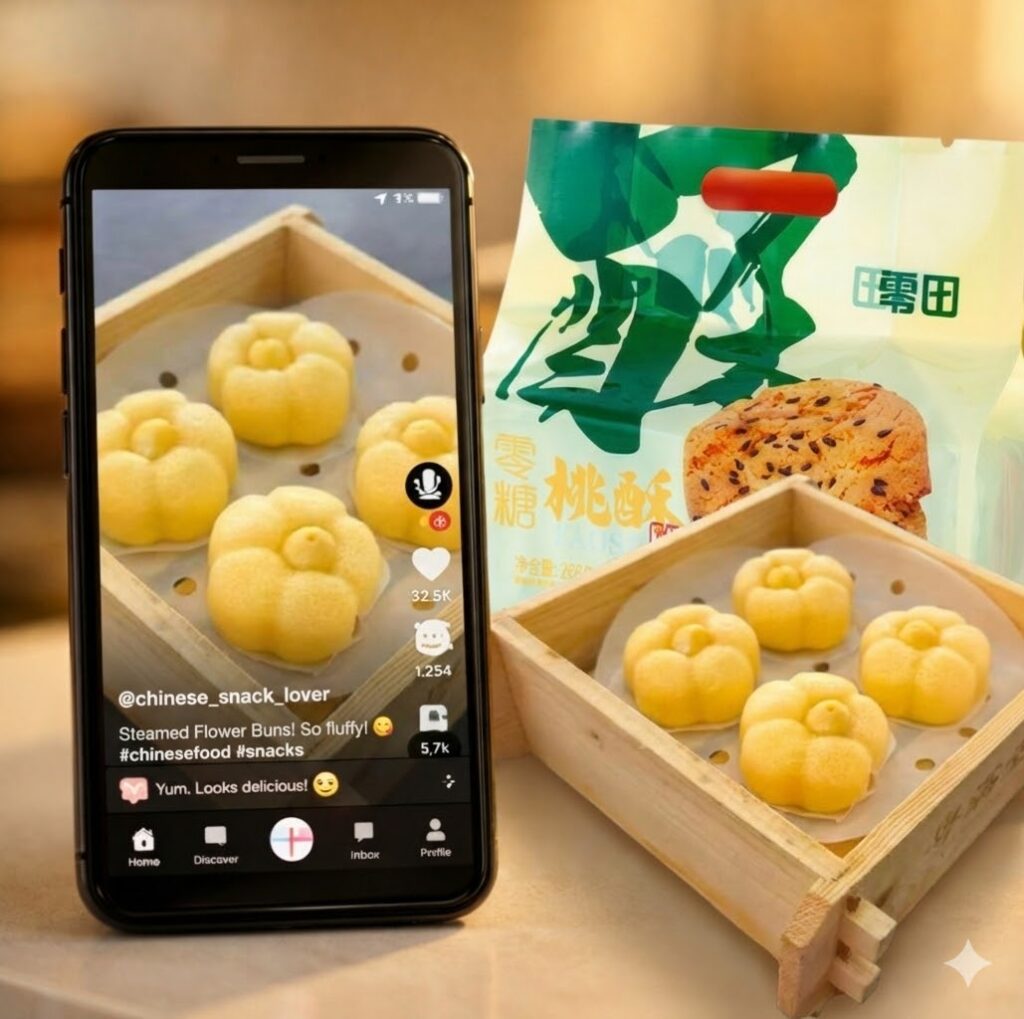
The physical store experience should acknowledge the digital discovery journey. QR codes linking to recipe videos or preparation instructions signal that you understand how customers learned about these products and want to support their success in using them.
The Risks You Need to Manage
Not every TikTok trend deserves shelf space, and understanding the difference between fleeting fads and sustainable demand shifts is crucial. Some viral moments are purely novelty—interesting to watch, but without the depth to drive repeated purchases. Others represent genuine consumer interest in discovering new flavor experiences from Asian cuisine.
The ephemeral nature of some trends means you could invest in inventory that becomes obsolete before you sell through. This is particularly risky with products that require certification adjustments or packaging modifications for your market. By the time you’ve completed compliance processes for a truly short-lived trend, consumer interest may have already moved on.
Product quality and margins deserve careful attention. In the rush to capitalize on viral trends, some suppliers may cut corners or buyers may accept lower margins just to have the product available. Both approaches damage long-term brand integrity. When working with Chinese suppliers, maintaining quality standards even for trending products protects your reputation and ensures positive customer experiences that drive repeat purchases.
Monitor your metrics ruthlessly. For trend-driven products, velocity and sell-through rates matter more than traditional category performance indicators. A product that generates excitement for four weeks then dies completely requires different inventory management than a steady performer. Build systems that flag when trending products start losing momentum so you can exit positions before you’re stuck with dead stock.
Be cautious about the quality-price-trend triangle. Customers may be willing to pay premium prices for viral products initially, but if quality doesn’t match their TikTok-influenced expectations, you’ll face returns and negative word-of-mouth. This is especially important for perishable items or products requiring specific storage conditions during international shipping from China.
Your Practical Action Plan
The retailers winning in this new environment treat TikTok trends not as random disruptions but as real-time market research revealing category evolution. These viral moments are signals—indicators of broader shifts in how consumers view Asian cuisine, what flavors they’re ready to embrace, and how cultural boundaries around food are changing.
Start small if you need to. Allocate a modest section of your Asian food category as a “discovery zone” where trending products can rotate. Track performance not just in absolute sales but in traffic generation and cross-category lift. Many buyers find that a well-curated selection of viral Asian products increases overall category engagement, benefiting established products too.
Invest in supplier partnerships that enable speed. When evaluating potential partners in China, ask explicitly about their capacity to respond to emerging trends. How quickly can they process small orders? Do they have relationships with producers of trending products? Can they provide market intelligence about what’s gaining traction in Asian markets before it crosses over globally?
Develop content workflows that let you move from social media observation to shelf execution efficiently. This might mean creating templates for promotional materials, establishing relationships with local food photographers who can create retail content quickly, or training staff to recognize and communicate trending product opportunities.
Remember that TikTok is showing you what consumers are curious about—and curiosity about Asian food is at an all-time high internationally. Your role as a retail buyer isn’t just responding to individual viral products, but facilitating an ongoing cultural exchange through food. When you stock that Korean egg sandwich or those Chinese salted egg snacks, you’re helping customers explore authentic Asian flavors and food traditions.
The most successful approach combines responsiveness with judgment. Not every trend matters for your specific customer base, and not every viral product fits your brand positioning. But having the capability to respond when the right trend emerges—that’s the competitive advantage.
Your stockroom needs a TikTok strategy because your customers are already there, discovering products, building excitement, and forming purchase intentions. The question isn’t whether social media will influence your Asian food category. It’s whether you’ll be ready when it does.