
- The GACC: Your Gateway and Gatekeeper
- Documentation: Where Most Shipments Fail
- Labeling and Packaging: The GB 7718 Standard
- Product Safety and Quality Standards: The Non-Negotiables
- Your Compliance Roadmap: Practical Steps to Success
- Common Mistakes and How to Avoid Them
- Building Success Through Partnership
- Further Reading for Overseas Buyers of Chinese Food Products
💡 Buyer’s Tip: Many international buyers assume compliance only starts at their own country’s border. In reality, a shipment can be blocked before it even leaves China if the exporter doesn’t meet the GACC’s latest digital filing requirements. As your partner on the ground, Jade Premium verifies these export credentials at the source.
Every year, international buyers sourcing Chinese food products face unexpected challenges: shipments delayed due to incomplete export documentation, misinterpreted labeling, or lack of regulatory clarity. Even premium mushrooms, specialty sauces, and carefully selected teas can face delays at destination ports if export processes are misunderstood.
The financial impact extends beyond the immediate loss. There’s storage fees accumulating by the day, relationships with retailers hanging in the balance, and market opportunities slipping away while competitors move forward. For many importers, these rejected shipments represent not just lost revenue but damaged reputations and broken supply chains.
Understanding Chinese export regulations isn’t simply about avoiding losses—it’s about building sustainable, profitable trade relationships. The complexity of these regulations creates a hidden trap for the unprepared, but it also presents an opportunity for those willing to navigate them correctly.
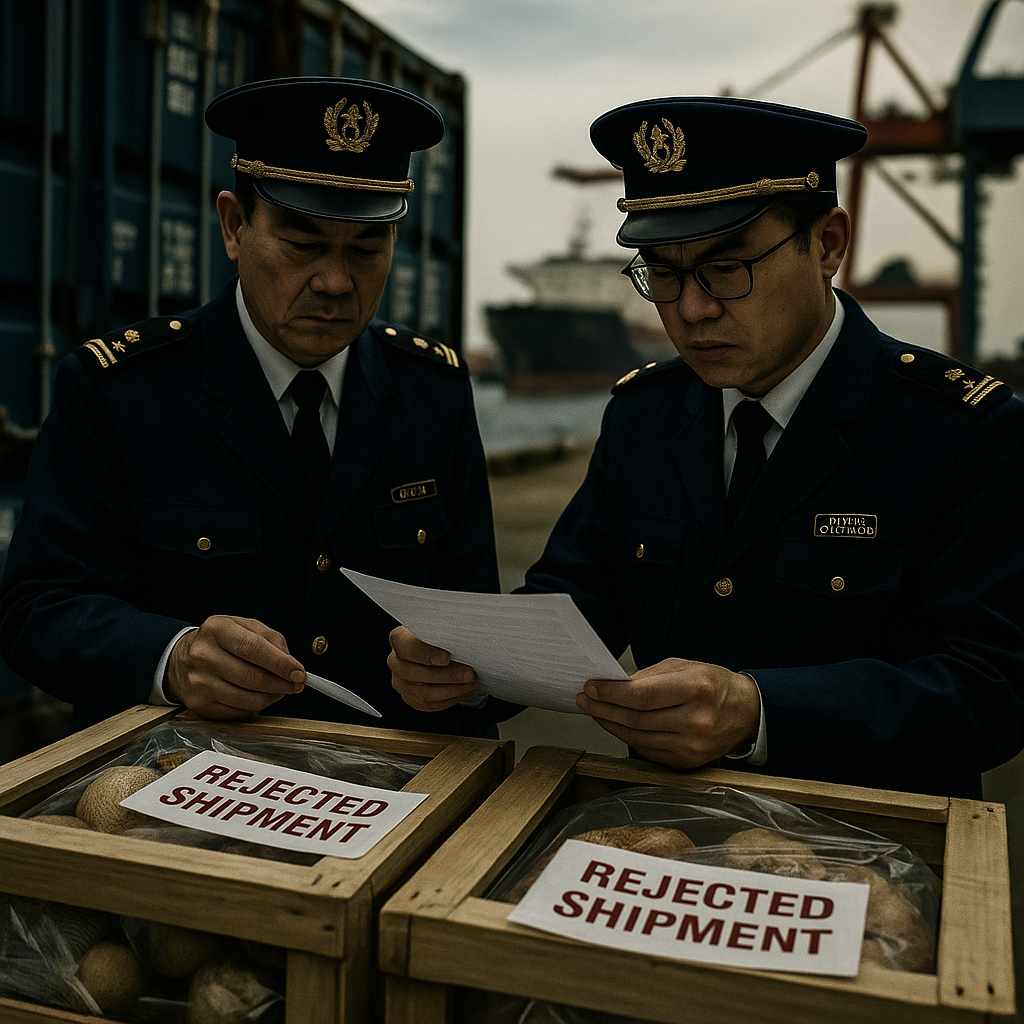
The GACC: Your Gateway and Gatekeeper
At the heart of China’s export regulation landscape is the General Administration of Customs of China (GACC), which oversees food safety and facility registration. For overseas buyers, understanding whether a Chinese supplier is properly registered with GACC provides assurance that export documentation is complete and that shipments are prepared in compliance with local production standards.
GACC’s role extends far beyond simple customs clearance. The administration manages facility registration, monitors food safety standards, conducts risk assessments, and maintains the authority to approve or reject any food product entering or leaving China. For overseas producers targeting the Chinese market or Chinese exporters serving international buyers, GACC registration has become an unavoidable prerequisite.
The practical implications are profound. Ensuring a supplier has proper GACC registration gives overseas buyers confidence that products are prepared and documented in compliance with Chinese export regulations. This registration process involves detailed documentation of production processes, quality control measures, and facility specifications. The average registration timeline spans several months, and any incomplete or inaccurate submission resets the clock.
What makes GACC particularly challenging is its evolving nature. Regulations update regularly, reflecting new food safety concerns, international trade developments, and policy priorities. A compliance strategy that worked last year may fall short today. Importers who fail to track these changes often discover their oversight only when shipments face unexpected detention at the border.
Documentation: Where Most Shipments Fail
For overseas buyers sourcing Chinese food, proper export documentation is essential. Commercial invoices, certificates of origin, packing lists, bills of lading, and health certificates must all be accurate and clearly translated to ensure smooth customs clearance in their own countries.
Commercial invoices must detail product descriptions, quantities, values, and terms of sale with precision. Vague descriptions like “food products” or “assorted items” invite scrutiny and delays. Certificates of origin verify the manufacturing location, crucial for tariff calculations and trade agreement benefits. Many importers underestimate the importance of accurate origin documentation, leading to reclassification issues and unexpected duty charges.
Health certificates represent another critical layer. Depending on the product category, importers may need certificates of free sale, sanitary certificates, or phytosanitary certificates. These documents must come from recognized authorities in China and match exactly with the product information on other documents. A single discrepancy—a misspelled product name, an incorrect batch number—can trigger rejection.
The packing list must correspond perfectly with the actual shipment contents. Inspectors compare declared quantities against physical counts, and any mismatch raises red flags about product integrity or potential smuggling. Bills of lading establish ownership and shipping terms, requiring careful attention to consignee information and shipping marks.
Common pitfalls emerge in the preparation stage. Translations between Chinese and English create opportunities for error, particularly with technical food terminology. Dates must follow the correct format, measurement units need standardization, and all signatures must come from authorized representatives. Many rejected shipments trace back to document preparation rushed through without proper verification.
Labeling and Packaging: The GB 7718 Standard
Understanding China’s GB 7718 standard standard, which defines food labeling practices, helps overseas buyers work with suppliers to ensure accurate translations and packaging adaptations for international shipment, reducing the risk of delays or compliance issues at destination ports.
The translation requirement alone causes numerous problems. Direct translations often fail to capture regulatory nuances or may inadvertently violate Chinese advertising laws. For example, certain health claims permitted in Western markets face prohibition in China. Ingredient names must use their official Chinese terminology, not simplified or colloquial versions.
Nutritional information follows a prescribed format, listing energy, protein, fat, carbohydrates, and sodium in specific units per 100 grams or 100 milliliters. Additional nutrients require disclosure based on product type and any nutritional claims made. The layout, font size, and positioning of this information all fall under regulatory scrutiny.
Packaging materials themselves face restrictions. Certain plastics, inks, or adhesives banned for food contact in China may be permissible elsewhere. Importers must verify that every component of their packaging meets Chinese standards, from the primary container to outer shipping cartons. This verification requires documentation from packaging suppliers and sometimes independent testing.
The consequences of non-compliant labeling extend beyond initial rejection. Products discovered in the market with improper labels can trigger recalls, fines, and import bans. The responsible importer faces potential blacklisting, effectively ending their ability to operate in the Chinese food import business. These severe penalties reflect China’s serious approach to food safety and consumer protection.
For companies like Jade Premium, ensuring labeling compliance represents a core service value. Our understanding of both GB 7718 requirements and international labeling practices allows us to bridge these differences effectively, preventing costly mistakes before they occur.

Product Safety and Quality Standards: The Non-Negotiables
Chinese food safety standards provide a strong baseline for product quality. For overseas buyers, sourcing from suppliers adhering to these standards ensures that products meet international expectations and facilitates compliance with destination country import regulations.
Good Manufacturing Practices (GMP) and Hazard Analysis and Critical Control Points (HACCP) certification have become increasingly important. While not universally mandatory, these quality management systems demonstrate a producer’s commitment to food safety and often smooth the approval process. GACC views certified facilities more favorably during registration reviews and conducts less intensive inspections of their products.
Traceability represents another crucial element. Chinese regulations require complete traceability from farm or fishing vessel through processing, packaging, and distribution. This means maintaining detailed records of raw material sources, production batches, quality testing results, and distribution channels. When food safety issues arise, this traceability enables rapid identification of affected products and prevents widespread harm.
The testing requirements deserve special attention. Depending on the product, samples may undergo testing before export and at destination, creating dual compliance considerations for overseas buyers.
This rigorous focus on safety aligns perfectly with Jade Premium’s philosophy of delivering premium, healthy products to global markets. We recognize that compliance with these standards isn’t merely regulatory box-checking—it’s fundamental to our commitment to consumer wellbeing and product excellence. Our quality control processes mirror and often exceed Chinese requirements, ensuring that products meet standards before they ever reach customs.
Your Compliance Roadmap: Practical Steps to Success
Navigating Chinese export regulations successfully requires a systematic approach. Begin by engaging a qualified Chinese importer who holds proper Food Importer Registration. This partnership provides essential local knowledge and handles much of the regulatory interface. Verify their credentials thoroughly—request their registration certificates and reference checks from other international suppliers.
Next, ensure GACC registration for all relevant production facilities. This process requires detailed facility documentation, quality management system descriptions, and often on-site inspections. Start this registration early, as the timeline typically extends six months or more. Maintain this registration actively by reporting any significant facility changes and renewing when required.
Develop comprehensive documentation procedures. Create templates for all required documents that incorporate both Chinese regulatory requirements and your internal quality standards. Implement multiple verification steps before submission—have documents reviewed by both regulatory experts and native Chinese speakers. This redundancy catches errors that single reviews miss.
Invest in regulatory intelligence. Subscribe to updates from GACC and relevant Chinese regulatory bodies. Join industry associations that track Chinese food import regulations and share best practices. Consider retaining a regulatory consultant with expertise in Chinese food law who can provide guidance as regulations evolve.
Build relationships with accredited testing laboratories in both your country and China. Understand their testing protocols, turnaround times, and how to interpret results. Establish regular testing schedules that identify problems before they reach customs rather than after.
Create a compliance checklist specific to your products. This checklist should cover facility registration status, product registration requirements, documentation completeness, labeling compliance, testing results, and packaging verification. Review this checklist before every shipment without exception.
Common Mistakes and How to Avoid Them
Product misclassification ranks among the most frequent errors. The Chinese customs classification system uses highly specific codes, and choosing the wrong code affects duty rates, documentation requirements, and inspection procedures. Work with customs brokers experienced in food products who can accurately classify items according to Chinese standards.
Incomplete or outdated supplier documentation can result in delays during overseas customs clearance. Understanding a supplier’s registration and quality management practices helps buyers anticipate and prevent such issues.
Incomplete ingredient disclosure creates serious problems, particularly with processed foods. Chinese regulations require listing all ingredients, including processing aids and additives that might be exempt from declaration in other markets. Undeclared ingredients discovered during inspection trigger automatic rejection and potential fraud investigations.
Neglecting cold chain documentation for temperature-sensitive products can lead to quality concerns and delays. Proper temperature logs maintained from the supplier to shipment help overseas buyers meet regulatory and client expectations.
Language barriers compound many errors. Machine translations of technical documents often introduce inaccuracies that raise regulatory concerns. Professional translation by food industry specialists costs more initially but prevents expensive corrections later. The investment in quality translation pays for itself many times over through avoided rejections and delays.
Assuming international standards automatically satisfy Chinese export requirements is a misconception. Even products meeting EU, US, or Australian standards require verification to ensure smooth shipment to global markets.
Building Success Through Partnership
The complexity of Chinese export regulations need not become an insurmountable barrier. With proper preparation, expert guidance, and systematic compliance processes, international food importers can navigate these requirements successfully and build profitable, sustainable Chinese supply chains.
Jade Premium’s decade of experience in global food trade provides the cultural expertise and regulatory knowledge that importers need. Our offices across major Chinese cities maintain direct relationships with producers, testing laboratories, and regulatory authorities. This network enables us to stay ahead of regulatory changes and resolve issues quickly when they arise.
Our approach extends beyond simple facilitation. We help international buyers understand not just the regulations but the cultural context behind them. Chinese food safety regulations reflect historical concerns, consumer priorities, and governmental philosophy about public health protection. Understanding this context helps importers anticipate regulatory directions and build compliance strategies that remain effective as standards evolve.
By positioning ourselves as a bridge between Eastern and Western culinary markets, we transform regulatory compliance from a burden into a competitive advantage. Our clients benefit from streamlined documentation processes, proactive regulatory monitoring, and rapid problem resolution when unexpected issues arise. More importantly, they gain peace of mind knowing their shipments meet all requirements before they leave China.
The hidden trap of Chinese export regulations costs unprepared importers millions annually. But for those who approach compliance systematically, work with experienced partners, and commit to understanding the regulatory landscape, these same regulations become a framework for quality assurance and business success. The key lies not in avoiding the complexity but in embracing it with proper preparation and expert support.
As global demand for authentic Chinese food products continues growing, regulatory compliance will increasingly separate successful importers from those struggling with rejected shipments and mounting losses. The time to build robust compliance capabilities is now, before the next shipment sits detained at customs while competitors capture your market share.
Further Reading for Overseas Buyers of Chinese Food Products
For overseas buyers sourcing food products from China, import rejections are often the result of recurring compliance gaps rather than isolated mistakes.The following guides explore specific regulatory, documentation, and logistics risks in greater detail, helping buyers better understand how to avoid costly delays and shipment failures when importing Chinese food products.
• Chinese Food Export Compliance: Avoid Rejection at Overseas Customs
A comprehensive overview of compliance risks that commonly lead to shipment rejection when exporting food from China.
• Chinese Food Export Standards vs International Requirements
A comparison of regulatory differences that often create hidden compliance risks for importers.
• HS Code & Tariffs for Chinese Food Exports
How incorrect HS classification increases duties, delays clearance, and raises compliance risks.
• Cold Chain Logistics for Chinese Food Exports
Common cold chain failures that impact food safety and customs clearance.
• Top Mistakes Overseas Buyers Make When Importing Chinese Food
Real-world errors that repeatedly lead to rejection, loss, or regulatory scrutiny.