
Chinese food exports stand at a pivotal moment in global trade history. With Chinese food exports entering a critical growth phase by the mid-2020s, the landscape is undergoing fundamental transformation that extends far beyond traditional bulk commodity trading. At Jade Premium, we’ve witnessed firsthand how authentic Chinese cuisine is finding its way onto tables across Europe, North America, the Middle East, and ASEAN regions—not through chance, but through deliberate evolution in how food crosses borders.
The most significant shift reshaping this industry is the rise of cross-border e-commerce as a legitimate export channel. Where once only established corporations could navigate the complex terrain of international food trade, digital platforms now enable smaller producers of premium Chinese ingredients to reach global consumers directly. This democratization doesn’t diminish quality standards—rather, it demands even greater attention to authenticity and compliance. For companies like Jade Premium that bridge Eastern and Western culinary traditions, this presents an opportunity to curate and guide, ensuring that what arrives on international shelves truly represents the cultural significance and craftsmanship behind Chinese food products.
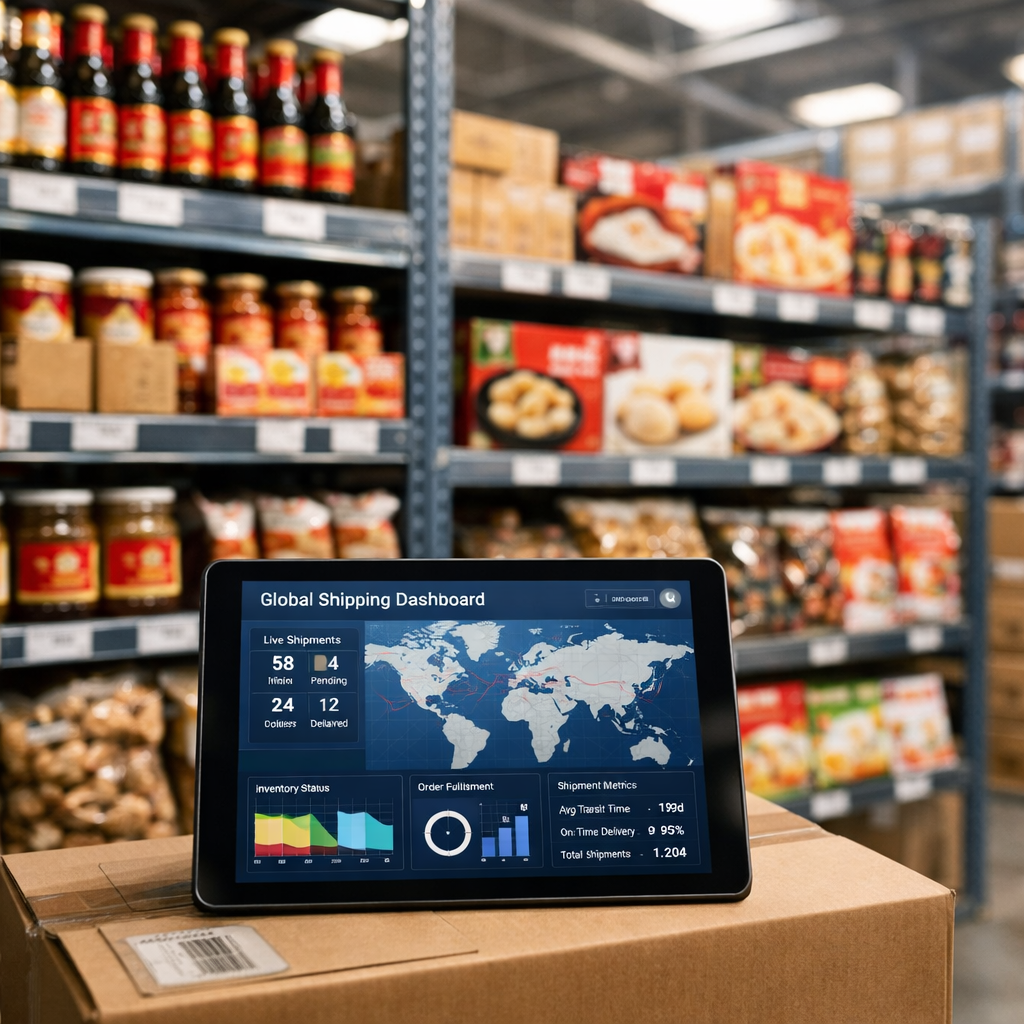
Cross-border e-commerce achieved a historic milestone in 2024, with Chinese exports through this channel surpassing 2 trillion yuan (approximately $278.59 billion USD). This 19.6% growth trajectory from the previous year signals more than market expansion—it represents a fundamental restructuring of how Chinese food products enter foreign markets. Unlike traditional export models requiring local entity registration and extensive infrastructure investment, cross-border channels allow Chinese food producers to maintain their original identity while selling directly to international buyers. This flexibility particularly benefits specialty food categories: artisanal sauces, regional dim sum varieties, premium hotpot ingredients, and ready-to-cook meals that carry distinct cultural narratives.
Consider the practical impact: a family-owned producer in Chengdu specializing in authentic Sichuan peppercorn oil can now reach restaurants in Melbourne or Berlin without intermediaries diluting their story or reformulating their product beyond recognition. This direct connection preserves what makes Chinese cuisine compelling—its regional diversity, traditional preparation methods, and the generations of knowledge embedded in each ingredient. At Jade Premium, our role has evolved from simple procurement agent to cultural translator, helping international buyers understand not just what they’re purchasing, but why these products matter within Chinese culinary heritage.
Navigating the Regulatory Landscape
Quality assurance and regulatory compliance have emerged as non-negotiable foundations for sustained export success. The regulatory environment governing Chinese food exports grows more sophisticated annually, reflecting both domestic standards improvements and alignment with international expectations. Rather than viewing compliance as bureaucratic burden, forward-thinking exporters recognize it as competitive advantage—proof that their products meet the rigorous safety and quality standards demanded by discerning global markets.
China’s food safety regulatory framework underwent significant updates throughout 2024 and into 2025, with particular emphasis on traceability, labeling accuracy, and production site verification. New labeling regulations scheduled to take effect in the coming years will require unprecedented transparency regarding ingredient sourcing, processing methods, and nutritional information. For exporters accustomed to domestic market norms, these requirements represent substantial adjustment. Yet they also signal maturation—Chinese food products increasingly compete on equal footing with established international brands because they meet equivalent standards.
The introduction of licensing systems for specialized food transport, including bulk liquid foods, demonstrates how compliance extends beyond the product itself to encompass entire supply chains. Operators must now verify not only that their food products meet safety standards, but that every step from production facility to port maintains those standards. This comprehensive approach builds confidence among international buyers who historically viewed Chinese food exports with skepticism.
Initiatives like Fi Global’s New to Market Zone provide crucial support for exporters navigating these complexities. These programs recognize that regulatory compliance isn’t intuitive—it requires expertise, investment, and often partnership with organizations that understand both Chinese production capabilities and international market requirements. At Jade Premium, our comprehensive trade services include supplier qualification verification and product compliance transformation precisely because we’ve seen how easily promising products fail in foreign markets due to preventable regulatory oversights.
The evolution toward stricter compliance benefits everyone in the long term. International buyers gain assurance that Chinese food products arrive safe, accurately labeled, and meeting all legal requirements. Chinese producers willing to invest in meeting these standards differentiate themselves from competitors cutting corners. And consumers worldwide access authentic Chinese ingredients without compromising on safety or quality—the fundamental promise that drives Jade Premium’s work connecting Eastern and Western food cultures.
Understanding Market Dynamics and Innovations
Market trends shaping Chinese food exports in 2026 reveal both opportunities and strategic considerations. Demand dynamics show clear preference shifts toward premium, value-added products over bulk commodities. Health foods, ready-to-eat meals, authentic dim sum, and specialty ingredients command growing market share as international consumers seek convenient ways to experience Chinese cuisine at home. This trend accelerated during recent years as restaurant dining patterns changed and home cooking gained renewed appeal.
However, export growth isn’t uniform across all markets. according to a report by the China Chamber of Commerce for Import and Export of Medicines and Health Products (CCCMHPIE), Chinese health food exports to the United States dropped 12.2% in the first half of 2025, illustrating how trade tensions and tariff policies create headwinds even for high-quality products. This decline underscores the critical importance of diversified export strategies. Exporters overly dependent on single markets face disproportionate vulnerability to political shifts, regulatory changes, or economic downturns in that region. Geographic diversification—actively developing presence across Europe, Middle East, ASEAN, and other emerging markets—provides resilience against localized disruptions.
Supply chain innovation directly impacts competitiveness in ways that extend beyond cost reduction. Technological advancements in food preservation, cold chain logistics, and inventory management are enhancing product shelf life while reducing waste. For Chinese exporters, this means perishable items like fresh dim sum or prepared meals can reach distant markets while maintaining quality that meets consumer expectations. Jade Premium’s logistics optimization services address precisely these challenges, ensuring that authentic Chinese food products arrive in optimal condition regardless of destination.
Strategic market timing has become increasingly sophisticated. China’s overall export data showed a 1.1% contraction in October 2025—the sharpest decline since February—as front-loaded shipments designed to avoid U.S. tariffs gave way to normalized trade patterns. This volatility highlights how macro-level trade policy directly affects operational decisions. Exporters must balance immediate opportunities (like pre-tariff shipping surges) against long-term relationship building with international partners who value consistency and reliability over opportunistic selling.
The food delivery market in China, reaching RMB 1.64 trillion ($229 billion USD) in 2024 and projected to hit RMB 1.96 trillion by 2027, demonstrates domestic infrastructure sophistication that increasingly supports export capabilities. Technologies and operational practices refined serving China’s massive domestic market—real-time tracking, quality maintenance during transport, efficient last-mile delivery—now transfer to international supply chains. This cross-pollination of expertise gives Chinese food exporters unique advantages in serving markets that similarly value speed, freshness, and convenience.
Regional product variations also create specialized export opportunities. While vegetable products and processed foods dominate overall export volumes, niche categories like premium seafood, artisanal sauces, and regional specialties often command higher margins and stronger brand loyalty. Jade Premium’s extensive local network across major Chinese cities positions us to identify these regional gems—products with authentic cultural stories and exceptional quality that resonate with international buyers seeking differentiation beyond price competition.
Leveraging Data and Market Intelligence
Data-driven market intelligence has transformed from competitive advantage to operational necessity. In an environment characterized by fluctuating trade policies, evolving consumer preferences, and intensifying competition, exporters require real-time insights to adapt strategies effectively. This goes beyond basic sales tracking—sophisticated market intelligence encompasses consumer trend analysis, regulatory change monitoring, competitive positioning assessment, and supply chain vulnerability identification.
Global trade pressures create both challenges and opportunities that data helps navigate. While headlines focus on tariffs and trade tensions, underlying consumer demand for authentic Chinese food products remains robust. The key lies in understanding which products resonate in which markets, and why. For instance, health-conscious consumers in European markets might prioritize organic certifications and clean ingredient labels, while buyers in Southeast Asian markets may value flavor authenticity and familiar preparation methods. Data intelligence reveals these nuances, enabling targeted product development and marketing strategies.
Jade Premium’s approach integrates market intelligence throughout our comprehensive trade services. When conducting supplier qualification verification, we assess not only whether a producer meets technical standards, but whether their products align with current market demand patterns in target regions. Our customized procurement planning draws on cross-market data, helping international buyers identify Chinese products positioned for success in their specific markets. This intelligence-driven approach reduces risk and increases success rates compared to intuition-based decision-making.
The company’s core strengths in maintaining high-quality standards connect directly to data utilization. End-to-end quality control isn’t merely about inspection—it requires understanding what quality means in different contexts. A premium dim sum product meeting Chinese market expectations might require adjustments for international markets regarding portion sizing, ingredient transparency, or packaging durability during extended shipping. Data on international buyer feedback, product performance metrics, and market-specific preferences informs these adaptations without compromising authenticity.
Cross-cultural business negotiation support, another Jade Premium service, benefits enormously from market intelligence. When facilitating partnerships between Chinese producers and international buyers, we leverage data on successful collaboration models, common friction points, and market-specific business practices. This knowledge helps both parties establish realistic expectations and structure arrangements that account for cultural differences while pursuing shared commercial objectives.
Market intelligence also addresses the reality that Chinese food exports compete in crowded global markets. China’s role in global food exports remains significant, with food exports accounting for a notable proportion of its total merchandise exports according to World Bank trade indicators. Maintaining and expanding this position requires understanding not just Chinese production capabilities, but international competitive landscapes. What are Japanese, Korean, Thai, and Vietnamese food exporters doing? How do established Western food brands position themselves? Where are white space opportunities for authentic Chinese products? These questions demand ongoing intelligence gathering and analysis.
Looking Forward: Opportunities and Strategic Imperatives
The outlook for Chinese food exports in 2026 and beyond reflects cautious optimism grounded in structural shifts favoring quality, authenticity, and sustainability. Small and medium-sized enterprises represent significant growth potential as barriers to market entry continue lowering. Cross-border e-commerce platforms, third-party logistics providers, and trade facilitators like Jade Premium collectively enable smaller producers to compete internationally without massive capital investment or in-house export expertise.
Consumer preferences increasingly favor premium, safe, and sustainable products—criteria that align well with China’s improving food safety infrastructure and growing number of certified producers. International buyers once skeptical of Chinese food quality now recognize that top-tier Chinese producers match or exceed international benchmarks. This perception shift creates opportunities for premium positioning rather than cost-based competition. Authentic Chinese dim sum, specialty sauces, premium hotpot ingredients, and artisanal products can command price points reflecting their cultural significance and quality standards.
Diversified channel strategies will prove essential. While direct-to-consumer e-commerce grows, traditional channels through importers, distributors, retail chains, and food service operators remain vital. Successful exporters develop multi-channel approaches appropriate to their products and target markets. Jade Premium’s comprehensive trade services support this diversification, helping clients evaluate which channels best serve their specific offerings while managing the complexity of operating across multiple distribution models simultaneously.
Sustainability considerations are transitioning from optional differentiators to expected standards. International buyers increasingly request documentation regarding environmental practices, labor conditions, and supply chain transparency. Chinese exporters addressing these concerns proactively position themselves favorably for long-term partnerships. This aligns with Jade Premium’s philosophy promoting authentic Chinese cuisine while building trust and understanding between Eastern and Western food markets—trust founded on shared values regarding safety, sustainability, and ethical business practices.
The projected broad-based increase in global food commodity production in 2026, including wheat, coarse grains, and other staples, suggests stable input costs for processed Chinese food products. This stability enables strategic planning around product development, pricing, and market expansion without excessive volatility concerns. However, exporters must remain vigilant regarding geopolitical factors, trade policy changes, and economic conditions in key markets that could disrupt these projections.
Regional dynamics within China itself influence export capabilities. Offices in Hong Kong, Shenzhen, Guangzhou, Shanghai, Chengdu, Wuhan, and Changsha provide Jade Premium with localized knowledge of distinct production ecosystems. Each region specializes in different food categories with unique cultural heritage—Sichuan’s spicy seasonings, Guangdong’s dim sum traditions, Shanghai’s sophisticated prepared foods. This regional diversity within Chinese cuisine represents enormous export potential when properly curated and matched with appropriate international markets.
Brand internationalization support becomes increasingly important as Chinese food companies transition from anonymous suppliers to recognized brands. Building brand equity internationally requires more than quality products—it demands storytelling that resonates across cultures, packaging that appeals to foreign sensibilities while maintaining authenticity, and marketing strategies appropriate to different markets. Jade Premium’s role extends beyond logistics to helping Chinese producers present their products in ways that international buyers understand and value.
The ultimate opportunity lies in deeper cultural integration between Chinese food traditions and global culinary landscapes. Chinese cuisine’s complexity, regional diversity, and millennia-old heritage offer endless possibilities for products that educate while delighting international consumers. Every exported ingredient carries stories of place, tradition, and craftsmanship. When these stories travel alongside the products—when international buyers and consumers understand not just what they’re purchasing, but its significance within Chinese culture—food exports transcend commodity status to become cultural ambassadors.
Jade Premium’s vision of deepening integration of global premium food resources while promoting mutually beneficial international trade partnerships reflects this broader potential. The 2026 landscape for Chinese food exports promises transformation driven by technology, evolving regulations, sophisticated consumers, and companies committed to authentic quality. Those navigating this landscape successfully will demonstrate not just business acumen, but cultural sensitivity and genuine commitment to connecting people through food—the essence of bringing authentic Chinese cuisine to global tables.