
Picture this: You’re a Chinese food exporter sitting in your office in Guangzhou, sipping jasmine tea, and staring at a spreadsheet of potential markets. The U.S. market glimmers like a golden dumpling on your plate—tantalizing, lucrative, and worth approximately 3.5 million Muslim consumers who collectively represent a rapidly growing segment of the $2.7 trillion American food industry. But there’s a catch. Between you and that delicious market opportunity stands something called halal food certification USA—a term that might sound as intimidating as attempting to explain the Sichuan peppercorn’s numbing sensation to someone who’s never left Kansas.
Here’s the good news: obtaining halal certification isn’t the bureaucratic nightmare you might imagine. Think of it more as learning a new recipe—initially confusing, requiring specific ingredients and techniques, but ultimately rewarding when you see the final dish. And just like how kung pao chicken found its way onto American dinner tables, your authentic Chinese products can reach Muslim consumers across the United States with the right certification in hand.
The cultural exchange between East and West has always happened most deliciously at the dining table. From fortune cookies (ironically, not originally Chinese) to General Tso’s chicken (a dish the actual General would probably never recognize), food has been the ultimate diplomat. In 2025, halal certification represents the next frontier of this culinary diplomacy, opening doors not just to Muslim. According to IMARC Group, the global halal food market is projected to reach approximately $5.9 trillion by 2033, reflecting strong long-term growth. That’s not a typo—trillion with a “T.”
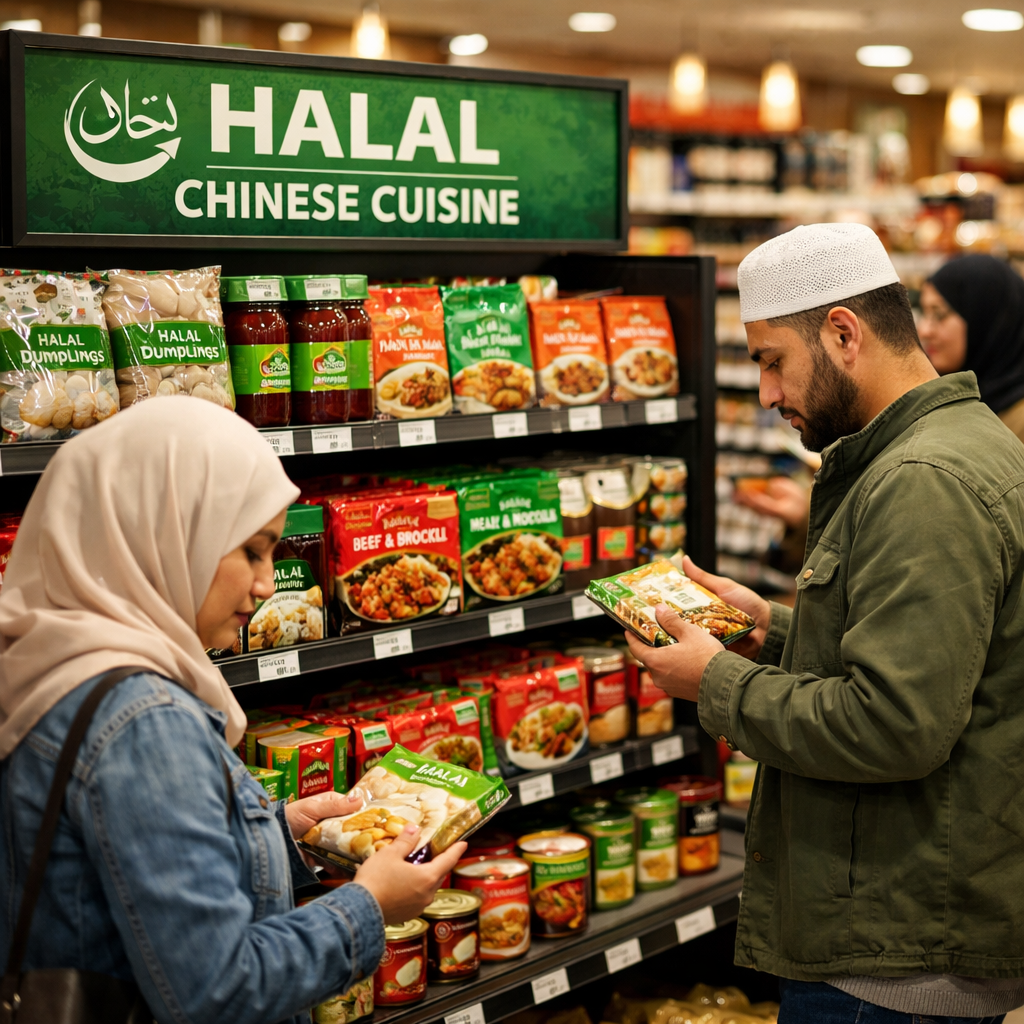
What Makes Food ‘Halal’ and Why Third-Party Verification Matters
Let’s demystify halal food certification USA requirements before your eyes glaze over. In Arabic, “halal” means “permissible,” which sounds straightforward until you realize that determining what’s permissible involves more than just avoiding pork and alcohol. It’s like the difference between calling yourself a chef because you can boil water versus actually understanding knife skills, flavor profiles, and the science of heat.
Halal certification covers everything from how animals are raised and slaughtered to what ingredients touch your production line. That innocent-looking enzyme in your sauce? It matters. The alcohol-based flavoring you thought evaporated during cooking? Still counts. Even the equipment shared between halal and non-halal products needs consideration. Think of halal compliance as maintaining separate cutting boards for meat and vegetables, but multiplied by every aspect of your production process.
Here’s where third-party certifiers enter the picture—they’re essentially the food safety inspectors of the Islamic dietary law world. Just as you wouldn’t self-certify your factory’s hygiene standards and expect international buyers to take your word for it, halal certification requires external validation. These certifiers are trained scholars who understand both Islamic jurisprudence and modern food science, a combination rarer than a perfectly executed Peking duck.
Without proper certification, you’re basically asking Muslim consumers to trust that your “halal” label means what you think it means. Spoiler alert: they won’t, and they shouldn’t. The halal market has seen its share of scandals involving mislabeled products, making legitimate certification more crucial than ever. It’s the difference between saying “trust me, I’m a doctor” while wearing a lab coat you bought on Amazon versus actually having a medical degree on your wall.
For Chinese exporters eyeing the American market, third-party verification solves a fundamental problem: credibility. When your product bears the stamp of a recognized U.S.-based halal certifier, you’re not just saying your food is halal—you’re proving it through a system that American Muslim consumers trust.
Navigating the U.S. Halal Certifier Landscape Without Losing Your Mind
Welcome to the American halal certification jungle, where over 40 organizations claim they can certify your products, but only a handful will actually open the doors you want opened. It’s like online dating—lots of options, but you need to find the right match or you’ll waste time and money.
The heavy hitters in the U.S. halal certification scene include the Islamic Food and Nutrition Council of America (IFANCA), the Islamic Society of North America (ISNA), the Halal Food Council USA, and the Islamic Services of America (ISA). IFANCA, in particular, has earned a reputation as the gold standard, recognized not just in America but internationally—think of them as the Harvard of halal certification. They’ve been around since 1982 and work directly with the USDA on halal food standards, which means they understand both Islamic requirements and American regulatory frameworks.
Choosing your certifier isn’t about picking the cheapest option or the one with the flashiest website. It’s about matching your business goals with the certifier’s reach and recognition. Planning to export only to American supermarkets? You might choose differently than if you’re aiming to break into Middle Eastern markets through U.S. distributors. Some certifiers are better recognized in certain regions or by specific retail chains.
Here’s a practical tip that could save you months of headaches: before committing to any certifier, ask your potential U.S. buyers which certifications they recognize and trust. Yes, this means having those conversations before you spend thousands on certification fees. Think of it as checking if your date actually likes spicy food before taking them to a hot pot restaurant.
Also, beware of “certification mills“—organizations that hand out halal certificates like candy without rigorous inspection. The halal certification USA landscape includes some certifiers whose stamps are as useful as a chocolate teapot. How do you spot them? If the certification process seems suspiciously easy, doesn’t require facility inspection, or costs significantly less than established certifiers, run the other way. Your reputation is worth more than the money you’d save.
At Jade Premium, we’ve seen countless exporters stumble at this stage, choosing certifiers based on price rather than recognition, only to discover their certification isn’t accepted by major U.S. retailers. It’s like showing up to a black-tie event wearing your finest sweatpants—technically, you’re dressed, but you’re not getting in.
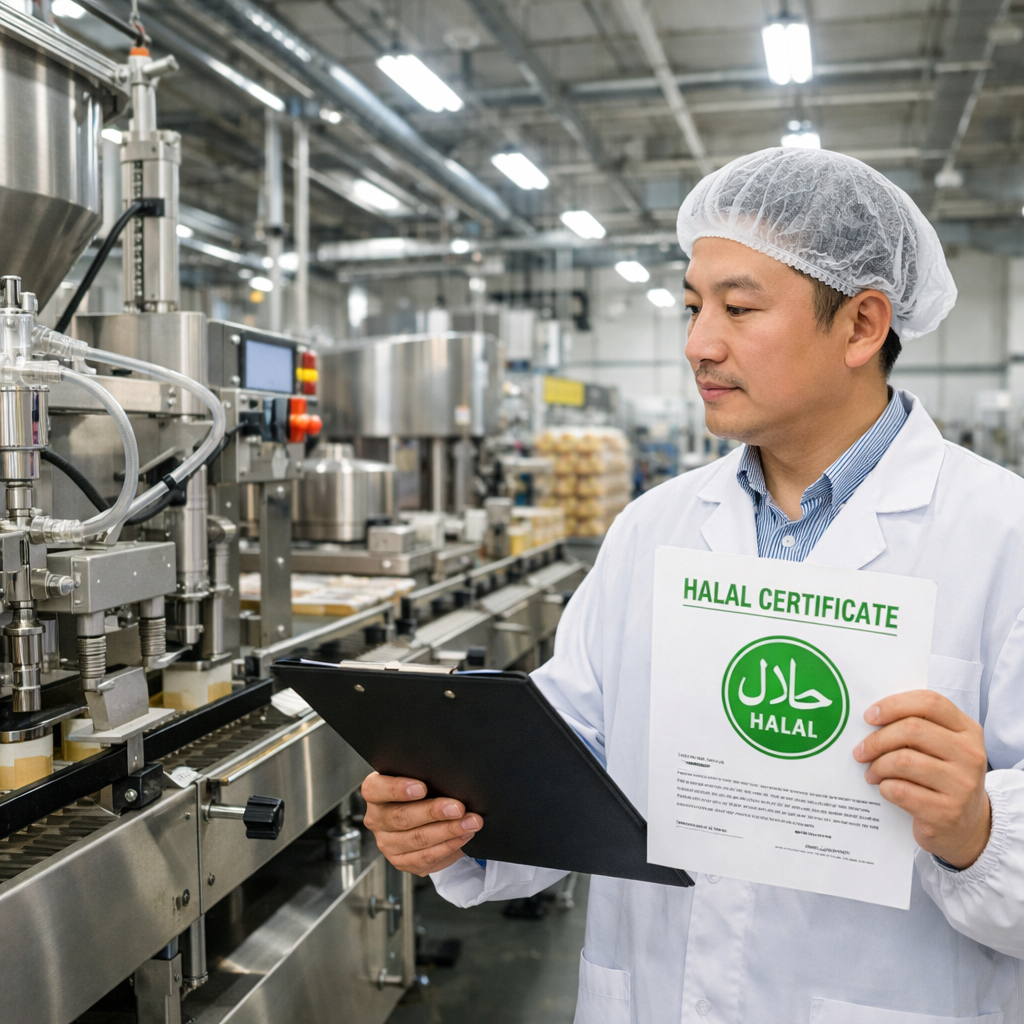
The Step-by-Step Journey to Halal Certification
Obtaining halal food certification USA approval is like preparing Peking duck—it takes time, requires attention to detail, and skipping steps will ruin the final product. But unlike that duck, which takes three days, halal certification typically takes between three to six months. Let’s break down the process so it feels less like climbing Mount Everest and more like taking a well-marked hiking trail.
Step One: Pre-Assessment and Application
Start by conducting an internal audit of your production facility. List every ingredient, every piece of equipment, every cleaning agent, and every process. Yes, every single one. This isn’t the time to wing it. Most certifiers provide detailed questionnaires that feel longer than a Russian novel, but they serve a purpose—they help identify potential issues before the official inspection.
When filling out your application, honesty is your best policy. Discovered discrepancies during inspection can delay certification or worse, damage your credibility with the certifier. If you use alcohol-based flavoring or non-halal gelatin, disclose it now. Often, certifiers can suggest halal alternatives you didn’t know existed.
Step Two: Documentation Review
Your certifier will review your ingredient lists, supplier certificates, production processes, and quality control procedures. This phase feels like homework review, except the teacher is checking whether your ingredients align with Islamic dietary laws. You’ll need to provide halal certificates for all animal-derived ingredients and clarify the status of questionable items like enzymes, emulsifiers, and flavorings.
Pro tip: Start gathering supplier documentation early. Tracking down a halal certificate from your glycerin supplier in Inner Mongolia takes time, especially if they’ve never been asked for one before. Learn more about raw material sourcing verification best practices to streamline this process.
Step Three: Facility Inspection
Here’s where the rubber meets the road. A qualified inspector from your chosen certifier visits your facility to verify everything you’ve claimed on paper. They’ll examine your production lines, storage areas, cleaning procedures, and staff training. Think of this as your facility’s final exam.
For Chinese exporters working with U.S. certifiers, some organizations conduct inspections through their international partners or local representatives. IFANCA, for instance, has a network spanning multiple countries, making the process more accessible than flying an inspector from Chicago to Chengdu every time.
During inspection, the certifier evaluates whether you have adequate separation procedures if you produce both halal and non-halal products. They’ll check your slaughter procedures if you handle meat, verify your cleaning protocols, and ensure your staff understands halal requirements. It’s thorough, but that’s precisely why the certification matters.
Step Four: Corrective Actions and Certification Issuance
If inspectors identify issues—and they usually do during first-time certifications—you’ll receive a corrective action report. Maybe your equipment cleaning procedure needs modification, or perhaps you need to source a different emulsifier. Address these issues promptly and provide evidence of corrections.
Once everything passes muster, you receive your halal certificate, typically valid for one year. Pop the champagne (the non-alcoholic kind, naturally). But remember, certification isn’t a one-and-done deal—annual renewals and periodic inspections maintain your status.
The Rewards and Reality Checks of Halal Certification
Let’s talk about why going through this certification marathon is worth every form, every inspection, and every moment you question your life choices. The American halal food market is projected to grow from $100.11 billion in 2024 to $226 billion by 2033, representing a compound annual growth rate of 9.47%. That’s not just impressive—it’s the kind of market expansion that makes CFOs weak in the knees.
For Chinese food exporters, halal certification opens doors previously locked tighter than a dim sum steamer. Major American retailers like Whole Foods, Walmart, and Costco actively seek halal-certified products to serve their Muslim customer base. Restaurant chains and food service operators increasingly require halal options. Your certified Chinese dumplings, noodles, sauces, and ready-to-eat meals suddenly become viable options for contracts worth millions.
Beyond direct sales, halal certification builds trust with consumers who view the certification as a quality marker. Muslim Americans often perceive halal-certified products as cleaner, healthier, and more ethically produced—even non-Muslim consumers increasingly choose halal products for these perceived benefits. It’s like organic certification; the target audience cares deeply, but the halo effect reaches beyond that core group.
Here’s the reality check nobody mentions in promotional materials: halal certification costs money. Application fees, inspection costs, annual renewal charges, and potential facility modifications add up quickly. Expect to invest anywhere from $2,000 to $10,000 or more, depending on your operation’s size and complexity. For small to medium exporters, this represents significant capital.
Additionally, maintaining certification requires ongoing vigilance. You can’t get certified and then go back to your old ways—that’s like getting a gym membership and never going. Surprise inspections happen. Recipe changes need approval. New suppliers require documentation. It’s a commitment, not unlike maintaining ISO certification or HACCP compliance.
Another pitfall: assuming one halal certificate conquers all markets. While U.S. certification helps domestically, international markets often require specific certifications. Indonesia might demand JAKIM-approved certification; UAE markets prefer ESMA-certified products. Plan your certification strategy based on your actual target markets, not a vague hope to “sell everywhere.”
Practical Pathways for Chinese Exporters
So you’re convinced halal food certification USA is worth pursuing. How do you actually make it happen without drowning in regulatory complexity or accidentally offending everyone involved?
First, consider partnering with companies that specialize in navigating international food trade. At Jade Premium, experts in Chinese food exports, we’ve helped Chinese exporters bridge the gap between domestic production and international requirements, including halal certification. Our offices across major Chinese cities provide localized support for understanding both production capabilities and international standards—think of us as bilingual, bi-cultural guides who speak fluent “food regulation.”
Start by evaluating which of your existing products have the highest halal-certification potential. Items already free from pork, alcohol, and questionable ingredients require less reformulation. Your vegetable-based sauces, plant-based snacks, or seafood products might need minimal adjustment. This strategic approach prevents overwhelming your operations while you learn the certification ropes.
Next, invest in staff training. Halal certification isn’t just about ingredients—it’s about culture and understanding. Train your quality control team, production managers, and even cleaning staff on halal requirements. When your entire team understands why certain procedures matter, compliance becomes easier than enforcing arbitrary rules nobody comprehends.
Regarding labeling, U.S. regulations require clear, accurate product information. Your halal certification logo must come from your recognized certifier—no generic “halal” claims without backing. Understanding Chinese export regulations and compliance requirements is crucial for avoiding costly mistakes. American consumers and regulators take mislabeling seriously, with penalties ranging from product recalls to market bans. Work with label designers familiar with FDA requirements and halal certification standards to avoid costly mistakes.
Don’t forget about logistics and storage. Halal integrity extends beyond your factory to the entire supply chain. Ensure your logistics partners understand cross-contamination prevention. If your certified products share container space with non-halal items, you risk compromising your certification. It’s like carefully preparing a vegan meal and then serving it on a plate that just held a steak—technically clean, but missing the point.
Finally, market your certification effectively. American Muslim consumers actively seek halal products but can’t choose yours if they don’t know about it. Highlight your certification in marketing materials, product descriptions, and trade show presentations. Connect with Muslim community organizations, halal grocery stores, and ethnic food distributors who serve this market. Your beautiful certification means nothing if it sits in a filing cabinet rather than reaching consumers who care.
Your Halal Certification Glossary: Jargon-Free Edition
Let’s face it—industry terminology sounds like a secret language designed to exclude outsiders. Here’s your decoder ring for navigating halal certification conversations without nodding cluelessly:
Halal: The Arabic word for “permissible” or “lawful” under Islamic law. In food terms, it means products meeting Islamic dietary requirements—think kosher certification’s Muslim cousin, though the specific rules differ.
Haram: The opposite of halal, meaning “forbidden.” Pork, alcohol, and improperly slaughtered animals fall into this category. It’s basically the “do not pass go, do not collect $200” of Islamic food law.
Mashbooh: The gray area—items whose halal status is questionable or uncertain. Many food additives land here until their source and processing are verified. Treat mashbooh ingredients like suspicious-looking mushrooms on a hike: investigate before consuming.
Halal Certificate: Your official documentation proving your product or facility meets halal standards, issued by a recognized certifying body. It’s your golden ticket to halal markets, except it requires renewal and actual compliance rather than just luck.
Certifying Body: The organization authorized to inspect facilities and issue halal certificates. Not all certifiers are created equal—recognition matters more than fancy logos.
Slaughter Requirements (Dhabihah): Specific Islamic guidelines for humane animal slaughter, performed by a trained Muslim while invoking God’s name. For meat exporters, this is non-negotiable and requires certified slaughter personnel.
Cross-Contamination: When halal products contact non-halal substances or surfaces, potentially compromising their status. Preventing this requires dedicated equipment or rigorous cleaning protocols—basically, treating your production line like someone with severe allergies treats their kitchen.
IFANCA (Islamic Food and Nutrition Council of America): One of North America’s most recognized halal certifiers, established in 1982. Their certification opens more doors than a master key, thanks to broad market recognition.
ISNA (Islamic Society of North America): Another major U.S. certifier with strong community connections and recognized certification standards. Think of them as IFANCA’s equally respected sibling.
Halal Integrity: Maintaining halal status throughout the entire supply chain from ingredients to the consumer’s table. It’s not just about what you do—it’s about everything everyone does with your product.
The journey to halal food certification USA might seem daunting, but breaking into the American halal market in 2025 offers Chinese exporters unprecedented opportunities. With Muslim American spending power growing annually and mainstream retailers increasingly stocking halal products, certification represents not just compliance but competitive advantage.
Yes, the process requires investment, patience, and attention to detail. But consider the alternative: watching competitors capture a multi-billion dollar market while your perfectly good products sit on the sidelines because of a missing certificate. That’s like having the recipe for the world’s best baozi but refusing to open a restaurant because obtaining food permits seems complicated.
The American halal market isn’t a distant dream—it’s a present reality growing faster than bamboo in spring rain. Chinese food exporters who embrace halal certification now position themselves at the forefront of this market expansion, building bridges between Eastern culinary traditions and Western Muslim consumers hungry for authentic, certified options.
So take that first step. Contact a recognized certifier, audit your facility, and start the conversation with your potential U.S. partners. The path from Guangzhou to American grocery shelves might twist through certification requirements and regulatory compliance, but the destination—a thriving export business serving millions of new customers—makes the journey worthwhile.
After all, Chinese cuisine has spent centuries adapting to new markets while maintaining its authentic soul. Halal certification is simply the next chapter in that story, and 2025 is the year to write it.