
If you’re an international buyer sourcing Chinese food products for your foodservice operation, you know the sleepless nights all too well. One shipment arrives with inconsistent quality. Another gets held up at customs because of certification issues. A third batch shows up with damaged packaging after sitting in an uncontrolled temperature environment for days. These aren’t isolated incidents—they’re symptoms of a fragmented, opaque supply chain that threatens your reputation, your budget, and your ability to deliver authentic Chinese cuisine to your customers.
The foodservice supply chain from China presents unique challenges that go far beyond simply placing an order and waiting for delivery. You’re navigating cultural differences, complex regulatory landscapes, vast geographical distances, and a production ecosystem where quality standards can vary dramatically from one province to another. Unlike domestic sourcing, where you might visit a supplier’s facility within a day’s drive, Chinese procurement often means relying on intermediaries, translated documents, and trust built across time zones and language barriers.
Consider the stakes: Your restaurant guests expect consistent flavor profiles. Your retail customers demand products that meet strict food safety standards. Your brand reputation hinges on every shipment arriving exactly as promised. Yet the traditional supply chain model—working through multiple brokers, unclear sourcing origins, and reactive problem-solving—leaves you vulnerable at every stage. A single contamination scare, a labeling error, or a cold chain failure can unravel months of relationship-building and market development.
The complexity intensifies when you factor in China’s rapidly evolving food industry. Domestic players are innovating at breakneck speed, tailoring products to local preferences while simultaneously improving export capabilities. Meanwhile, competition among international buyers has never been fiercer. Those who can secure reliable, high-quality sources of authentic Chinese ingredients gain significant competitive advantages in markets hungry for genuine culinary experiences. The question isn’t whether supply chain excellence matters—it’s whether you can afford to operate without it.

Finding a Partner Who Speaks Both Languages
The solution to sleepless nights doesn’t start with logistics software or procurement platforms. It starts with finding a partner who truly understands both sides of the transaction—someone who comprehends what international markets demand while also navigating the intricacies of Chinese food production with cultural fluency and operational expertise.
This is where Jade Premium’s philosophy of bridging cultural gaps becomes not just a marketing message, but a practical necessity. When we say “Bringing Authentic Chinese Cuisine to Global Tables,” we’re acknowledging that authenticity requires more than just shipping products overseas. It requires understanding why a particular dim sum filling needs specific fat content to achieve the right texture, why certain hotpot ingredients must come from designated geographical regions to deliver genuine flavor, and why international food safety certifications need to align with traditional production methods without compromising either quality or heritage.
Too many international buyers approach Chinese sourcing transactionally, treating suppliers as interchangeable vendors rather than specialized craftspeople. This mindset creates cascading problems. Without understanding the cultural significance behind production methods, buyers might request modifications that fundamentally alter a product’s authenticity. Without recognizing regional quality variations, they might choose suppliers based solely on price, only to discover inconsistency months into the relationship. Without appreciating the complexity of Chinese food regulations and export procedures, they might miss critical compliance steps until customs agents reject an entire shipment.
A trusted partner changes this dynamic entirely. Instead of working through translation apps and hoping context survives multiple handoffs, you gain direct access to expertise that lives in both worlds. This partner can identify when a “premium” claim on a product label reflects genuine quality or merely marketing spin. They can distinguish between factories with authentic export credentials and those cutting corners on certifications. They can recognize when a price seems suspiciously low because critical quality controls have been omitted.
More importantly, a culturally fluent partner helps you ask better questions. Rather than simply requesting “frozen dumplings that meet EU standards,” you can explore questions like: What regional variations in dumpling styles would resonate with your target market? Which wrapper thickness balances authentic texture with transportation durability? How do seasonal variations in filling ingredients affect consistency, and how can supply planning accommodate these natural cycles? These nuanced conversations transform procurement from a commodity transaction into strategic sourcing that delivers genuine competitive advantages.
The partner should also provide transparency that builds confidence rather than requiring blind trust. When Jade Premium conducts supplier qualification verification, we’re not just checking boxes on a compliance form. We’re visiting facilities, observing production processes, interviewing quality control teams, and assessing whether a supplier’s capabilities genuinely match their claims. This ground-level intelligence protects you from the countless ways Chinese food export relationships can go wrong—invalid or unverifiable certifications, inconsistent raw material sourcing, inadequate cold chain facilities, or simply cultural misunderstandings that create cascading complications.
Practical Solutions for Supply Chain Excellence
Understanding the importance of a trusted partner is just the beginning. Transforming your foodservice supply chain from a source of anxiety into a competitive advantage requires implementing specific, actionable practices that address the unique challenges of Chinese food procurement.
Technology for Visibility
Modern supply chain management demands real-time visibility, yet many international buyers still rely on email updates and trust that their Chinese suppliers are following protocols. This information gap creates vulnerability. Adopting technology platforms that provide shipment tracking, temperature monitoring, and documentation management doesn’t just offer convenience—it provides insurance against the costly mistakes that happen when you discover problems only after products reach your warehouse.
For perishable Chinese food products, temperature monitoring throughout the cold chain is non-negotiable. A batch of premium lamb destined for fine dining establishments can lose market value entirely if temperatures fluctuate during the three-week ocean journey from Guangzhou to Rotterdam. Smart sensors that alert you immediately to temperature deviations enable quick interventions—rerouting shipments, adjusting storage plans, or even rejecting cargo before you’ve invested in customs clearance and distribution.
Documentation management technology similarly protects against customs delays that plague international food shipments. Chinese export regulations require specific certificates that vary by product category and destination country. Missing a single form—or having documents with slight inconsistencies in product descriptions—can strand your shipment for days or weeks. Digital systems that verify documentation completeness before goods leave China prevent these painful surprises.
Logistics Optimization
Ocean freight from Chinese ports to international destinations involves countless variables—shipping routes, carrier reliability, port congestion, customs processing times, and last-mile delivery coordination. Each variable introduces delay risks that multiply when you’re managing multiple product categories with different storage requirements.
Optimization starts with understanding that not all routes are created equal. A supplier in Chengdu can ship through multiple Chinese ports, each offering different transit times, frequency of service, and connection reliability. Similarly, consolidation strategies dramatically affect costs and timing. Shipping smaller quantities more frequently keeps inventory fresh but increases per-unit costs. Larger, less frequent shipments reduce freight expenses but require more warehouse space and risk obsolescence if demand patterns shift.
The optimal approach depends on your specific business model. A large retail chain might benefit from dedicated container shipments scheduled around promotional calendars. A restaurant group might prefer mixed containers consolidating multiple product types to maintain menu variety without tying up capital in excess inventory. A food service distributor might prioritize air freight for premium items with high margins and ocean freight for staple products with predictable demand.
Cold Chain Integrity
Nothing undermines consumer confidence faster than inconsistent product quality caused by cold chain failures. Chinese food exports—from frozen dim sum to chilled seafood to temperature-sensitive sauces—require unbroken refrigeration from factory to final destination. Yet cold chain integrity is exactly where many supply chains break down.
The challenge begins at origin. Not all Chinese food manufacturers maintain the same cold storage standards. A factory might produce excellent products but lack proper blast freezing capabilities, meaning items don’t freeze quickly enough to preserve optimal texture. Or they might store frozen goods in facilities that experience temperature fluctuations during power interruptions or equipment failures.
Transportation compounds these risks. Container refrigeration units can malfunction. Port delays can expose products to temperature abuse. Customs inspections sometimes occur in non-climate-controlled areas. Each hand-off point—from factory to truck to port to ship to destination port to distribution center—introduces potential failure points.
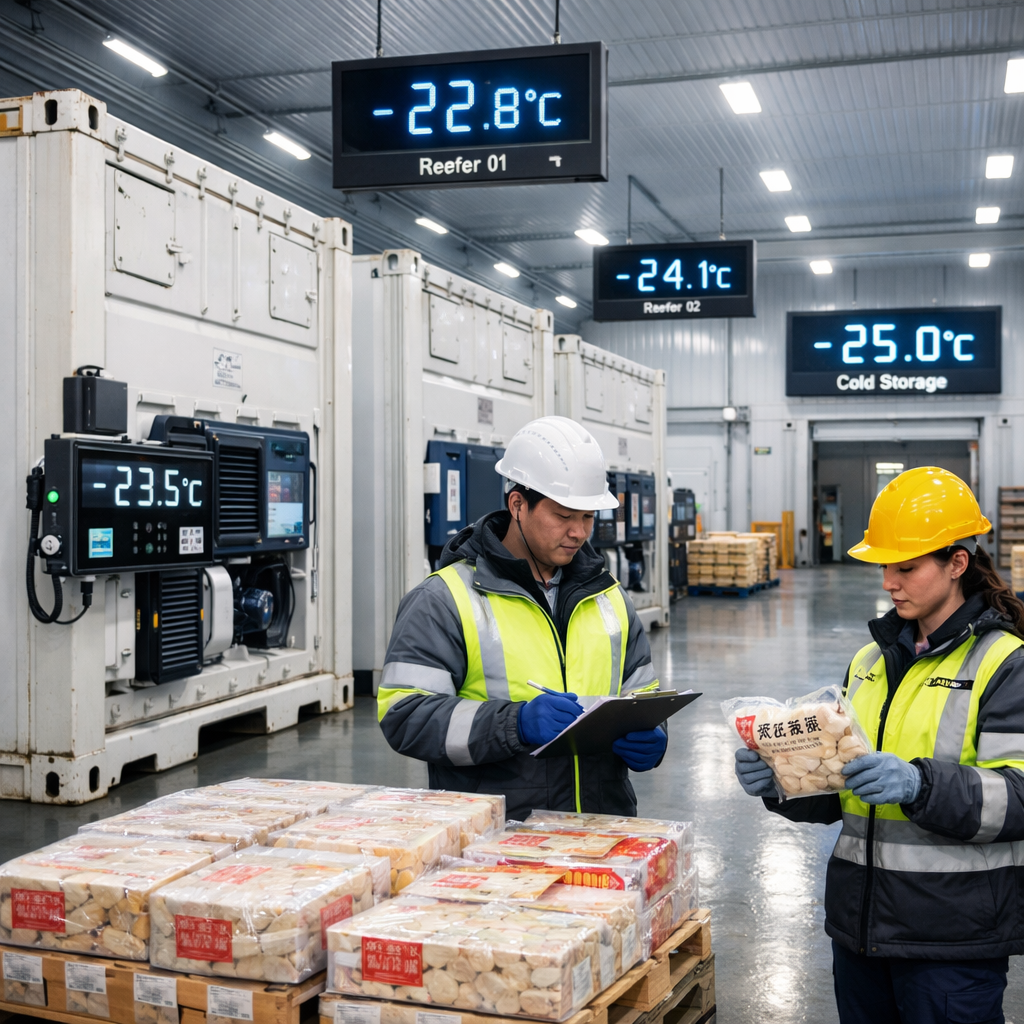
Robust cold chain management requires verification at every stage. Your supplier should provide temperature records from production through port loading. Shipping lines should offer refrigerated container monitoring with documented temperature logs throughout transit. Your logistics partner should coordinate immediate transfers from port to your controlled storage facilities. Regular audits of these processes—not just reviewing documentation but spot-checking actual conditions—ensure compliance rather than hoping for the best.
Supplier Relationship Management
In Chinese business culture, relationships matter profoundly. A supplier who views you as a valued long-term partner will prioritize your orders during capacity constraints, alert you to potential quality issues before they affect your shipments, and invest in improvements that benefit your specific needs. A supplier who sees you as a transactional customer will do the minimum required by your purchase orders and little more.
Building these relationships requires more than occasional factory visits. It demands ongoing communication that goes beyond order placement and problem complaints. Share your business plans so suppliers understand your growth trajectory. Provide feedback—both positive and constructive—so they know what matters most to you. Recognize cultural norms around business relationships, which in China often involve patience, face-saving communication styles, and appreciation for incremental progress rather than demanding immediate perfection.
Continuous auditing reinforces these relationships while maintaining accountability. Rather than viewing audits as adversarial inspections, frame them as collaborative quality improvement processes. When you discover issues, work with suppliers to understand root causes and implement preventive measures. When suppliers demonstrate consistent excellence, acknowledge their performance and consider expanding your relationship.
This approach also creates natural redundancy in your supply chain. Cultivating relationships with multiple suppliers for critical product categories protects against disruptions. If one factory experiences equipment failures or regulatory problems, you have alternatives ready rather than scrambling to find new sources during a crisis.
Sustainability and Ethics as Supply Chain Imperatives
Modern foodservice buyers face increasing pressure from consumers, regulators, and corporate stakeholders to demonstrate responsible sourcing practices. Sustainability and ethics aren’t optional add-ons to supply chain management—they’re fundamental requirements for long-term success, particularly when sourcing from China where environmental regulations and labor practices vary widely.
Environmental Responsibility
Chinese food production has made tremendous strides in environmental practices, but significant variations remain. Some producers have invested heavily in waste reduction, water conservation, and renewable energy. Others continue operating with minimal environmental controls, creating both ecological damage and business risks for their international buyers.
As a foodservice buyer, your sourcing decisions directly influence these practices. Prioritizing suppliers who demonstrate genuine environmental commitment sends clear market signals. Look for operations that treat wastewater before discharge, minimize packaging waste, source ingredients from sustainable agriculture, and optimize energy usage. These practices not only reduce environmental impact but often correlate with better overall operational discipline and quality control.
Sustainability extends to logistics as well. The carbon footprint of shipping Chinese food products internationally is substantial. While you can’t eliminate transportation emissions, you can optimize shipping routes, consolidate loads to improve efficiency, and work with carriers investing in cleaner vessels. Some buyers offset carbon emissions through certified programs, demonstrating environmental commitment to their own customers.
Food waste reduction represents another critical sustainability dimension. Approximately one-third of all food produced globally goes to waste, representing both environmental damage and economic loss. In foodservice supply chains, waste occurs through spoilage, overstocking, packaging damage, and demand forecasting errors. Better inventory management, improved cold chain reliability, and accurate demand planning reduce waste while improving profitability.
Ethical Sourcing Practices
Beyond environmental concerns, ethical sourcing addresses labor practices, animal welfare, and community impact. International consumers increasingly demand transparency about how their food is produced, including working conditions in processing facilities and treatment of animals in meat production.
Chinese food producers operate under varying labor standards. Leading facilities provide safe working conditions, fair wages, and employee development opportunities. Others fall short of international expectations. Your supply chain choices either support improvement or perpetuate poor practices.
Conducting ethical audits shouldn’t rely solely on supplier self-reporting. Third-party certifications provide valuable verification, but nothing replaces direct observation of actual working conditions. During facility visits, observe whether workers wear appropriate safety equipment, whether the facility is properly ventilated and maintained, and whether the atmosphere suggests respectful management practices or exploitation.
Animal welfare standards in Chinese meat and seafood production similarly vary. While China has been improving regulations, enforcement remains inconsistent. International buyers committed to animal welfare should verify that suppliers follow humane handling practices, provide appropriate living conditions, and minimize stress during processing.
Long-Term Value Creation
Some buyers view sustainability and ethics as cost burdens that reduce competitiveness. This short-term thinking misses how responsible practices create long-term value. Suppliers with strong environmental and labor practices demonstrate operational discipline that typically extends to quality control and reliability. They’re less likely to face regulatory shutdowns or reputation crises that disrupt your supply chain.
Moreover, consumers increasingly reward ethical sourcing. Restaurants can command premium pricing for dishes made with responsibly sourced ingredients. Retailers experience stronger customer loyalty when they demonstrate supply chain transparency. Foodservice operators reduce risk of reputation damage from sourcing scandals that seem to erupt regularly in global food systems.
Jade Premium’s commitment to premium quality naturally aligns with sustainability and ethics. We recognize that authentic Chinese cuisine deserves to reach global tables through supply chains that honor both culinary traditions and modern responsibility standards. This means carefully vetting suppliers not just for product quality but for their complete operational practices.
Actionable Steps for Supply Chain Transformation
Understanding principles matters less than implementing practices. Here’s your roadmap for transforming foodservice supply chain management from reactive problem-solving into proactive competitive advantage:
Step 1: Conduct a Current State Assessment
Before improving your supply chain, you need honest evaluation of current performance. Document every step in your procurement process—from identifying product needs through final delivery to customers. Identify specific pain points: Where do quality inconsistencies occur? Which suppliers cause the most problems? What percentage of shipments experience delays? How often do you face compliance issues?
Quantify the costs of these problems. Calculate expenses from rejected shipments, rushed air freight to cover for delayed ocean containers, wasted staff time managing crises, and lost sales from stockouts. These numbers justify investment in improvement and provide baseline metrics for measuring progress.
Step 2: Define Clear Quality Standards
Vague expectations guarantee disappointment. Develop detailed specifications for every product you source, including sensory characteristics (appearance, texture, flavor), technical parameters (moisture content, fat percentage, protein levels), packaging requirements, labeling standards, and certification needs. Share these specifications with suppliers in both English and Chinese to minimize misunderstanding.
Create acceptance criteria that your team can apply consistently. When should you accept a shipment despite minor deviations? When must you reject products? Clear standards enable objective decision-making rather than subjective judgment calls that vary by individual or circumstance.
Step 3: Partner with Cultural Experts
Unless you have deep personal experience in both Chinese food production and international markets, you need partners who bridge this gap. Evaluate potential partners based on their demonstrated track record, network depth in China, understanding of your target markets, and commitment to transparency. A partner who promises easy solutions and low prices probably can’t deliver both quality and reliability.
Jade Premium’s comprehensive services—from supplier verification through logistics optimization to quality control—address exactly this need. We provide the local expertise and cultural fluency that international buyers lack while maintaining alignment with your business objectives and quality standards.
Step 4: Implement Continuous Improvement
Supply chain excellence isn’t a destination—it’s an ongoing process. Establish regular review cycles where you analyze performance metrics, identify emerging problems, and implement preventive measures. Meet with your key suppliers quarterly to discuss performance, share feedback, and plan improvements. Update your specifications as you learn more about products and market demands.
Create feedback loops that connect your customers’ experiences back to supplier performance. If restaurant patrons complain about product consistency, trace the issue to its source and address root causes. If retail customers return products due to quality problems, document exactly what went wrong and verify corrections with suppliers.
Step 5: Build Resilience
Supply chain disruptions will occur—geopolitical tensions, natural disasters, regulatory changes, economic shifts. Resilient supply chains anticipate disruptions and maintain alternatives. Diversify your supplier base across different Chinese regions. Maintain safety stock for critical items. Develop contingency plans for your most important product categories.
Resilience also means flexibility. Consumer preferences evolve, regulations change, and market conditions shift. Your supply chain should adapt rather than lock you into rigid structures that become liabilities when circumstances change.
The Bottom Line
Your foodservice supply chain doesn’t have to keep you awake at night. The anxiety, the quality inconsistencies, the logistics headaches, the compliance complications—these problems have solutions rooted in choosing the right partners, implementing proven practices, and committing to continuous improvement.
Chinese food products offer tremendous opportunities for international foodservice operations seeking authentic ingredients that differentiate their offerings. The challenges of sourcing these products across vast distances and cultural differences are real but manageable with proper expertise and systematic approaches.
Success requires moving beyond transactional relationships toward strategic partnerships with suppliers and service providers who share your commitment to quality, sustainability, and ethical practices. It demands investment in visibility, optimization, and resilience rather than hoping that low prices and minimal oversight will somehow deliver consistent results.
Most importantly, it needs recognition that supply chain excellence creates competitive advantages worth far more than the cost of achieving it. When you can reliably deliver authentic Chinese cuisine that meets international standards, maintains consistent quality, and reflects responsible sourcing practices, you’re not just solving operational problems—you’re building the foundation for long-term market leadership.
The question isn’t whether to transform your foodservice supply chain. It’s whether to start today or continue losing sleep over avoidable problems that erode your competitiveness, frustrate your team, and disappoint your customers. The practices outlined here work. The partners who can implement them exist. The only variable is your commitment to making supply chain excellence a priority rather than an afterthought.
Your next shipment of authentic Chinese food products can arrive exactly as promised—right quality, right time, right condition. That’s not an impossible dream. It’s what happens when you stop accepting supply chain dysfunction as normal and start demanding the excellence your business deserves.