
- The Tourism Effect: How Muslim Travelers Are Reshaping Demand
- Beyond Religion: Halal as a Quality Signal
- Business Implications: Navigating Certification and Supply Chain Transparency
- Consumer Opportunities: Expanding Access and Authentic Variety
- Challenges and Risk Factors: Maintaining Standards Across Borders
- A Global Trend with Local Innovation
The global food trade is witnessing an unexpected phenomenon that’s catching even seasoned industry analysts off guard. Halal Chinese food exports are experiencing explosive growth that consistently exceeds market forecasts, creating opportunities that extend far beyond traditional Muslim-majority markets. This isn’t just about meeting religious dietary requirements anymore—it’s about recognizing how authentic Chinese flavors, when combined with halal certification standards, create a compelling value proposition for diverse international buyers seeking quality, safety, and authenticity.
For international buyers navigating the complexities of sourcing from China, this trend represents both tremendous opportunity and a fundamental shift in how Chinese cuisine enters global markets. The dual appeal lies in maintaining the distinctive taste profiles that make Chinese food beloved worldwide while adhering to stringent halal standards that signal quality assurance and ethical production practices. When a buyer in Dubai, Frankfurt, or Toronto encounters halal-certified Chinese products, they’re not just purchasing food—they’re accessing a carefully vetted supply chain that meets both cultural needs and modern quality expectations.
The Tourism Effect: How Muslim Travelers Are Reshaping Demand
The surge in Muslim tourism has become an unexpected catalyst for halal Chinese food export growth. Consider the numbers: by 2027, Muslim tourists are expected to contribute over $300 billion to the global travel economy, and their influence extends directly into the food service sector. When these travelers visit non-Muslim majority countries, they seek familiar dining options that respect their dietary requirements. This has created unprecedented demand for authentic Chinese restaurants offering halal certification in cities from London to Sydney.
What makes this particularly significant for international buyers is how it creates stable, long-term demand channels. A restaurant group in Singapore that once sourced conventional Chinese ingredients now specifically seeks halal-certified dim sum wrappers, sauces, and ready-to-cook components from Chinese suppliers. This isn’t a temporary trend—it’s a structural shift in procurement priorities. Hotels in major tourist destinations are increasingly partnering with Chinese halal food exporters to stock their kitchens with certified ingredients, ensuring their Chinese restaurants can serve both Muslim and non-Muslim guests with confidence.
Cross-border collaborations have accelerated this expansion dramatically. Chinese suppliers with halal certification are forming direct partnerships with international distributors who understand the unique requirements of Muslim consumers. Take the case of a Guangzhou-based food manufacturer specializing in halal hotpot bases: through strategic partnerships with distributors in Malaysia and Indonesia, they’ve expanded from serving local restaurants to supplying major retail chains across Southeast Asia. The distributor handles local market knowledge and certification recognition, while the Chinese partner ensures consistent quality and authentic taste—a model that’s being replicated across dozens of product categories.
These collaborations work because they solve a critical challenge for international buyers: verification. When sourcing halal products from China, buyers need assurance that certification is genuine and that suppliers understand the full scope of halal requirements beyond just avoiding pork. Established partnerships create transparency and accountability that individual transactions cannot match.
Beyond Religion: Halal as a Quality Signal
A fascinating development is reshaping perceptions of halal certification: consumers increasingly view it as a mark of quality and safety that transcends religious compliance. This shift has profound implications for market expansion. In countries like South Korea, Japan, and even parts of Europe, non-Muslim consumers actively seek halal-certified products because they associate the certification with rigorous supply chain oversight, cleaner production practices, and ethical sourcing.
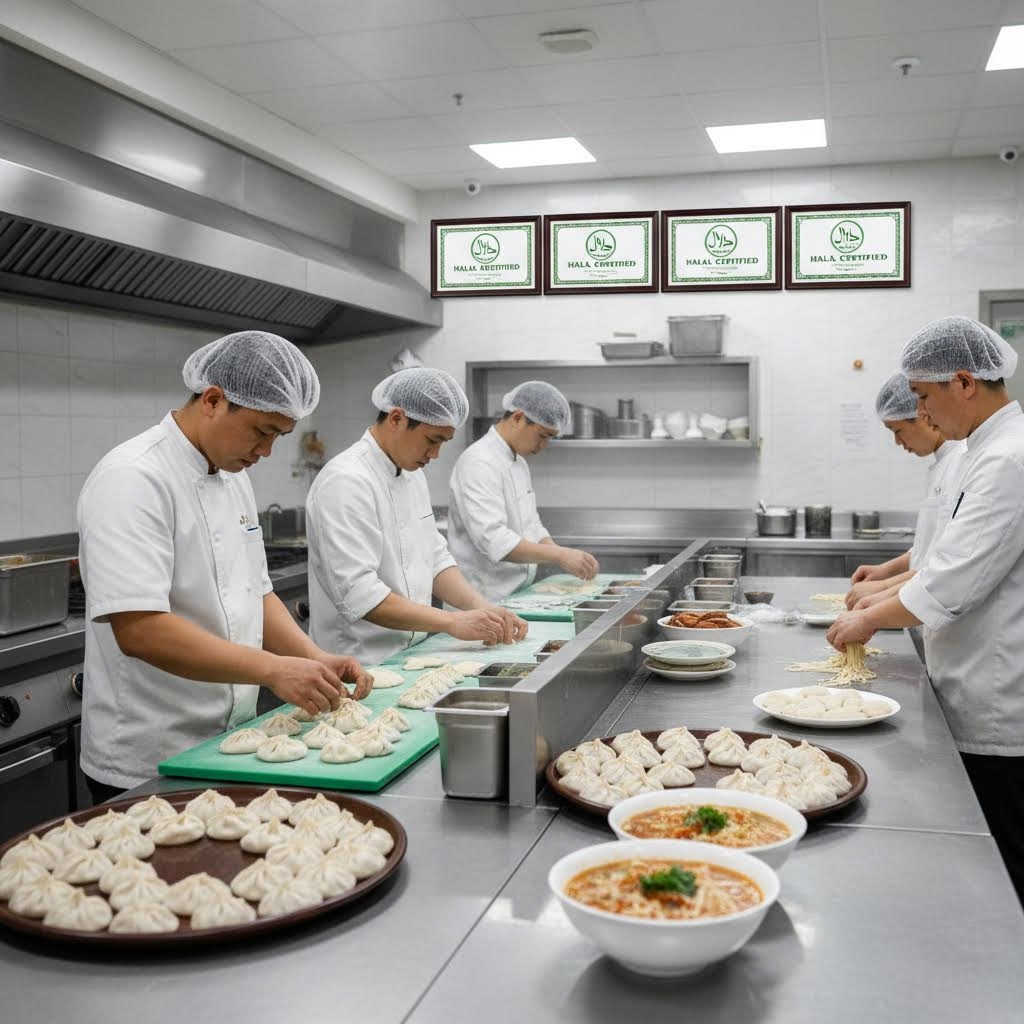
This perception isn’t unfounded. Halal certification requires comprehensive documentation of ingredient sources, manufacturing processes, and equipment cleanliness. For Chinese exporters, achieving halal certification often means upgrading facilities, implementing stricter hygiene protocols, and maintaining transparent records—improvements that benefit all customers regardless of their religious background. When an international buyer in Germany selects halal-certified Chinese dumplings for their retail chain, they’re confident that every ingredient has been traced, every production step documented, and every quality checkpoint validated.
Southeast Asia exemplifies how this broader acceptance accelerates growth. In Malaysia, where both Muslim and non-Muslim populations embrace Chinese cuisine, halal Chinese restaurants have become cultural institutions. The Malaysian market for halal Chinese food reached approximately $8 billion in 2024, with growth rates exceeding 12% annually. Indonesian consumers similarly demonstrate strong preference for halal-certified Chinese products, whether dining out or purchasing packaged foods. This regional embrace has created a proving ground for Chinese exporters, allowing them to refine products and processes before expanding to Western markets.
The quality signal extends to corporate procurement as well. Multinational food service companies operating across diverse markets find that halal-certified Chinese ingredients simplify their supply chains. Rather than maintaining separate sourcing channels for different regions, they can standardize on halal-certified products that meet requirements across Muslim-majority and non-Muslim markets alike. This efficiency creates substantial competitive advantages for Chinese suppliers who invest in certification early.
Business Implications: Navigating Certification and Supply Chain Transparency
For international buyers and restaurant operators, the halal Chinese food export boom creates compelling business opportunities alongside new considerations for procurement strategy. The certification landscape has matured significantly, with Chinese suppliers increasingly holding recognition from multiple international halal certification bodies. This matters because certification accepted in Malaysia may differ from what’s required in Saudi Arabia or Turkey. Smart buyers verify that their Chinese suppliers hold certifications recognized in their target markets before finalizing purchase agreements.
Supply chain transparency has evolved from a nice-to-have feature to a competitive necessity. When sourcing halal Chinese products, buyers need complete visibility into ingredient origins, processing facilities, and logistics pathways. A European restaurant chain importing halal Chinese spring rolls, for instance, requires documentation proving that every ingredient—from the flour in the wrapper to the seasoning in the filling—meets halal standards. Chinese suppliers who invest in digital traceability systems, blockchain-based verification, or comprehensive documentation platforms position themselves as preferred partners.
The digital discovery of halal options represents another critical advantage. International buyers increasingly use online platforms and databases to identify certified Chinese suppliers, verify credentials, and compare offerings. Chinese exporters who maintain updated profiles on international halal food marketplaces, provide detailed certification documentation online, and demonstrate transparent practices through digital channels capture disproportionate attention from buyers worldwide. This digital-first approach reduces friction in international transactions and builds trust before the first conversation even occurs.
Investment implications extend beyond immediate procurement decisions. Restaurant groups expanding their Chinese food offerings see halal certification as a growth accelerator rather than a cost center. The incremental expense of sourcing certified ingredients is offset by access to broader customer bases, reduced reputational risk, and simplified operations across diverse markets. For investors evaluating Chinese food export businesses, halal certification capability serves as a strong indicator of management sophistication and market positioning.
Consumer Opportunities: Expanding Access and Authentic Variety
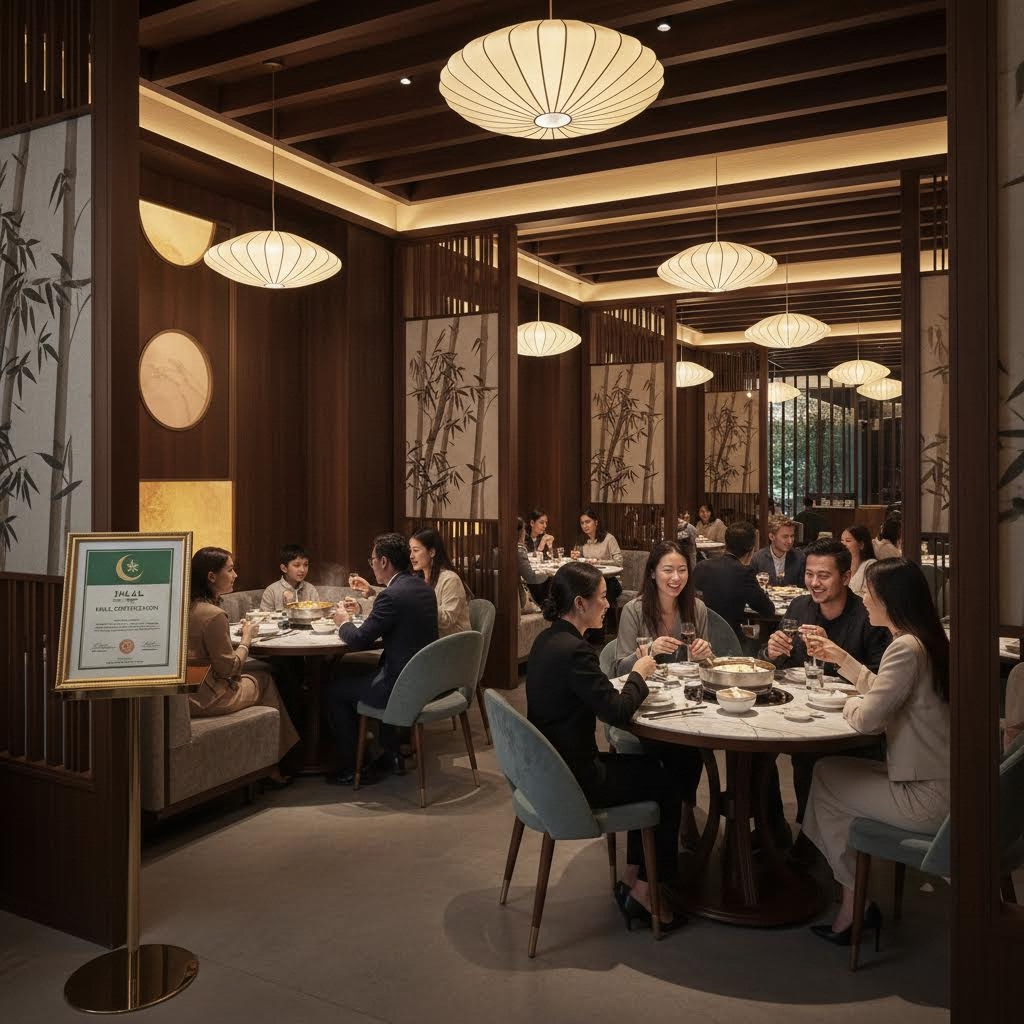
International consumers represent the ultimate beneficiaries of halal Chinese food export growth, though the impact varies significantly by market. In the Middle East, the number of authentic Chinese restaurants offering halal-certified menus has nearly doubled in major cities over the past two years. A Muslim family in Riyadh or Dubai can now enjoy legitimate Sichuan hotpot, Cantonese dim sum, or Xinjiang lamb skewers knowing these dishes meet their dietary requirements—something virtually impossible five years ago.
European markets have experienced particularly dramatic expansion. London, which had fewer than 20 halal Chinese restaurants in 2020, now hosts over 80, with several earning critical acclaim for authenticity. These restaurants succeed because they source directly from certified Chinese suppliers who understand both traditional preparation methods and halal requirements. When a restaurant in Manchester imports halal-certified Chinese barbecue sauce or wonton wrappers, they’re able to deliver flavors that match what diners would experience in Guangzhou or Chengdu.
The retail sector has followed suit. International supermarkets in Muslim-majority and cosmopolitan cities now stock frozen halal Chinese dumplings, ready-to-cook meal kits, and authentic sauces imported directly from China. This retail availability transforms Chinese cuisine from an occasional restaurant experience into a convenient weeknight dinner option for families who previously lacked access to halal-certified versions of these products.
Importantly, variety has expanded beyond stereotypical “Chinese food” offerings. International buyers can now source regional specialties: halal Lanzhou beef noodles, Xi’an lamb burgers, Yunnan rice noodles, and dozens of other authentic dishes that reflect China’s diverse culinary landscape. This variety enriches the global food scene while providing consumers with genuine cultural experiences rather than simplified, westernized interpretations.
The quality of available products has improved alongside variety. Early halal Chinese exports sometimes sacrificed authenticity to meet certification requirements, resulting in dishes that disappointed consumers familiar with traditional flavors. Today’s certified products increasingly match the taste, texture, and presentation of their conventional counterparts because Chinese manufacturers have mastered the technical challenges of halal-compliant production without compromise.
Challenges and Risk Factors: Maintaining Standards Across Borders
Despite impressive growth, significant challenges threaten to undermine confidence in halal Chinese food exports if not addressed systematically. Regulatory variations between countries create substantial complexity for both suppliers and buyers. A product certified halal in China may not automatically qualify for sale in Indonesia, Saudi Arabia, or Turkey without additional verification. Each country maintains its own certification bodies, slaughter requirements, and ingredient restrictions. International buyers navigating these variations need expert guidance to ensure compliance across their distribution networks.
Maintaining consistent compliance as production scales presents another critical challenge. A small Chinese manufacturer producing halal dumplings for local restaurants can personally oversee every aspect of halal requirements. When that same manufacturer scales up to serve international markets with production volumes increasing tenfold, maintaining the same attention to detail becomes exponentially more difficult. Ingredient sourcing must remain consistent, production line segregation must be absolute, and staff training must be comprehensive—all while managing rapid growth.
Authenticity concerns add another layer of complexity. As more Chinese manufacturers enter halal food production, some lack deep understanding of either traditional Chinese culinary techniques or genuine halal requirements. The result can be products that technically meet certification standards but fail to deliver authentic flavors, or conversely, products that taste authentic but cut corners on halal compliance. International buyers must conduct thorough due diligence to identify suppliers who genuinely excel at both dimensions.
The “greenwashing” risk—or perhaps more accurately, “halal-washing”—represents a serious threat to industry credibility. Without proper audits, some suppliers may display halal certification symbols without maintaining actual compliance, counting on the difficulty international buyers face in verifying practices thousands of miles away. Recent investigations have uncovered cases where Chinese food manufacturers claimed halal certification from questionable bodies or maintained certification while gradually relaxing standards to reduce costs. These incidents damage buyer confidence and create reputational risks for the entire sector.
For international buyers, mitigating these risks requires establishing robust verification processes. This means working with suppliers who welcome facility inspections, provide comprehensive documentation, maintain relationships with recognized international certification bodies, and demonstrate long-term commitment to halal standards rather than treating certification as a marketing checkbox. Partnering with experienced trade facilitators who understand both Chinese production capabilities and international halal requirements adds another layer of protection.
A Global Trend with Local Innovation
The explosive growth of halal Chinese food exports reflects a fundamental transformation in how authentic cuisine crosses borders while adapting to diverse consumer needs. China’s halal food market, now exceeding $77 billion and growing at double-digit rates, demonstrates that this isn’t a temporary phenomenon but a structural shift in global food trade. The projection that this market will reach $217 billion by 2034 underscores the scale of opportunity for international buyers willing to navigate the complexities of sourcing from China.
Consider a specific case study: a Hong Kong-based food manufacturer specializing in halal-certified dim sum products. Five years ago, they served primarily local restaurants catering to Muslim tourists. Today, they export to 24 countries across Asia, the Middle East, and Europe, with annual revenue exceeding $30 million. Their success stems from maintaining authentic Cantonese techniques while implementing rigorous halal protocols that satisfy the strictest international certification bodies. They’ve invested in separate production lines, comprehensive staff training, and digital traceability systems that allow buyers anywhere in the world to verify the halal status of individual product batches. This represents the model that’s driving industry growth: combining cultural authenticity with modern quality assurance.
Statistics illuminate the broader impact. China now contributes nearly 17% of the global halal meat market, projected to maintain this leading position through 2027 and beyond. The number of halal-certified Chinese restaurants worldwide has increased by over 150% since 2020, while retail distribution of Chinese halal products has expanded even more dramatically. For international buyers, these numbers translate into improved availability, competitive pricing, and diverse sourcing options.
The philosophy behind this growth aligns perfectly with the approach of bridging cultures through food trade. When international buyers source halal Chinese products, they’re not just importing ingredients or finished goods—they’re facilitating cultural exchange, creating employment in Chinese Muslim communities, and giving global consumers access to authentic culinary traditions that might otherwise remain inaccessible. A restaurant in Berlin serving halal Xinjiang lamb pilaf or a supermarket in Jakarta stocking halal Guangdong soy sauce becomes a point of connection between distant cultures, made possible through thoughtful trade relationships.
Looking forward, the trajectory remains steeply upward. The confluence of Muslim tourism growth, broader acceptance of halal as a quality indicator, China’s production capabilities, and digital tools enabling transparent verification creates an environment where halal Chinese food exports can continue exceeding predictions. For international buyers, success in this market requires more than simply finding certified suppliers—it demands understanding the cultural context, investing in long-term partnerships, maintaining rigorous verification processes, and appreciating how authentic Chinese cuisine can respectfully adapt to meet diverse consumer needs while preserving its essential character.
The halal Chinese food export boom isn’t just outpacing predictions; it’s redefining what’s possible when traditional culinary excellence meets modern certification standards, when local production expertise serves global markets, and when international buyers recognize that quality and authenticity need not conflict with specialized dietary requirements. This is the future of global food trade: inclusive, transparent, culturally respectful, and built on genuine partnerships between producers and buyers who share a commitment to delivering exceptional food experiences to consumers worldwide.