
- The Three-Pillared Audit Framework: Starting with Documentation
- On-Site Facility Assessments: Where Paper Meets Reality
- Product-Labeling and Testing Controls: Beyond Marketing Claims
- Pre-Audit Checks Specific to Chinese Suppliers
- Red Flags That Undermine Clean-Label Promises
- Your 6-Step Quick-Start Audit Checklist
- Transforming Paper Claims Into Supply Chain Reality
When you’re sourcing food products from China, “clean label” isn’t just a marketing phrase—it’s a promise your customers expect you to keep. As an international buyer, you know the stakes: a single mislabeled ingredient or hidden additive can damage years of brand reputation overnight. The challenge? Distinguishing genuine clean-label producers from those who simply know what buyers want to hear.
Clean label means transparency. It means simple, recognizable ingredients. It means no hidden additives, no artificial colors, and no fine-print surprises. For overseas buyers purchasing from China, it means looking beyond glossy certificates and convincing presentations to understand what’s actually happening on the production floor.
The reality is that paperwork can be impressively comprehensive while telling you almost nothing about real production practices. Structured supplier audits reveal what documents cannot. A supplier might present flawless documentation—organic certificates, HACCP approvals, test reports—yet still cut corners where it counts. Your job isn’t to collect documents; it’s to verify the truth behind them.
This is where many buyers stumble. They receive a thick folder of certificates, scan through ingredient declarations that look pristine, and assume they’ve done their due diligence. Then six months later, a routine test reveals undeclared preservatives or a surprise allergen. The supplier seems shocked. The paperwork all checked out, they insist. What went wrong?
What went wrong was trusting paper over process.

The Three-Pillared Audit Framework: Starting with Documentation
Effective supplier verification starts with documentation, but it doesn’t end there. Think of it as the first pillar of a three-part framework that progressively deepens your understanding of a supplier’s capabilities.
Documentation review gives you the baseline. You’re checking business legitimacy, examining certifications, and reviewing product specifications. This isn’t busywork—it’s establishing whether the supplier operates legally and has the basic infrastructure to support clean-label production.
Start with their business license. Verify it against government databases like the National Enterprise Credit Information Publicity System. Cross-check the legal entity name, registration number, and registered address. If the company on the license doesn’t match the one you’re negotiating with, stop immediately. This often signals a trading company masquerading as a manufacturer or, worse, a shell operation that subcontracts without disclosure.
Next, scrutinize their certifications. ISO 22000, HACCP, organic certificates—these matter, but only if they’re current, scope-appropriate, and verifiable. Contact the issuing bodies directly. A surprising number of certificates displayed proudly in factory reception areas turn out to be expired, suspended, or issued for completely different product categories.
Product specifications deserve particular attention. A clean-label supplier should provide detailed formulations showing exactly what goes into each product. If the ingredient list is vague—”natural seasonings,” “processing aids,” or “food-grade additives” without specifics—that’s a warning sign. Clean label demands precision. You need to know not just that they use salt, but what kind of salt, from which source, and in what quantity.
But here’s the critical point: documentation only tells you what a supplier claims to do. On-site inspection reveals what they actually do. No amount of paperwork can substitute for walking through their facility with experienced eyes.
On-Site Facility Assessments: Where Paper Meets Reality
An on-site visit to a Chinese production facility changes everything. What looked clean on paper might reveal itself as chaotic in practice. What seemed well-controlled might actually depend on a single knowledgeable employee who’s about to retire.
Hygiene comes first. This isn’t about whether the floors are spotless during your scheduled visit—any factory can deep-clean before guests arrive. Look instead at the details that matter for ongoing cleanliness. Are handwashing stations positioned at every entry point? Do employees actually use them, or do they skip past? Are cleaning logs filled out in real-time or hastily completed during your tour?
Check the drains, the ceiling corners, the gaps between equipment and walls. These unglamorous spots tell the truth. If you see built-up residue or signs of pest activity in forgotten corners, it doesn’t matter how impressive the quality control lab looks.
Production controls reveal whether clean-label promises can be kept consistently. Watch how ingredients are stored and handled. Are they clearly labeled with receiving dates and batch numbers? Is there a first-in-first-out system that’s actually followed? For clean-label production, cross-contamination prevention is crucial. If you’re verifying an allergen-free product line, trace the flow from raw material receiving through finished goods. A single shared conveyor belt can invalidate every clean-label claim.
Equipment condition matters more than equipment modernity. A fifteen-year-old mixer that’s meticulously maintained and calibrated monthly beats a brand-new line that’s poorly understood by operators. Talk to the production staff—not just managers, but the people actually running the machines. Do they understand critical control points? Can they explain what happens if parameters drift out of specification?
Labeling accuracy deserves special focus during facility visits. Pull random samples from inventory and compare labels against formulations. In one visit to a Chinese condiment manufacturer, we found a “no MSG added” product that did indeed contain no added monosodium glutamate—but included yeast extract, which naturally contains glutamates and provides the same flavor enhancement. Technically truthful, but misleading to consumers expecting a truly clean label. The supplier genuinely didn’t understand the issue until we explained international clean-label expectations.
Employee training reveals organizational commitment. Ask to see training records, but more importantly, quiz a few workers at random. If the night-shift packaging line operator can’t explain basic allergen controls, those beautiful standard operating procedures posted on the wall are just decoration.
Product-Labeling and Testing Controls: Beyond Marketing Claims
Clean-label verification demands scientific rigor. This is where third-party laboratories become your essential partners.
Ingredient verification should happen before you commit to large orders. Understanding how to validate natural claims protects your brand reputation. Send samples to accredited labs and test for common adulterants in your product category. For example, if you’re sourcing “organic black sesame powder,” test for synthetic black dyes—a surprisingly common problem. For “no preservatives” products, screen for benzoates, sorbates, and other undeclared antimicrobials.
Your supplier will likely provide their own test reports. Respect them, but verify independently. Not all Chinese laboratories operate to the same standards, and some suppliers have long-standing relationships with testing facilities that might prioritize maintaining the relationship over reporting uncomfortable truths.
Allergen management deserves particular scrutiny for clean-label products marketed to health-conscious consumers. Many Chinese suppliers are improving their allergen controls, but the concept of “may contain” warnings is still evolving. A factory producing both sesame-containing and sesame-free products might have excellent segregation practices yet fail to recognize cross-contact risks in shared packaging areas.
Request detailed allergen control plans. Map them against the facility layout you observed during your site visit. Do they align? If the allergen plan describes dedicated production lines, but you saw shared equipment during your tour, someone isn’t being truthful.
Testing should extend beyond initial qualification. Build regular third-party testing into your supply agreement. Quarterly testing for key parameters keeps suppliers honest and catches quality drift before it becomes a crisis. One European buyer told us about discovering undeclared sulfites in “preservative-free” dried vegetables only because of routine quarterly testing—eighteen months after starting the relationship. The supplier had changed ingredient sources without notification, apparently viewing sulfite-containing products as “basically the same.”
Pre-Audit Checks Specific to Chinese Suppliers
Before investing time and money in comprehensive audits, run these China-specific pre-qualification checks that can screen out problematic suppliers early.
Verify business identity thoroughly. Use the National Enterprise Credit Information Publicity System (gsxt.gov.cn) to confirm the company exists, is in good standing, and has the registered capital they claim. Check for legal disputes, regulatory violations, or administrative penalties. A clean record isn’t just about avoiding troublemakers—it indicates a supplier who understands compliance.
Government databases often reveal surprising information. We once discovered that a supplier presenting themselves as an organic vegetable specialist had been fined multiple times for pesticide residue violations. They weren’t lying about their organic certification—they did have one product line certified—but their broader practices told a different story.
Export capability verification prevents the nightmare scenario of developing a supplier relationship only to discover they can’t legally export what you need. Check their customs registration, export product scope, and history of international shipments. A supplier with minimal export experience might struggle with international labeling requirements, documentation standards, and foreign customer expectations around clean label.
Pay particular attention to ownership structure and related entities. Some Chinese food companies operate through complex networks of subsidiaries and affiliates. Your clean-label tofu supplier might be owned by a larger conglomerate that produces highly processed foods with additives. This doesn’t automatically disqualify them, but it increases cross-contamination risks and suggests their clean-label commitment might be opportunistic rather than philosophical.
Verify they’re not just traders masquerading as manufacturers. Request proof of factory ownership or long-term lease agreements. Ask about production capacity and seasonal variations. A genuine manufacturer will discuss these details readily. A trading company will be evasive or provide inconsistent information.
Red Flags That Undermine Clean-Label Promises
Experience teaches you to spot warning signs before they become disasters. These red flags don’t automatically mean a supplier is dishonest, but they demand deeper investigation.
Inconsistent documentation should trigger immediate skepticism. If the company name on the organic certificate doesn’t match the business license, or the production address on HACCP certification differs from the factory you’re visiting, something’s wrong. These aren’t clerical errors—they often indicate subcontracting, certificate borrowing, or shell company arrangements.
Unverifiable supplier lists raise questions about ingredient traceability. For specialized products like clean label Chinese noodles, knowing your supplier’s raw material sources is non-negotiable. A clean-label supplier should know exactly where each ingredient originates. If they can’t provide specific supplier names and locations—just vague references to “approved suppliers” or “qualified sources”—they either don’t care about traceability or are hiding something uncomfortable.
Reluctance to allow unannounced visits suggests they need time to prepare what you’ll see. While it’s courteous to schedule audits in advance, a truly confident supplier will accommodate reasonable requests for short-notice visits. Some overseas buyers we work with conduct announced initial audits, then return unannounced six months later to verify consistency.
Excessive flexibility about specifications can paradoxically indicate problems. If a supplier immediately agrees to any requirement you mention—organic, non-GMO, kosher, halal, sugar-free, all simultaneously—they might not genuinely understand the constraints each certification imposes. Real clean-label production involves trade-offs and limitations. A supplier who never says “that’s difficult” or “we’d need to modify our process” might be telling you what you want to hear rather than what they can deliver.
Prices significantly below market rates deserve explanation. Clean-label production typically costs more—premium ingredients, stricter controls, more documentation, higher rejection rates. If a supplier offers “organic, non-GMO, clean-label” products at conventional product pricing, investigate how they’re achieving this. Sometimes you’ll discover genuine efficiency innovations. More often, you’ll find corners being cut somewhere critical.
Your 6-Step Quick-Start Audit Checklist
Building a robust supplier audit program doesn’t require a massive team or specialized expertise. Here’s a practical framework you can implement immediately:
Step 1: Prescreening Research (2-3 days)
Before contact, research the supplier using government databases, online business registries, and industry references. Verify basic legitimacy and export capabilities. This eliminates obviously unsuitable candidates before you invest further time.
Step 2: Documentation Request and Review (1 week)
Request comprehensive documentation package: business licenses, quality certifications, product specifications, ingredient sourcing documentation, test reports, and customer references. Review critically for consistency, currency, and scope relevance.
Step 3: Remote Interview with Technical Staff (2-3 hours)
Conduct video calls with quality managers and production supervisors—not just salespeople. Ask specific technical questions about production processes, ingredient specifications, and control procedures. Listen for detailed, confident answers versus rehearsed sales pitches.
Step 4: On-Site Audit Planning (1 week preparation)
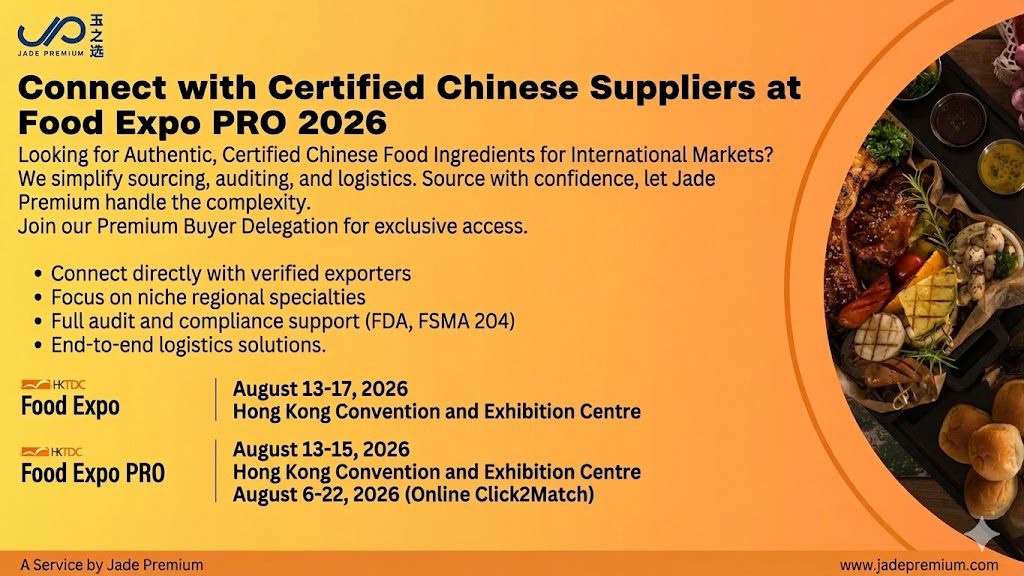
If documentation and interviews pass muster, plan a comprehensive site visit. Consider attending trade events like Hong Kong Food Expo 2026 to identify potential suppliers before committing to full audits. Prepare detailed checklists covering facility layout, hygiene practices, production controls, ingredient handling, labeling processes, and employee knowledge. Schedule at least a full day on-site.
Step 5: Comprehensive Site Visit (1-2 days)
Execute the planned audit, but stay flexible. If you spot something concerning, investigate deeper. Collect samples for independent laboratory testing. Take photographs (with permission) for documentation. Interview multiple employees at different organizational levels.
Step 6: Post-Audit Evaluation and Corrective Actions (2 weeks)
Compile findings, prioritize any issues discovered, and present them to the supplier with specific corrective action requests. Set deadlines and verification methods. A good supplier will respond constructively. Evasiveness or defensiveness at this stage should end the relationship.
Throughout this process, remember that perfect suppliers don’t exist. You’re looking for honest suppliers who understand clean-label requirements, have appropriate controls, and show genuine commitment to improvement when issues surface.
Transforming Paper Claims Into Supply Chain Reality
Verification isn’t a one-time event—it’s an ongoing relationship practice. The best supplier relationships balance healthy skepticism with collaborative problem-solving. You’re not trying to catch suppliers doing something wrong; you’re working together to ensure consistent delivery of genuinely clean-label products.
Regular monitoring maintains standards after initial qualification. Quarterly reviews of test results, semi-annual document updates, and annual comprehensive re-audits keep everyone aligned. Market conditions change, regulations evolve, and even good suppliers experience drift without ongoing attention.
Transparency builds trust on both sides. When sourcing clean label private label food from China, clear communication about quality expectations prevents costly misunderstandings. When you explain clearly why certain controls matter—not just that you require them, but how they protect end consumers and brand reputation—Chinese suppliers often respond with surprising creativity in meeting those needs. Cultural and language differences sometimes create apparent compliance gaps that disappear once underlying expectations are genuinely understood.
The investment in thorough verification pays dividends that extend far beyond avoiding disasters. Deep supplier knowledge allows you to market products more confidently, respond to customer questions more credibly, and build brand stories rooted in verified truth rather than hopeful assumptions.
Clean label represents an evolution in food production toward transparency, simplicity, and consumer trust. As an international buyer sourcing from China, your verification processes don’t just protect your business—they advance the entire industry toward higher standards. Every supplier you audit rigorously, every corrective action you pursue, and every honest conversation you facilitate contributes to a food supply chain worthy of consumer confidence.
Don’t settle for paperwork that looks good. Demand—and verify—production practices that are genuinely clean label. Your customers, your brand, and ultimately the Chinese suppliers genuinely committed to quality all deserve nothing less.