
When international buyers source Chinese ingredients, they often discover a frustrating truth: not all products labeled “authentic” actually deliver on that promise. A jar of fermented black beans might look legitimate on the shelf, but one taste reveals a flatness that disappoints customers expecting the deep, complex umami that defines genuine Chinese cuisine. This gap between expectation and reality isn’t just about disappointing diners—it directly impacts your bottom line and brand reputation.
Authenticity in Chinese ingredients extends far beyond country-of-origin labels. It encompasses flavor fidelity, regional specificity, quality standards, and verifiable provenance. True authenticity means that Sichuan peppercorns deliver that characteristic numbing sensation, that aged rice vinegar from Zhenjiang carries its distinctive malty sweetness, and that dried shiitake mushrooms release their earthy aroma the moment they hit hot water. For retail buyers and food service operators, understanding these nuances separates successful ethnic food category management from costly missteps.
Regional specificity matters profoundly in Chinese cuisine. Shaoxing wine from Zhejiang province tastes fundamentally different from cooking wine produced elsewhere, even when made with similar methods. The terroir, water quality, fermentation traditions, and aging processes create flavor profiles that cannot be authentically replicated. When your restaurant chef specifies Chinkiang vinegar for a dish, generic “black vinegar” simply won’t deliver the same depth. These distinctions aren’t culinary snobbery—they’re the difference between food that tastes right and food that falls flat.
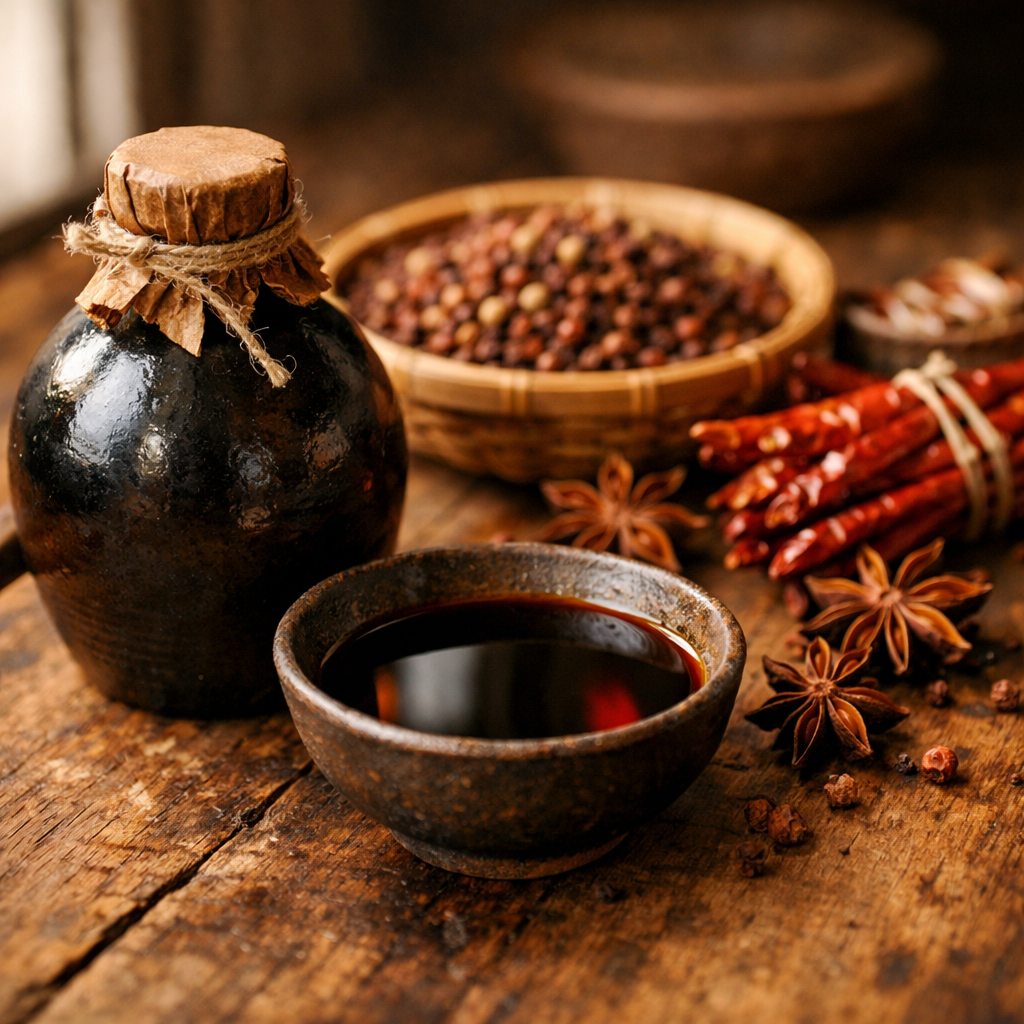
Quality and provenance form the foundation of authenticity. Knowing exactly where your star anise was grown, how your dried chili peppers were processed, and which facility packed your soy sauce isn’t just about compliance—it’s about ensuring consistent flavor profiles that keep customers coming back. When you can trace your ingredients to specific farms and production facilities, you gain control over the sensory experience your products deliver.
Why Flavor Integrity and Traceability Matter for International Buyers
For international buyers managing ethnic food categories, flavor integrity represents the non-negotiable baseline. Your customers—whether they’re Chinese diaspora seeking tastes from home or adventurous food enthusiasts exploring new cuisines—expect ingredients that deliver authentic flavors. When fermented bean paste lacks the right funk, when “aged” soy sauce tastes like it was made last month, or when dried mushrooms have no aroma, you lose customer trust that takes years to rebuild.
Consistency across batches ensures that restaurants can replicate dishes reliably and retailers can guarantee the same taste experience bottle after bottle. A chef who develops a signature dish using your preserved mustard greens needs to know that next month’s delivery will taste identical. This consistency only comes from suppliers with rigorous quality control systems and stable sourcing relationships.
Traceability has evolved from a nice-to-have to a business-critical requirement. When you can trace soy sauce back to the specific soybean harvest and fermentation batch, you protect your business from contamination scares and recalls. Modern consumers increasingly demand transparency—they want to know their food’s journey from farm to table. QR codes on packaging that reveal ingredient origins, production dates, and certification details build the trust that drives premium positioning and repeat purchases.
Safety and compliance depend entirely on robust traceability systems. International markets require documentation proving that products meet specific standards—whether that’s HACCP certification, organic verification, or allergen labeling. Without complete supply chain visibility, you risk costly shipment rejections at customs, potential health hazards, and devastating reputation damage. The 2008 melamine scandal showed how quickly consumer confidence collapses when traceability fails.
At Jade Premium, we’ve built our reputation on ensuring both flavor fidelity and complete traceability. Our localized operations across China’s major food production hubs mean we visit production facilities regularly, verify processing methods firsthand, and maintain relationships with suppliers who understand that consistency isn’t optional. We’ve rejected countless suppliers whose products seemed acceptable on paper but failed our taste tests—because we know that authentic flavor is ultimately what sells products and builds brands.
Understanding the China Sourcing Landscape for Ethnic Ingredients
Navigating China’s complex food production landscape requires understanding the distinct types of suppliers and their respective strengths and limitations. Each sourcing channel offers different trade-offs between price, quality control, customization, and reliability.
Direct manufacturers represent the most straightforward path to authentic products. These producers—whether they’re making fermented sauces in Sichuan, processing dried seafood in Fujian, or producing rice noodles in Guangxi—offer the closest connection to traditional production methods. Working directly with manufacturers typically provides better pricing, greater customization flexibility, and transparent insight into production processes. However, direct relationships require significant time investment to identify qualified producers, navigate language barriers, and manage quality assurance across multiple suppliers.
Trading companies and export specialists serve as intermediaries who aggregate products from various manufacturers. These companies handle export documentation, consolidate shipments, and navigate regulatory requirements—services that prove invaluable for international buyers who lack deep local market knowledge. The best trading companies maintain rigorous supplier vetting processes and conduct regular factory audits. Challenge lies in ensuring that your trading partner prioritizes quality over volume and maintains the traceability you require.
Distributors and wholesale platforms like online B2B marketplaces have democratized access to Chinese suppliers. These platforms make it easy to compare prices and contact multiple suppliers quickly. However, this convenience comes with risks. Platform listings often include unverified suppliers, product descriptions may be misleading, and quality can vary dramatically. While these platforms work well for initial market research and supplier discovery, they require careful due diligence before committing to large orders.
Regional specialization defines China’s food production landscape. Certain provinces have centuries-old expertise in specific products: Sichuan for pickled vegetables and chili products, Guangdong for dried seafood and sauces, Zhejiang for fermented condiments, Henan for wheat-based products. Understanding these regional strengths helps identify suppliers with genuine expertise rather than generic manufacturers producing whatever seems profitable.
The certification landscape has become increasingly important for international trade. Suppliers with established export track records typically hold relevant certifications—ISO 22000, HACCP, organic certifications, and market-specific approvals. These certifications indicate that producers understand international quality expectations and have invested in systems to meet them consistently.
Step-by-Step Guide to Sourcing Authentic Ingredients
Successful sourcing begins with crystal-clear product specifications. Define not just the obvious parameters—ingredient lists, packaging sizes, shelf life—but also the sensory characteristics that define authenticity. What should the product smell like? What color variations are acceptable and what texture should it have? Creating detailed sensory profiles based on authentic reference samples prevents misunderstandings and ensures suppliers understand your quality expectations.
Market research and supplier identification require a multi-pronged approach. Start with trade shows like the China Food and Drinks Fair or SIAL China, where you can meet suppliers face-to-face, taste samples, and gauge production capabilities. Industry associations, verified B2B platforms, and referrals from trusted industry contacts provide additional supplier leads. Look beyond flashy marketing presentations to assess actual production capabilities and export experience.
Evaluating supplier samples demands both systematic testing and subjective assessment. Conduct side-by-side comparisons with benchmark products you know are authentic. Bring in stakeholders who understand the cuisine—whether that’s your restaurant chef, product development team, or focus groups from your target market. Chemical analysis and lab testing verify safety and composition, but human taste testing ultimately determines whether flavors are right.
Verification of certifications and compliance documentation protects you from costly mistakes. Request original certificates and independently verify their authenticity through issuing bodies. Check that certifications are current and cover the specific products and facilities you’ll be sourcing from. Ensure packaging and labeling comply with your destination market’s regulations—this means checking everything from ingredient declarations to allergen warnings to nutritional information formatting.
Factory assessments provide irreplaceable insight into supplier capabilities and reliability. During site visits, observe production processes, hygiene practices, raw material storage, and quality control procedures. Inspect the actual production lines that will make your products, not just show facilities. Ask detailed questions about traceability systems, testing protocols, and how they handle quality issues. Pay attention to employee behavior and working conditions—ethical production matters both morally and practically, as poor labor practices often correlate with quality shortcuts.

Negotiation and contract terms should extend beyond just pricing. Specify quality standards, testing requirements, documentation needs, and remediation procedures for quality failures. Include clear terms about intellectual property protection if you’re developing custom formulations. Define payment terms that balance your cash flow needs with supplier requirements—letters of credit, for instance, provide security for both parties in new relationships.
Quality Assurance and Safety Essentials for International Compliance
Third-party audits and certifications form the foundation of credible quality assurance. Independent auditors assess facilities against internationally recognized standards like GMP (Good Manufacturing Practices), HACCP (Hazard Analysis and Critical Control Points), and ISO 22000. These certifications verify that suppliers have systematic approaches to food safety rather than relying on final product testing alone. For products entering highly regulated markets like the EU or North America, these certifications often represent minimum requirements rather than competitive advantages.
Batch testing and quality control protocols must be built into every stage of the supply chain. Establish clear testing parameters for each product—microbial counts, pesticide residues, heavy metals, authenticity markers, and sensory characteristics. Specify whether testing happens at the supplier facility, upon arrival at port, or both. Understand the distinction between routine batch testing and comprehensive specification testing—the former ensures consistency, the latter verifies that products meet all contractual requirements.
Documentation requirements extend far beyond basic commercial invoices. China’s General Administration of Customs (GACC) requires specific export documentation, while your destination country demands its own import paperwork. Health certificates, phytosanitary certificates, certificates of origin, and halal certifications (when applicable) must be authentic, accurate, and properly executed. Missing or incorrect documentation causes shipment delays, storage fees, and sometimes product destruction at customs.
Contamination prevention focuses on both physical and chemical hazards. Allergen management becomes critical when dealing with products processed in shared facilities—cross-contamination with peanuts, sesame, or shellfish can have severe consequences. Heavy metal accumulation in certain agricultural products requires testing and source verification. Pesticide residue limits vary by market and product; what’s acceptable in China may exceed limits in the EU or Japan.
Market-specific requirements demand careful attention to detail. The EU’s stringent regulations around food additives, novel foods, and maximum residue levels differ substantially from US or Australian requirements. Some countries prohibit certain preservatives or colorants commonly used in Chinese food production. Labeling regulations vary dramatically—font sizes, language requirements, allergen declarations, and nutritional information formatting all require customization for each market.
At Jade Premium, our quality assurance approach combines rigorous systematic controls with deep cultural understanding of Chinese food production. Our teams conduct regular supplier audits, verify certifications independently, and maintain relationships with accredited testing laboratories across China. We don’t just check boxes—we understand the science behind fermentation processes, the agriculture behind ingredient sourcing, and the regulatory landscapes of our target markets. This expertise allows us to catch potential issues before they become expensive problems.
Logistics and Supply Chain Best Practices
Lead-time management separates successful ethnic food sourcing from perpetual stockouts and rush orders. Chinese food ingredients typically require 45-90 days from order placement to arrival at your warehouse, depending on production schedules, shipping methods, and customs clearance. Fermented and aged products may need even longer lead times. Build these timelines into your inventory planning and communicate clearly with suppliers about production schedules and booking cutoffs.
Temperature control throughout the supply chain preserves product quality and safety. Many Chinese ingredients—from fresh dumpling wrappers to certain pickled vegetables—require refrigerated transport and storage. Even shelf-stable products like soy sauce or dried mushrooms degrade faster under extreme temperature fluctuations. Specify temperature requirements clearly in contracts and verify that logistics providers have appropriate cold chain capabilities, monitoring systems, and backup protocols.
Customs clearance challenges multiply when dealing with food products. Perishable items require expedited customs processing. Proper documentation, advance filing, and clear communication with customs brokers minimize delays. Understand which products require additional inspections—fresh products, animal-derived ingredients, and certain preserved foods face additional scrutiny. Working with experienced customs brokers who understand food importation nuances prevents costly delays.
Container optimization balances cost efficiency with quality preservation. Full container loads (FCL) offer better per-unit economics and reduce handling risk compared to less-than-container loads (LCL). However, mixing multiple products in a single container requires careful consideration of temperature requirements, odor transfer risks, and inventory turnover rates. Strategic consolidation—combining products with similar logistics requirements—maximizes efficiency without compromising quality.
Insurance and risk mitigation protect your investment throughout the supply chain. Comprehensive marine cargo insurance covers product loss and damage during transit. Consider additional coverage for perishable goods and high-value shipments. Understand exclusions and claim procedures before disasters strike. Diversifying suppliers and shipping routes reduces vulnerability to port disruptions, natural disasters, or geopolitical tensions.
At Jade Premium, our logistics expertise comes from managing thousands of shipments across diverse product categories and destination markets. Our strategic office locations across China’s major food production and export hubs allow us to optimize shipping routes and coordinate directly with manufacturers. We’ve developed relationships with specialized cold chain logistics providers and customs brokers who understand the unique requirements of food imports, ensuring your products arrive on time and in optimal condition.
Building Long-Term Supplier Relationships and Governance
Ongoing quality monitoring maintains standards after the initial honeymoon period ends. Establish regular sampling and testing schedules for every supplier and product line. Random audits verify that quality control systems remain robust. Trend analysis of test results can reveal gradual quality drift before it becomes a serious problem. Regular communication—not just when issues arise—builds relationships that facilitate problem-solving.
Performance metrics and scorecards bring objectivity to supplier management. Track on-time delivery rates, quality rejection percentages, documentation accuracy, and responsiveness to inquiries. Share these metrics with suppliers transparently—top performers appreciate recognition, while underperformers receive clear feedback about improvement areas. Tie business volume allocation to performance metrics where appropriate, rewarding excellence and motivating improvement.
Communication protocols prevent misunderstandings that derail relationships. Establish clear points of contact for different issues—quality problems go to one person, logistics questions to another. Use written communication for important matters to create a documentation trail. Consider cultural communication differences; Chinese business culture often prefers indirect communication about problems, while Western buyers typically favor directness. Finding middle ground prevents frustration on both sides.
Continuous improvement initiatives benefit both buyers and suppliers. Share customer feedback—both positive and negative—so suppliers understand how their products perform in the market. Introduce suppliers to new market trends and opportunities. When you help suppliers improve their operations and expand their markets, you build loyalty that translates into priority treatment during supply shortages and greater willingness to accommodate special requirements.
Risk management strategies protect against supply chain disruptions. Maintain qualified backup suppliers for critical products, even if you rarely use them. Monitor geopolitical and regulatory developments that could impact sourcing—trade tensions, environmental regulations, certification requirement changes. Build inventory buffers for products with long lead times or supply volatility. Diversify sourcing across regions when possible to reduce concentration risk.
Ethical considerations increasingly influence sourcing decisions and impact brand reputation. Labor practices, environmental sustainability, and animal welfare standards matter to consumers and regulators. Verify that suppliers meet ethical standards through audits and certifications. Chinese suppliers vary dramatically in their approach to these issues—some lead their industries while others lag behind. Choose partners whose values align with your brand positioning.
Market Strategy: Leveraging Authenticity as a Competitive Advantage
Authenticity serves as a powerful differentiator in crowded ethnic food categories. When competitors compromise on quality or substitute ingredients to hit lower price points, authentic products command premium positioning and loyal customer bases. Marketing authentic Chinese ingredients requires educating customers about what makes products special—the regional origins, traditional production methods, and flavor profiles that distinguish real products from imitations.
Consumer storytelling transforms commodities into compelling brands. Share the stories behind your products: the family business that’s been fermenting soy sauce for five generations, the remote mountain region where the most prized mushrooms grow, the traditional pickling techniques that create unique flavors. Use packaging, website content, and social media to bring these stories to life. Modern consumers don’t just buy ingredients—they buy connections to culture, tradition, and authenticity.
Product education drives trial and repeat purchases. Many consumers encounter Chinese ingredients they’ve never used before. Recipes, preparation tips, and usage suggestions reduce barriers to purchase. Video content showing how to cook with products builds confidence and inspiration. In-store demonstrations and sampling programs introduce customers to new flavors. When buyers understand how to use products successfully, they become repeat customers.
Certification transparency builds trust with increasingly skeptical consumers. Display relevant certifications prominently on packaging and marketing materials. Use QR codes to provide detailed information about product origins, testing results, and certification details. Transparency about what certifications mean—and what they don’t guarantee—establishes credibility. Don’t oversell certifications, but don’t hide them either.
Premium positioning strategies position authentic ingredients as worth the investment. Compare authentic products with mainstream alternatives to highlight quality differences. Emphasize the value of concentrated flavors that mean customers use less product. Position products as restaurant-quality ingredients for home cooking. Create premium tiers within product ranges—offering both accessible entry-level options and ultra-premium specialty items for enthusiasts.
At Jade Premium, we believe that authenticity isn’t just about products—it’s about the entire approach to business. Our slogan, “Bringing Authentic Chinese Cuisine to Global Tables,” reflects our commitment to connecting international markets with genuinely excellent Chinese ingredients while respecting the cultural heritage behind them. We don’t just facilitate transactions; we bridge cultures, share stories, and help international buyers build ethnic food categories that honor the authentic flavors and traditions of Chinese cuisine. When you source with integrity, invest in supplier relationships, and educate customers about what makes products special, authenticity becomes more than a marketing claim—it becomes a sustainable competitive advantage that drives growth and builds lasting customer loyalty.