
As “Chinamaxxing” Fuels Western Appetite for Everyday Chinese Culture, Here’s How Buyers Are Turning It Into Breakfast, Retail and Menu Programmes
Frozen Dim Sum Is Outgrowing the Restaurant Trolley
Dim sum has stopped being something Western consumers only order at a restaurant table, and it is increasingly something they keep in their own freezer. Since early 2026, a social media trend widely covered by outlets including NPR and CNN — nicknamed “Chinamaxxing” — has seen young consumers across the United States and Europe experimenting with everyday Chinese habits, from drinking hot water to eating congee for breakfast. For global food buyers, Chinamaxxing is best understood as a commercial shift: Western consumers moving Chinese food from a restaurant-only experience to an everyday at-home staple. That shift matters because a generation curious about eating Chinese food at home is a generation more willing to try a frozen dumpling, wonton or bun, rather than only encountering dim sum on a restaurant trolley — already visible in categories such as the renewed Western interest in matcha and other Chinese ingredients.
That cultural curiosity is landing on top of a category that was already growing on its own commercial merits. The global frozen dim sum assortments segment was valued at close to USD 4.2 billion in 2025 and is projected to reach around USD 8.2 billion by the end of the decade, expanding at a compound annual growth rate of roughly 6.8%, according to market analysis from Research and Markets. Frozen formats are leading that growth for a simple reason: they solve the two biggest obstacles to selling dim sum outside a specialist restaurant kitchen — skilled labour and shelf life.
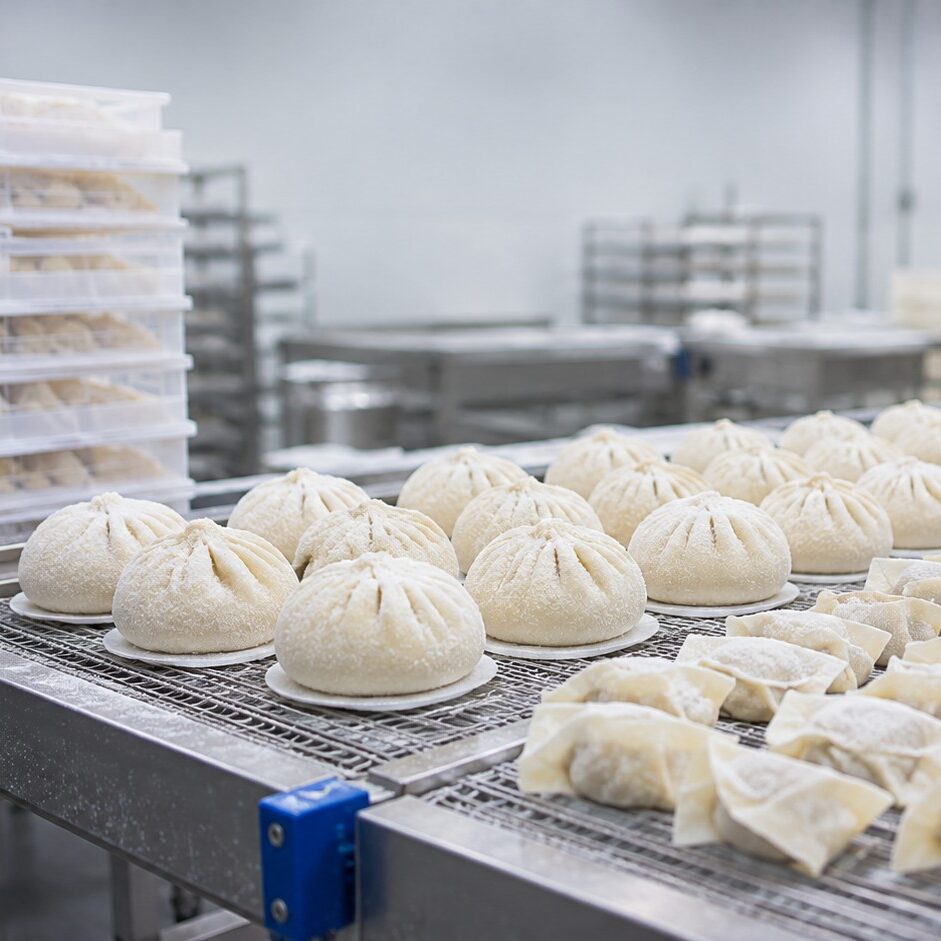
Manufacturers with the scale to serve this demand reliably are becoming a more valuable partner for international buyers than manufacturers with simply the best single recipe. Hekouwei, a Shenzhen-founded frozen dim sum producer established in 1994, has spent more than three decades focused specifically on frozen wheat and rice-based foods, and now runs 15 dedicated frozen dough production lines certified to ISO22000 and BRC food safety standards at its Fujian manufacturing base. That kind of production depth is what lets a Hong Kong-style dim sum recipe travel reliably from a factory floor to a breakfast counter on the other side of the world.
What’s Turning Frozen Dim Sum Into a Growth Category
Two separate forces are driving frozen dim sum’s growth at the same time: better freezing technology, and a wave of flavour innovation that gives buyers a reason to stock more than the usual siu mai and har gow.
On the technical side, blast-freezing and individually quick-frozen (IQF) processing now preserve the textures that used to be dim sum’s weak point in export — a wonton wrapper that stays thin and springy rather than turning gluey, or a custard filling that holds its molten centre through steaming rather than separating. Blast-freezing works by forming ice crystals fast enough that they stay small rather than rupturing cell walls, which is what keeps a wrapper elastic rather than waterlogged and stops a custard filling from weeping once it is thawed and reheated. That distinction matters over an export supply chain, where product can sit in transit and cold storage for a month or more between a factory in China and a freezer case overseas — long enough that inferior freezing shows up as a visibly different texture by the time it reaches the customer. Pairing that with standardised steam-or-microwave heating instructions has lowered the skill required to serve dim sum well below what a dedicated dim sum chef would need, which is precisely what is opening the category to buyers who were previously locked out by a lack of in-house expertise — a pattern also visible in frozen ready-to-cook Chinese snacks entering mainstream supermarkets.
The second driver is less about production and more about the menu. Fusion and novelty dim sum — familiar formats built around unexpected fillings — has become one of the fastest-growing segments of the wider dim sum restaurant market, according to analysis from GrowthMarketReports, as operators use it to appeal to younger, more cosmopolitan diners without abandoning a format their customers already recognise, echoing the same experimentation buyers have already brought to modern plant-based Chinese formats. Foodservice trend analysts have also noted that frozen dim sum quality has improved enough that a restaurant no longer needs a dedicated dim sum kitchen to offer a credible, differentiated selection — which turns a sourcing decision into a genuine menu strategy rather than a back-of-house convenience.
Who’s Buying Wholesale Frozen Dim Sum, and Why
Three distinct buyer motivations are driving frozen dim sum purchases right now, and each maps onto a different point in the day and a different type of product.
The first is straightforward breakfast demand. Quick-service operators, teahouses and breakfast counters want something that can go from freezer to table in minutes without sacrificing the fresh, handmade feel customers associate with a proper morning wonton or dumpling — a use case that sits well outside the traditional yum cha occasion. The second is classic-occasion demand from hotels, banqueting teams and central kitchens, who need a dim sum course that can be produced consistently at scale for a set breakfast buffet or a banquet dessert course without variation between batches. The third, and the one most directly connected to the cultural curiosity behind Chinamaxxing, is differentiation demand: foodservice operators and retail buyers looking for a format customers already recognise — a steamed bun — built around a filling they have not tried before, giving them a low-risk way to add a talking point to an otherwise familiar menu or freezer aisle.
Retail and online grocery sit underneath all three of these motivations rather than beside them. Online grocery channels already account for close to a quarter of frozen dim sum sales globally, a figure that reflects how much of this category’s growth is happening through the freezer aisle rather than the restaurant trolley. That expansion does come with due diligence buyers should not skip — allergen labelling for shellfish, wheat and egg content needs to be accurate for the destination market, and buyers introducing a novelty filling for the first time should confirm ingredient panels translate cleanly before committing to a first order, a step we set out in more detail in our Chinese snack sourcing risk framework.
The table below maps each buyer scenario to the product built for it:
| Buyer Scenario | Product Solution | Key Value |
| Breakfast / QSR | Cantonese Prawn Wonton | Speed to table, familiar handmade format |
| Banqueting / Hotels / Central Kitchens | Custard Lava Bun | Batch consistency at scale |
| Menu Differentiation / Retail Novelty | Steamed Bun with Roast Duck | Low-risk novelty, familiar format, new filling |
Product Spotlight: How Top Frozen Dim Sum Suppliers Meet 3 Core Buyer Demands
These three motivations show up clearly in the frozen dim sum range currently being sourced through Jade Premium’s network of frozen dim sum suppliers in China.
Cantonese Prawn Wonton
The wonton is built for the breakfast case first. Hekouwei’s Cantonese Prawn Wonton is a handmade frozen wonton finished with a thin, springy wrapper and a filling built around whole prawns rather than minced or reformed prawn meat. Each pack contains 30 wontons at 350g net weight, supplied with two 5g soup seasoning sachets, and the product is designed to go straight from a -18°C freezer into boiling water for a hot, made-to-order bowl within minutes — a format suited to quick-service breakfast counters and teahouses as much as retail freezer cases.
Key product characteristics include:
- Whole prawn filling rather than minced or reconstituted prawn
- Handmade wrapper for a springy, non-gluey texture after cooking
- 30 pieces at 350g net weight, with two 5g soup sachets included
- Produced under ISO22000 and BRC-certified manufacturing
Custard Lava Bun
Where the wonton earns its place at breakfast, the Custard Lava Bun earns its place on a dim sum trolley or hotel dessert course. As a manufacturer specialising in frozen wheat and rice-based dim sum, Hekouwei engineers this steamed bun with a salted egg custard designed to stay molten through steaming rather than setting solid, delivering the sweet-savoury contrast that has made lava buns a Hong Kong yum cha staple. Each pack contains 12 buns at 420g net weight, stored frozen at -18°C and finished by steaming or microwaving.
Key product characteristics include:
- Salted egg custard filling engineered to stay molten after steaming
- Soft, non-sticky steamed bun exterior
- 12 pieces at 420g net weight
- Produced under ISO22000 and BRC-certified manufacturing
Steamed Bun with Roast Duck
If the first two products are about serving a familiar dim sum experience reliably, the Steamed Bun with Roast Duck is about giving buyers something to talk about. Produced by Qingqing Foods — a novelty dim sum supplier in China worth watching for buyers building differentiated menus — this bun pairs a traditional steamed wheat-flour bun with a seasoned roast duck filling, built on the same logic as the classic char siu bao but with a filling far fewer international menus currently offer. It is supplied at 800g per bag, ten bags per carton, stored frozen at -18°C with an 18-month shelf life, and produced under HACCP-certified manufacturing.
Key product characteristics include:
- Seasoned roast duck filling in place of the more familiar char siu pork
- 800g per bag, ten bags per carton
- 18-month frozen shelf life at -18°C
- HACCP-certified production
| Sourcing frozen dim sum for your market? Jade Premium can help you build a frozen dim sum programme suited to your channel — from breakfast-format wontons and classic lava buns to differentiation-focused novelty fillings — including specification checks, ingredient panels prepared for your destination regulations, and factory verification before your first order. Contact Jade Premium’s team today to discuss sourcing options for frozen dim sum. |
Looking Ahead: Where Frozen Dim Sum Goes Next
Chinamaxxing will not stay a headline trend forever, but the underlying shift behind it — Western consumers treating Chinese food as something to cook at home rather than only order out — looks durable enough to build a sourcing strategy around. Dim sum’s future is not really about the trolley any more; it is about whether a wonton, a bun or a dumpling can hold its texture through a freezer, a shipping container and a microwave, and still taste like it just came out of a steamer.
For international buyers, that shift rewards manufacturers who can prove consistency at scale over manufacturers who simply make a good product once. Working with a verified frozen dim sum supplier — one that can show certified production, accurate specifications and a track record across breakfast, banqueting and retail formats — is what turns a passing cultural moment into a category buyers can build a menu or a freezer range around for years, not just a season. Buyers ready to move on that opportunity are welcome to get in touch to discuss the right format for their market.
Related Articles
Continue exploring the latest market trends shaping the global food industry.
Beyond the Bakery Boom: Sourcing High-Margin Ready-to-Cook Chinese Snacks for Global Supermarkets